🎉 Up to 70% Off Selected ItemsShop Sale

1 / 2
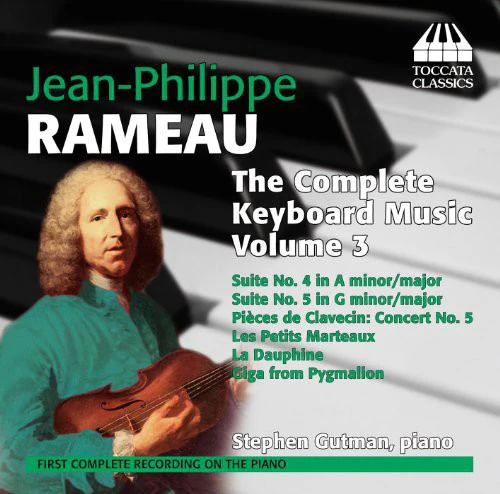
Rameau: The Complete Keyboard Music, Vol 3 / Gutman
RAMEAU Suites: No. 4 in A/a; No. 5 in G/g. La Dauphine. Les petits marteaux. RAMEAU-GUTMAN Pièces de clavecin en concerts: Concert No. 5 in D/d. RAMEAU-BALBASTRE Pigmalion: Giga • Stephen Gutman (pn) • TOCCATA 0052 (68:48)
I am always overjoyed to hear a new recording of Rameau’s keyboard music performed on the piano; it is a repertoire which I find completely underappreciated by most pianists today who favor the works of either Bach or Scarlatti for their recital programs. For whatever the inexplicable reasons, it is both their loss in playing this repertoire and ours in hearing it performed on an instrument capable of such tonal nuances as benefits this music. That said: This is the third and last of Stephen Gutman’s recordings of the complete keyboard music of this master, but only the first that I’ve heard. After playing this disc over and over again this month, I’ll be sure to run—not walk!—to my nearest shop to obtain the first two releases which I’ve missed out on thus far.
Luckily for me, Gutman here performs two of Rameau’s greatest keyboard suites—the one in A-Minor/Major, which ends with the virtuosic Gavotte with six variations (or doubles as he labels them), most likely modeled on the “Air and Variations” from Handel’s D-Minor Suite, and the one in G Major/Minor, which includes some of the most famous of Rameau’s excerpted pieces—“La poule,” “Les sauvages,” “L’enharmonique,” and “L’egiptienne,” among others. From the very first notes of the opening A-Minor Allemande, the pianist’s sense of exploration, his wide tonal palette, and his rhythmic freedom can all be heard to good advantage, along with his intimate and scholarly knowledge of these works—from correct ornamentation to matters of tempo. Importantly, the pianist looks to characterize each of these movements in their own particular way, and does so well—from the serious Courante to the intimate Sarabande, from the athletic and virtuosic “Les trois mains” to the exuberant and joyful “La triomphant.” Perhaps the only aspect I miss a bit comes in the concluding Gavotte, where just a bit more bombast could surely do no harm; here the minute characterization of each variation takes away from the inherent drive to the end which should pervade the entire set. As the following Suite in G is comprised of mostly named movements— à la Couperin—it benefits even more so from Gutman’s quick and profound characterization: “La poule,” being one of the best examples, demonstrates just how quickly he can portray these musical numbers. From the opening repeated-note gesture one is pulled in, only to be startled by the quick flourishes which drive the music forward. The ornaments found throughout the piece are hardly simple trills or mordents—rather, they are sounds of the hen herself. Though “Les sauvages” could be a bit more brutal in character, the pianist’s tendency to emphasize the gallant and graceful aspects in the music is in keeping with the age. “L’egiptienne” makes for a mysterious, yet rousing, conclusion.
The other works here include two transcriptions—one made by Gutman of the Concert No. 5 from the Pièces de clavecin en concerts , which includes three movements (“La Forqueray,” “La Cupis,” and “La Marais”) and the Giga from Pigmalion , possibly transcribed by one Claude-Bénigne Balbastre. Of the two works, the former is the more impressive piece, originally conceived, as is was, for a chamber ensemble of strings and keyboard; the opening work, “La Forqueray,” is actually a four-part fugue, which Gutman carefully choreographs for performance on a single keyboard—no small feat! While there are, of course, interesting little details left out, Gutman is careful to capture the most important aspects of the piece, in both transcription and performance.
Throughout this very fine recital Gutman proves himself a guide of the first order—not only does he understand this music both inside and out, he never allows the scholar in him to inhibit the performer; rather he uses the knowledge to bring out the best in this music. And while I may have my quibbles about matters of performance, there is hardly a movement in the entire recital that will not charm and delight the most judgmental of listeners. Recorded in generally good, though somewhat dry, sound and accompanied by excellent program notes (both by Graham Sadler and the pianist himself), this is a release to savor. Recommended.
FANFARE: Scott Noriega
RAMEAU Suites: No. 4 in A/a; No. 5 in G/g. La Dauphine. Les petits marteaux. RAMEAU-GUTMAN Pièces de clavecin en concerts: Concert No. 5 in D/d. RAMEAU-BALBASTRE Pigmalion: Giga • Stephen Gutman (pn) • TOCCATA 0052 (68:48)
I am always overjoyed to hear a new recording of Rameau’s keyboard music performed on the piano; it is a repertoire which I find completely underappreciated by most pianists today who favor the works of either Bach or Scarlatti for their recital programs. For whatever the inexplicable reasons, it is both their loss in playing this repertoire and ours in hearing it performed on an instrument capable of such tonal nuances as benefits this music. That said: This is the third and last of Stephen Gutman’s recordings of the complete keyboard music of this master, but only the first that I’ve heard. After playing this disc over and over again this month, I’ll be sure to run—not walk!—to my nearest shop to obtain the first two releases which I’ve missed out on thus far.
Luckily for me, Gutman here performs two of Rameau’s greatest keyboard suites—the one in A-Minor/Major, which ends with the virtuosic Gavotte with six variations (or doubles as he labels them), most likely modeled on the “Air and Variations” from Handel’s D-Minor Suite, and the one in G Major/Minor, which includes some of the most famous of Rameau’s excerpted pieces—“La poule,” “Les sauvages,” “L’enharmonique,” and “L’egiptienne,” among others. From the very first notes of the opening A-Minor Allemande, the pianist’s sense of exploration, his wide tonal palette, and his rhythmic freedom can all be heard to good advantage, along with his intimate and scholarly knowledge of these works—from correct ornamentation to matters of tempo. Importantly, the pianist looks to characterize each of these movements in their own particular way, and does so well—from the serious Courante to the intimate Sarabande, from the athletic and virtuosic “Les trois mains” to the exuberant and joyful “La triomphant.” Perhaps the only aspect I miss a bit comes in the concluding Gavotte, where just a bit more bombast could surely do no harm; here the minute characterization of each variation takes away from the inherent drive to the end which should pervade the entire set. As the following Suite in G is comprised of mostly named movements— à la Couperin—it benefits even more so from Gutman’s quick and profound characterization: “La poule,” being one of the best examples, demonstrates just how quickly he can portray these musical numbers. From the opening repeated-note gesture one is pulled in, only to be startled by the quick flourishes which drive the music forward. The ornaments found throughout the piece are hardly simple trills or mordents—rather, they are sounds of the hen herself. Though “Les sauvages” could be a bit more brutal in character, the pianist’s tendency to emphasize the gallant and graceful aspects in the music is in keeping with the age. “L’egiptienne” makes for a mysterious, yet rousing, conclusion.
The other works here include two transcriptions—one made by Gutman of the Concert No. 5 from the Pièces de clavecin en concerts , which includes three movements (“La Forqueray,” “La Cupis,” and “La Marais”) and the Giga from Pigmalion , possibly transcribed by one Claude-Bénigne Balbastre. Of the two works, the former is the more impressive piece, originally conceived, as is was, for a chamber ensemble of strings and keyboard; the opening work, “La Forqueray,” is actually a four-part fugue, which Gutman carefully choreographs for performance on a single keyboard—no small feat! While there are, of course, interesting little details left out, Gutman is careful to capture the most important aspects of the piece, in both transcription and performance.
Throughout this very fine recital Gutman proves himself a guide of the first order—not only does he understand this music both inside and out, he never allows the scholar in him to inhibit the performer; rather he uses the knowledge to bring out the best in this music. And while I may have my quibbles about matters of performance, there is hardly a movement in the entire recital that will not charm and delight the most judgmental of listeners. Recorded in generally good, though somewhat dry, sound and accompanied by excellent program notes (both by Graham Sadler and the pianist himself), this is a release to savor. Recommended.
FANFARE: Scott Noriega
$7.35
Original: $20.99
-65%Rameau: The Complete Keyboard Music, Vol 3 / Gutman—
$20.99
$7.35Description
RAMEAU Suites: No. 4 in A/a; No. 5 in G/g. La Dauphine. Les petits marteaux. RAMEAU-GUTMAN Pièces de clavecin en concerts: Concert No. 5 in D/d. RAMEAU-BALBASTRE Pigmalion: Giga • Stephen Gutman (pn) • TOCCATA 0052 (68:48)
I am always overjoyed to hear a new recording of Rameau’s keyboard music performed on the piano; it is a repertoire which I find completely underappreciated by most pianists today who favor the works of either Bach or Scarlatti for their recital programs. For whatever the inexplicable reasons, it is both their loss in playing this repertoire and ours in hearing it performed on an instrument capable of such tonal nuances as benefits this music. That said: This is the third and last of Stephen Gutman’s recordings of the complete keyboard music of this master, but only the first that I’ve heard. After playing this disc over and over again this month, I’ll be sure to run—not walk!—to my nearest shop to obtain the first two releases which I’ve missed out on thus far.
Luckily for me, Gutman here performs two of Rameau’s greatest keyboard suites—the one in A-Minor/Major, which ends with the virtuosic Gavotte with six variations (or doubles as he labels them), most likely modeled on the “Air and Variations” from Handel’s D-Minor Suite, and the one in G Major/Minor, which includes some of the most famous of Rameau’s excerpted pieces—“La poule,” “Les sauvages,” “L’enharmonique,” and “L’egiptienne,” among others. From the very first notes of the opening A-Minor Allemande, the pianist’s sense of exploration, his wide tonal palette, and his rhythmic freedom can all be heard to good advantage, along with his intimate and scholarly knowledge of these works—from correct ornamentation to matters of tempo. Importantly, the pianist looks to characterize each of these movements in their own particular way, and does so well—from the serious Courante to the intimate Sarabande, from the athletic and virtuosic “Les trois mains” to the exuberant and joyful “La triomphant.” Perhaps the only aspect I miss a bit comes in the concluding Gavotte, where just a bit more bombast could surely do no harm; here the minute characterization of each variation takes away from the inherent drive to the end which should pervade the entire set. As the following Suite in G is comprised of mostly named movements— à la Couperin—it benefits even more so from Gutman’s quick and profound characterization: “La poule,” being one of the best examples, demonstrates just how quickly he can portray these musical numbers. From the opening repeated-note gesture one is pulled in, only to be startled by the quick flourishes which drive the music forward. The ornaments found throughout the piece are hardly simple trills or mordents—rather, they are sounds of the hen herself. Though “Les sauvages” could be a bit more brutal in character, the pianist’s tendency to emphasize the gallant and graceful aspects in the music is in keeping with the age. “L’egiptienne” makes for a mysterious, yet rousing, conclusion.
The other works here include two transcriptions—one made by Gutman of the Concert No. 5 from the Pièces de clavecin en concerts , which includes three movements (“La Forqueray,” “La Cupis,” and “La Marais”) and the Giga from Pigmalion , possibly transcribed by one Claude-Bénigne Balbastre. Of the two works, the former is the more impressive piece, originally conceived, as is was, for a chamber ensemble of strings and keyboard; the opening work, “La Forqueray,” is actually a four-part fugue, which Gutman carefully choreographs for performance on a single keyboard—no small feat! While there are, of course, interesting little details left out, Gutman is careful to capture the most important aspects of the piece, in both transcription and performance.
Throughout this very fine recital Gutman proves himself a guide of the first order—not only does he understand this music both inside and out, he never allows the scholar in him to inhibit the performer; rather he uses the knowledge to bring out the best in this music. And while I may have my quibbles about matters of performance, there is hardly a movement in the entire recital that will not charm and delight the most judgmental of listeners. Recorded in generally good, though somewhat dry, sound and accompanied by excellent program notes (both by Graham Sadler and the pianist himself), this is a release to savor. Recommended.
FANFARE: Scott Noriega