🎉 Up to 70% Off Selected ItemsShop Sale

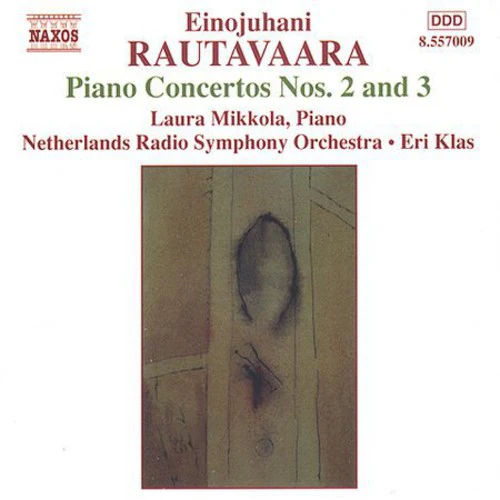
Rautavaara: Piano Concertos Nos. 2 & 3 / Mikkola, Klas
This new release makes a distinguished follow-up to Laura Mikkola's Naxos recording of Rautavaara's First Piano Concerto. When works are new, as these are, it's always fascinating to listen to previous recordings and compare. The Third Piano Concerto, composed for Ashkenazy and recorded by him for Ondine, benefits from having a conductor independent of the pianist. Eri Klas leads a performance more flexible in tempo than Ashkenazy's, though I find him to be marginally the finer pianist, especially in the Adagio assai central movement, where his playing reveals a finer touch, just as the Helsinki Philharmonic is marginally the superior orchestra despite the fact that this newcomer offers more clarity of orchestral detail. Similarly, in the Second Piano Concerto Ralf Gothoni's ever-so-slightly more impulsive way with the music strikes me as preferable to Mikkola's otherwise quite admirable effort, while Klas provides her a finer accompaniment than does Jukka-Pekka Saraste and the Bavarian Radio band for Gothoni (while still being very good). Isle of Bliss is beautifully done, though it does not sing quite as well as Segerstam's Helsinki rendition for Ondine.
Because of the ease of comparison, all of this may sound as if Klas and Mikkola's efforts amount to "second best" performances, but that really isn't true. The differences between them and the only available competition are very small, and very much a matter of personal preference. By any standard, these newcomers do full justice to this lovely music. Furthermore, Mikkola is a first-class artist with a fine sense of the music's flow and a terrific technique to boot: listen to the admirable independence of right and left hands in the Third Concerto's finale, for example, a couple of minutes into the movement.
She's also very well recorded. As suggested above, the orchestral textures have greater transparency here than they do on the Ondine recordings, if perhaps not as much warmth and tonal richness. In the final analysis, I can recommend this disc without reservation, even while acknowledging the fact (not always true, of course) that the premiere recordings of the two concertos by the artists for whom they were originally composed still convey a certain special authority. But if those performances establish the works as worthy additions to the Rautavaara canon, then these attest to their ongoing viability as repertoire items, and that's every bit as important.
--David Hurwitz, ClassicsToday.com
Because of the ease of comparison, all of this may sound as if Klas and Mikkola's efforts amount to "second best" performances, but that really isn't true. The differences between them and the only available competition are very small, and very much a matter of personal preference. By any standard, these newcomers do full justice to this lovely music. Furthermore, Mikkola is a first-class artist with a fine sense of the music's flow and a terrific technique to boot: listen to the admirable independence of right and left hands in the Third Concerto's finale, for example, a couple of minutes into the movement.
She's also very well recorded. As suggested above, the orchestral textures have greater transparency here than they do on the Ondine recordings, if perhaps not as much warmth and tonal richness. In the final analysis, I can recommend this disc without reservation, even while acknowledging the fact (not always true, of course) that the premiere recordings of the two concertos by the artists for whom they were originally composed still convey a certain special authority. But if those performances establish the works as worthy additions to the Rautavaara canon, then these attest to their ongoing viability as repertoire items, and that's every bit as important.
--David Hurwitz, ClassicsToday.com
This new release makes a distinguished follow-up to Laura Mikkola's Naxos recording of Rautavaara's First Piano Concerto. When works are new, as these are, it's always fascinating to listen to previous recordings and compare. The Third Piano Concerto, composed for Ashkenazy and recorded by him for Ondine, benefits from having a conductor independent of the pianist. Eri Klas leads a performance more flexible in tempo than Ashkenazy's, though I find him to be marginally the finer pianist, especially in the Adagio assai central movement, where his playing reveals a finer touch, just as the Helsinki Philharmonic is marginally the superior orchestra despite the fact that this newcomer offers more clarity of orchestral detail. Similarly, in the Second Piano Concerto Ralf Gothoni's ever-so-slightly more impulsive way with the music strikes me as preferable to Mikkola's otherwise quite admirable effort, while Klas provides her a finer accompaniment than does Jukka-Pekka Saraste and the Bavarian Radio band for Gothoni (while still being very good). Isle of Bliss is beautifully done, though it does not sing quite as well as Segerstam's Helsinki rendition for Ondine.
Because of the ease of comparison, all of this may sound as if Klas and Mikkola's efforts amount to "second best" performances, but that really isn't true. The differences between them and the only available competition are very small, and very much a matter of personal preference. By any standard, these newcomers do full justice to this lovely music. Furthermore, Mikkola is a first-class artist with a fine sense of the music's flow and a terrific technique to boot: listen to the admirable independence of right and left hands in the Third Concerto's finale, for example, a couple of minutes into the movement.
She's also very well recorded. As suggested above, the orchestral textures have greater transparency here than they do on the Ondine recordings, if perhaps not as much warmth and tonal richness. In the final analysis, I can recommend this disc without reservation, even while acknowledging the fact (not always true, of course) that the premiere recordings of the two concertos by the artists for whom they were originally composed still convey a certain special authority. But if those performances establish the works as worthy additions to the Rautavaara canon, then these attest to their ongoing viability as repertoire items, and that's every bit as important.
--David Hurwitz, ClassicsToday.com
Because of the ease of comparison, all of this may sound as if Klas and Mikkola's efforts amount to "second best" performances, but that really isn't true. The differences between them and the only available competition are very small, and very much a matter of personal preference. By any standard, these newcomers do full justice to this lovely music. Furthermore, Mikkola is a first-class artist with a fine sense of the music's flow and a terrific technique to boot: listen to the admirable independence of right and left hands in the Third Concerto's finale, for example, a couple of minutes into the movement.
She's also very well recorded. As suggested above, the orchestral textures have greater transparency here than they do on the Ondine recordings, if perhaps not as much warmth and tonal richness. In the final analysis, I can recommend this disc without reservation, even while acknowledging the fact (not always true, of course) that the premiere recordings of the two concertos by the artists for whom they were originally composed still convey a certain special authority. But if those performances establish the works as worthy additions to the Rautavaara canon, then these attest to their ongoing viability as repertoire items, and that's every bit as important.
--David Hurwitz, ClassicsToday.com
$19.99
Rautavaara: Piano Concertos Nos. 2 & 3 / Mikkola, Klas—
$19.99
Description
This new release makes a distinguished follow-up to Laura Mikkola's Naxos recording of Rautavaara's First Piano Concerto. When works are new, as these are, it's always fascinating to listen to previous recordings and compare. The Third Piano Concerto, composed for Ashkenazy and recorded by him for Ondine, benefits from having a conductor independent of the pianist. Eri Klas leads a performance more flexible in tempo than Ashkenazy's, though I find him to be marginally the finer pianist, especially in the Adagio assai central movement, where his playing reveals a finer touch, just as the Helsinki Philharmonic is marginally the superior orchestra despite the fact that this newcomer offers more clarity of orchestral detail. Similarly, in the Second Piano Concerto Ralf Gothoni's ever-so-slightly more impulsive way with the music strikes me as preferable to Mikkola's otherwise quite admirable effort, while Klas provides her a finer accompaniment than does Jukka-Pekka Saraste and the Bavarian Radio band for Gothoni (while still being very good). Isle of Bliss is beautifully done, though it does not sing quite as well as Segerstam's Helsinki rendition for Ondine.
Because of the ease of comparison, all of this may sound as if Klas and Mikkola's efforts amount to "second best" performances, but that really isn't true. The differences between them and the only available competition are very small, and very much a matter of personal preference. By any standard, these newcomers do full justice to this lovely music. Furthermore, Mikkola is a first-class artist with a fine sense of the music's flow and a terrific technique to boot: listen to the admirable independence of right and left hands in the Third Concerto's finale, for example, a couple of minutes into the movement.
She's also very well recorded. As suggested above, the orchestral textures have greater transparency here than they do on the Ondine recordings, if perhaps not as much warmth and tonal richness. In the final analysis, I can recommend this disc without reservation, even while acknowledging the fact (not always true, of course) that the premiere recordings of the two concertos by the artists for whom they were originally composed still convey a certain special authority. But if those performances establish the works as worthy additions to the Rautavaara canon, then these attest to their ongoing viability as repertoire items, and that's every bit as important.
--David Hurwitz, ClassicsToday.com
Because of the ease of comparison, all of this may sound as if Klas and Mikkola's efforts amount to "second best" performances, but that really isn't true. The differences between them and the only available competition are very small, and very much a matter of personal preference. By any standard, these newcomers do full justice to this lovely music. Furthermore, Mikkola is a first-class artist with a fine sense of the music's flow and a terrific technique to boot: listen to the admirable independence of right and left hands in the Third Concerto's finale, for example, a couple of minutes into the movement.
She's also very well recorded. As suggested above, the orchestral textures have greater transparency here than they do on the Ondine recordings, if perhaps not as much warmth and tonal richness. In the final analysis, I can recommend this disc without reservation, even while acknowledging the fact (not always true, of course) that the premiere recordings of the two concertos by the artists for whom they were originally composed still convey a certain special authority. But if those performances establish the works as worthy additions to the Rautavaara canon, then these attest to their ongoing viability as repertoire items, and that's every bit as important.
--David Hurwitz, ClassicsToday.com