🎉 Up to 70% Off Selected ItemsShop Sale

1 / 2
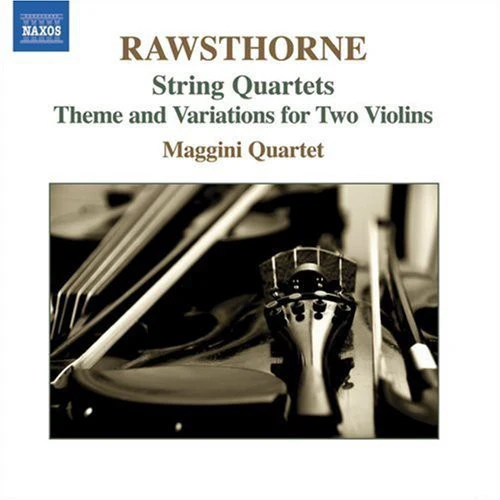
Rawsthorne: String Quartets, Etc / Maggini Quartet
Naxos has been doing Alan Rawsthorne (1905–1971) proud. An English composer who might have become a dentist, and who studied the piano with Egon Petri in Poland and Germany, Rawsthorne’s music is gritty, concentrated, and very communicative in its edge.
The two violinists of the Maggini Quartet give a very assured account of Theme and Variations (1937), spellbinding music of wide range: lyrical, intense, fiery, and mercurial. Rawsthorne’s String Quartet No. 1 (1939) is also cast as a theme and variations; once more this is music that compels, is beautifully worked out, and is compact while spawning much over its 10 minutes.
The other quartets, from 1954 and 1965, are just as concise, in four and three movements, respectively—at least, Naxos supplies three cue points for No. 3—although the composer himself informs us that No. 3 is in “two main sections, each of these being divided into several sub-sections.” Rawsthorne’s introductions, presumably written for the first performances of each work, are helpfully reproduced in Naxos’s booklet. Both works dig deep into emotional states as well as being formally attractive. There’s real heart, here, and genuine craftsmanship, searching and voluble, the musical language extended as each work is reached in terms of the composer’s chronology while retaining a passionate outreach for the listener to climb aboard. If I suggest that admirers of Bartók and Hindemith will be on home ground here, I also want to stress that Rawsthorne is very much his own man, expressing himself deeply through music.
Wonderfully well played by the Maggini Quartet, and rendered with a conviction that suggests Rawsthorne’s music is standard repertoire for these musicians, this is an outstanding release that is further blessed by sound that is tangible and truthful. Please don’t miss what I believe to be really significant pieces.
FANFARE: Colin Anderson
The two violinists of the Maggini Quartet give a very assured account of Theme and Variations (1937), spellbinding music of wide range: lyrical, intense, fiery, and mercurial. Rawsthorne’s String Quartet No. 1 (1939) is also cast as a theme and variations; once more this is music that compels, is beautifully worked out, and is compact while spawning much over its 10 minutes.
The other quartets, from 1954 and 1965, are just as concise, in four and three movements, respectively—at least, Naxos supplies three cue points for No. 3—although the composer himself informs us that No. 3 is in “two main sections, each of these being divided into several sub-sections.” Rawsthorne’s introductions, presumably written for the first performances of each work, are helpfully reproduced in Naxos’s booklet. Both works dig deep into emotional states as well as being formally attractive. There’s real heart, here, and genuine craftsmanship, searching and voluble, the musical language extended as each work is reached in terms of the composer’s chronology while retaining a passionate outreach for the listener to climb aboard. If I suggest that admirers of Bartók and Hindemith will be on home ground here, I also want to stress that Rawsthorne is very much his own man, expressing himself deeply through music.
Wonderfully well played by the Maggini Quartet, and rendered with a conviction that suggests Rawsthorne’s music is standard repertoire for these musicians, this is an outstanding release that is further blessed by sound that is tangible and truthful. Please don’t miss what I believe to be really significant pieces.
FANFARE: Colin Anderson
Naxos has been doing Alan Rawsthorne (1905–1971) proud. An English composer who might have become a dentist, and who studied the piano with Egon Petri in Poland and Germany, Rawsthorne’s music is gritty, concentrated, and very communicative in its edge.
The two violinists of the Maggini Quartet give a very assured account of Theme and Variations (1937), spellbinding music of wide range: lyrical, intense, fiery, and mercurial. Rawsthorne’s String Quartet No. 1 (1939) is also cast as a theme and variations; once more this is music that compels, is beautifully worked out, and is compact while spawning much over its 10 minutes.
The other quartets, from 1954 and 1965, are just as concise, in four and three movements, respectively—at least, Naxos supplies three cue points for No. 3—although the composer himself informs us that No. 3 is in “two main sections, each of these being divided into several sub-sections.” Rawsthorne’s introductions, presumably written for the first performances of each work, are helpfully reproduced in Naxos’s booklet. Both works dig deep into emotional states as well as being formally attractive. There’s real heart, here, and genuine craftsmanship, searching and voluble, the musical language extended as each work is reached in terms of the composer’s chronology while retaining a passionate outreach for the listener to climb aboard. If I suggest that admirers of Bartók and Hindemith will be on home ground here, I also want to stress that Rawsthorne is very much his own man, expressing himself deeply through music.
Wonderfully well played by the Maggini Quartet, and rendered with a conviction that suggests Rawsthorne’s music is standard repertoire for these musicians, this is an outstanding release that is further blessed by sound that is tangible and truthful. Please don’t miss what I believe to be really significant pieces.
FANFARE: Colin Anderson
The two violinists of the Maggini Quartet give a very assured account of Theme and Variations (1937), spellbinding music of wide range: lyrical, intense, fiery, and mercurial. Rawsthorne’s String Quartet No. 1 (1939) is also cast as a theme and variations; once more this is music that compels, is beautifully worked out, and is compact while spawning much over its 10 minutes.
The other quartets, from 1954 and 1965, are just as concise, in four and three movements, respectively—at least, Naxos supplies three cue points for No. 3—although the composer himself informs us that No. 3 is in “two main sections, each of these being divided into several sub-sections.” Rawsthorne’s introductions, presumably written for the first performances of each work, are helpfully reproduced in Naxos’s booklet. Both works dig deep into emotional states as well as being formally attractive. There’s real heart, here, and genuine craftsmanship, searching and voluble, the musical language extended as each work is reached in terms of the composer’s chronology while retaining a passionate outreach for the listener to climb aboard. If I suggest that admirers of Bartók and Hindemith will be on home ground here, I also want to stress that Rawsthorne is very much his own man, expressing himself deeply through music.
Wonderfully well played by the Maggini Quartet, and rendered with a conviction that suggests Rawsthorne’s music is standard repertoire for these musicians, this is an outstanding release that is further blessed by sound that is tangible and truthful. Please don’t miss what I believe to be really significant pieces.
FANFARE: Colin Anderson
$19.99
Rawsthorne: String Quartets, Etc / Maggini Quartet—
$19.99
Description
Naxos has been doing Alan Rawsthorne (1905–1971) proud. An English composer who might have become a dentist, and who studied the piano with Egon Petri in Poland and Germany, Rawsthorne’s music is gritty, concentrated, and very communicative in its edge.
The two violinists of the Maggini Quartet give a very assured account of Theme and Variations (1937), spellbinding music of wide range: lyrical, intense, fiery, and mercurial. Rawsthorne’s String Quartet No. 1 (1939) is also cast as a theme and variations; once more this is music that compels, is beautifully worked out, and is compact while spawning much over its 10 minutes.
The other quartets, from 1954 and 1965, are just as concise, in four and three movements, respectively—at least, Naxos supplies three cue points for No. 3—although the composer himself informs us that No. 3 is in “two main sections, each of these being divided into several sub-sections.” Rawsthorne’s introductions, presumably written for the first performances of each work, are helpfully reproduced in Naxos’s booklet. Both works dig deep into emotional states as well as being formally attractive. There’s real heart, here, and genuine craftsmanship, searching and voluble, the musical language extended as each work is reached in terms of the composer’s chronology while retaining a passionate outreach for the listener to climb aboard. If I suggest that admirers of Bartók and Hindemith will be on home ground here, I also want to stress that Rawsthorne is very much his own man, expressing himself deeply through music.
Wonderfully well played by the Maggini Quartet, and rendered with a conviction that suggests Rawsthorne’s music is standard repertoire for these musicians, this is an outstanding release that is further blessed by sound that is tangible and truthful. Please don’t miss what I believe to be really significant pieces.
FANFARE: Colin Anderson
The two violinists of the Maggini Quartet give a very assured account of Theme and Variations (1937), spellbinding music of wide range: lyrical, intense, fiery, and mercurial. Rawsthorne’s String Quartet No. 1 (1939) is also cast as a theme and variations; once more this is music that compels, is beautifully worked out, and is compact while spawning much over its 10 minutes.
The other quartets, from 1954 and 1965, are just as concise, in four and three movements, respectively—at least, Naxos supplies three cue points for No. 3—although the composer himself informs us that No. 3 is in “two main sections, each of these being divided into several sub-sections.” Rawsthorne’s introductions, presumably written for the first performances of each work, are helpfully reproduced in Naxos’s booklet. Both works dig deep into emotional states as well as being formally attractive. There’s real heart, here, and genuine craftsmanship, searching and voluble, the musical language extended as each work is reached in terms of the composer’s chronology while retaining a passionate outreach for the listener to climb aboard. If I suggest that admirers of Bartók and Hindemith will be on home ground here, I also want to stress that Rawsthorne is very much his own man, expressing himself deeply through music.
Wonderfully well played by the Maggini Quartet, and rendered with a conviction that suggests Rawsthorne’s music is standard repertoire for these musicians, this is an outstanding release that is further blessed by sound that is tangible and truthful. Please don’t miss what I believe to be really significant pieces.
FANFARE: Colin Anderson