🎉 Up to 70% Off Selected ItemsShop Sale

Rebel: Les Plaisirs Champetres, Etc / Cuiller, Arion
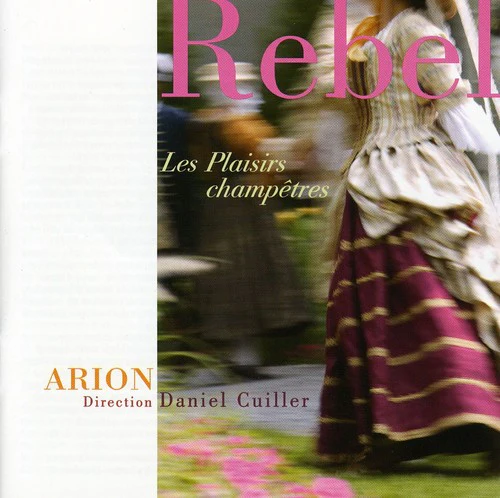
REBEL La Terpsichore. Les caractères de la danse. Caprice. Les plaisirs champêtres. La fantaisie. Les élémens • Daniel Cuiller, cond; Arion (period instruments) • early-music.com 7765 (63:00)
Recordings of Jean-Féry Rebel’s Les élémens have been appearing with increasing frequency of late. Three showed up on my desk last year, for a total of five in print. Only one of these, however, moved beyond the composer’s most thematically distinctive ballet to give us a broader sample of his art: the conductorless Pratum Integrum Orchestra on Caro Mitis 52005, in an unfortunately stiff, monochrome series of readings that did these technically proficient musicians little credit. A release of Rebel’s Les caractères de la danse by Bernardini/Harmony of Nations (Raumklang 2704) was considerably better, though the rest of the album was devoted to a range of Baroque composers. The disc under review is the first to compete directly with the PIO in an all-Rebel concert, with only one difference of content between the two: Boutade on the earlier album is replaced here by La Terpsichore.
The first of Rebel’s ballets, Caprice , was composed in 1711 for the celebrated danseuse seule of the Paris Opera, Françoise Prévost. (They collaborated repeatedly. So did their children, for Rebel’s son, the composer François, and La Prévost’s daughter, Anne, married in 1733.) It was a very short work, under four minutes in performance, skillfully employing a playful imitation of the Flamenco folk style. It was also experimental in its way, as an attempt to divorce dance on the official stage from the larger, literarily driven plot concerns of comic and tragic opera. Within a few years, the efforts of Rebel and other composers bore fruit, leading to the creation of a new, recognized art form: the ballet-pantomime or ballet d’action , in which a narrative and its emotional context were conveyed through dance steps, gestures, costuming, and music. At the other end of the time scale from Caprice stands Rebel’s final work, the well-known Les élémens , a 23-minute ballet composed when he was over 70, and a depiction of the elemental world defined by Empedocles—air, fire, water, and earth—forming out of chaos. Between these, the most interesting is Les caractères de la danse , an uninterrupted, kaleidoscopic series of 14 short dances that deliberately emphasizes its joints through regular shifts in rhythm, tempo, texture, meter, and orchestral color. If Les élémens hadn’t grabbed musical attention with its introductory depiction of primordial Chaos as an octave-based tonal cluster, I suspect we’d have heard from Les caractères a lot sooner than we have. It is the finer of the two works, more rhythmically and thematically inventive, and more harmonically daring overall.
A comparison of this version of Les caractères with Bernardini/Harmony of Nations reveals some interesting distinctions in approach. Bernardini pursues slower tempos in slow dances, and faster tempos in fast ones, than does Cuiller. He also accents rhythms more aggressively. There is no lack of well-defined rhythms in Cuiller’s performances, but there is a slightly stolid, non-theatrical air about the proceedings, despite some superb playing by Arion. On the other hand, though of approximately the same ensemble size—20 members—Arion has the richer, more full-bodied sound. Harmony of Nations, with fewer winds but one more violinist and violist, produces a lighter, narrower tone. This accounts at least in part for the greater range of orchestral color Arion evokes in its performances, from the delicacy of the Sarabande in Les caractères to the frenetic brightness of the Tamborin from La fantaisie , to the pungent horns of the Loure marked “La chasse” in Les élémens.
If you want just Les caractères , then, the matter is a tossup between Bernardini and Cuiller, though I incline slightly to the latter. For Les élémens , I still prefer Gaigg/L’Orfeo Baroque O (Phoenix Edition 110; reviewed in Fanfare 32:3). Their playing is crisp, and rich in character. But if you want a very good version on one album of more Rebel than just these two ballets, the only good choice is Cuiller. It’s a very good choice indeed; and despite minor reservations, I have no hesitancy in recommending it for both the playing and the music.
FANFARE: Barry Brenesal
REBEL La Terpsichore. Les caractères de la danse. Caprice. Les plaisirs champêtres. La fantaisie. Les élémens • Daniel Cuiller, cond; Arion (period instruments) • early-music.com 7765 (63:00)
Recordings of Jean-Féry Rebel’s Les élémens have been appearing with increasing frequency of late. Three showed up on my desk last year, for a total of five in print. Only one of these, however, moved beyond the composer’s most thematically distinctive ballet to give us a broader sample of his art: the conductorless Pratum Integrum Orchestra on Caro Mitis 52005, in an unfortunately stiff, monochrome series of readings that did these technically proficient musicians little credit. A release of Rebel’s Les caractères de la danse by Bernardini/Harmony of Nations (Raumklang 2704) was considerably better, though the rest of the album was devoted to a range of Baroque composers. The disc under review is the first to compete directly with the PIO in an all-Rebel concert, with only one difference of content between the two: Boutade on the earlier album is replaced here by La Terpsichore.
The first of Rebel’s ballets, Caprice , was composed in 1711 for the celebrated danseuse seule of the Paris Opera, Françoise Prévost. (They collaborated repeatedly. So did their children, for Rebel’s son, the composer François, and La Prévost’s daughter, Anne, married in 1733.) It was a very short work, under four minutes in performance, skillfully employing a playful imitation of the Flamenco folk style. It was also experimental in its way, as an attempt to divorce dance on the official stage from the larger, literarily driven plot concerns of comic and tragic opera. Within a few years, the efforts of Rebel and other composers bore fruit, leading to the creation of a new, recognized art form: the ballet-pantomime or ballet d’action , in which a narrative and its emotional context were conveyed through dance steps, gestures, costuming, and music. At the other end of the time scale from Caprice stands Rebel’s final work, the well-known Les élémens , a 23-minute ballet composed when he was over 70, and a depiction of the elemental world defined by Empedocles—air, fire, water, and earth—forming out of chaos. Between these, the most interesting is Les caractères de la danse , an uninterrupted, kaleidoscopic series of 14 short dances that deliberately emphasizes its joints through regular shifts in rhythm, tempo, texture, meter, and orchestral color. If Les élémens hadn’t grabbed musical attention with its introductory depiction of primordial Chaos as an octave-based tonal cluster, I suspect we’d have heard from Les caractères a lot sooner than we have. It is the finer of the two works, more rhythmically and thematically inventive, and more harmonically daring overall.
A comparison of this version of Les caractères with Bernardini/Harmony of Nations reveals some interesting distinctions in approach. Bernardini pursues slower tempos in slow dances, and faster tempos in fast ones, than does Cuiller. He also accents rhythms more aggressively. There is no lack of well-defined rhythms in Cuiller’s performances, but there is a slightly stolid, non-theatrical air about the proceedings, despite some superb playing by Arion. On the other hand, though of approximately the same ensemble size—20 members—Arion has the richer, more full-bodied sound. Harmony of Nations, with fewer winds but one more violinist and violist, produces a lighter, narrower tone. This accounts at least in part for the greater range of orchestral color Arion evokes in its performances, from the delicacy of the Sarabande in Les caractères to the frenetic brightness of the Tamborin from La fantaisie , to the pungent horns of the Loure marked “La chasse” in Les élémens.
If you want just Les caractères , then, the matter is a tossup between Bernardini and Cuiller, though I incline slightly to the latter. For Les élémens , I still prefer Gaigg/L’Orfeo Baroque O (Phoenix Edition 110; reviewed in Fanfare 32:3). Their playing is crisp, and rich in character. But if you want a very good version on one album of more Rebel than just these two ballets, the only good choice is Cuiller. It’s a very good choice indeed; and despite minor reservations, I have no hesitancy in recommending it for both the playing and the music.
FANFARE: Barry Brenesal
$18.99
Rebel: Les Plaisirs Champetres, Etc / Cuiller, Arion—
$18.99
Description
REBEL La Terpsichore. Les caractères de la danse. Caprice. Les plaisirs champêtres. La fantaisie. Les élémens • Daniel Cuiller, cond; Arion (period instruments) • early-music.com 7765 (63:00)
Recordings of Jean-Féry Rebel’s Les élémens have been appearing with increasing frequency of late. Three showed up on my desk last year, for a total of five in print. Only one of these, however, moved beyond the composer’s most thematically distinctive ballet to give us a broader sample of his art: the conductorless Pratum Integrum Orchestra on Caro Mitis 52005, in an unfortunately stiff, monochrome series of readings that did these technically proficient musicians little credit. A release of Rebel’s Les caractères de la danse by Bernardini/Harmony of Nations (Raumklang 2704) was considerably better, though the rest of the album was devoted to a range of Baroque composers. The disc under review is the first to compete directly with the PIO in an all-Rebel concert, with only one difference of content between the two: Boutade on the earlier album is replaced here by La Terpsichore.
The first of Rebel’s ballets, Caprice , was composed in 1711 for the celebrated danseuse seule of the Paris Opera, Françoise Prévost. (They collaborated repeatedly. So did their children, for Rebel’s son, the composer François, and La Prévost’s daughter, Anne, married in 1733.) It was a very short work, under four minutes in performance, skillfully employing a playful imitation of the Flamenco folk style. It was also experimental in its way, as an attempt to divorce dance on the official stage from the larger, literarily driven plot concerns of comic and tragic opera. Within a few years, the efforts of Rebel and other composers bore fruit, leading to the creation of a new, recognized art form: the ballet-pantomime or ballet d’action , in which a narrative and its emotional context were conveyed through dance steps, gestures, costuming, and music. At the other end of the time scale from Caprice stands Rebel’s final work, the well-known Les élémens , a 23-minute ballet composed when he was over 70, and a depiction of the elemental world defined by Empedocles—air, fire, water, and earth—forming out of chaos. Between these, the most interesting is Les caractères de la danse , an uninterrupted, kaleidoscopic series of 14 short dances that deliberately emphasizes its joints through regular shifts in rhythm, tempo, texture, meter, and orchestral color. If Les élémens hadn’t grabbed musical attention with its introductory depiction of primordial Chaos as an octave-based tonal cluster, I suspect we’d have heard from Les caractères a lot sooner than we have. It is the finer of the two works, more rhythmically and thematically inventive, and more harmonically daring overall.
A comparison of this version of Les caractères with Bernardini/Harmony of Nations reveals some interesting distinctions in approach. Bernardini pursues slower tempos in slow dances, and faster tempos in fast ones, than does Cuiller. He also accents rhythms more aggressively. There is no lack of well-defined rhythms in Cuiller’s performances, but there is a slightly stolid, non-theatrical air about the proceedings, despite some superb playing by Arion. On the other hand, though of approximately the same ensemble size—20 members—Arion has the richer, more full-bodied sound. Harmony of Nations, with fewer winds but one more violinist and violist, produces a lighter, narrower tone. This accounts at least in part for the greater range of orchestral color Arion evokes in its performances, from the delicacy of the Sarabande in Les caractères to the frenetic brightness of the Tamborin from La fantaisie , to the pungent horns of the Loure marked “La chasse” in Les élémens.
If you want just Les caractères , then, the matter is a tossup between Bernardini and Cuiller, though I incline slightly to the latter. For Les élémens , I still prefer Gaigg/L’Orfeo Baroque O (Phoenix Edition 110; reviewed in Fanfare 32:3). Their playing is crisp, and rich in character. But if you want a very good version on one album of more Rebel than just these two ballets, the only good choice is Cuiller. It’s a very good choice indeed; and despite minor reservations, I have no hesitancy in recommending it for both the playing and the music.
FANFARE: Barry Brenesal