🎉 Up to 70% Off Selected ItemsShop Sale

1 / 2
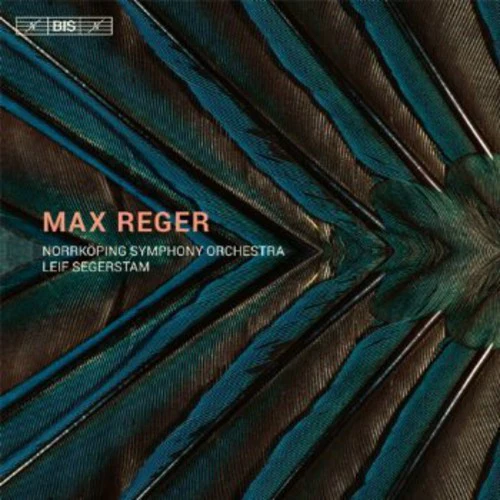
Reger: Orchestral Works / Segerstam, Norrkoping Symphony
“Everything that is included is substantial… the hugely impressive Symphonic Prologue to a Tragedy is dark, brooding and intricately wrought. It's invaluable to have these works available in such lucid, well-played and committed performances.” – The Guardian (UK)
REGER Variations and Fugue on a Theme of Mozart, op. 132. Symphonic Prolog to a Tragedy, op. 108. Piano Concerto 1. Suite in Olden Style, op. 93. Variations and Fugue on a Theme of Beethoven, op. 86. A Ballet Suite, op. 130. Four Tone Poems after Arnold Böcklin, op. 128 • Leif Segerstam, cond; 1 Love Derwinger (pn); Norrköping SO • BIS 9047 (3 CDs: 203:54)
This new compilation of Leif Segerstam’s Reger recordings, originally issued on three separate CDs in the 1990s, makes an outstanding introduction to the work of a composer still largely known by many classical lovers for his organ music and one song, Maria Wiegenlied. When I reviewed the 2-CD Guild set of historic Reger recordings ( Fanfare 37:6), I said how much I liked the works presented there. I can say much the same thing of this set, despite Segerstam’s penchant for slower tempos, simply because as a composer himself he approaches each work from a structural standpoint and brings out many subtleties.
Surprisingly, only two works are duplicated in the two sets, the Mozart Variations and the Ballet Suite . The Guild collection also included the Lustpielouvertüre, Serenade in G, Romantic Suite, and Eine vaterländische Ouverture. Possibly one may also want to hear Reger’s Violin Concerto, Sinfonietta, and the Variations on a Theme of Hiller, but otherwise, between these two sets, you have the bulk of Reger’s orchestral oeuvre . Early on in life, Reger became infatuated with both Bach and Wagner, and from these twin fonts of Teutonic culture he created remarkably interesting structures in music. And, surprisingly, his music is not only interesting but also fun to listen to, a point I made in regards to the Guild set.
Of the music new to me via this release, I was particularly impressed with the Symphonic Prelude to a Tragedy (which one might describe as a more modern, and more tragic, incarnation of Brahms’s Tragic Overture ), the piano concerto, and the Beethoven Variations and Fugue. My sole complaint of the recordings, and this probably has more to do with the engineering than with Segerstam, is that in quiet passages the music sometimes fades out of earshot. Unless you are listening with your ears very close to the speakers or, on headphones, with the volume turned up high, you will miss some of those softer passages. Other than that, however, I was very pleased overall with Segerstam’s readings. As usual with this conductor, transparency of texture is paramount, often revealing details that go unnoticed in others’ readings, and his subtle plasticity of phrasing keeps the music fluid and moving forward. Thus in a work like the Mozart Variations, one may prefer the more straightforward conducting of Eduard van Beinum in the Guild set, but one will find much more to hear in the Segerstam performance.
I was not particularly impressed by the Suite in Olden Style, which just toodled along and sounded nice but not much else. The Variations on a Theme of Beethoven is based on the last of the op. 119 Bagatelles. He originally wrote it for two pianos, but when preparing the orchestral score he eliminated four of the 12 variations and, according to the notes, changed both the playing order and the arrangement of keys. When he finished this score in August 1915, he had less than a year to live. In this case, I felt that Segerstam’s performance was a bit too airy for my taste, making the music sound less energetic that it might have, but the Ballet Suite came off pretty well. Segerstam’s problem, like the famous criticism of Bruno Walter, is that “when he comes to something beautiful, he melts.”
The liner notes suggest that the reason Reger’s Piano Concerto has failed to gain a place in the standard repertoire is that it is technically demanding but does not allow the soloist to “show off.” I would also suggest that the dark, brooding quality of the music is another reason. Most people like their piano concertos to sound cheerful or dramatic or, if somewhat brooding, then brooding in a Romantic Russian (read: Tchaikovsky or Rachmaninoff) sort of way, neither of which Reger gives us. This is a very complex piece, too, continually evolving yet knitting together its various sections within each movement with consummate mastery. (I would particularly commend this concerto to many modern American composers who write “clever” music that does not develop properly.) Derwinger is a committed interpreter, throwing himself into this complex score with emotional fervor, and Segerstam, too, is particularly dramatic here.
What makes this packaging even more attractive is that BIS is selling the 3-CD box at a special price. I found it listed for $32.75 at Presto Classical and $38.49 at ArkivMusic, an excellent bargain considering BIS’s normal price tag for single discs, which run around $21.
FANFARE: Lynn René Bayley
REGER Variations and Fugue on a Theme of Mozart, op. 132. Symphonic Prolog to a Tragedy, op. 108. Piano Concerto 1. Suite in Olden Style, op. 93. Variations and Fugue on a Theme of Beethoven, op. 86. A Ballet Suite, op. 130. Four Tone Poems after Arnold Böcklin, op. 128 • Leif Segerstam, cond; 1 Love Derwinger (pn); Norrköping SO • BIS 9047 (3 CDs: 203:54)
This new compilation of Leif Segerstam’s Reger recordings, originally issued on three separate CDs in the 1990s, makes an outstanding introduction to the work of a composer still largely known by many classical lovers for his organ music and one song, Maria Wiegenlied. When I reviewed the 2-CD Guild set of historic Reger recordings ( Fanfare 37:6), I said how much I liked the works presented there. I can say much the same thing of this set, despite Segerstam’s penchant for slower tempos, simply because as a composer himself he approaches each work from a structural standpoint and brings out many subtleties.
Surprisingly, only two works are duplicated in the two sets, the Mozart Variations and the Ballet Suite . The Guild collection also included the Lustpielouvertüre, Serenade in G, Romantic Suite, and Eine vaterländische Ouverture. Possibly one may also want to hear Reger’s Violin Concerto, Sinfonietta, and the Variations on a Theme of Hiller, but otherwise, between these two sets, you have the bulk of Reger’s orchestral oeuvre . Early on in life, Reger became infatuated with both Bach and Wagner, and from these twin fonts of Teutonic culture he created remarkably interesting structures in music. And, surprisingly, his music is not only interesting but also fun to listen to, a point I made in regards to the Guild set.
Of the music new to me via this release, I was particularly impressed with the Symphonic Prelude to a Tragedy (which one might describe as a more modern, and more tragic, incarnation of Brahms’s Tragic Overture ), the piano concerto, and the Beethoven Variations and Fugue. My sole complaint of the recordings, and this probably has more to do with the engineering than with Segerstam, is that in quiet passages the music sometimes fades out of earshot. Unless you are listening with your ears very close to the speakers or, on headphones, with the volume turned up high, you will miss some of those softer passages. Other than that, however, I was very pleased overall with Segerstam’s readings. As usual with this conductor, transparency of texture is paramount, often revealing details that go unnoticed in others’ readings, and his subtle plasticity of phrasing keeps the music fluid and moving forward. Thus in a work like the Mozart Variations, one may prefer the more straightforward conducting of Eduard van Beinum in the Guild set, but one will find much more to hear in the Segerstam performance.
I was not particularly impressed by the Suite in Olden Style, which just toodled along and sounded nice but not much else. The Variations on a Theme of Beethoven is based on the last of the op. 119 Bagatelles. He originally wrote it for two pianos, but when preparing the orchestral score he eliminated four of the 12 variations and, according to the notes, changed both the playing order and the arrangement of keys. When he finished this score in August 1915, he had less than a year to live. In this case, I felt that Segerstam’s performance was a bit too airy for my taste, making the music sound less energetic that it might have, but the Ballet Suite came off pretty well. Segerstam’s problem, like the famous criticism of Bruno Walter, is that “when he comes to something beautiful, he melts.”
The liner notes suggest that the reason Reger’s Piano Concerto has failed to gain a place in the standard repertoire is that it is technically demanding but does not allow the soloist to “show off.” I would also suggest that the dark, brooding quality of the music is another reason. Most people like their piano concertos to sound cheerful or dramatic or, if somewhat brooding, then brooding in a Romantic Russian (read: Tchaikovsky or Rachmaninoff) sort of way, neither of which Reger gives us. This is a very complex piece, too, continually evolving yet knitting together its various sections within each movement with consummate mastery. (I would particularly commend this concerto to many modern American composers who write “clever” music that does not develop properly.) Derwinger is a committed interpreter, throwing himself into this complex score with emotional fervor, and Segerstam, too, is particularly dramatic here.
What makes this packaging even more attractive is that BIS is selling the 3-CD box at a special price. I found it listed for $32.75 at Presto Classical and $38.49 at ArkivMusic, an excellent bargain considering BIS’s normal price tag for single discs, which run around $21.
FANFARE: Lynn René Bayley
“Everything that is included is substantial… the hugely impressive Symphonic Prologue to a Tragedy is dark, brooding and intricately wrought. It's invaluable to have these works available in such lucid, well-played and committed performances.” – The Guardian (UK)
REGER Variations and Fugue on a Theme of Mozart, op. 132. Symphonic Prolog to a Tragedy, op. 108. Piano Concerto 1. Suite in Olden Style, op. 93. Variations and Fugue on a Theme of Beethoven, op. 86. A Ballet Suite, op. 130. Four Tone Poems after Arnold Böcklin, op. 128 • Leif Segerstam, cond; 1 Love Derwinger (pn); Norrköping SO • BIS 9047 (3 CDs: 203:54)
This new compilation of Leif Segerstam’s Reger recordings, originally issued on three separate CDs in the 1990s, makes an outstanding introduction to the work of a composer still largely known by many classical lovers for his organ music and one song, Maria Wiegenlied. When I reviewed the 2-CD Guild set of historic Reger recordings ( Fanfare 37:6), I said how much I liked the works presented there. I can say much the same thing of this set, despite Segerstam’s penchant for slower tempos, simply because as a composer himself he approaches each work from a structural standpoint and brings out many subtleties.
Surprisingly, only two works are duplicated in the two sets, the Mozart Variations and the Ballet Suite . The Guild collection also included the Lustpielouvertüre, Serenade in G, Romantic Suite, and Eine vaterländische Ouverture. Possibly one may also want to hear Reger’s Violin Concerto, Sinfonietta, and the Variations on a Theme of Hiller, but otherwise, between these two sets, you have the bulk of Reger’s orchestral oeuvre . Early on in life, Reger became infatuated with both Bach and Wagner, and from these twin fonts of Teutonic culture he created remarkably interesting structures in music. And, surprisingly, his music is not only interesting but also fun to listen to, a point I made in regards to the Guild set.
Of the music new to me via this release, I was particularly impressed with the Symphonic Prelude to a Tragedy (which one might describe as a more modern, and more tragic, incarnation of Brahms’s Tragic Overture ), the piano concerto, and the Beethoven Variations and Fugue. My sole complaint of the recordings, and this probably has more to do with the engineering than with Segerstam, is that in quiet passages the music sometimes fades out of earshot. Unless you are listening with your ears very close to the speakers or, on headphones, with the volume turned up high, you will miss some of those softer passages. Other than that, however, I was very pleased overall with Segerstam’s readings. As usual with this conductor, transparency of texture is paramount, often revealing details that go unnoticed in others’ readings, and his subtle plasticity of phrasing keeps the music fluid and moving forward. Thus in a work like the Mozart Variations, one may prefer the more straightforward conducting of Eduard van Beinum in the Guild set, but one will find much more to hear in the Segerstam performance.
I was not particularly impressed by the Suite in Olden Style, which just toodled along and sounded nice but not much else. The Variations on a Theme of Beethoven is based on the last of the op. 119 Bagatelles. He originally wrote it for two pianos, but when preparing the orchestral score he eliminated four of the 12 variations and, according to the notes, changed both the playing order and the arrangement of keys. When he finished this score in August 1915, he had less than a year to live. In this case, I felt that Segerstam’s performance was a bit too airy for my taste, making the music sound less energetic that it might have, but the Ballet Suite came off pretty well. Segerstam’s problem, like the famous criticism of Bruno Walter, is that “when he comes to something beautiful, he melts.”
The liner notes suggest that the reason Reger’s Piano Concerto has failed to gain a place in the standard repertoire is that it is technically demanding but does not allow the soloist to “show off.” I would also suggest that the dark, brooding quality of the music is another reason. Most people like their piano concertos to sound cheerful or dramatic or, if somewhat brooding, then brooding in a Romantic Russian (read: Tchaikovsky or Rachmaninoff) sort of way, neither of which Reger gives us. This is a very complex piece, too, continually evolving yet knitting together its various sections within each movement with consummate mastery. (I would particularly commend this concerto to many modern American composers who write “clever” music that does not develop properly.) Derwinger is a committed interpreter, throwing himself into this complex score with emotional fervor, and Segerstam, too, is particularly dramatic here.
What makes this packaging even more attractive is that BIS is selling the 3-CD box at a special price. I found it listed for $32.75 at Presto Classical and $38.49 at ArkivMusic, an excellent bargain considering BIS’s normal price tag for single discs, which run around $21.
FANFARE: Lynn René Bayley
REGER Variations and Fugue on a Theme of Mozart, op. 132. Symphonic Prolog to a Tragedy, op. 108. Piano Concerto 1. Suite in Olden Style, op. 93. Variations and Fugue on a Theme of Beethoven, op. 86. A Ballet Suite, op. 130. Four Tone Poems after Arnold Böcklin, op. 128 • Leif Segerstam, cond; 1 Love Derwinger (pn); Norrköping SO • BIS 9047 (3 CDs: 203:54)
This new compilation of Leif Segerstam’s Reger recordings, originally issued on three separate CDs in the 1990s, makes an outstanding introduction to the work of a composer still largely known by many classical lovers for his organ music and one song, Maria Wiegenlied. When I reviewed the 2-CD Guild set of historic Reger recordings ( Fanfare 37:6), I said how much I liked the works presented there. I can say much the same thing of this set, despite Segerstam’s penchant for slower tempos, simply because as a composer himself he approaches each work from a structural standpoint and brings out many subtleties.
Surprisingly, only two works are duplicated in the two sets, the Mozart Variations and the Ballet Suite . The Guild collection also included the Lustpielouvertüre, Serenade in G, Romantic Suite, and Eine vaterländische Ouverture. Possibly one may also want to hear Reger’s Violin Concerto, Sinfonietta, and the Variations on a Theme of Hiller, but otherwise, between these two sets, you have the bulk of Reger’s orchestral oeuvre . Early on in life, Reger became infatuated with both Bach and Wagner, and from these twin fonts of Teutonic culture he created remarkably interesting structures in music. And, surprisingly, his music is not only interesting but also fun to listen to, a point I made in regards to the Guild set.
Of the music new to me via this release, I was particularly impressed with the Symphonic Prelude to a Tragedy (which one might describe as a more modern, and more tragic, incarnation of Brahms’s Tragic Overture ), the piano concerto, and the Beethoven Variations and Fugue. My sole complaint of the recordings, and this probably has more to do with the engineering than with Segerstam, is that in quiet passages the music sometimes fades out of earshot. Unless you are listening with your ears very close to the speakers or, on headphones, with the volume turned up high, you will miss some of those softer passages. Other than that, however, I was very pleased overall with Segerstam’s readings. As usual with this conductor, transparency of texture is paramount, often revealing details that go unnoticed in others’ readings, and his subtle plasticity of phrasing keeps the music fluid and moving forward. Thus in a work like the Mozart Variations, one may prefer the more straightforward conducting of Eduard van Beinum in the Guild set, but one will find much more to hear in the Segerstam performance.
I was not particularly impressed by the Suite in Olden Style, which just toodled along and sounded nice but not much else. The Variations on a Theme of Beethoven is based on the last of the op. 119 Bagatelles. He originally wrote it for two pianos, but when preparing the orchestral score he eliminated four of the 12 variations and, according to the notes, changed both the playing order and the arrangement of keys. When he finished this score in August 1915, he had less than a year to live. In this case, I felt that Segerstam’s performance was a bit too airy for my taste, making the music sound less energetic that it might have, but the Ballet Suite came off pretty well. Segerstam’s problem, like the famous criticism of Bruno Walter, is that “when he comes to something beautiful, he melts.”
The liner notes suggest that the reason Reger’s Piano Concerto has failed to gain a place in the standard repertoire is that it is technically demanding but does not allow the soloist to “show off.” I would also suggest that the dark, brooding quality of the music is another reason. Most people like their piano concertos to sound cheerful or dramatic or, if somewhat brooding, then brooding in a Romantic Russian (read: Tchaikovsky or Rachmaninoff) sort of way, neither of which Reger gives us. This is a very complex piece, too, continually evolving yet knitting together its various sections within each movement with consummate mastery. (I would particularly commend this concerto to many modern American composers who write “clever” music that does not develop properly.) Derwinger is a committed interpreter, throwing himself into this complex score with emotional fervor, and Segerstam, too, is particularly dramatic here.
What makes this packaging even more attractive is that BIS is selling the 3-CD box at a special price. I found it listed for $32.75 at Presto Classical and $38.49 at ArkivMusic, an excellent bargain considering BIS’s normal price tag for single discs, which run around $21.
FANFARE: Lynn René Bayley
$30.99
Reger: Orchestral Works / Segerstam, Norrkoping Symphony—
$30.99
Description
“Everything that is included is substantial… the hugely impressive Symphonic Prologue to a Tragedy is dark, brooding and intricately wrought. It's invaluable to have these works available in such lucid, well-played and committed performances.” – The Guardian (UK)
REGER Variations and Fugue on a Theme of Mozart, op. 132. Symphonic Prolog to a Tragedy, op. 108. Piano Concerto 1. Suite in Olden Style, op. 93. Variations and Fugue on a Theme of Beethoven, op. 86. A Ballet Suite, op. 130. Four Tone Poems after Arnold Böcklin, op. 128 • Leif Segerstam, cond; 1 Love Derwinger (pn); Norrköping SO • BIS 9047 (3 CDs: 203:54)
This new compilation of Leif Segerstam’s Reger recordings, originally issued on three separate CDs in the 1990s, makes an outstanding introduction to the work of a composer still largely known by many classical lovers for his organ music and one song, Maria Wiegenlied. When I reviewed the 2-CD Guild set of historic Reger recordings ( Fanfare 37:6), I said how much I liked the works presented there. I can say much the same thing of this set, despite Segerstam’s penchant for slower tempos, simply because as a composer himself he approaches each work from a structural standpoint and brings out many subtleties.
Surprisingly, only two works are duplicated in the two sets, the Mozart Variations and the Ballet Suite . The Guild collection also included the Lustpielouvertüre, Serenade in G, Romantic Suite, and Eine vaterländische Ouverture. Possibly one may also want to hear Reger’s Violin Concerto, Sinfonietta, and the Variations on a Theme of Hiller, but otherwise, between these two sets, you have the bulk of Reger’s orchestral oeuvre . Early on in life, Reger became infatuated with both Bach and Wagner, and from these twin fonts of Teutonic culture he created remarkably interesting structures in music. And, surprisingly, his music is not only interesting but also fun to listen to, a point I made in regards to the Guild set.
Of the music new to me via this release, I was particularly impressed with the Symphonic Prelude to a Tragedy (which one might describe as a more modern, and more tragic, incarnation of Brahms’s Tragic Overture ), the piano concerto, and the Beethoven Variations and Fugue. My sole complaint of the recordings, and this probably has more to do with the engineering than with Segerstam, is that in quiet passages the music sometimes fades out of earshot. Unless you are listening with your ears very close to the speakers or, on headphones, with the volume turned up high, you will miss some of those softer passages. Other than that, however, I was very pleased overall with Segerstam’s readings. As usual with this conductor, transparency of texture is paramount, often revealing details that go unnoticed in others’ readings, and his subtle plasticity of phrasing keeps the music fluid and moving forward. Thus in a work like the Mozart Variations, one may prefer the more straightforward conducting of Eduard van Beinum in the Guild set, but one will find much more to hear in the Segerstam performance.
I was not particularly impressed by the Suite in Olden Style, which just toodled along and sounded nice but not much else. The Variations on a Theme of Beethoven is based on the last of the op. 119 Bagatelles. He originally wrote it for two pianos, but when preparing the orchestral score he eliminated four of the 12 variations and, according to the notes, changed both the playing order and the arrangement of keys. When he finished this score in August 1915, he had less than a year to live. In this case, I felt that Segerstam’s performance was a bit too airy for my taste, making the music sound less energetic that it might have, but the Ballet Suite came off pretty well. Segerstam’s problem, like the famous criticism of Bruno Walter, is that “when he comes to something beautiful, he melts.”
The liner notes suggest that the reason Reger’s Piano Concerto has failed to gain a place in the standard repertoire is that it is technically demanding but does not allow the soloist to “show off.” I would also suggest that the dark, brooding quality of the music is another reason. Most people like their piano concertos to sound cheerful or dramatic or, if somewhat brooding, then brooding in a Romantic Russian (read: Tchaikovsky or Rachmaninoff) sort of way, neither of which Reger gives us. This is a very complex piece, too, continually evolving yet knitting together its various sections within each movement with consummate mastery. (I would particularly commend this concerto to many modern American composers who write “clever” music that does not develop properly.) Derwinger is a committed interpreter, throwing himself into this complex score with emotional fervor, and Segerstam, too, is particularly dramatic here.
What makes this packaging even more attractive is that BIS is selling the 3-CD box at a special price. I found it listed for $32.75 at Presto Classical and $38.49 at ArkivMusic, an excellent bargain considering BIS’s normal price tag for single discs, which run around $21.
FANFARE: Lynn René Bayley
REGER Variations and Fugue on a Theme of Mozart, op. 132. Symphonic Prolog to a Tragedy, op. 108. Piano Concerto 1. Suite in Olden Style, op. 93. Variations and Fugue on a Theme of Beethoven, op. 86. A Ballet Suite, op. 130. Four Tone Poems after Arnold Böcklin, op. 128 • Leif Segerstam, cond; 1 Love Derwinger (pn); Norrköping SO • BIS 9047 (3 CDs: 203:54)
This new compilation of Leif Segerstam’s Reger recordings, originally issued on three separate CDs in the 1990s, makes an outstanding introduction to the work of a composer still largely known by many classical lovers for his organ music and one song, Maria Wiegenlied. When I reviewed the 2-CD Guild set of historic Reger recordings ( Fanfare 37:6), I said how much I liked the works presented there. I can say much the same thing of this set, despite Segerstam’s penchant for slower tempos, simply because as a composer himself he approaches each work from a structural standpoint and brings out many subtleties.
Surprisingly, only two works are duplicated in the two sets, the Mozart Variations and the Ballet Suite . The Guild collection also included the Lustpielouvertüre, Serenade in G, Romantic Suite, and Eine vaterländische Ouverture. Possibly one may also want to hear Reger’s Violin Concerto, Sinfonietta, and the Variations on a Theme of Hiller, but otherwise, between these two sets, you have the bulk of Reger’s orchestral oeuvre . Early on in life, Reger became infatuated with both Bach and Wagner, and from these twin fonts of Teutonic culture he created remarkably interesting structures in music. And, surprisingly, his music is not only interesting but also fun to listen to, a point I made in regards to the Guild set.
Of the music new to me via this release, I was particularly impressed with the Symphonic Prelude to a Tragedy (which one might describe as a more modern, and more tragic, incarnation of Brahms’s Tragic Overture ), the piano concerto, and the Beethoven Variations and Fugue. My sole complaint of the recordings, and this probably has more to do with the engineering than with Segerstam, is that in quiet passages the music sometimes fades out of earshot. Unless you are listening with your ears very close to the speakers or, on headphones, with the volume turned up high, you will miss some of those softer passages. Other than that, however, I was very pleased overall with Segerstam’s readings. As usual with this conductor, transparency of texture is paramount, often revealing details that go unnoticed in others’ readings, and his subtle plasticity of phrasing keeps the music fluid and moving forward. Thus in a work like the Mozart Variations, one may prefer the more straightforward conducting of Eduard van Beinum in the Guild set, but one will find much more to hear in the Segerstam performance.
I was not particularly impressed by the Suite in Olden Style, which just toodled along and sounded nice but not much else. The Variations on a Theme of Beethoven is based on the last of the op. 119 Bagatelles. He originally wrote it for two pianos, but when preparing the orchestral score he eliminated four of the 12 variations and, according to the notes, changed both the playing order and the arrangement of keys. When he finished this score in August 1915, he had less than a year to live. In this case, I felt that Segerstam’s performance was a bit too airy for my taste, making the music sound less energetic that it might have, but the Ballet Suite came off pretty well. Segerstam’s problem, like the famous criticism of Bruno Walter, is that “when he comes to something beautiful, he melts.”
The liner notes suggest that the reason Reger’s Piano Concerto has failed to gain a place in the standard repertoire is that it is technically demanding but does not allow the soloist to “show off.” I would also suggest that the dark, brooding quality of the music is another reason. Most people like their piano concertos to sound cheerful or dramatic or, if somewhat brooding, then brooding in a Romantic Russian (read: Tchaikovsky or Rachmaninoff) sort of way, neither of which Reger gives us. This is a very complex piece, too, continually evolving yet knitting together its various sections within each movement with consummate mastery. (I would particularly commend this concerto to many modern American composers who write “clever” music that does not develop properly.) Derwinger is a committed interpreter, throwing himself into this complex score with emotional fervor, and Segerstam, too, is particularly dramatic here.
What makes this packaging even more attractive is that BIS is selling the 3-CD box at a special price. I found it listed for $32.75 at Presto Classical and $38.49 at ArkivMusic, an excellent bargain considering BIS’s normal price tag for single discs, which run around $21.
FANFARE: Lynn René Bayley