🎉 Up to 70% Off Selected ItemsShop Sale

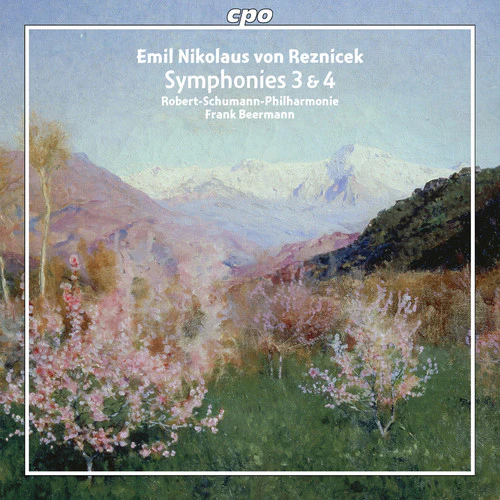
Reznicek: Symphonies 3 & 4 / Beermann, Robert Schumann Philharmonie
Emil Nikolaus von Reznicek had a very conflicted relationship with the German symphonic legacy. His First Symphony, subtitled “Tragic,” is anything but. The Second, the “Ironic,” is arguably too cute for its own good. The Fifth is a suite of dances orchestrated from piano originals–it’s not really a symphony at all. The two immaculately crafted works on this release make the best impression so far, while confirming that when it came to dealing with the imposing musical tradition that he inherited, Reznicek basically hadn’t a clue. Even so, there are times when failure can be interesting, especially when it’s done with such craft.
The Third Symphony, subtitled “In the Olden Style” (in the score, not on the tray card), is written for classical orchestra: double winds, two trumpets, four horns, timpani and strings. Its music is pure pastiche. It begins with a 15th century folk song, and continues with a first movement that recalls Schumann, albeit with better orchestration. The third movement is a faux Haydn minuet (sound clip) with tipsy harmonies, while the finale takes the accompaniment of the opening of Mendelssohn’s Italian Symphony and combines it with the tune of the Scottish Symphony’s scherzo. It tries really hard to be adorable, but winds up sounding forced and tired. The trio of the minuet is a bland Ländler, and the finale fails to sustain the energy of its opening. It’s really a bit sad.
The situation hardly improves in the Fourth. Its slow movement is a “Funeral March for a Comedian,” and might strike you as a bit like Prokofiev, without the melodic character. The scherzo is just a good piece of traditional symphonic writing, but the outer movements are a mess. This work adds trombones,and features two crashes for cymbals and bass drum in the finale, but is otherwise just as conservative, not to say inhibited, as its predecessor. The grand chorale at the end never quite achieves the culmination that Reznicek obviously intends, and like the Third Symphony you get the sense that the medium simply resists the composer’s best efforts to write something plausibly honest and genuine.
In short, these two decadent relics are fun to listen to as desperate attempts to grapple with a tradition that, however vital and vibrant just about everywhere else in the world, was truly dead in Germany. They are fascinating documents of their time (the first decades of the 20th century), and Frank Beermann contrives to offer the most successful release thus far of the three devoted to Reznicek’s symphonies.
-- David Hurwitz, ClassicsToday.com
The Third Symphony, subtitled “In the Olden Style” (in the score, not on the tray card), is written for classical orchestra: double winds, two trumpets, four horns, timpani and strings. Its music is pure pastiche. It begins with a 15th century folk song, and continues with a first movement that recalls Schumann, albeit with better orchestration. The third movement is a faux Haydn minuet (sound clip) with tipsy harmonies, while the finale takes the accompaniment of the opening of Mendelssohn’s Italian Symphony and combines it with the tune of the Scottish Symphony’s scherzo. It tries really hard to be adorable, but winds up sounding forced and tired. The trio of the minuet is a bland Ländler, and the finale fails to sustain the energy of its opening. It’s really a bit sad.
The situation hardly improves in the Fourth. Its slow movement is a “Funeral March for a Comedian,” and might strike you as a bit like Prokofiev, without the melodic character. The scherzo is just a good piece of traditional symphonic writing, but the outer movements are a mess. This work adds trombones,and features two crashes for cymbals and bass drum in the finale, but is otherwise just as conservative, not to say inhibited, as its predecessor. The grand chorale at the end never quite achieves the culmination that Reznicek obviously intends, and like the Third Symphony you get the sense that the medium simply resists the composer’s best efforts to write something plausibly honest and genuine.
In short, these two decadent relics are fun to listen to as desperate attempts to grapple with a tradition that, however vital and vibrant just about everywhere else in the world, was truly dead in Germany. They are fascinating documents of their time (the first decades of the 20th century), and Frank Beermann contrives to offer the most successful release thus far of the three devoted to Reznicek’s symphonies.
-- David Hurwitz, ClassicsToday.com
Emil Nikolaus von Reznicek had a very conflicted relationship with the German symphonic legacy. His First Symphony, subtitled “Tragic,” is anything but. The Second, the “Ironic,” is arguably too cute for its own good. The Fifth is a suite of dances orchestrated from piano originals–it’s not really a symphony at all. The two immaculately crafted works on this release make the best impression so far, while confirming that when it came to dealing with the imposing musical tradition that he inherited, Reznicek basically hadn’t a clue. Even so, there are times when failure can be interesting, especially when it’s done with such craft.
The Third Symphony, subtitled “In the Olden Style” (in the score, not on the tray card), is written for classical orchestra: double winds, two trumpets, four horns, timpani and strings. Its music is pure pastiche. It begins with a 15th century folk song, and continues with a first movement that recalls Schumann, albeit with better orchestration. The third movement is a faux Haydn minuet (sound clip) with tipsy harmonies, while the finale takes the accompaniment of the opening of Mendelssohn’s Italian Symphony and combines it with the tune of the Scottish Symphony’s scherzo. It tries really hard to be adorable, but winds up sounding forced and tired. The trio of the minuet is a bland Ländler, and the finale fails to sustain the energy of its opening. It’s really a bit sad.
The situation hardly improves in the Fourth. Its slow movement is a “Funeral March for a Comedian,” and might strike you as a bit like Prokofiev, without the melodic character. The scherzo is just a good piece of traditional symphonic writing, but the outer movements are a mess. This work adds trombones,and features two crashes for cymbals and bass drum in the finale, but is otherwise just as conservative, not to say inhibited, as its predecessor. The grand chorale at the end never quite achieves the culmination that Reznicek obviously intends, and like the Third Symphony you get the sense that the medium simply resists the composer’s best efforts to write something plausibly honest and genuine.
In short, these two decadent relics are fun to listen to as desperate attempts to grapple with a tradition that, however vital and vibrant just about everywhere else in the world, was truly dead in Germany. They are fascinating documents of their time (the first decades of the 20th century), and Frank Beermann contrives to offer the most successful release thus far of the three devoted to Reznicek’s symphonies.
-- David Hurwitz, ClassicsToday.com
The Third Symphony, subtitled “In the Olden Style” (in the score, not on the tray card), is written for classical orchestra: double winds, two trumpets, four horns, timpani and strings. Its music is pure pastiche. It begins with a 15th century folk song, and continues with a first movement that recalls Schumann, albeit with better orchestration. The third movement is a faux Haydn minuet (sound clip) with tipsy harmonies, while the finale takes the accompaniment of the opening of Mendelssohn’s Italian Symphony and combines it with the tune of the Scottish Symphony’s scherzo. It tries really hard to be adorable, but winds up sounding forced and tired. The trio of the minuet is a bland Ländler, and the finale fails to sustain the energy of its opening. It’s really a bit sad.
The situation hardly improves in the Fourth. Its slow movement is a “Funeral March for a Comedian,” and might strike you as a bit like Prokofiev, without the melodic character. The scherzo is just a good piece of traditional symphonic writing, but the outer movements are a mess. This work adds trombones,and features two crashes for cymbals and bass drum in the finale, but is otherwise just as conservative, not to say inhibited, as its predecessor. The grand chorale at the end never quite achieves the culmination that Reznicek obviously intends, and like the Third Symphony you get the sense that the medium simply resists the composer’s best efforts to write something plausibly honest and genuine.
In short, these two decadent relics are fun to listen to as desperate attempts to grapple with a tradition that, however vital and vibrant just about everywhere else in the world, was truly dead in Germany. They are fascinating documents of their time (the first decades of the 20th century), and Frank Beermann contrives to offer the most successful release thus far of the three devoted to Reznicek’s symphonies.
-- David Hurwitz, ClassicsToday.com
$4.90
Original: $13.99
-65%Reznicek: Symphonies 3 & 4 / Beermann, Robert Schumann Philharmonie—
$13.99
$4.90Description
Emil Nikolaus von Reznicek had a very conflicted relationship with the German symphonic legacy. His First Symphony, subtitled “Tragic,” is anything but. The Second, the “Ironic,” is arguably too cute for its own good. The Fifth is a suite of dances orchestrated from piano originals–it’s not really a symphony at all. The two immaculately crafted works on this release make the best impression so far, while confirming that when it came to dealing with the imposing musical tradition that he inherited, Reznicek basically hadn’t a clue. Even so, there are times when failure can be interesting, especially when it’s done with such craft.
The Third Symphony, subtitled “In the Olden Style” (in the score, not on the tray card), is written for classical orchestra: double winds, two trumpets, four horns, timpani and strings. Its music is pure pastiche. It begins with a 15th century folk song, and continues with a first movement that recalls Schumann, albeit with better orchestration. The third movement is a faux Haydn minuet (sound clip) with tipsy harmonies, while the finale takes the accompaniment of the opening of Mendelssohn’s Italian Symphony and combines it with the tune of the Scottish Symphony’s scherzo. It tries really hard to be adorable, but winds up sounding forced and tired. The trio of the minuet is a bland Ländler, and the finale fails to sustain the energy of its opening. It’s really a bit sad.
The situation hardly improves in the Fourth. Its slow movement is a “Funeral March for a Comedian,” and might strike you as a bit like Prokofiev, without the melodic character. The scherzo is just a good piece of traditional symphonic writing, but the outer movements are a mess. This work adds trombones,and features two crashes for cymbals and bass drum in the finale, but is otherwise just as conservative, not to say inhibited, as its predecessor. The grand chorale at the end never quite achieves the culmination that Reznicek obviously intends, and like the Third Symphony you get the sense that the medium simply resists the composer’s best efforts to write something plausibly honest and genuine.
In short, these two decadent relics are fun to listen to as desperate attempts to grapple with a tradition that, however vital and vibrant just about everywhere else in the world, was truly dead in Germany. They are fascinating documents of their time (the first decades of the 20th century), and Frank Beermann contrives to offer the most successful release thus far of the three devoted to Reznicek’s symphonies.
-- David Hurwitz, ClassicsToday.com
The Third Symphony, subtitled “In the Olden Style” (in the score, not on the tray card), is written for classical orchestra: double winds, two trumpets, four horns, timpani and strings. Its music is pure pastiche. It begins with a 15th century folk song, and continues with a first movement that recalls Schumann, albeit with better orchestration. The third movement is a faux Haydn minuet (sound clip) with tipsy harmonies, while the finale takes the accompaniment of the opening of Mendelssohn’s Italian Symphony and combines it with the tune of the Scottish Symphony’s scherzo. It tries really hard to be adorable, but winds up sounding forced and tired. The trio of the minuet is a bland Ländler, and the finale fails to sustain the energy of its opening. It’s really a bit sad.
The situation hardly improves in the Fourth. Its slow movement is a “Funeral March for a Comedian,” and might strike you as a bit like Prokofiev, without the melodic character. The scherzo is just a good piece of traditional symphonic writing, but the outer movements are a mess. This work adds trombones,and features two crashes for cymbals and bass drum in the finale, but is otherwise just as conservative, not to say inhibited, as its predecessor. The grand chorale at the end never quite achieves the culmination that Reznicek obviously intends, and like the Third Symphony you get the sense that the medium simply resists the composer’s best efforts to write something plausibly honest and genuine.
In short, these two decadent relics are fun to listen to as desperate attempts to grapple with a tradition that, however vital and vibrant just about everywhere else in the world, was truly dead in Germany. They are fascinating documents of their time (the first decades of the 20th century), and Frank Beermann contrives to offer the most successful release thus far of the three devoted to Reznicek’s symphonies.
-- David Hurwitz, ClassicsToday.com