🎉 Up to 70% Off Selected ItemsShop Sale

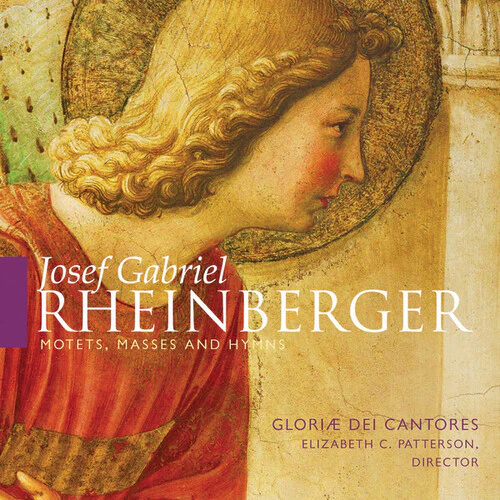
Rheinberger: Motets, Masses & Hymns / Patterson, Gloriae dei Cantores
RHEINBERGER 3 Motets, op. 133. Mass in F for Male Choir and Organ, op. 190. Hymn, op. 140. Mass in g for Female Choir and Organ, op. 187. Mass in E?, “Cantus Missae,” op. 109 • Elizabeth C. Patterson, cond; David Chalmers (org); Gloriæ Dei Cantores • GLORIÆ DEI CANTORES 121 (74:05 Text and Translation)
This is a retread. Recorded in 1994, it was previously reviewed by John Bauman in 2000 in Fanfare 23:6. What I can’t be sure of is whether or not the original has been remastered, for in Bauman’s headnote it carried a label number of 108 and in its current reincarnation Gloriæ Dei Cantores has renumbered it 121. The discrepancy is significant inasmuch as Bauman complained in his review of engineering that damaged the music, noting a distant perspective that lacked full bass. Since I don’t have the earlier release to compare with the one at hand and, indeed, never heard it, I can only comment on the disc before me. Having listened to it, I’ll venture that nothing has been done to correct or compensate for Bauman’s impression of the recorded sound, for the singers do in fact come at the ear as if from some distant aural space. The effect is compounded, in my opinion, by a kind of churchy acoustic, which is strange, given that the recording was not made in a church but in the splendid acoustic venue of Mechanics Hall in Worcester, Massachusetts.
Besides panning the recording, Bauman expressed little love or patience for Rheinberger’s music, dismissing these works in a few pithy, if amusing, words worth quoting: “Perhaps Rheinberger’s writing reflects the late-19th-century calm of the Catholic Mass that favors the lack of big, almost explosive outbursts. It makes one want to throw the whole of his sacred writing out. Even with the organ, the Masses just seem to go on forever. They last just over 20 minutes, which is really a very short time compared to the Masses of Haydn, Mozart, and Schubert. All of these three Masses are thus afflicted, as well as the short motets and hymns. In short this is well-crafted music that ultimately brings about a big ho-hum. The performances seem to be good but one—at least this listener—just doesn’t care.”
I tend to be more charitable toward Rheinberger, allowing for the fact that even in his own lifetime (1839–1901) he was probably more sought-after as a prominent professor of organ and composition than he was recognized as a great composer. His roll call of students at the conservatory in Munich was long and impressive; it included Humperdinck, Wolf-Ferrari, Horatio Parker, George Chadwick, Henry Holden Huss, and Wilhelm Furtwängler, among others. And though his methods were stern and pedantic, apparently he was beloved by all who came under his wing.
From an entry in the February 1902 issue of Etude Magazine , we get some insight into Rheinberger’s MO from a J. W. Nicholl who had studied organ under him. “At a technical blunder the professor would frown, and if later in the lesson the same mistake occurred he would expostulate. Once, from nervousness or perhaps lack of sufficient preparation, a student made the same mistake three times during the playing of a Rheinberger sonata, the result was that the lesson came to a violent stop, and the unfortunate student left the Conservatorium in a very unenviable state of mind.” Lest you think this shows an impatient and ill-tempered tutor, I think it shows quite the opposite. I’ve known teachers who wouldn’t suffer a student the same mistake twice, let alone three times.
As the opus numbers in the headnote indicate, Rheinberger was nothing if not prolific, churning out a large volume of organ music, as well as numerous Masses, motets, and other sacred vocal works. But he also produced many secular songs and ballads, some chamber music, at least two symphonies I know of, and two or three operas. I can’t say I’ve ever heard an opera by Rheinberger, but I do have a recording of his Symphony No. 2 in F Major with Alun Francis leading the Northwest German Philharmonic on the Carus label, and a two-disc set on MDG of his complete piano trios with the Parnassus Trio, and I find them quite to my liking.
Rheinberger’s style tends to confound expectations for a German-Romantic composer who was almost exactly contemporaneous with Brahms and who couldn’t have escaped the lingering malodor that hung over Munich following the real-life opera starring Wagner, Cosima, von Bülow, Liszt, and King Ludwig.
The works on this disc have very little in common with Brahms’s sacred motets. Rheinberger’s music is not nearly as contrapuntal—the voices move mainly together in harmonic, chorale-style blocks—and it’s regular in its progressions, consonant, and sweet. One writer has suggested that rather than regarding Rheinberger as a lesser Brahms, we should think of him as a “South German Fauré.” That analogy may apply to Rheinberger’s chamber music—there’s definitely a bit of a French accent in his piano trios—but I don’t think it holds up in these Masses. When I think of Fauré and sacred vocal music, I think of his Requiem, and these pieces are nothing like that. They’re of a much more staid and devotional character. If I had to compare them to anything, I’d say they’re a bit reminiscent of some of the sacred vocal works by Bruckner.
Bottom line: I’m not bothered, as Bauman was, by the distant perspective and churchy acoustic. In fact, for me, it tends to enhance the ethereal quality of the music. I can see how one might become bored by more than an hour’s worth of this stuff, which pretty much all sounds alike, but I find it calming, comforting, consoling, and peaceful, much in the way I find a good deal of 16th-century Renaissance vocal polyphony to be. So, on that note, I’m going to recommend this disc with the stipulation that I’ve described the music to you and told you what you can expect.
FANFARE: Jerry Dubins
RHEINBERGER 3 Motets, op. 133. Mass in F for Male Choir and Organ, op. 190. Hymn, op. 140. Mass in g for Female Choir and Organ, op. 187. Mass in E?, “Cantus Missae,” op. 109 • Elizabeth C. Patterson, cond; David Chalmers (org); Gloriæ Dei Cantores • GLORIÆ DEI CANTORES 121 (74:05 Text and Translation)
This is a retread. Recorded in 1994, it was previously reviewed by John Bauman in 2000 in Fanfare 23:6. What I can’t be sure of is whether or not the original has been remastered, for in Bauman’s headnote it carried a label number of 108 and in its current reincarnation Gloriæ Dei Cantores has renumbered it 121. The discrepancy is significant inasmuch as Bauman complained in his review of engineering that damaged the music, noting a distant perspective that lacked full bass. Since I don’t have the earlier release to compare with the one at hand and, indeed, never heard it, I can only comment on the disc before me. Having listened to it, I’ll venture that nothing has been done to correct or compensate for Bauman’s impression of the recorded sound, for the singers do in fact come at the ear as if from some distant aural space. The effect is compounded, in my opinion, by a kind of churchy acoustic, which is strange, given that the recording was not made in a church but in the splendid acoustic venue of Mechanics Hall in Worcester, Massachusetts.
Besides panning the recording, Bauman expressed little love or patience for Rheinberger’s music, dismissing these works in a few pithy, if amusing, words worth quoting: “Perhaps Rheinberger’s writing reflects the late-19th-century calm of the Catholic Mass that favors the lack of big, almost explosive outbursts. It makes one want to throw the whole of his sacred writing out. Even with the organ, the Masses just seem to go on forever. They last just over 20 minutes, which is really a very short time compared to the Masses of Haydn, Mozart, and Schubert. All of these three Masses are thus afflicted, as well as the short motets and hymns. In short this is well-crafted music that ultimately brings about a big ho-hum. The performances seem to be good but one—at least this listener—just doesn’t care.”
I tend to be more charitable toward Rheinberger, allowing for the fact that even in his own lifetime (1839–1901) he was probably more sought-after as a prominent professor of organ and composition than he was recognized as a great composer. His roll call of students at the conservatory in Munich was long and impressive; it included Humperdinck, Wolf-Ferrari, Horatio Parker, George Chadwick, Henry Holden Huss, and Wilhelm Furtwängler, among others. And though his methods were stern and pedantic, apparently he was beloved by all who came under his wing.
From an entry in the February 1902 issue of Etude Magazine , we get some insight into Rheinberger’s MO from a J. W. Nicholl who had studied organ under him. “At a technical blunder the professor would frown, and if later in the lesson the same mistake occurred he would expostulate. Once, from nervousness or perhaps lack of sufficient preparation, a student made the same mistake three times during the playing of a Rheinberger sonata, the result was that the lesson came to a violent stop, and the unfortunate student left the Conservatorium in a very unenviable state of mind.” Lest you think this shows an impatient and ill-tempered tutor, I think it shows quite the opposite. I’ve known teachers who wouldn’t suffer a student the same mistake twice, let alone three times.
As the opus numbers in the headnote indicate, Rheinberger was nothing if not prolific, churning out a large volume of organ music, as well as numerous Masses, motets, and other sacred vocal works. But he also produced many secular songs and ballads, some chamber music, at least two symphonies I know of, and two or three operas. I can’t say I’ve ever heard an opera by Rheinberger, but I do have a recording of his Symphony No. 2 in F Major with Alun Francis leading the Northwest German Philharmonic on the Carus label, and a two-disc set on MDG of his complete piano trios with the Parnassus Trio, and I find them quite to my liking.
Rheinberger’s style tends to confound expectations for a German-Romantic composer who was almost exactly contemporaneous with Brahms and who couldn’t have escaped the lingering malodor that hung over Munich following the real-life opera starring Wagner, Cosima, von Bülow, Liszt, and King Ludwig.
The works on this disc have very little in common with Brahms’s sacred motets. Rheinberger’s music is not nearly as contrapuntal—the voices move mainly together in harmonic, chorale-style blocks—and it’s regular in its progressions, consonant, and sweet. One writer has suggested that rather than regarding Rheinberger as a lesser Brahms, we should think of him as a “South German Fauré.” That analogy may apply to Rheinberger’s chamber music—there’s definitely a bit of a French accent in his piano trios—but I don’t think it holds up in these Masses. When I think of Fauré and sacred vocal music, I think of his Requiem, and these pieces are nothing like that. They’re of a much more staid and devotional character. If I had to compare them to anything, I’d say they’re a bit reminiscent of some of the sacred vocal works by Bruckner.
Bottom line: I’m not bothered, as Bauman was, by the distant perspective and churchy acoustic. In fact, for me, it tends to enhance the ethereal quality of the music. I can see how one might become bored by more than an hour’s worth of this stuff, which pretty much all sounds alike, but I find it calming, comforting, consoling, and peaceful, much in the way I find a good deal of 16th-century Renaissance vocal polyphony to be. So, on that note, I’m going to recommend this disc with the stipulation that I’ve described the music to you and told you what you can expect.
FANFARE: Jerry Dubins
$6.65
Original: $18.99
-65%Rheinberger: Motets, Masses & Hymns / Patterson, Gloriae dei Cantores—
$18.99
$6.65Description
RHEINBERGER 3 Motets, op. 133. Mass in F for Male Choir and Organ, op. 190. Hymn, op. 140. Mass in g for Female Choir and Organ, op. 187. Mass in E?, “Cantus Missae,” op. 109 • Elizabeth C. Patterson, cond; David Chalmers (org); Gloriæ Dei Cantores • GLORIÆ DEI CANTORES 121 (74:05 Text and Translation)
This is a retread. Recorded in 1994, it was previously reviewed by John Bauman in 2000 in Fanfare 23:6. What I can’t be sure of is whether or not the original has been remastered, for in Bauman’s headnote it carried a label number of 108 and in its current reincarnation Gloriæ Dei Cantores has renumbered it 121. The discrepancy is significant inasmuch as Bauman complained in his review of engineering that damaged the music, noting a distant perspective that lacked full bass. Since I don’t have the earlier release to compare with the one at hand and, indeed, never heard it, I can only comment on the disc before me. Having listened to it, I’ll venture that nothing has been done to correct or compensate for Bauman’s impression of the recorded sound, for the singers do in fact come at the ear as if from some distant aural space. The effect is compounded, in my opinion, by a kind of churchy acoustic, which is strange, given that the recording was not made in a church but in the splendid acoustic venue of Mechanics Hall in Worcester, Massachusetts.
Besides panning the recording, Bauman expressed little love or patience for Rheinberger’s music, dismissing these works in a few pithy, if amusing, words worth quoting: “Perhaps Rheinberger’s writing reflects the late-19th-century calm of the Catholic Mass that favors the lack of big, almost explosive outbursts. It makes one want to throw the whole of his sacred writing out. Even with the organ, the Masses just seem to go on forever. They last just over 20 minutes, which is really a very short time compared to the Masses of Haydn, Mozart, and Schubert. All of these three Masses are thus afflicted, as well as the short motets and hymns. In short this is well-crafted music that ultimately brings about a big ho-hum. The performances seem to be good but one—at least this listener—just doesn’t care.”
I tend to be more charitable toward Rheinberger, allowing for the fact that even in his own lifetime (1839–1901) he was probably more sought-after as a prominent professor of organ and composition than he was recognized as a great composer. His roll call of students at the conservatory in Munich was long and impressive; it included Humperdinck, Wolf-Ferrari, Horatio Parker, George Chadwick, Henry Holden Huss, and Wilhelm Furtwängler, among others. And though his methods were stern and pedantic, apparently he was beloved by all who came under his wing.
From an entry in the February 1902 issue of Etude Magazine , we get some insight into Rheinberger’s MO from a J. W. Nicholl who had studied organ under him. “At a technical blunder the professor would frown, and if later in the lesson the same mistake occurred he would expostulate. Once, from nervousness or perhaps lack of sufficient preparation, a student made the same mistake three times during the playing of a Rheinberger sonata, the result was that the lesson came to a violent stop, and the unfortunate student left the Conservatorium in a very unenviable state of mind.” Lest you think this shows an impatient and ill-tempered tutor, I think it shows quite the opposite. I’ve known teachers who wouldn’t suffer a student the same mistake twice, let alone three times.
As the opus numbers in the headnote indicate, Rheinberger was nothing if not prolific, churning out a large volume of organ music, as well as numerous Masses, motets, and other sacred vocal works. But he also produced many secular songs and ballads, some chamber music, at least two symphonies I know of, and two or three operas. I can’t say I’ve ever heard an opera by Rheinberger, but I do have a recording of his Symphony No. 2 in F Major with Alun Francis leading the Northwest German Philharmonic on the Carus label, and a two-disc set on MDG of his complete piano trios with the Parnassus Trio, and I find them quite to my liking.
Rheinberger’s style tends to confound expectations for a German-Romantic composer who was almost exactly contemporaneous with Brahms and who couldn’t have escaped the lingering malodor that hung over Munich following the real-life opera starring Wagner, Cosima, von Bülow, Liszt, and King Ludwig.
The works on this disc have very little in common with Brahms’s sacred motets. Rheinberger’s music is not nearly as contrapuntal—the voices move mainly together in harmonic, chorale-style blocks—and it’s regular in its progressions, consonant, and sweet. One writer has suggested that rather than regarding Rheinberger as a lesser Brahms, we should think of him as a “South German Fauré.” That analogy may apply to Rheinberger’s chamber music—there’s definitely a bit of a French accent in his piano trios—but I don’t think it holds up in these Masses. When I think of Fauré and sacred vocal music, I think of his Requiem, and these pieces are nothing like that. They’re of a much more staid and devotional character. If I had to compare them to anything, I’d say they’re a bit reminiscent of some of the sacred vocal works by Bruckner.
Bottom line: I’m not bothered, as Bauman was, by the distant perspective and churchy acoustic. In fact, for me, it tends to enhance the ethereal quality of the music. I can see how one might become bored by more than an hour’s worth of this stuff, which pretty much all sounds alike, but I find it calming, comforting, consoling, and peaceful, much in the way I find a good deal of 16th-century Renaissance vocal polyphony to be. So, on that note, I’m going to recommend this disc with the stipulation that I’ve described the music to you and told you what you can expect.
FANFARE: Jerry Dubins