🎉 Up to 70% Off Selected ItemsShop Sale

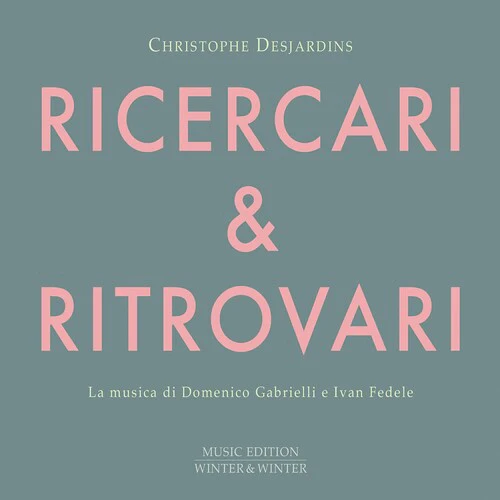
Ricercari & Ritrovari
Christophe Desjardins writes of this Italian journey: "On a journey from Palermo to Taormina I am accompanied by the sounds of Domenico Gabrielli's "Ricercari," the oldest composition for cello solo, and I experience the Sicilian landscape, fascinated by the genius of this music. Soon afterwards I begin to transcribe and to interpret them for viola and the wish arises to ask my Italian artist friend Ivan Fedele to compose reflections to these Baroque works. He explores Gabrieli's gestures and figures and imagines a further journey between "Ricercari" (from ricercare 'to seek') and "Ritrovari" (from ritrovare 'to find again') by creating the sensations of an inner journey through his creative power."
Christophe Desjardins writes of this Italian journey: "On a journey from Palermo to Taormina I am accompanied by the sounds of Domenico Gabrielli's "Ricercari," the oldest composition for cello solo, and I experience the Sicilian landscape, fascinated by the genius of this music. Soon afterwards I begin to transcribe and to interpret them for viola and the wish arises to ask my Italian artist friend Ivan Fedele to compose reflections to these Baroque works. He explores Gabrieli's gestures and figures and imagines a further journey between "Ricercari" (from ricercare 'to seek') and "Ritrovari" (from ritrovare 'to find again') by creating the sensations of an inner journey through his creative power."
$7.35
Original: $20.99
-65%Ricercari & Ritrovari—
$20.99
$7.35Description
Christophe Desjardins writes of this Italian journey: "On a journey from Palermo to Taormina I am accompanied by the sounds of Domenico Gabrielli's "Ricercari," the oldest composition for cello solo, and I experience the Sicilian landscape, fascinated by the genius of this music. Soon afterwards I begin to transcribe and to interpret them for viola and the wish arises to ask my Italian artist friend Ivan Fedele to compose reflections to these Baroque works. He explores Gabrieli's gestures and figures and imagines a further journey between "Ricercari" (from ricercare 'to seek') and "Ritrovari" (from ritrovare 'to find again') by creating the sensations of an inner journey through his creative power."