🎉 Up to 70% Off Selected ItemsShop Sale

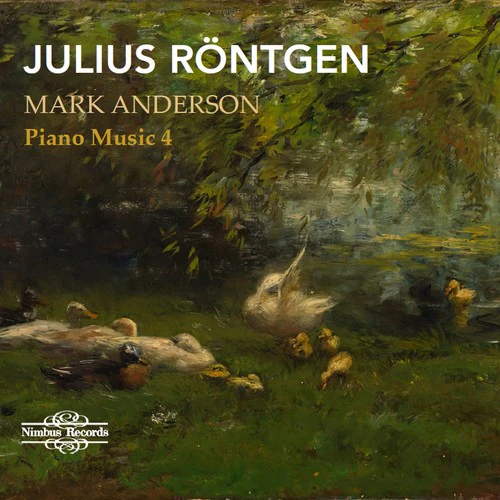
Rontgen: Piano Music, Vol. 4 / Anderson
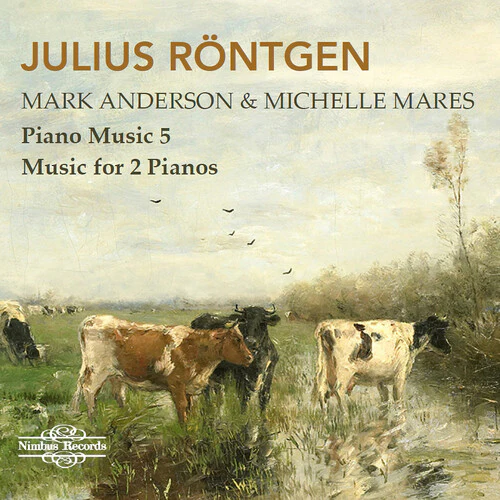
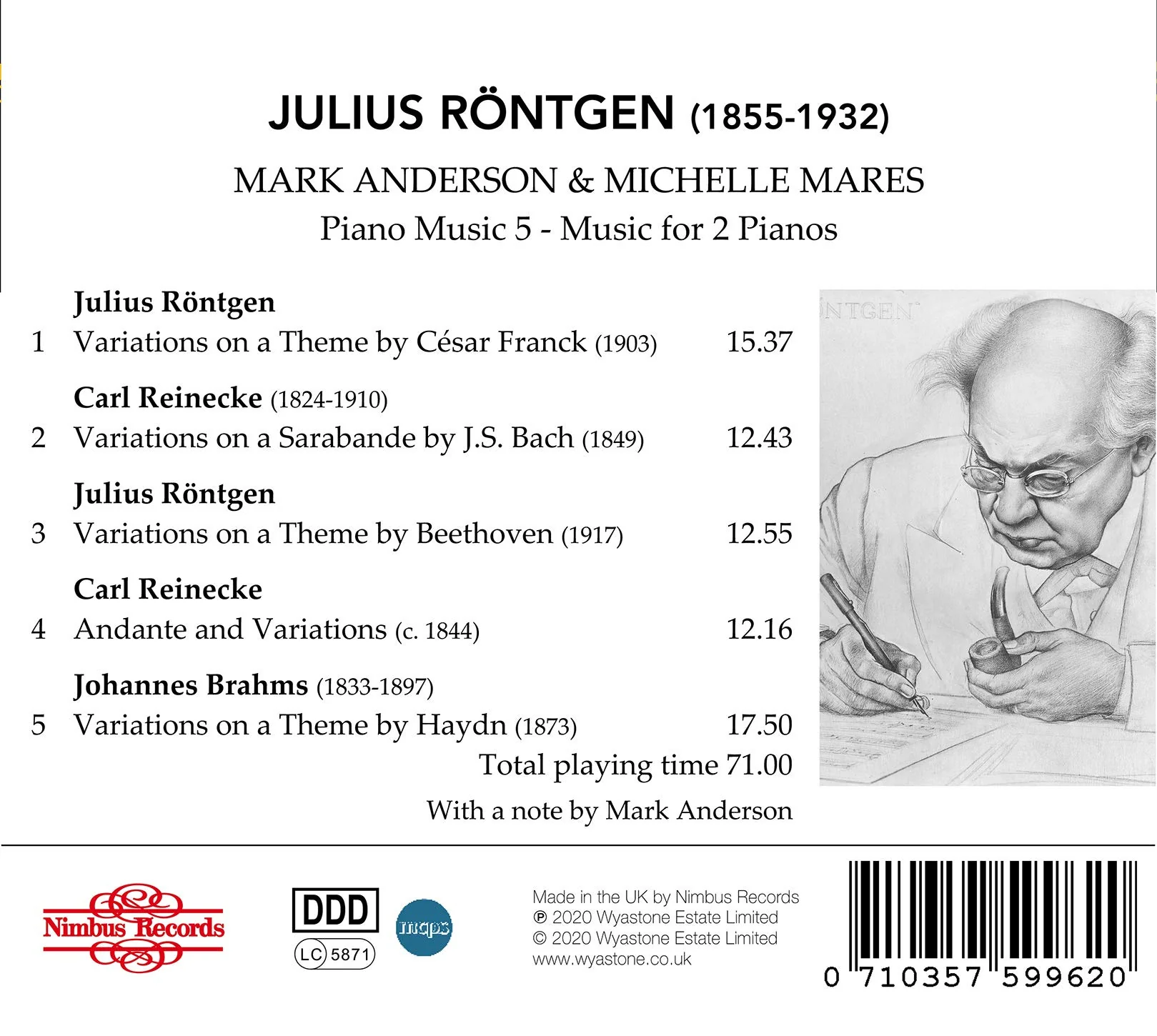
The present recording of piano music by Julius Röntgen (1855-1932), the fourth of an ongoing series, comprises works that span a significant portion of Röntgen’s compositional lifetime. Fifty-five years separates the first Ballad, Op.6 written in 1873, when the composer was just 17 years old, from the Sonata in C-sharp minor of 1928. This far- ranging chronology gives the listener an informed overview of Röntgen’s output. This is especially interesting given the fact that he lived through such musically revolutionary times. Röntgen’s writing style for the piano shows a gift for creating unique sonorities alongside ingenious harmonic invention. In particular, I am intrigued by his ability to create, on the one hand, exquisite and sublime musical moments – such as those found in the major variations of the Variations and Fugue Op.38 - and, on the other, masses of chordal harmony punctuated with rhapsodic episodes. The Ballad No. 3 best represents the latter compositional style with its highly varied textural and emotional contrasts. When Röntgen died in 1932, Donald Francis Tovey wrote, “He was an inspiration for the future but with a link to the past. His compositions cover the whole range of music in every art form; they all show consummate mastery in every aspect of technique; even in the most facile there is beauty and wit, each series of works culminate in something that has the uniqueness of a living masterpiece.”
The present recording of piano music by Julius Röntgen (1855-1932), the fourth of an ongoing series, comprises works that span a significant portion of Röntgen’s compositional lifetime. Fifty-five years separates the first Ballad, Op.6 written in 1873, when the composer was just 17 years old, from the Sonata in C-sharp minor of 1928. This far- ranging chronology gives the listener an informed overview of Röntgen’s output. This is especially interesting given the fact that he lived through such musically revolutionary times. Röntgen’s writing style for the piano shows a gift for creating unique sonorities alongside ingenious harmonic invention. In particular, I am intrigued by his ability to create, on the one hand, exquisite and sublime musical moments – such as those found in the major variations of the Variations and Fugue Op.38 - and, on the other, masses of chordal harmony punctuated with rhapsodic episodes. The Ballad No. 3 best represents the latter compositional style with its highly varied textural and emotional contrasts. When Röntgen died in 1932, Donald Francis Tovey wrote, “He was an inspiration for the future but with a link to the past. His compositions cover the whole range of music in every art form; they all show consummate mastery in every aspect of technique; even in the most facile there is beauty and wit, each series of works culminate in something that has the uniqueness of a living masterpiece.”
$7.35
Original: $20.99
-65%Rontgen: Piano Music, Vol. 4 / Anderson—
$20.99
$7.35Description
The present recording of piano music by Julius Röntgen (1855-1932), the fourth of an ongoing series, comprises works that span a significant portion of Röntgen’s compositional lifetime. Fifty-five years separates the first Ballad, Op.6 written in 1873, when the composer was just 17 years old, from the Sonata in C-sharp minor of 1928. This far- ranging chronology gives the listener an informed overview of Röntgen’s output. This is especially interesting given the fact that he lived through such musically revolutionary times. Röntgen’s writing style for the piano shows a gift for creating unique sonorities alongside ingenious harmonic invention. In particular, I am intrigued by his ability to create, on the one hand, exquisite and sublime musical moments – such as those found in the major variations of the Variations and Fugue Op.38 - and, on the other, masses of chordal harmony punctuated with rhapsodic episodes. The Ballad No. 3 best represents the latter compositional style with its highly varied textural and emotional contrasts. When Röntgen died in 1932, Donald Francis Tovey wrote, “He was an inspiration for the future but with a link to the past. His compositions cover the whole range of music in every art form; they all show consummate mastery in every aspect of technique; even in the most facile there is beauty and wit, each series of works culminate in something that has the uniqueness of a living masterpiece.”