🎉 Up to 70% Off Selected ItemsShop Sale

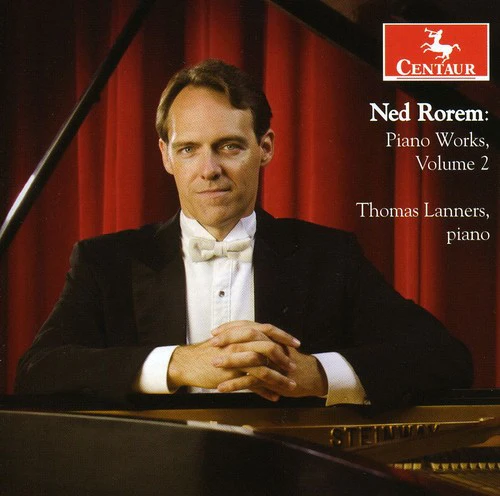
Rorem: Piano Works Vol 2 / Thomas Lanners
Also Available: Volume 1 - Rorem: Piano Sonatas performed by Thomas Lanners.
Ned Rorem has always written for the piano, and after hearing both of these discs, I agree with Thomas Lanners. “These works deserve wider acclaim than they currently enjoy . . . a significant body of captivating works that musically inquisitive pianists would be wise to explore.”. . . Lanners’ two-disc survey of Rorem’s piano music. Vol. 2 (2007) includes works composed around the same time as the three sonatas, as well as others from much later in Rorem’s career. The three Barcarolles share the traditional 6/8 meter and are primarily gentle and soothing, although Rorem’s harmonies, in keeping with the date of composition (1949), sound appropriately modern (nothing extreme, however). The second is the slowest of the three, and at first suggests that Rorem’s boat is becalmed; the forward motion picks up as it continues. The third is the liveliest, with bursts of speedy figuration propelling the vessel across the waters. A Quiet Afternoon (1948) is a suite of nine short pieces for children. The music is serene, playful, and wistful; it’s a pleasant addition to the genre. Fast- forward almost 30 years to 1976 and the Eight Etudes: conceived as a group, they naturally pose various challenges, including the rarely encountered one of an etude for the right hand alone (parallel motion plus simultaneously conflicting rhythms). Others include (in Rorem’s words) “a study in softness . . . [one] for speed without pedal . . . [and one for] slow tune with fast filigree.” There are also studies for fourths, sevenths, loud contrary motion, and a novel concluding etude that’s “a disguised medley of all the preceding ones.” This is an exciting and imaginative set in a modern idiom—“fiendishly difficult but exceptionally well-crafted for the instrument”—that deserves a place alongside such famous 20th century etudes as those by Bartók, Messiaen, and Ligeti. The five brief pieces that Lanner performs after the Eight Etudes were written for friends of the composer (for example, Sixty Notes for Judy celebrates singer Judy Collin’s 60th birthday). These are all more or less cut from the same cloth: slow, evocative, harmonically interesting, occasionally with more dynamic variety than one would expect in such a short span (the longest only takes 1:42). Recalling (2003) is in three parts. The first, “Remembering Lake Michigan,” begins mysteriously, and then startles the listener with a sudden, fortissimo crash. This pattern, repeated several times, gives way to a driving series of bass and treble flurries, also periodically interrupted by crashes. It’s an unforgettable opening to the program. In “The Wind Remains (Remembering Paul Bowles),” Rorem (in his own words) “quotes the descending minor third—‘the dying fall’—as utilized by Paul Bowles” in his opera of the same name. The piece is very similar in mood (as well as thematically and harmonically) to “Remembering Lake Michigan’s” slower moments. To Rorem, “‘Remembering Tomorrow’ defies explanation, as indeed does any music.” Paradoxical title aside, it’s interesting that the piece begins with a 12-tone row. (I’m taking Lanners’ word for that, as I didn’t count. I just heard it as an unexpected use of pointillism, perhaps symbolic of the future?) Combined with scurrying figures in both hands and references to the earlier movements, the result is an exciting piece that “races towards its crashing conclusion.” Song and Dance (1986, commissioned as a competition piece) combines jazzy syncopation and sweet-toned lyricism: it ends amusingly with a bland major cadence that drops in out of the blue. The piece is “appropriately flashy and crowd-pleasing”; it would make a great encore. Lanners plays it to the hilt, as he does all the virtuosic pieces, and he’s also a sensitive musician who communicates the essence of Rorem’s varied moods. Additionally, his album notes are so “spot on” that I felt obliged to quote him throughout my review. Recommended.
- Robert Schulslaper, Fanfare, Issue 33:3 [Jan/Feb 2010]
Ned Rorem has always written for the piano, and after hearing both of these discs, I agree with Thomas Lanners. “These works deserve wider acclaim than they currently enjoy . . . a significant body of captivating works that musically inquisitive pianists would be wise to explore.”. . . Lanners’ two-disc survey of Rorem’s piano music. Vol. 2 (2007) includes works composed around the same time as the three sonatas, as well as others from much later in Rorem’s career. The three Barcarolles share the traditional 6/8 meter and are primarily gentle and soothing, although Rorem’s harmonies, in keeping with the date of composition (1949), sound appropriately modern (nothing extreme, however). The second is the slowest of the three, and at first suggests that Rorem’s boat is becalmed; the forward motion picks up as it continues. The third is the liveliest, with bursts of speedy figuration propelling the vessel across the waters. A Quiet Afternoon (1948) is a suite of nine short pieces for children. The music is serene, playful, and wistful; it’s a pleasant addition to the genre. Fast- forward almost 30 years to 1976 and the Eight Etudes: conceived as a group, they naturally pose various challenges, including the rarely encountered one of an etude for the right hand alone (parallel motion plus simultaneously conflicting rhythms). Others include (in Rorem’s words) “a study in softness . . . [one] for speed without pedal . . . [and one for] slow tune with fast filigree.” There are also studies for fourths, sevenths, loud contrary motion, and a novel concluding etude that’s “a disguised medley of all the preceding ones.” This is an exciting and imaginative set in a modern idiom—“fiendishly difficult but exceptionally well-crafted for the instrument”—that deserves a place alongside such famous 20th century etudes as those by Bartók, Messiaen, and Ligeti. The five brief pieces that Lanner performs after the Eight Etudes were written for friends of the composer (for example, Sixty Notes for Judy celebrates singer Judy Collin’s 60th birthday). These are all more or less cut from the same cloth: slow, evocative, harmonically interesting, occasionally with more dynamic variety than one would expect in such a short span (the longest only takes 1:42). Recalling (2003) is in three parts. The first, “Remembering Lake Michigan,” begins mysteriously, and then startles the listener with a sudden, fortissimo crash. This pattern, repeated several times, gives way to a driving series of bass and treble flurries, also periodically interrupted by crashes. It’s an unforgettable opening to the program. In “The Wind Remains (Remembering Paul Bowles),” Rorem (in his own words) “quotes the descending minor third—‘the dying fall’—as utilized by Paul Bowles” in his opera of the same name. The piece is very similar in mood (as well as thematically and harmonically) to “Remembering Lake Michigan’s” slower moments. To Rorem, “‘Remembering Tomorrow’ defies explanation, as indeed does any music.” Paradoxical title aside, it’s interesting that the piece begins with a 12-tone row. (I’m taking Lanners’ word for that, as I didn’t count. I just heard it as an unexpected use of pointillism, perhaps symbolic of the future?) Combined with scurrying figures in both hands and references to the earlier movements, the result is an exciting piece that “races towards its crashing conclusion.” Song and Dance (1986, commissioned as a competition piece) combines jazzy syncopation and sweet-toned lyricism: it ends amusingly with a bland major cadence that drops in out of the blue. The piece is “appropriately flashy and crowd-pleasing”; it would make a great encore. Lanners plays it to the hilt, as he does all the virtuosic pieces, and he’s also a sensitive musician who communicates the essence of Rorem’s varied moods. Additionally, his album notes are so “spot on” that I felt obliged to quote him throughout my review. Recommended.
- Robert Schulslaper, Fanfare, Issue 33:3 [Jan/Feb 2010]
Also Available: Volume 1 - Rorem: Piano Sonatas performed by Thomas Lanners.
Ned Rorem has always written for the piano, and after hearing both of these discs, I agree with Thomas Lanners. “These works deserve wider acclaim than they currently enjoy . . . a significant body of captivating works that musically inquisitive pianists would be wise to explore.”. . . Lanners’ two-disc survey of Rorem’s piano music. Vol. 2 (2007) includes works composed around the same time as the three sonatas, as well as others from much later in Rorem’s career. The three Barcarolles share the traditional 6/8 meter and are primarily gentle and soothing, although Rorem’s harmonies, in keeping with the date of composition (1949), sound appropriately modern (nothing extreme, however). The second is the slowest of the three, and at first suggests that Rorem’s boat is becalmed; the forward motion picks up as it continues. The third is the liveliest, with bursts of speedy figuration propelling the vessel across the waters. A Quiet Afternoon (1948) is a suite of nine short pieces for children. The music is serene, playful, and wistful; it’s a pleasant addition to the genre. Fast- forward almost 30 years to 1976 and the Eight Etudes: conceived as a group, they naturally pose various challenges, including the rarely encountered one of an etude for the right hand alone (parallel motion plus simultaneously conflicting rhythms). Others include (in Rorem’s words) “a study in softness . . . [one] for speed without pedal . . . [and one for] slow tune with fast filigree.” There are also studies for fourths, sevenths, loud contrary motion, and a novel concluding etude that’s “a disguised medley of all the preceding ones.” This is an exciting and imaginative set in a modern idiom—“fiendishly difficult but exceptionally well-crafted for the instrument”—that deserves a place alongside such famous 20th century etudes as those by Bartók, Messiaen, and Ligeti. The five brief pieces that Lanner performs after the Eight Etudes were written for friends of the composer (for example, Sixty Notes for Judy celebrates singer Judy Collin’s 60th birthday). These are all more or less cut from the same cloth: slow, evocative, harmonically interesting, occasionally with more dynamic variety than one would expect in such a short span (the longest only takes 1:42). Recalling (2003) is in three parts. The first, “Remembering Lake Michigan,” begins mysteriously, and then startles the listener with a sudden, fortissimo crash. This pattern, repeated several times, gives way to a driving series of bass and treble flurries, also periodically interrupted by crashes. It’s an unforgettable opening to the program. In “The Wind Remains (Remembering Paul Bowles),” Rorem (in his own words) “quotes the descending minor third—‘the dying fall’—as utilized by Paul Bowles” in his opera of the same name. The piece is very similar in mood (as well as thematically and harmonically) to “Remembering Lake Michigan’s” slower moments. To Rorem, “‘Remembering Tomorrow’ defies explanation, as indeed does any music.” Paradoxical title aside, it’s interesting that the piece begins with a 12-tone row. (I’m taking Lanners’ word for that, as I didn’t count. I just heard it as an unexpected use of pointillism, perhaps symbolic of the future?) Combined with scurrying figures in both hands and references to the earlier movements, the result is an exciting piece that “races towards its crashing conclusion.” Song and Dance (1986, commissioned as a competition piece) combines jazzy syncopation and sweet-toned lyricism: it ends amusingly with a bland major cadence that drops in out of the blue. The piece is “appropriately flashy and crowd-pleasing”; it would make a great encore. Lanners plays it to the hilt, as he does all the virtuosic pieces, and he’s also a sensitive musician who communicates the essence of Rorem’s varied moods. Additionally, his album notes are so “spot on” that I felt obliged to quote him throughout my review. Recommended.
- Robert Schulslaper, Fanfare, Issue 33:3 [Jan/Feb 2010]
Ned Rorem has always written for the piano, and after hearing both of these discs, I agree with Thomas Lanners. “These works deserve wider acclaim than they currently enjoy . . . a significant body of captivating works that musically inquisitive pianists would be wise to explore.”. . . Lanners’ two-disc survey of Rorem’s piano music. Vol. 2 (2007) includes works composed around the same time as the three sonatas, as well as others from much later in Rorem’s career. The three Barcarolles share the traditional 6/8 meter and are primarily gentle and soothing, although Rorem’s harmonies, in keeping with the date of composition (1949), sound appropriately modern (nothing extreme, however). The second is the slowest of the three, and at first suggests that Rorem’s boat is becalmed; the forward motion picks up as it continues. The third is the liveliest, with bursts of speedy figuration propelling the vessel across the waters. A Quiet Afternoon (1948) is a suite of nine short pieces for children. The music is serene, playful, and wistful; it’s a pleasant addition to the genre. Fast- forward almost 30 years to 1976 and the Eight Etudes: conceived as a group, they naturally pose various challenges, including the rarely encountered one of an etude for the right hand alone (parallel motion plus simultaneously conflicting rhythms). Others include (in Rorem’s words) “a study in softness . . . [one] for speed without pedal . . . [and one for] slow tune with fast filigree.” There are also studies for fourths, sevenths, loud contrary motion, and a novel concluding etude that’s “a disguised medley of all the preceding ones.” This is an exciting and imaginative set in a modern idiom—“fiendishly difficult but exceptionally well-crafted for the instrument”—that deserves a place alongside such famous 20th century etudes as those by Bartók, Messiaen, and Ligeti. The five brief pieces that Lanner performs after the Eight Etudes were written for friends of the composer (for example, Sixty Notes for Judy celebrates singer Judy Collin’s 60th birthday). These are all more or less cut from the same cloth: slow, evocative, harmonically interesting, occasionally with more dynamic variety than one would expect in such a short span (the longest only takes 1:42). Recalling (2003) is in three parts. The first, “Remembering Lake Michigan,” begins mysteriously, and then startles the listener with a sudden, fortissimo crash. This pattern, repeated several times, gives way to a driving series of bass and treble flurries, also periodically interrupted by crashes. It’s an unforgettable opening to the program. In “The Wind Remains (Remembering Paul Bowles),” Rorem (in his own words) “quotes the descending minor third—‘the dying fall’—as utilized by Paul Bowles” in his opera of the same name. The piece is very similar in mood (as well as thematically and harmonically) to “Remembering Lake Michigan’s” slower moments. To Rorem, “‘Remembering Tomorrow’ defies explanation, as indeed does any music.” Paradoxical title aside, it’s interesting that the piece begins with a 12-tone row. (I’m taking Lanners’ word for that, as I didn’t count. I just heard it as an unexpected use of pointillism, perhaps symbolic of the future?) Combined with scurrying figures in both hands and references to the earlier movements, the result is an exciting piece that “races towards its crashing conclusion.” Song and Dance (1986, commissioned as a competition piece) combines jazzy syncopation and sweet-toned lyricism: it ends amusingly with a bland major cadence that drops in out of the blue. The piece is “appropriately flashy and crowd-pleasing”; it would make a great encore. Lanners plays it to the hilt, as he does all the virtuosic pieces, and he’s also a sensitive musician who communicates the essence of Rorem’s varied moods. Additionally, his album notes are so “spot on” that I felt obliged to quote him throughout my review. Recommended.
- Robert Schulslaper, Fanfare, Issue 33:3 [Jan/Feb 2010]
$6.65
Original: $18.99
-65%Rorem: Piano Works Vol 2 / Thomas Lanners—
$18.99
$6.65Description
Also Available: Volume 1 - Rorem: Piano Sonatas performed by Thomas Lanners.
Ned Rorem has always written for the piano, and after hearing both of these discs, I agree with Thomas Lanners. “These works deserve wider acclaim than they currently enjoy . . . a significant body of captivating works that musically inquisitive pianists would be wise to explore.”. . . Lanners’ two-disc survey of Rorem’s piano music. Vol. 2 (2007) includes works composed around the same time as the three sonatas, as well as others from much later in Rorem’s career. The three Barcarolles share the traditional 6/8 meter and are primarily gentle and soothing, although Rorem’s harmonies, in keeping with the date of composition (1949), sound appropriately modern (nothing extreme, however). The second is the slowest of the three, and at first suggests that Rorem’s boat is becalmed; the forward motion picks up as it continues. The third is the liveliest, with bursts of speedy figuration propelling the vessel across the waters. A Quiet Afternoon (1948) is a suite of nine short pieces for children. The music is serene, playful, and wistful; it’s a pleasant addition to the genre. Fast- forward almost 30 years to 1976 and the Eight Etudes: conceived as a group, they naturally pose various challenges, including the rarely encountered one of an etude for the right hand alone (parallel motion plus simultaneously conflicting rhythms). Others include (in Rorem’s words) “a study in softness . . . [one] for speed without pedal . . . [and one for] slow tune with fast filigree.” There are also studies for fourths, sevenths, loud contrary motion, and a novel concluding etude that’s “a disguised medley of all the preceding ones.” This is an exciting and imaginative set in a modern idiom—“fiendishly difficult but exceptionally well-crafted for the instrument”—that deserves a place alongside such famous 20th century etudes as those by Bartók, Messiaen, and Ligeti. The five brief pieces that Lanner performs after the Eight Etudes were written for friends of the composer (for example, Sixty Notes for Judy celebrates singer Judy Collin’s 60th birthday). These are all more or less cut from the same cloth: slow, evocative, harmonically interesting, occasionally with more dynamic variety than one would expect in such a short span (the longest only takes 1:42). Recalling (2003) is in three parts. The first, “Remembering Lake Michigan,” begins mysteriously, and then startles the listener with a sudden, fortissimo crash. This pattern, repeated several times, gives way to a driving series of bass and treble flurries, also periodically interrupted by crashes. It’s an unforgettable opening to the program. In “The Wind Remains (Remembering Paul Bowles),” Rorem (in his own words) “quotes the descending minor third—‘the dying fall’—as utilized by Paul Bowles” in his opera of the same name. The piece is very similar in mood (as well as thematically and harmonically) to “Remembering Lake Michigan’s” slower moments. To Rorem, “‘Remembering Tomorrow’ defies explanation, as indeed does any music.” Paradoxical title aside, it’s interesting that the piece begins with a 12-tone row. (I’m taking Lanners’ word for that, as I didn’t count. I just heard it as an unexpected use of pointillism, perhaps symbolic of the future?) Combined with scurrying figures in both hands and references to the earlier movements, the result is an exciting piece that “races towards its crashing conclusion.” Song and Dance (1986, commissioned as a competition piece) combines jazzy syncopation and sweet-toned lyricism: it ends amusingly with a bland major cadence that drops in out of the blue. The piece is “appropriately flashy and crowd-pleasing”; it would make a great encore. Lanners plays it to the hilt, as he does all the virtuosic pieces, and he’s also a sensitive musician who communicates the essence of Rorem’s varied moods. Additionally, his album notes are so “spot on” that I felt obliged to quote him throughout my review. Recommended.
- Robert Schulslaper, Fanfare, Issue 33:3 [Jan/Feb 2010]
Ned Rorem has always written for the piano, and after hearing both of these discs, I agree with Thomas Lanners. “These works deserve wider acclaim than they currently enjoy . . . a significant body of captivating works that musically inquisitive pianists would be wise to explore.”. . . Lanners’ two-disc survey of Rorem’s piano music. Vol. 2 (2007) includes works composed around the same time as the three sonatas, as well as others from much later in Rorem’s career. The three Barcarolles share the traditional 6/8 meter and are primarily gentle and soothing, although Rorem’s harmonies, in keeping with the date of composition (1949), sound appropriately modern (nothing extreme, however). The second is the slowest of the three, and at first suggests that Rorem’s boat is becalmed; the forward motion picks up as it continues. The third is the liveliest, with bursts of speedy figuration propelling the vessel across the waters. A Quiet Afternoon (1948) is a suite of nine short pieces for children. The music is serene, playful, and wistful; it’s a pleasant addition to the genre. Fast- forward almost 30 years to 1976 and the Eight Etudes: conceived as a group, they naturally pose various challenges, including the rarely encountered one of an etude for the right hand alone (parallel motion plus simultaneously conflicting rhythms). Others include (in Rorem’s words) “a study in softness . . . [one] for speed without pedal . . . [and one for] slow tune with fast filigree.” There are also studies for fourths, sevenths, loud contrary motion, and a novel concluding etude that’s “a disguised medley of all the preceding ones.” This is an exciting and imaginative set in a modern idiom—“fiendishly difficult but exceptionally well-crafted for the instrument”—that deserves a place alongside such famous 20th century etudes as those by Bartók, Messiaen, and Ligeti. The five brief pieces that Lanner performs after the Eight Etudes were written for friends of the composer (for example, Sixty Notes for Judy celebrates singer Judy Collin’s 60th birthday). These are all more or less cut from the same cloth: slow, evocative, harmonically interesting, occasionally with more dynamic variety than one would expect in such a short span (the longest only takes 1:42). Recalling (2003) is in three parts. The first, “Remembering Lake Michigan,” begins mysteriously, and then startles the listener with a sudden, fortissimo crash. This pattern, repeated several times, gives way to a driving series of bass and treble flurries, also periodically interrupted by crashes. It’s an unforgettable opening to the program. In “The Wind Remains (Remembering Paul Bowles),” Rorem (in his own words) “quotes the descending minor third—‘the dying fall’—as utilized by Paul Bowles” in his opera of the same name. The piece is very similar in mood (as well as thematically and harmonically) to “Remembering Lake Michigan’s” slower moments. To Rorem, “‘Remembering Tomorrow’ defies explanation, as indeed does any music.” Paradoxical title aside, it’s interesting that the piece begins with a 12-tone row. (I’m taking Lanners’ word for that, as I didn’t count. I just heard it as an unexpected use of pointillism, perhaps symbolic of the future?) Combined with scurrying figures in both hands and references to the earlier movements, the result is an exciting piece that “races towards its crashing conclusion.” Song and Dance (1986, commissioned as a competition piece) combines jazzy syncopation and sweet-toned lyricism: it ends amusingly with a bland major cadence that drops in out of the blue. The piece is “appropriately flashy and crowd-pleasing”; it would make a great encore. Lanners plays it to the hilt, as he does all the virtuosic pieces, and he’s also a sensitive musician who communicates the essence of Rorem’s varied moods. Additionally, his album notes are so “spot on” that I felt obliged to quote him throughout my review. Recommended.
- Robert Schulslaper, Fanfare, Issue 33:3 [Jan/Feb 2010]