🎉 Up to 70% Off Selected ItemsShop Sale

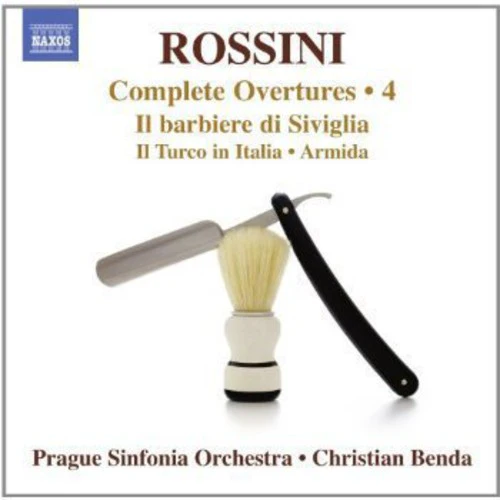
Rossini: Complete Overtures Vol 4 / Benda
This volume completes Naxos’ very enjoyable four-disc set of the complete Rossini overtures. Think about it: that’s a lot of orchestral music from a composer known almost exclusively for his vocal works–three or four Bruckner symphonies’ worth, and what would you rather listen to? This last installment includes two really popular overtures: The Barber of Seville and Il Turco in Italia, but much of the musical interest lies in the less familiar pieces.
Ricciardo e Zoraide, for example, has an unconventional form, ending quietly with a lengthy aria for solo flute, preceded by a romantic horn solo. Torvaldo e Dorliska reveals that Rossini was always ready with a new and interesting take on his signature “crescendo.” This one ends, not with the conventional climactic tutti, but with a series of more lyrical phrases for the violins. Armida’s opening march leads to another insanely difficult horn solo (the MET’s player blew it horribly at the performance of the opera that I saw). Rossini must have worked with some astoundingly fine individual players.
The performances, as with the other volumes in this series, are crisp, fleet, and shapely, with excellent solo winds nicely balanced against well-coordinated strings. Conductor Christian Benda also takes care to handle the percussion with good taste and common sense. For example, he reserves the cymbals for the very end of The Barber of Seville, an effective decision.
If you’re looking for the complete Rossini overtures, the only other option you have is Marriner’s set on Philips. These performances, on the whole, have just that much more more character and sparkle. They deserve your consideration.
-- David Hurwitz, ClassicsToday.com
Ricciardo e Zoraide, for example, has an unconventional form, ending quietly with a lengthy aria for solo flute, preceded by a romantic horn solo. Torvaldo e Dorliska reveals that Rossini was always ready with a new and interesting take on his signature “crescendo.” This one ends, not with the conventional climactic tutti, but with a series of more lyrical phrases for the violins. Armida’s opening march leads to another insanely difficult horn solo (the MET’s player blew it horribly at the performance of the opera that I saw). Rossini must have worked with some astoundingly fine individual players.
The performances, as with the other volumes in this series, are crisp, fleet, and shapely, with excellent solo winds nicely balanced against well-coordinated strings. Conductor Christian Benda also takes care to handle the percussion with good taste and common sense. For example, he reserves the cymbals for the very end of The Barber of Seville, an effective decision.
If you’re looking for the complete Rossini overtures, the only other option you have is Marriner’s set on Philips. These performances, on the whole, have just that much more more character and sparkle. They deserve your consideration.
-- David Hurwitz, ClassicsToday.com
This volume completes Naxos’ very enjoyable four-disc set of the complete Rossini overtures. Think about it: that’s a lot of orchestral music from a composer known almost exclusively for his vocal works–three or four Bruckner symphonies’ worth, and what would you rather listen to? This last installment includes two really popular overtures: The Barber of Seville and Il Turco in Italia, but much of the musical interest lies in the less familiar pieces.
Ricciardo e Zoraide, for example, has an unconventional form, ending quietly with a lengthy aria for solo flute, preceded by a romantic horn solo. Torvaldo e Dorliska reveals that Rossini was always ready with a new and interesting take on his signature “crescendo.” This one ends, not with the conventional climactic tutti, but with a series of more lyrical phrases for the violins. Armida’s opening march leads to another insanely difficult horn solo (the MET’s player blew it horribly at the performance of the opera that I saw). Rossini must have worked with some astoundingly fine individual players.
The performances, as with the other volumes in this series, are crisp, fleet, and shapely, with excellent solo winds nicely balanced against well-coordinated strings. Conductor Christian Benda also takes care to handle the percussion with good taste and common sense. For example, he reserves the cymbals for the very end of The Barber of Seville, an effective decision.
If you’re looking for the complete Rossini overtures, the only other option you have is Marriner’s set on Philips. These performances, on the whole, have just that much more more character and sparkle. They deserve your consideration.
-- David Hurwitz, ClassicsToday.com
Ricciardo e Zoraide, for example, has an unconventional form, ending quietly with a lengthy aria for solo flute, preceded by a romantic horn solo. Torvaldo e Dorliska reveals that Rossini was always ready with a new and interesting take on his signature “crescendo.” This one ends, not with the conventional climactic tutti, but with a series of more lyrical phrases for the violins. Armida’s opening march leads to another insanely difficult horn solo (the MET’s player blew it horribly at the performance of the opera that I saw). Rossini must have worked with some astoundingly fine individual players.
The performances, as with the other volumes in this series, are crisp, fleet, and shapely, with excellent solo winds nicely balanced against well-coordinated strings. Conductor Christian Benda also takes care to handle the percussion with good taste and common sense. For example, he reserves the cymbals for the very end of The Barber of Seville, an effective decision.
If you’re looking for the complete Rossini overtures, the only other option you have is Marriner’s set on Philips. These performances, on the whole, have just that much more more character and sparkle. They deserve your consideration.
-- David Hurwitz, ClassicsToday.com
$4.90
Original: $13.99
-65%Rossini: Complete Overtures Vol 4 / Benda—
$13.99
$4.90Description
This volume completes Naxos’ very enjoyable four-disc set of the complete Rossini overtures. Think about it: that’s a lot of orchestral music from a composer known almost exclusively for his vocal works–three or four Bruckner symphonies’ worth, and what would you rather listen to? This last installment includes two really popular overtures: The Barber of Seville and Il Turco in Italia, but much of the musical interest lies in the less familiar pieces.
Ricciardo e Zoraide, for example, has an unconventional form, ending quietly with a lengthy aria for solo flute, preceded by a romantic horn solo. Torvaldo e Dorliska reveals that Rossini was always ready with a new and interesting take on his signature “crescendo.” This one ends, not with the conventional climactic tutti, but with a series of more lyrical phrases for the violins. Armida’s opening march leads to another insanely difficult horn solo (the MET’s player blew it horribly at the performance of the opera that I saw). Rossini must have worked with some astoundingly fine individual players.
The performances, as with the other volumes in this series, are crisp, fleet, and shapely, with excellent solo winds nicely balanced against well-coordinated strings. Conductor Christian Benda also takes care to handle the percussion with good taste and common sense. For example, he reserves the cymbals for the very end of The Barber of Seville, an effective decision.
If you’re looking for the complete Rossini overtures, the only other option you have is Marriner’s set on Philips. These performances, on the whole, have just that much more more character and sparkle. They deserve your consideration.
-- David Hurwitz, ClassicsToday.com
Ricciardo e Zoraide, for example, has an unconventional form, ending quietly with a lengthy aria for solo flute, preceded by a romantic horn solo. Torvaldo e Dorliska reveals that Rossini was always ready with a new and interesting take on his signature “crescendo.” This one ends, not with the conventional climactic tutti, but with a series of more lyrical phrases for the violins. Armida’s opening march leads to another insanely difficult horn solo (the MET’s player blew it horribly at the performance of the opera that I saw). Rossini must have worked with some astoundingly fine individual players.
The performances, as with the other volumes in this series, are crisp, fleet, and shapely, with excellent solo winds nicely balanced against well-coordinated strings. Conductor Christian Benda also takes care to handle the percussion with good taste and common sense. For example, he reserves the cymbals for the very end of The Barber of Seville, an effective decision.
If you’re looking for the complete Rossini overtures, the only other option you have is Marriner’s set on Philips. These performances, on the whole, have just that much more more character and sparkle. They deserve your consideration.
-- David Hurwitz, ClassicsToday.com