🎉 Up to 70% Off Selected ItemsShop Sale

1 / 2
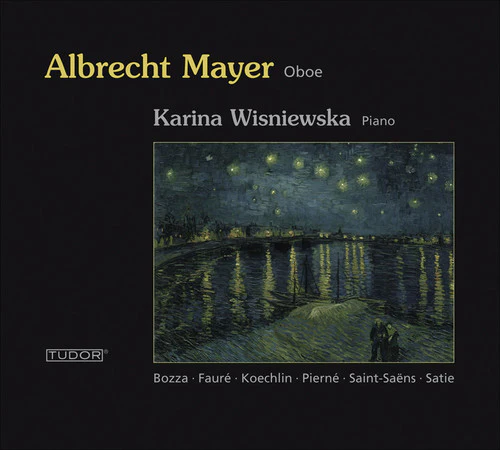
Saint-Saens: Sonata for Oboe and Piano; Faure / Mayer, Wisniewska
It is a shame that this unhackneyed collection of French music for oboe and piano has been overlooked. The Swiss company Tudor apply their usual exemplary production standards to recording and documentation. Artistic matters are in the hands of two dedicated musicians. Bamberg-born Mayer produces a full-throated quality, but going by the initial Fauré tracks, tends to scout over emotional expression. The Sicilienne could have been touching if the emotional agenda had been painted in. The Pavane feels rushed. The Berceuse is on the other hand quite pleasing with the note production being both curvaceous and penetrating. Wisniewska’s piano sound is rounded; not harsh. The Saint-Saens Sonata seems congealed in the first movement but in the other two is perfectly gracious. There is a gamin cheeky finale with strange echoes of Beethoven’s Fifth. Is Saint-Saens lampooning Beethoven?
Then we are back to Fauré with a sequence of five song transcriptions. Après un rêve is heavy-lidded and weighed down with sleepy contentment. Le secret is suitably grave with the music carrying a faintly melancholy tincture. Au bord de l'eau explores an elusive mood though the faint clicking of the oboe’s key mechanism can be heard and does return you to earth. Clair de lune is a brisk and pleasant stroll of a piece; not ardent. Mayer’s oboe here takes on the opulence of its cousin up the road, the clarinet. There are two Pierné’s represented in this recital Gabriel’s Serenade has an Iberian accent – more Massenet than Ravel. The Pièce sounds rather Tchaikovskian with a surprisingly brusque role for the piano. Fantasie Pastorale is by Paul Pierné. It radiates elysian calm – superbly done by the two players. The Satie pieces are well enough known. Here that sentimentality deficit I mentioned earlier is again in evidence though I did note that Wisniewska’s insight provided emotional contrast – listen to the way she gives face to a simple note cell in Gymnopédie 2. Bozza’s Fantaisie Pastorale is so much more than the shallow display piece I had braced myself for. It surveys stygian Bax territory, moves into showers of fanciful curlicues and culminates in a magically poised and elfin close. Koechlin’s Au Loin is for English horn and piano. It is splendidly ermine-dark and languid. The melodic material might remind some listeners of Bax’s In The Faery Hills.
-- Rob Barnett, MusicWeb International
Then we are back to Fauré with a sequence of five song transcriptions. Après un rêve is heavy-lidded and weighed down with sleepy contentment. Le secret is suitably grave with the music carrying a faintly melancholy tincture. Au bord de l'eau explores an elusive mood though the faint clicking of the oboe’s key mechanism can be heard and does return you to earth. Clair de lune is a brisk and pleasant stroll of a piece; not ardent. Mayer’s oboe here takes on the opulence of its cousin up the road, the clarinet. There are two Pierné’s represented in this recital Gabriel’s Serenade has an Iberian accent – more Massenet than Ravel. The Pièce sounds rather Tchaikovskian with a surprisingly brusque role for the piano. Fantasie Pastorale is by Paul Pierné. It radiates elysian calm – superbly done by the two players. The Satie pieces are well enough known. Here that sentimentality deficit I mentioned earlier is again in evidence though I did note that Wisniewska’s insight provided emotional contrast – listen to the way she gives face to a simple note cell in Gymnopédie 2. Bozza’s Fantaisie Pastorale is so much more than the shallow display piece I had braced myself for. It surveys stygian Bax territory, moves into showers of fanciful curlicues and culminates in a magically poised and elfin close. Koechlin’s Au Loin is for English horn and piano. It is splendidly ermine-dark and languid. The melodic material might remind some listeners of Bax’s In The Faery Hills.
-- Rob Barnett, MusicWeb International
It is a shame that this unhackneyed collection of French music for oboe and piano has been overlooked. The Swiss company Tudor apply their usual exemplary production standards to recording and documentation. Artistic matters are in the hands of two dedicated musicians. Bamberg-born Mayer produces a full-throated quality, but going by the initial Fauré tracks, tends to scout over emotional expression. The Sicilienne could have been touching if the emotional agenda had been painted in. The Pavane feels rushed. The Berceuse is on the other hand quite pleasing with the note production being both curvaceous and penetrating. Wisniewska’s piano sound is rounded; not harsh. The Saint-Saens Sonata seems congealed in the first movement but in the other two is perfectly gracious. There is a gamin cheeky finale with strange echoes of Beethoven’s Fifth. Is Saint-Saens lampooning Beethoven?
Then we are back to Fauré with a sequence of five song transcriptions. Après un rêve is heavy-lidded and weighed down with sleepy contentment. Le secret is suitably grave with the music carrying a faintly melancholy tincture. Au bord de l'eau explores an elusive mood though the faint clicking of the oboe’s key mechanism can be heard and does return you to earth. Clair de lune is a brisk and pleasant stroll of a piece; not ardent. Mayer’s oboe here takes on the opulence of its cousin up the road, the clarinet. There are two Pierné’s represented in this recital Gabriel’s Serenade has an Iberian accent – more Massenet than Ravel. The Pièce sounds rather Tchaikovskian with a surprisingly brusque role for the piano. Fantasie Pastorale is by Paul Pierné. It radiates elysian calm – superbly done by the two players. The Satie pieces are well enough known. Here that sentimentality deficit I mentioned earlier is again in evidence though I did note that Wisniewska’s insight provided emotional contrast – listen to the way she gives face to a simple note cell in Gymnopédie 2. Bozza’s Fantaisie Pastorale is so much more than the shallow display piece I had braced myself for. It surveys stygian Bax territory, moves into showers of fanciful curlicues and culminates in a magically poised and elfin close. Koechlin’s Au Loin is for English horn and piano. It is splendidly ermine-dark and languid. The melodic material might remind some listeners of Bax’s In The Faery Hills.
-- Rob Barnett, MusicWeb International
Then we are back to Fauré with a sequence of five song transcriptions. Après un rêve is heavy-lidded and weighed down with sleepy contentment. Le secret is suitably grave with the music carrying a faintly melancholy tincture. Au bord de l'eau explores an elusive mood though the faint clicking of the oboe’s key mechanism can be heard and does return you to earth. Clair de lune is a brisk and pleasant stroll of a piece; not ardent. Mayer’s oboe here takes on the opulence of its cousin up the road, the clarinet. There are two Pierné’s represented in this recital Gabriel’s Serenade has an Iberian accent – more Massenet than Ravel. The Pièce sounds rather Tchaikovskian with a surprisingly brusque role for the piano. Fantasie Pastorale is by Paul Pierné. It radiates elysian calm – superbly done by the two players. The Satie pieces are well enough known. Here that sentimentality deficit I mentioned earlier is again in evidence though I did note that Wisniewska’s insight provided emotional contrast – listen to the way she gives face to a simple note cell in Gymnopédie 2. Bozza’s Fantaisie Pastorale is so much more than the shallow display piece I had braced myself for. It surveys stygian Bax territory, moves into showers of fanciful curlicues and culminates in a magically poised and elfin close. Koechlin’s Au Loin is for English horn and piano. It is splendidly ermine-dark and languid. The melodic material might remind some listeners of Bax’s In The Faery Hills.
-- Rob Barnett, MusicWeb International
$7.70
Original: $21.99
-65%Saint-Saens: Sonata for Oboe and Piano; Faure / Mayer, Wisniewska—
$21.99
$7.70Description
It is a shame that this unhackneyed collection of French music for oboe and piano has been overlooked. The Swiss company Tudor apply their usual exemplary production standards to recording and documentation. Artistic matters are in the hands of two dedicated musicians. Bamberg-born Mayer produces a full-throated quality, but going by the initial Fauré tracks, tends to scout over emotional expression. The Sicilienne could have been touching if the emotional agenda had been painted in. The Pavane feels rushed. The Berceuse is on the other hand quite pleasing with the note production being both curvaceous and penetrating. Wisniewska’s piano sound is rounded; not harsh. The Saint-Saens Sonata seems congealed in the first movement but in the other two is perfectly gracious. There is a gamin cheeky finale with strange echoes of Beethoven’s Fifth. Is Saint-Saens lampooning Beethoven?
Then we are back to Fauré with a sequence of five song transcriptions. Après un rêve is heavy-lidded and weighed down with sleepy contentment. Le secret is suitably grave with the music carrying a faintly melancholy tincture. Au bord de l'eau explores an elusive mood though the faint clicking of the oboe’s key mechanism can be heard and does return you to earth. Clair de lune is a brisk and pleasant stroll of a piece; not ardent. Mayer’s oboe here takes on the opulence of its cousin up the road, the clarinet. There are two Pierné’s represented in this recital Gabriel’s Serenade has an Iberian accent – more Massenet than Ravel. The Pièce sounds rather Tchaikovskian with a surprisingly brusque role for the piano. Fantasie Pastorale is by Paul Pierné. It radiates elysian calm – superbly done by the two players. The Satie pieces are well enough known. Here that sentimentality deficit I mentioned earlier is again in evidence though I did note that Wisniewska’s insight provided emotional contrast – listen to the way she gives face to a simple note cell in Gymnopédie 2. Bozza’s Fantaisie Pastorale is so much more than the shallow display piece I had braced myself for. It surveys stygian Bax territory, moves into showers of fanciful curlicues and culminates in a magically poised and elfin close. Koechlin’s Au Loin is for English horn and piano. It is splendidly ermine-dark and languid. The melodic material might remind some listeners of Bax’s In The Faery Hills.
-- Rob Barnett, MusicWeb International
Then we are back to Fauré with a sequence of five song transcriptions. Après un rêve is heavy-lidded and weighed down with sleepy contentment. Le secret is suitably grave with the music carrying a faintly melancholy tincture. Au bord de l'eau explores an elusive mood though the faint clicking of the oboe’s key mechanism can be heard and does return you to earth. Clair de lune is a brisk and pleasant stroll of a piece; not ardent. Mayer’s oboe here takes on the opulence of its cousin up the road, the clarinet. There are two Pierné’s represented in this recital Gabriel’s Serenade has an Iberian accent – more Massenet than Ravel. The Pièce sounds rather Tchaikovskian with a surprisingly brusque role for the piano. Fantasie Pastorale is by Paul Pierné. It radiates elysian calm – superbly done by the two players. The Satie pieces are well enough known. Here that sentimentality deficit I mentioned earlier is again in evidence though I did note that Wisniewska’s insight provided emotional contrast – listen to the way she gives face to a simple note cell in Gymnopédie 2. Bozza’s Fantaisie Pastorale is so much more than the shallow display piece I had braced myself for. It surveys stygian Bax territory, moves into showers of fanciful curlicues and culminates in a magically poised and elfin close. Koechlin’s Au Loin is for English horn and piano. It is splendidly ermine-dark and languid. The melodic material might remind some listeners of Bax’s In The Faery Hills.
-- Rob Barnett, MusicWeb International