🎉 Up to 70% Off Selected ItemsShop Sale

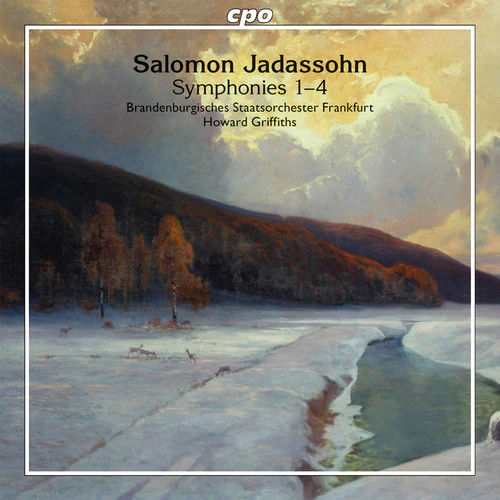
Salomon Jadassohn: Symphonies 1-4
Yes, this music is ridiculously conservative, as we might expect from a founder of the post-Mendelssohnian Leipzig school, but with a difference. Unlike so many of his colleagues Jadassohn, who composed these four symphonies between 1860 and 1888, keeps all of their elements in scale. They are brief (about thirty minutes maximum), immaculately scored, tuneful, and not afraid to be light without ever turning frivolous. Indeed, in their day these works were criticized for their lack of profundity. Today, we can see this as one of their greatest virtues.
The First Symphony looks back less to Mendelssohn than to Schumann, with better scoring. Consider the scherzo, and try to guess the composer. After that, the range expands a bit. Jadassohn had a genuine lyric gift, evident in the two Cavatinas for violin and cello, respectively, and also at such moments as the slow movement of the Third Symphony. With the Fourth Symphony, in C minor, Jadassohn does strike a more serious note, but once again at no point does it ever seem that he’s stretching his material farther than it wants to go. He knows how to keep his music moving, and he’s not ashamed of the fact that he’s not Beethoven. That’s saying a lot.
The performances by the Brandenburg State Orchestra under Howard Griffiths are quite good, with characterful contributions from the woodwinds and nice, clean ensemble generally. In the two Cavatinas, Thomas Georgi (cello) and Klaudyna Schulze-Broniewska (violin) play sensitively and don’t overload their predominantly gentle solo lines. The sonics are also naturally balanced and warm. Jadassohn’s symphonies may not be “important,” but they are wisely written, attractive pieces and for that reason well worth getting to know.
-- David Hurwitz, ClassicsToday.com
The First Symphony looks back less to Mendelssohn than to Schumann, with better scoring. Consider the scherzo, and try to guess the composer. After that, the range expands a bit. Jadassohn had a genuine lyric gift, evident in the two Cavatinas for violin and cello, respectively, and also at such moments as the slow movement of the Third Symphony. With the Fourth Symphony, in C minor, Jadassohn does strike a more serious note, but once again at no point does it ever seem that he’s stretching his material farther than it wants to go. He knows how to keep his music moving, and he’s not ashamed of the fact that he’s not Beethoven. That’s saying a lot.
The performances by the Brandenburg State Orchestra under Howard Griffiths are quite good, with characterful contributions from the woodwinds and nice, clean ensemble generally. In the two Cavatinas, Thomas Georgi (cello) and Klaudyna Schulze-Broniewska (violin) play sensitively and don’t overload their predominantly gentle solo lines. The sonics are also naturally balanced and warm. Jadassohn’s symphonies may not be “important,” but they are wisely written, attractive pieces and for that reason well worth getting to know.
-- David Hurwitz, ClassicsToday.com
Yes, this music is ridiculously conservative, as we might expect from a founder of the post-Mendelssohnian Leipzig school, but with a difference. Unlike so many of his colleagues Jadassohn, who composed these four symphonies between 1860 and 1888, keeps all of their elements in scale. They are brief (about thirty minutes maximum), immaculately scored, tuneful, and not afraid to be light without ever turning frivolous. Indeed, in their day these works were criticized for their lack of profundity. Today, we can see this as one of their greatest virtues.
The First Symphony looks back less to Mendelssohn than to Schumann, with better scoring. Consider the scherzo, and try to guess the composer. After that, the range expands a bit. Jadassohn had a genuine lyric gift, evident in the two Cavatinas for violin and cello, respectively, and also at such moments as the slow movement of the Third Symphony. With the Fourth Symphony, in C minor, Jadassohn does strike a more serious note, but once again at no point does it ever seem that he’s stretching his material farther than it wants to go. He knows how to keep his music moving, and he’s not ashamed of the fact that he’s not Beethoven. That’s saying a lot.
The performances by the Brandenburg State Orchestra under Howard Griffiths are quite good, with characterful contributions from the woodwinds and nice, clean ensemble generally. In the two Cavatinas, Thomas Georgi (cello) and Klaudyna Schulze-Broniewska (violin) play sensitively and don’t overload their predominantly gentle solo lines. The sonics are also naturally balanced and warm. Jadassohn’s symphonies may not be “important,” but they are wisely written, attractive pieces and for that reason well worth getting to know.
-- David Hurwitz, ClassicsToday.com
The First Symphony looks back less to Mendelssohn than to Schumann, with better scoring. Consider the scherzo, and try to guess the composer. After that, the range expands a bit. Jadassohn had a genuine lyric gift, evident in the two Cavatinas for violin and cello, respectively, and also at such moments as the slow movement of the Third Symphony. With the Fourth Symphony, in C minor, Jadassohn does strike a more serious note, but once again at no point does it ever seem that he’s stretching his material farther than it wants to go. He knows how to keep his music moving, and he’s not ashamed of the fact that he’s not Beethoven. That’s saying a lot.
The performances by the Brandenburg State Orchestra under Howard Griffiths are quite good, with characterful contributions from the woodwinds and nice, clean ensemble generally. In the two Cavatinas, Thomas Georgi (cello) and Klaudyna Schulze-Broniewska (violin) play sensitively and don’t overload their predominantly gentle solo lines. The sonics are also naturally balanced and warm. Jadassohn’s symphonies may not be “important,” but they are wisely written, attractive pieces and for that reason well worth getting to know.
-- David Hurwitz, ClassicsToday.com
$36.99
Salomon Jadassohn: Symphonies 1-4—
$36.99
Description
Yes, this music is ridiculously conservative, as we might expect from a founder of the post-Mendelssohnian Leipzig school, but with a difference. Unlike so many of his colleagues Jadassohn, who composed these four symphonies between 1860 and 1888, keeps all of their elements in scale. They are brief (about thirty minutes maximum), immaculately scored, tuneful, and not afraid to be light without ever turning frivolous. Indeed, in their day these works were criticized for their lack of profundity. Today, we can see this as one of their greatest virtues.
The First Symphony looks back less to Mendelssohn than to Schumann, with better scoring. Consider the scherzo, and try to guess the composer. After that, the range expands a bit. Jadassohn had a genuine lyric gift, evident in the two Cavatinas for violin and cello, respectively, and also at such moments as the slow movement of the Third Symphony. With the Fourth Symphony, in C minor, Jadassohn does strike a more serious note, but once again at no point does it ever seem that he’s stretching his material farther than it wants to go. He knows how to keep his music moving, and he’s not ashamed of the fact that he’s not Beethoven. That’s saying a lot.
The performances by the Brandenburg State Orchestra under Howard Griffiths are quite good, with characterful contributions from the woodwinds and nice, clean ensemble generally. In the two Cavatinas, Thomas Georgi (cello) and Klaudyna Schulze-Broniewska (violin) play sensitively and don’t overload their predominantly gentle solo lines. The sonics are also naturally balanced and warm. Jadassohn’s symphonies may not be “important,” but they are wisely written, attractive pieces and for that reason well worth getting to know.
-- David Hurwitz, ClassicsToday.com
The First Symphony looks back less to Mendelssohn than to Schumann, with better scoring. Consider the scherzo, and try to guess the composer. After that, the range expands a bit. Jadassohn had a genuine lyric gift, evident in the two Cavatinas for violin and cello, respectively, and also at such moments as the slow movement of the Third Symphony. With the Fourth Symphony, in C minor, Jadassohn does strike a more serious note, but once again at no point does it ever seem that he’s stretching his material farther than it wants to go. He knows how to keep his music moving, and he’s not ashamed of the fact that he’s not Beethoven. That’s saying a lot.
The performances by the Brandenburg State Orchestra under Howard Griffiths are quite good, with characterful contributions from the woodwinds and nice, clean ensemble generally. In the two Cavatinas, Thomas Georgi (cello) and Klaudyna Schulze-Broniewska (violin) play sensitively and don’t overload their predominantly gentle solo lines. The sonics are also naturally balanced and warm. Jadassohn’s symphonies may not be “important,” but they are wisely written, attractive pieces and for that reason well worth getting to know.
-- David Hurwitz, ClassicsToday.com