🎉 Up to 70% Off Selected ItemsShop Sale

1 / 2
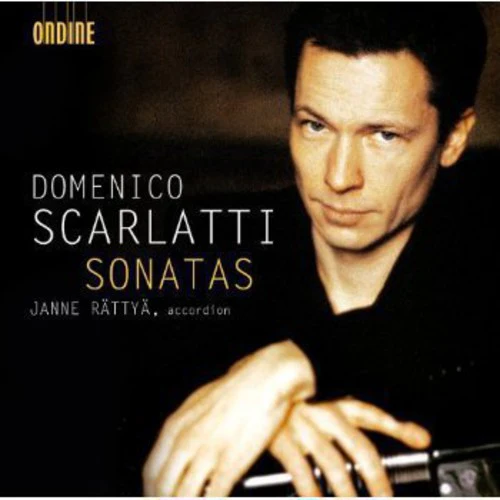
Scarlatti: Sonatas (Arranged For Accordion) / Janne Rattya
D. SCARLATTI Harpsichord Sonatas • Janne Rättyä (acc) • ONDINE 1232-2 (57:10)
After a couple of generic paragraphs about the music, mixing the usual, uninformative clichés with some eyebrow-raising opinions (“Scarlatti introduces a veritable history of Spanish music into his style and enables sonic invention to blossom from the dry soil of the harpsichord....”), the liner notes finally deal briefly with the question that might interest anyone curious about this album: why an accordion? The answer does not satisfy: “The nuanced attention to sonic shape at every moment of the melody, figure or gesture ... the stunning range of color....”
The accordion is a keyboard-based wind instrument. Its range of color is based on stops. If you’re looking for nuance and color, the piano is far better at it, because dynamics can be applied individually to each note. Dynamics on an accordion apply to all notes across the board at any given time by varying the degree of air pumped through the bellows. It’s safer to say what the liner notes in all their vague effusiveness never point out, that Janne Rättyä is an excellent classical accordionist who has collaborated with a host of modern composers, and understandably wants to claim some Baroque territory for his instrument as well.
How does this work out in practice? Rättyä is careful to select music that plays to the strengths of his instrument. The F-Minor Sonata, K 386, features lively two-part counterpoint, and the accordionist is an agile technician. He also plays several slower works, such as the well-known Sonata in C Minor, K 11, where a guitar-like, single-note melody is played in the right hand. This allows him a degree of freedom with dynamics, and also reveals his sensitivity in phrasing. He shows himself of much of the same mind as harpsichordist Richard Lester, with his flexible, folk-inflected tempos, rather than more Italianate performances in Scarlatti’s keyboard music that emphasize consistent rhythms. Some of the moderate tempo pieces benefit from a similar treatment. The E-Major Sonata, K 135, sounds very playful here, without losing its forward pulse, and the pastoral-like G-Major Sonata, K 13, is picked out with grace.
I find matters less successful when Rättyä tries to push beyond these boundaries. The popular F Minor Sonata, K 519, and D-Minor Sonata, K 52, are muddy in their bass voicings, because the instrument’s rounder tone blends the notes of the chords rather than allowing them to stand out distinctly. But in general, the album hews to the plan laid out above: faster, two-part counterpoint pieces, and slower ones with a simple single-note melody in the right hand. This makes for a certain monotony, since there’s far more to Scarlatti than that, but a few selections at a time make for attractive listening. Up to you.
FANFARE: Barry Brenesal
The truth is that Rättyä does some amazing things from a purely mechanical point of view: some of the quicker sonatas, such as K.386 in F Minor, have seldom been played more accurately on any instrument, and the accordion’s near total absence of resonance makes it impossible for the player to hide. You just have to keep going. It’s like getting stuck on a roller coster. In slower, more emotionally affecting music the instrument frankly sounds silly. Strike that–it sounds silly everywhere, but give Rättyä credit for taking this project completely seriously and doing everything that he can with the limited resources that he’s stuck with. He even arranges the sonatas into quasi-scholarly groups by key, although he’s limited to C, F, E, G and D (major and minor). The sonics are terrific."
-- David Hurwitz, ClassicsToday.com
D. SCARLATTI Harpsichord Sonatas • Janne Rättyä (acc) • ONDINE 1232-2 (57:10)
After a couple of generic paragraphs about the music, mixing the usual, uninformative clichés with some eyebrow-raising opinions (“Scarlatti introduces a veritable history of Spanish music into his style and enables sonic invention to blossom from the dry soil of the harpsichord....”), the liner notes finally deal briefly with the question that might interest anyone curious about this album: why an accordion? The answer does not satisfy: “The nuanced attention to sonic shape at every moment of the melody, figure or gesture ... the stunning range of color....”
The accordion is a keyboard-based wind instrument. Its range of color is based on stops. If you’re looking for nuance and color, the piano is far better at it, because dynamics can be applied individually to each note. Dynamics on an accordion apply to all notes across the board at any given time by varying the degree of air pumped through the bellows. It’s safer to say what the liner notes in all their vague effusiveness never point out, that Janne Rättyä is an excellent classical accordionist who has collaborated with a host of modern composers, and understandably wants to claim some Baroque territory for his instrument as well.
How does this work out in practice? Rättyä is careful to select music that plays to the strengths of his instrument. The F-Minor Sonata, K 386, features lively two-part counterpoint, and the accordionist is an agile technician. He also plays several slower works, such as the well-known Sonata in C Minor, K 11, where a guitar-like, single-note melody is played in the right hand. This allows him a degree of freedom with dynamics, and also reveals his sensitivity in phrasing. He shows himself of much of the same mind as harpsichordist Richard Lester, with his flexible, folk-inflected tempos, rather than more Italianate performances in Scarlatti’s keyboard music that emphasize consistent rhythms. Some of the moderate tempo pieces benefit from a similar treatment. The E-Major Sonata, K 135, sounds very playful here, without losing its forward pulse, and the pastoral-like G-Major Sonata, K 13, is picked out with grace.
I find matters less successful when Rättyä tries to push beyond these boundaries. The popular F Minor Sonata, K 519, and D-Minor Sonata, K 52, are muddy in their bass voicings, because the instrument’s rounder tone blends the notes of the chords rather than allowing them to stand out distinctly. But in general, the album hews to the plan laid out above: faster, two-part counterpoint pieces, and slower ones with a simple single-note melody in the right hand. This makes for a certain monotony, since there’s far more to Scarlatti than that, but a few selections at a time make for attractive listening. Up to you.
FANFARE: Barry Brenesal
The truth is that Rättyä does some amazing things from a purely mechanical point of view: some of the quicker sonatas, such as K.386 in F Minor, have seldom been played more accurately on any instrument, and the accordion’s near total absence of resonance makes it impossible for the player to hide. You just have to keep going. It’s like getting stuck on a roller coster. In slower, more emotionally affecting music the instrument frankly sounds silly. Strike that–it sounds silly everywhere, but give Rättyä credit for taking this project completely seriously and doing everything that he can with the limited resources that he’s stuck with. He even arranges the sonatas into quasi-scholarly groups by key, although he’s limited to C, F, E, G and D (major and minor). The sonics are terrific."
-- David Hurwitz, ClassicsToday.com
$5.25
Original: $14.99
-65%Scarlatti: Sonatas (Arranged For Accordion) / Janne Rattya—
$14.99
$5.25Description
D. SCARLATTI Harpsichord Sonatas • Janne Rättyä (acc) • ONDINE 1232-2 (57:10)
After a couple of generic paragraphs about the music, mixing the usual, uninformative clichés with some eyebrow-raising opinions (“Scarlatti introduces a veritable history of Spanish music into his style and enables sonic invention to blossom from the dry soil of the harpsichord....”), the liner notes finally deal briefly with the question that might interest anyone curious about this album: why an accordion? The answer does not satisfy: “The nuanced attention to sonic shape at every moment of the melody, figure or gesture ... the stunning range of color....”
The accordion is a keyboard-based wind instrument. Its range of color is based on stops. If you’re looking for nuance and color, the piano is far better at it, because dynamics can be applied individually to each note. Dynamics on an accordion apply to all notes across the board at any given time by varying the degree of air pumped through the bellows. It’s safer to say what the liner notes in all their vague effusiveness never point out, that Janne Rättyä is an excellent classical accordionist who has collaborated with a host of modern composers, and understandably wants to claim some Baroque territory for his instrument as well.
How does this work out in practice? Rättyä is careful to select music that plays to the strengths of his instrument. The F-Minor Sonata, K 386, features lively two-part counterpoint, and the accordionist is an agile technician. He also plays several slower works, such as the well-known Sonata in C Minor, K 11, where a guitar-like, single-note melody is played in the right hand. This allows him a degree of freedom with dynamics, and also reveals his sensitivity in phrasing. He shows himself of much of the same mind as harpsichordist Richard Lester, with his flexible, folk-inflected tempos, rather than more Italianate performances in Scarlatti’s keyboard music that emphasize consistent rhythms. Some of the moderate tempo pieces benefit from a similar treatment. The E-Major Sonata, K 135, sounds very playful here, without losing its forward pulse, and the pastoral-like G-Major Sonata, K 13, is picked out with grace.
I find matters less successful when Rättyä tries to push beyond these boundaries. The popular F Minor Sonata, K 519, and D-Minor Sonata, K 52, are muddy in their bass voicings, because the instrument’s rounder tone blends the notes of the chords rather than allowing them to stand out distinctly. But in general, the album hews to the plan laid out above: faster, two-part counterpoint pieces, and slower ones with a simple single-note melody in the right hand. This makes for a certain monotony, since there’s far more to Scarlatti than that, but a few selections at a time make for attractive listening. Up to you.
FANFARE: Barry Brenesal
The truth is that Rättyä does some amazing things from a purely mechanical point of view: some of the quicker sonatas, such as K.386 in F Minor, have seldom been played more accurately on any instrument, and the accordion’s near total absence of resonance makes it impossible for the player to hide. You just have to keep going. It’s like getting stuck on a roller coster. In slower, more emotionally affecting music the instrument frankly sounds silly. Strike that–it sounds silly everywhere, but give Rättyä credit for taking this project completely seriously and doing everything that he can with the limited resources that he’s stuck with. He even arranges the sonatas into quasi-scholarly groups by key, although he’s limited to C, F, E, G and D (major and minor). The sonics are terrific."
-- David Hurwitz, ClassicsToday.com