🎉 Up to 70% Off Selected ItemsShop Sale

1 / 2
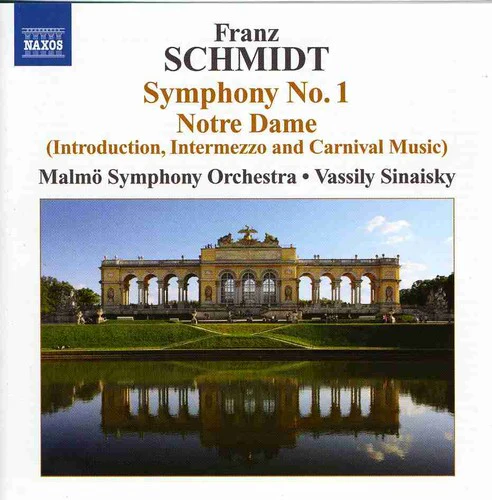
Schmidt: Symphony No 1, Music From Notre Dame / Sinaisky, Malmö SO
That Franz Schmidt's 1899 Symphony No. 1 met with greater success than Mahler's contemporaneous Symphonies Nos. 1-3 seems surprising to us today, until we consider the conservative tastes of the Viennese in that era. Schmidt, though not necessarily a straitlaced "conservative" composer, did early on dutifully (perhaps too dutifully) follow the path laid by Wagner, as his magisterial first movement amply demonstrates. It's similar in style and harmony to Wagner's Meistersinger, but with less interesting tunes. The following Langsam movement also evokes Wagner through its not immediately apparent tonality and its rather languid atmosphere (as well as the beautiful writing for strings). But again the melodic material is not all that memorable.
The scherzo is best: it features a catchy tune with beguiling turns of melody and harmony that foreshadow the Schmidt of the Fourth symphony (particularly in the colorful and distinguished woodwind writing), his finest work in the genre. The finale returns to the prosaic, though it does boast an affirmative if seemingly obligatory chorale toward the conclusion.
Vassily Sinaisky shows real belief in and affection for the piece, and he leads a convincing performance with the Malmö Symphony Orchestra. He's certainly more involving than Neeme Järvi, who with his Detroit Symphony gives the impression he's always in a hurry to get to the good parts.
There are good parts aplenty in the Notre Dame excerpts. Composed only five years after the symphony, Schmidt's opera displays the composer's keen dramatic instincts and developing orchestral mastery (the colorful Carnival Music is quite captivating). Again Sinaisky and the Malmö players deliver a first-rate performance, captured in excellent sound by Naxos. If you're interested in early Schmidt, you'll do quite well with this release.
--Victor Carr Jr, ClassicsToday.com
The scherzo is best: it features a catchy tune with beguiling turns of melody and harmony that foreshadow the Schmidt of the Fourth symphony (particularly in the colorful and distinguished woodwind writing), his finest work in the genre. The finale returns to the prosaic, though it does boast an affirmative if seemingly obligatory chorale toward the conclusion.
Vassily Sinaisky shows real belief in and affection for the piece, and he leads a convincing performance with the Malmö Symphony Orchestra. He's certainly more involving than Neeme Järvi, who with his Detroit Symphony gives the impression he's always in a hurry to get to the good parts.
There are good parts aplenty in the Notre Dame excerpts. Composed only five years after the symphony, Schmidt's opera displays the composer's keen dramatic instincts and developing orchestral mastery (the colorful Carnival Music is quite captivating). Again Sinaisky and the Malmö players deliver a first-rate performance, captured in excellent sound by Naxos. If you're interested in early Schmidt, you'll do quite well with this release.
--Victor Carr Jr, ClassicsToday.com
That Franz Schmidt's 1899 Symphony No. 1 met with greater success than Mahler's contemporaneous Symphonies Nos. 1-3 seems surprising to us today, until we consider the conservative tastes of the Viennese in that era. Schmidt, though not necessarily a straitlaced "conservative" composer, did early on dutifully (perhaps too dutifully) follow the path laid by Wagner, as his magisterial first movement amply demonstrates. It's similar in style and harmony to Wagner's Meistersinger, but with less interesting tunes. The following Langsam movement also evokes Wagner through its not immediately apparent tonality and its rather languid atmosphere (as well as the beautiful writing for strings). But again the melodic material is not all that memorable.
The scherzo is best: it features a catchy tune with beguiling turns of melody and harmony that foreshadow the Schmidt of the Fourth symphony (particularly in the colorful and distinguished woodwind writing), his finest work in the genre. The finale returns to the prosaic, though it does boast an affirmative if seemingly obligatory chorale toward the conclusion.
Vassily Sinaisky shows real belief in and affection for the piece, and he leads a convincing performance with the Malmö Symphony Orchestra. He's certainly more involving than Neeme Järvi, who with his Detroit Symphony gives the impression he's always in a hurry to get to the good parts.
There are good parts aplenty in the Notre Dame excerpts. Composed only five years after the symphony, Schmidt's opera displays the composer's keen dramatic instincts and developing orchestral mastery (the colorful Carnival Music is quite captivating). Again Sinaisky and the Malmö players deliver a first-rate performance, captured in excellent sound by Naxos. If you're interested in early Schmidt, you'll do quite well with this release.
--Victor Carr Jr, ClassicsToday.com
The scherzo is best: it features a catchy tune with beguiling turns of melody and harmony that foreshadow the Schmidt of the Fourth symphony (particularly in the colorful and distinguished woodwind writing), his finest work in the genre. The finale returns to the prosaic, though it does boast an affirmative if seemingly obligatory chorale toward the conclusion.
Vassily Sinaisky shows real belief in and affection for the piece, and he leads a convincing performance with the Malmö Symphony Orchestra. He's certainly more involving than Neeme Järvi, who with his Detroit Symphony gives the impression he's always in a hurry to get to the good parts.
There are good parts aplenty in the Notre Dame excerpts. Composed only five years after the symphony, Schmidt's opera displays the composer's keen dramatic instincts and developing orchestral mastery (the colorful Carnival Music is quite captivating). Again Sinaisky and the Malmö players deliver a first-rate performance, captured in excellent sound by Naxos. If you're interested in early Schmidt, you'll do quite well with this release.
--Victor Carr Jr, ClassicsToday.com
$13.99
Schmidt: Symphony No 1, Music From Notre Dame / Sinaisky, Malmö SO—
$13.99
Description
That Franz Schmidt's 1899 Symphony No. 1 met with greater success than Mahler's contemporaneous Symphonies Nos. 1-3 seems surprising to us today, until we consider the conservative tastes of the Viennese in that era. Schmidt, though not necessarily a straitlaced "conservative" composer, did early on dutifully (perhaps too dutifully) follow the path laid by Wagner, as his magisterial first movement amply demonstrates. It's similar in style and harmony to Wagner's Meistersinger, but with less interesting tunes. The following Langsam movement also evokes Wagner through its not immediately apparent tonality and its rather languid atmosphere (as well as the beautiful writing for strings). But again the melodic material is not all that memorable.
The scherzo is best: it features a catchy tune with beguiling turns of melody and harmony that foreshadow the Schmidt of the Fourth symphony (particularly in the colorful and distinguished woodwind writing), his finest work in the genre. The finale returns to the prosaic, though it does boast an affirmative if seemingly obligatory chorale toward the conclusion.
Vassily Sinaisky shows real belief in and affection for the piece, and he leads a convincing performance with the Malmö Symphony Orchestra. He's certainly more involving than Neeme Järvi, who with his Detroit Symphony gives the impression he's always in a hurry to get to the good parts.
There are good parts aplenty in the Notre Dame excerpts. Composed only five years after the symphony, Schmidt's opera displays the composer's keen dramatic instincts and developing orchestral mastery (the colorful Carnival Music is quite captivating). Again Sinaisky and the Malmö players deliver a first-rate performance, captured in excellent sound by Naxos. If you're interested in early Schmidt, you'll do quite well with this release.
--Victor Carr Jr, ClassicsToday.com
The scherzo is best: it features a catchy tune with beguiling turns of melody and harmony that foreshadow the Schmidt of the Fourth symphony (particularly in the colorful and distinguished woodwind writing), his finest work in the genre. The finale returns to the prosaic, though it does boast an affirmative if seemingly obligatory chorale toward the conclusion.
Vassily Sinaisky shows real belief in and affection for the piece, and he leads a convincing performance with the Malmö Symphony Orchestra. He's certainly more involving than Neeme Järvi, who with his Detroit Symphony gives the impression he's always in a hurry to get to the good parts.
There are good parts aplenty in the Notre Dame excerpts. Composed only five years after the symphony, Schmidt's opera displays the composer's keen dramatic instincts and developing orchestral mastery (the colorful Carnival Music is quite captivating). Again Sinaisky and the Malmö players deliver a first-rate performance, captured in excellent sound by Naxos. If you're interested in early Schmidt, you'll do quite well with this release.
--Victor Carr Jr, ClassicsToday.com