🎉 Up to 70% Off Selected ItemsShop Sale

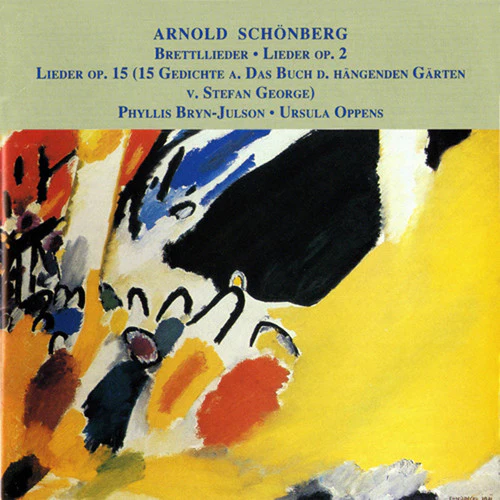
Schoenberg: Cabaret Songs, Lieder / Bryn-Julson, Oppens
Phyllis Bryn-Julson has been America's foremost Lieder and oratorio singer for decades; her sensitivity to texts and intelligent singing, along with the natural beauty of her voice, have been matched by no other singer. But Schoenberg's Cabaret Songs (Brettllieder), written for a Berlin nightclub—virtually his only means of support during 1901—need a young, teasing chanteuse to express their coy, fey, often erotic sentiments. No problem: Bryn-Julson becomes that chanteuse for these 1990 recordings. She does not go as far as Marni Nixon, who mimics a childish voice in her 1970s RCA LP of these songs, going over the line into caricature. Accompanist Ursula Oppens, a great artist in her own right, seems not to share the cabaret atmosphere; her grand piano sounds as if it belonged on the concert stage, which is really the case for these songs nowadays. The differing attitudes do not compromise these fine performances. Unfortunately, this disc omits one of Schoen-berg's eight cabaret songs, Nachtwandler, because it calls for piccolo, trumpet, and snare drum as well as piano; Nixon includes it, as does Dorothy Dorrow on an Etcetera disc {Fanfare 12:3).
In the 1899 Four Songs, op. 2, Schoenberg writes in the late-Romantic style of Brahms and Wolf. Bryn-Julson's true pitch is a blessing to the ear after Susanne Lange's velvety but unreliable mezzo {Fanfare 14:3). The Book of the Hanging Gardens gets an exceptional performance; Bryn-Julson makes every word intelligible, her precise diction aided by the digital recording. Jan De-Gaetani, in another fine performance, goes in for more exotic vocal effects, at the cost of some intelligibility; perhaps the loss is also due to the analog Nonesuch recording (also Fanfare 14:3). This disc's otherwise excellent recording goes momentarily over the edge on the final word of Erhebung in op. 2, as the engineer underestimates the joint power of this voice and this piano. The close-up sound is totally appropriate for the heavy atmosphere of op. 15, and the cabaret songs are recorded with more space. The booklet includes texts of all these songs, with English translations. Those who have Jan DeGaetani's Nonesuch disc of Pierrot lunaire already possess a superb Book of the Hanging Gardens; the stronger coupling makes that disc the more generally recommendable, but there will be many who will want to hear Phyllis Bryn-Julson's views on all this music.
-- James H. North, FANFARE [1/1992]
In the 1899 Four Songs, op. 2, Schoenberg writes in the late-Romantic style of Brahms and Wolf. Bryn-Julson's true pitch is a blessing to the ear after Susanne Lange's velvety but unreliable mezzo {Fanfare 14:3). The Book of the Hanging Gardens gets an exceptional performance; Bryn-Julson makes every word intelligible, her precise diction aided by the digital recording. Jan De-Gaetani, in another fine performance, goes in for more exotic vocal effects, at the cost of some intelligibility; perhaps the loss is also due to the analog Nonesuch recording (also Fanfare 14:3). This disc's otherwise excellent recording goes momentarily over the edge on the final word of Erhebung in op. 2, as the engineer underestimates the joint power of this voice and this piano. The close-up sound is totally appropriate for the heavy atmosphere of op. 15, and the cabaret songs are recorded with more space. The booklet includes texts of all these songs, with English translations. Those who have Jan DeGaetani's Nonesuch disc of Pierrot lunaire already possess a superb Book of the Hanging Gardens; the stronger coupling makes that disc the more generally recommendable, but there will be many who will want to hear Phyllis Bryn-Julson's views on all this music.
-- James H. North, FANFARE [1/1992]
Phyllis Bryn-Julson has been America's foremost Lieder and oratorio singer for decades; her sensitivity to texts and intelligent singing, along with the natural beauty of her voice, have been matched by no other singer. But Schoenberg's Cabaret Songs (Brettllieder), written for a Berlin nightclub—virtually his only means of support during 1901—need a young, teasing chanteuse to express their coy, fey, often erotic sentiments. No problem: Bryn-Julson becomes that chanteuse for these 1990 recordings. She does not go as far as Marni Nixon, who mimics a childish voice in her 1970s RCA LP of these songs, going over the line into caricature. Accompanist Ursula Oppens, a great artist in her own right, seems not to share the cabaret atmosphere; her grand piano sounds as if it belonged on the concert stage, which is really the case for these songs nowadays. The differing attitudes do not compromise these fine performances. Unfortunately, this disc omits one of Schoen-berg's eight cabaret songs, Nachtwandler, because it calls for piccolo, trumpet, and snare drum as well as piano; Nixon includes it, as does Dorothy Dorrow on an Etcetera disc {Fanfare 12:3).
In the 1899 Four Songs, op. 2, Schoenberg writes in the late-Romantic style of Brahms and Wolf. Bryn-Julson's true pitch is a blessing to the ear after Susanne Lange's velvety but unreliable mezzo {Fanfare 14:3). The Book of the Hanging Gardens gets an exceptional performance; Bryn-Julson makes every word intelligible, her precise diction aided by the digital recording. Jan De-Gaetani, in another fine performance, goes in for more exotic vocal effects, at the cost of some intelligibility; perhaps the loss is also due to the analog Nonesuch recording (also Fanfare 14:3). This disc's otherwise excellent recording goes momentarily over the edge on the final word of Erhebung in op. 2, as the engineer underestimates the joint power of this voice and this piano. The close-up sound is totally appropriate for the heavy atmosphere of op. 15, and the cabaret songs are recorded with more space. The booklet includes texts of all these songs, with English translations. Those who have Jan DeGaetani's Nonesuch disc of Pierrot lunaire already possess a superb Book of the Hanging Gardens; the stronger coupling makes that disc the more generally recommendable, but there will be many who will want to hear Phyllis Bryn-Julson's views on all this music.
-- James H. North, FANFARE [1/1992]
In the 1899 Four Songs, op. 2, Schoenberg writes in the late-Romantic style of Brahms and Wolf. Bryn-Julson's true pitch is a blessing to the ear after Susanne Lange's velvety but unreliable mezzo {Fanfare 14:3). The Book of the Hanging Gardens gets an exceptional performance; Bryn-Julson makes every word intelligible, her precise diction aided by the digital recording. Jan De-Gaetani, in another fine performance, goes in for more exotic vocal effects, at the cost of some intelligibility; perhaps the loss is also due to the analog Nonesuch recording (also Fanfare 14:3). This disc's otherwise excellent recording goes momentarily over the edge on the final word of Erhebung in op. 2, as the engineer underestimates the joint power of this voice and this piano. The close-up sound is totally appropriate for the heavy atmosphere of op. 15, and the cabaret songs are recorded with more space. The booklet includes texts of all these songs, with English translations. Those who have Jan DeGaetani's Nonesuch disc of Pierrot lunaire already possess a superb Book of the Hanging Gardens; the stronger coupling makes that disc the more generally recommendable, but there will be many who will want to hear Phyllis Bryn-Julson's views on all this music.
-- James H. North, FANFARE [1/1992]
$7.00
Original: $19.99
-65%Schoenberg: Cabaret Songs, Lieder / Bryn-Julson, Oppens—
$19.99
$7.00Description
Phyllis Bryn-Julson has been America's foremost Lieder and oratorio singer for decades; her sensitivity to texts and intelligent singing, along with the natural beauty of her voice, have been matched by no other singer. But Schoenberg's Cabaret Songs (Brettllieder), written for a Berlin nightclub—virtually his only means of support during 1901—need a young, teasing chanteuse to express their coy, fey, often erotic sentiments. No problem: Bryn-Julson becomes that chanteuse for these 1990 recordings. She does not go as far as Marni Nixon, who mimics a childish voice in her 1970s RCA LP of these songs, going over the line into caricature. Accompanist Ursula Oppens, a great artist in her own right, seems not to share the cabaret atmosphere; her grand piano sounds as if it belonged on the concert stage, which is really the case for these songs nowadays. The differing attitudes do not compromise these fine performances. Unfortunately, this disc omits one of Schoen-berg's eight cabaret songs, Nachtwandler, because it calls for piccolo, trumpet, and snare drum as well as piano; Nixon includes it, as does Dorothy Dorrow on an Etcetera disc {Fanfare 12:3).
In the 1899 Four Songs, op. 2, Schoenberg writes in the late-Romantic style of Brahms and Wolf. Bryn-Julson's true pitch is a blessing to the ear after Susanne Lange's velvety but unreliable mezzo {Fanfare 14:3). The Book of the Hanging Gardens gets an exceptional performance; Bryn-Julson makes every word intelligible, her precise diction aided by the digital recording. Jan De-Gaetani, in another fine performance, goes in for more exotic vocal effects, at the cost of some intelligibility; perhaps the loss is also due to the analog Nonesuch recording (also Fanfare 14:3). This disc's otherwise excellent recording goes momentarily over the edge on the final word of Erhebung in op. 2, as the engineer underestimates the joint power of this voice and this piano. The close-up sound is totally appropriate for the heavy atmosphere of op. 15, and the cabaret songs are recorded with more space. The booklet includes texts of all these songs, with English translations. Those who have Jan DeGaetani's Nonesuch disc of Pierrot lunaire already possess a superb Book of the Hanging Gardens; the stronger coupling makes that disc the more generally recommendable, but there will be many who will want to hear Phyllis Bryn-Julson's views on all this music.
-- James H. North, FANFARE [1/1992]
In the 1899 Four Songs, op. 2, Schoenberg writes in the late-Romantic style of Brahms and Wolf. Bryn-Julson's true pitch is a blessing to the ear after Susanne Lange's velvety but unreliable mezzo {Fanfare 14:3). The Book of the Hanging Gardens gets an exceptional performance; Bryn-Julson makes every word intelligible, her precise diction aided by the digital recording. Jan De-Gaetani, in another fine performance, goes in for more exotic vocal effects, at the cost of some intelligibility; perhaps the loss is also due to the analog Nonesuch recording (also Fanfare 14:3). This disc's otherwise excellent recording goes momentarily over the edge on the final word of Erhebung in op. 2, as the engineer underestimates the joint power of this voice and this piano. The close-up sound is totally appropriate for the heavy atmosphere of op. 15, and the cabaret songs are recorded with more space. The booklet includes texts of all these songs, with English translations. Those who have Jan DeGaetani's Nonesuch disc of Pierrot lunaire already possess a superb Book of the Hanging Gardens; the stronger coupling makes that disc the more generally recommendable, but there will be many who will want to hear Phyllis Bryn-Julson's views on all this music.
-- James H. North, FANFARE [1/1992]