🎉 Up to 70% Off Selected ItemsShop Sale

1 / 2
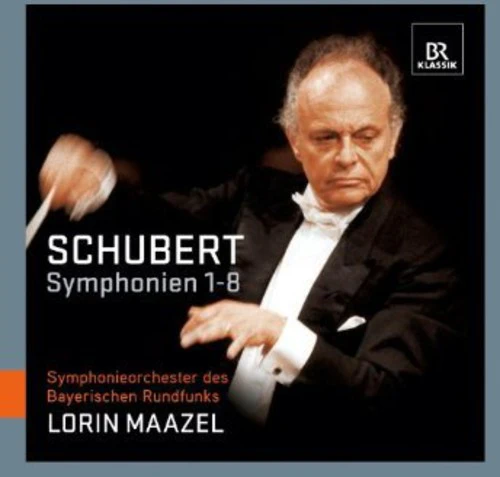
Schubert: The Symphonies / Maazel, Bavarian Radio
"[T]he first three symphonies are treated to exuberant readings, with lots of Haydnesque brio, except in the slow movements, where Schubert’s lyricism comes to the fore. Maazel and company change gears very comfortably, shifting in the Second Symphony from the boisterous ebullience of the first movement to the tender naïveté of the following Andante. And back again, in the propulsive Menuetto and Presto vivace finale. I’m happy that my favorite among the first six, No. 3, receives a model performance, from the hushed, feathery violin figures in the Adagio maestoso introduction to the breakneck Presto vivace finale. Maazel makes all the right moves as far as I’m concerned, and I’m as happy with this performance as with any on disc...
Schubert’s last two symphonies, with their grander gestures and grander orchestral palette, actually sound just a bit small-scale in these performances, and I think that reflects an interpretive trend rather than any outright lack on the part of conductor or orchestra. Basically, these are excellent readings, fully idiomatic, without an ounce of extraneous rubato or other grandstanding gestures that conductors often impose on this music, especially the Great C Major. The comparative lightness of texture in Maazel’s interpretation recalls recent performances I’ve heard by the likes of the Northern Sinfonia under Thomas Zehetmair (Avie) and the Budapest Festival Orchestra under Ivan Fischer (Channel Classics). A far cry from one of my favorites of another era, Georg Solti leading a hefty Vienna Philharmonic (Decca). Both approaches seem valid to me. Certainly, Maazel brings great nobility to this score; the sense of momentum with which he invests the last movement makes this the worthy high point of the set.
The Bavarian orchestra plays with expected fervor but with great discipline as well; in fact, you could be forgiven if in a blind test you thought these performances were set down in a studio—at least before you heard the applause at the end of each symphony. And except for the usual balance problem here and there, the recordings are quite good. There are a number of fine recordings of the eight Schubert symphonies available; I now count Maazel’s among them.
—Lee Passarella, Audiophile Audition
Schubert’s last two symphonies, with their grander gestures and grander orchestral palette, actually sound just a bit small-scale in these performances, and I think that reflects an interpretive trend rather than any outright lack on the part of conductor or orchestra. Basically, these are excellent readings, fully idiomatic, without an ounce of extraneous rubato or other grandstanding gestures that conductors often impose on this music, especially the Great C Major. The comparative lightness of texture in Maazel’s interpretation recalls recent performances I’ve heard by the likes of the Northern Sinfonia under Thomas Zehetmair (Avie) and the Budapest Festival Orchestra under Ivan Fischer (Channel Classics). A far cry from one of my favorites of another era, Georg Solti leading a hefty Vienna Philharmonic (Decca). Both approaches seem valid to me. Certainly, Maazel brings great nobility to this score; the sense of momentum with which he invests the last movement makes this the worthy high point of the set.
The Bavarian orchestra plays with expected fervor but with great discipline as well; in fact, you could be forgiven if in a blind test you thought these performances were set down in a studio—at least before you heard the applause at the end of each symphony. And except for the usual balance problem here and there, the recordings are quite good. There are a number of fine recordings of the eight Schubert symphonies available; I now count Maazel’s among them.
—Lee Passarella, Audiophile Audition
"[T]he first three symphonies are treated to exuberant readings, with lots of Haydnesque brio, except in the slow movements, where Schubert’s lyricism comes to the fore. Maazel and company change gears very comfortably, shifting in the Second Symphony from the boisterous ebullience of the first movement to the tender naïveté of the following Andante. And back again, in the propulsive Menuetto and Presto vivace finale. I’m happy that my favorite among the first six, No. 3, receives a model performance, from the hushed, feathery violin figures in the Adagio maestoso introduction to the breakneck Presto vivace finale. Maazel makes all the right moves as far as I’m concerned, and I’m as happy with this performance as with any on disc...
Schubert’s last two symphonies, with their grander gestures and grander orchestral palette, actually sound just a bit small-scale in these performances, and I think that reflects an interpretive trend rather than any outright lack on the part of conductor or orchestra. Basically, these are excellent readings, fully idiomatic, without an ounce of extraneous rubato or other grandstanding gestures that conductors often impose on this music, especially the Great C Major. The comparative lightness of texture in Maazel’s interpretation recalls recent performances I’ve heard by the likes of the Northern Sinfonia under Thomas Zehetmair (Avie) and the Budapest Festival Orchestra under Ivan Fischer (Channel Classics). A far cry from one of my favorites of another era, Georg Solti leading a hefty Vienna Philharmonic (Decca). Both approaches seem valid to me. Certainly, Maazel brings great nobility to this score; the sense of momentum with which he invests the last movement makes this the worthy high point of the set.
The Bavarian orchestra plays with expected fervor but with great discipline as well; in fact, you could be forgiven if in a blind test you thought these performances were set down in a studio—at least before you heard the applause at the end of each symphony. And except for the usual balance problem here and there, the recordings are quite good. There are a number of fine recordings of the eight Schubert symphonies available; I now count Maazel’s among them.
—Lee Passarella, Audiophile Audition
Schubert’s last two symphonies, with their grander gestures and grander orchestral palette, actually sound just a bit small-scale in these performances, and I think that reflects an interpretive trend rather than any outright lack on the part of conductor or orchestra. Basically, these are excellent readings, fully idiomatic, without an ounce of extraneous rubato or other grandstanding gestures that conductors often impose on this music, especially the Great C Major. The comparative lightness of texture in Maazel’s interpretation recalls recent performances I’ve heard by the likes of the Northern Sinfonia under Thomas Zehetmair (Avie) and the Budapest Festival Orchestra under Ivan Fischer (Channel Classics). A far cry from one of my favorites of another era, Georg Solti leading a hefty Vienna Philharmonic (Decca). Both approaches seem valid to me. Certainly, Maazel brings great nobility to this score; the sense of momentum with which he invests the last movement makes this the worthy high point of the set.
The Bavarian orchestra plays with expected fervor but with great discipline as well; in fact, you could be forgiven if in a blind test you thought these performances were set down in a studio—at least before you heard the applause at the end of each symphony. And except for the usual balance problem here and there, the recordings are quite good. There are a number of fine recordings of the eight Schubert symphonies available; I now count Maazel’s among them.
—Lee Passarella, Audiophile Audition
$34.99
Schubert: The Symphonies / Maazel, Bavarian Radio—
$34.99
Description
"[T]he first three symphonies are treated to exuberant readings, with lots of Haydnesque brio, except in the slow movements, where Schubert’s lyricism comes to the fore. Maazel and company change gears very comfortably, shifting in the Second Symphony from the boisterous ebullience of the first movement to the tender naïveté of the following Andante. And back again, in the propulsive Menuetto and Presto vivace finale. I’m happy that my favorite among the first six, No. 3, receives a model performance, from the hushed, feathery violin figures in the Adagio maestoso introduction to the breakneck Presto vivace finale. Maazel makes all the right moves as far as I’m concerned, and I’m as happy with this performance as with any on disc...
Schubert’s last two symphonies, with their grander gestures and grander orchestral palette, actually sound just a bit small-scale in these performances, and I think that reflects an interpretive trend rather than any outright lack on the part of conductor or orchestra. Basically, these are excellent readings, fully idiomatic, without an ounce of extraneous rubato or other grandstanding gestures that conductors often impose on this music, especially the Great C Major. The comparative lightness of texture in Maazel’s interpretation recalls recent performances I’ve heard by the likes of the Northern Sinfonia under Thomas Zehetmair (Avie) and the Budapest Festival Orchestra under Ivan Fischer (Channel Classics). A far cry from one of my favorites of another era, Georg Solti leading a hefty Vienna Philharmonic (Decca). Both approaches seem valid to me. Certainly, Maazel brings great nobility to this score; the sense of momentum with which he invests the last movement makes this the worthy high point of the set.
The Bavarian orchestra plays with expected fervor but with great discipline as well; in fact, you could be forgiven if in a blind test you thought these performances were set down in a studio—at least before you heard the applause at the end of each symphony. And except for the usual balance problem here and there, the recordings are quite good. There are a number of fine recordings of the eight Schubert symphonies available; I now count Maazel’s among them.
—Lee Passarella, Audiophile Audition
Schubert’s last two symphonies, with their grander gestures and grander orchestral palette, actually sound just a bit small-scale in these performances, and I think that reflects an interpretive trend rather than any outright lack on the part of conductor or orchestra. Basically, these are excellent readings, fully idiomatic, without an ounce of extraneous rubato or other grandstanding gestures that conductors often impose on this music, especially the Great C Major. The comparative lightness of texture in Maazel’s interpretation recalls recent performances I’ve heard by the likes of the Northern Sinfonia under Thomas Zehetmair (Avie) and the Budapest Festival Orchestra under Ivan Fischer (Channel Classics). A far cry from one of my favorites of another era, Georg Solti leading a hefty Vienna Philharmonic (Decca). Both approaches seem valid to me. Certainly, Maazel brings great nobility to this score; the sense of momentum with which he invests the last movement makes this the worthy high point of the set.
The Bavarian orchestra plays with expected fervor but with great discipline as well; in fact, you could be forgiven if in a blind test you thought these performances were set down in a studio—at least before you heard the applause at the end of each symphony. And except for the usual balance problem here and there, the recordings are quite good. There are a number of fine recordings of the eight Schubert symphonies available; I now count Maazel’s among them.
—Lee Passarella, Audiophile Audition