🎉 Up to 70% Off Selected ItemsShop Sale

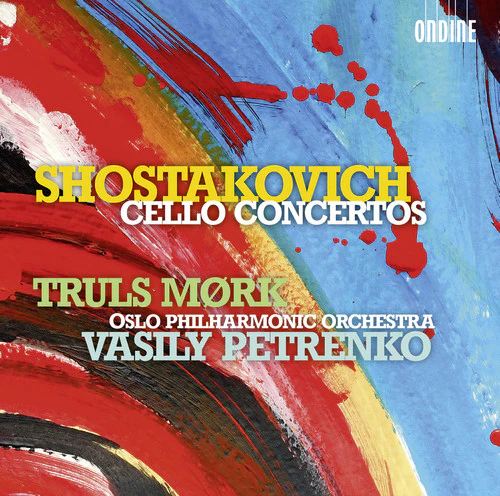
Shostakovich: Cello Concertos / Mork, Petrenko, Oslo
SHOSTAKOVICH Cello Concertos Nos. 1 and 2 • Truls Mørk (vc); Vasily Petrenko, cond; Oslo PO • ONDINE 1218-2 (64:59) Live: Oslo 1/30–2/1/2013
These cello concertos are relatively late works, and both were written for Mstislav Rostropovich. The First appeared in 1959, six years after the death of Stalin, at a time when official pressure on the composer had eased––yet Shostakovich never got over the terrors of the 1940s. This is the perfect work to illustrate the position he was in. Soviet authorities at the time of the Cold War were locked into an “anything you can do, we can do better” standoff with the rest of the world, particularly with the USA, so they needed to show off their world-famous composer. For the same reason, they allowed the West access to their greatest musicians, including Rostropovich. All was fine as long as everybody toed the official Communist line, but Soviet officials never really trusted Shostakovich, and rightly so. The concerto quite plainly depicts the cries of a desperate individual (the cello) up against the power of the state (the orchestra). There is no room for compromise on either side. In the cadenza preceding the finale, the cello hopelessly repeats thematic fragments like a soul trapped, while a passage of sour, circus-like music in the final movement sees the protagonist going through his paces with pointless, frenzied zeal. The work is unambiguously autobiographical: Shostakovich introduces himself in the cello’s opening phrases with the repeated DSCH motif, so there is never any doubt who this solo cello is intended to personify.
The Second Cello Concerto was composed in 1966, just prior to Symphony No. 14, a symphonic song cycle in which he set poems on the subject of death. The two works came in the wake of a heart attack. Fittingly, the cello part, while still in opposition to outside forces, now seems more reflective and less inclined to protest (except for parts of the short Allegretto movement). The brief cadenza in this work depicts resignation: quiet desperation and regret rather than defiance, an attitude that would color all of the composer’s subsequent music.
This kind of pop-psych analysis of Shostakovich’s music is frowned upon in some quarters, but is inescapable when faced with a recording like this one. Mørk identifies completely with the cello-as-individual approach, as anyone who has seen and heard him live in the First Concerto will attest. He attacks both works with every fiber of his being, to coin a cliché, precisely conveying each emotional nuance of the score. The personal nature of his performance is emphasized here by a close-up recording: We hear both soloist and orchestra from the conductor’s point of view, literally “in your face.” Petrenko’s Shostakovich has been much praised, and he elicits thoroughly committed playing from the soloists and sections of the orchestra. At the very opening of the First Concerto, where the cello’s DSCH phrases are answered by repeated chords in the winds, I thought their response was a fraction slower each time than the tempo set by Mørk, or at least not as decisively delivered. From then on the orchestral support is unswerving, with exceptionally strong work from the first horn.
The Norwegian cellist has recorded both concertos before. His previous disc was made in 1995 for Virgin, where he was accompanied by the London Philharmonic Orchestra conducted by Mariss Jansons. (Ironically, Jansons was then Chief Conductor of the Oslo Philharmonic.) That earlier recording has a more straightforward balance, with the orchestra set back, allowing Mørk’s cello to dominate. His interpretation does not seem to have changed substantially over 18 years––he was magnificent then, too––but the current recording brings greater immediacy. The London orchestra strikes me as tighter in ensemble but less emotionally involved. The earlier disc is nevertheless extremely fine. I would also recommend hearing the larger-than-life, Romantically inclined rendition of both concertos on DG by Misha Maisky (with the London Symphony Orchestra under Michael Tilson Thomas)––especially moving in the Second––and it goes without saying that Rostropovich in any of his recordings is in a class of his own.
FANFARE: Phillip Scott
SHOSTAKOVICH Cello Concertos Nos. 1 and 2 • Truls Mørk (vc); Vasily Petrenko, cond; Oslo PO • ONDINE 1218-2 (64:59) Live: Oslo 1/30–2/1/2013
These cello concertos are relatively late works, and both were written for Mstislav Rostropovich. The First appeared in 1959, six years after the death of Stalin, at a time when official pressure on the composer had eased––yet Shostakovich never got over the terrors of the 1940s. This is the perfect work to illustrate the position he was in. Soviet authorities at the time of the Cold War were locked into an “anything you can do, we can do better” standoff with the rest of the world, particularly with the USA, so they needed to show off their world-famous composer. For the same reason, they allowed the West access to their greatest musicians, including Rostropovich. All was fine as long as everybody toed the official Communist line, but Soviet officials never really trusted Shostakovich, and rightly so. The concerto quite plainly depicts the cries of a desperate individual (the cello) up against the power of the state (the orchestra). There is no room for compromise on either side. In the cadenza preceding the finale, the cello hopelessly repeats thematic fragments like a soul trapped, while a passage of sour, circus-like music in the final movement sees the protagonist going through his paces with pointless, frenzied zeal. The work is unambiguously autobiographical: Shostakovich introduces himself in the cello’s opening phrases with the repeated DSCH motif, so there is never any doubt who this solo cello is intended to personify.
The Second Cello Concerto was composed in 1966, just prior to Symphony No. 14, a symphonic song cycle in which he set poems on the subject of death. The two works came in the wake of a heart attack. Fittingly, the cello part, while still in opposition to outside forces, now seems more reflective and less inclined to protest (except for parts of the short Allegretto movement). The brief cadenza in this work depicts resignation: quiet desperation and regret rather than defiance, an attitude that would color all of the composer’s subsequent music.
This kind of pop-psych analysis of Shostakovich’s music is frowned upon in some quarters, but is inescapable when faced with a recording like this one. Mørk identifies completely with the cello-as-individual approach, as anyone who has seen and heard him live in the First Concerto will attest. He attacks both works with every fiber of his being, to coin a cliché, precisely conveying each emotional nuance of the score. The personal nature of his performance is emphasized here by a close-up recording: We hear both soloist and orchestra from the conductor’s point of view, literally “in your face.” Petrenko’s Shostakovich has been much praised, and he elicits thoroughly committed playing from the soloists and sections of the orchestra. At the very opening of the First Concerto, where the cello’s DSCH phrases are answered by repeated chords in the winds, I thought their response was a fraction slower each time than the tempo set by Mørk, or at least not as decisively delivered. From then on the orchestral support is unswerving, with exceptionally strong work from the first horn.
The Norwegian cellist has recorded both concertos before. His previous disc was made in 1995 for Virgin, where he was accompanied by the London Philharmonic Orchestra conducted by Mariss Jansons. (Ironically, Jansons was then Chief Conductor of the Oslo Philharmonic.) That earlier recording has a more straightforward balance, with the orchestra set back, allowing Mørk’s cello to dominate. His interpretation does not seem to have changed substantially over 18 years––he was magnificent then, too––but the current recording brings greater immediacy. The London orchestra strikes me as tighter in ensemble but less emotionally involved. The earlier disc is nevertheless extremely fine. I would also recommend hearing the larger-than-life, Romantically inclined rendition of both concertos on DG by Misha Maisky (with the London Symphony Orchestra under Michael Tilson Thomas)––especially moving in the Second––and it goes without saying that Rostropovich in any of his recordings is in a class of his own.
FANFARE: Phillip Scott
$6.65
Original: $18.99
-65%Shostakovich: Cello Concertos / Mork, Petrenko, Oslo—
$18.99
$6.65Description
SHOSTAKOVICH Cello Concertos Nos. 1 and 2 • Truls Mørk (vc); Vasily Petrenko, cond; Oslo PO • ONDINE 1218-2 (64:59) Live: Oslo 1/30–2/1/2013
These cello concertos are relatively late works, and both were written for Mstislav Rostropovich. The First appeared in 1959, six years after the death of Stalin, at a time when official pressure on the composer had eased––yet Shostakovich never got over the terrors of the 1940s. This is the perfect work to illustrate the position he was in. Soviet authorities at the time of the Cold War were locked into an “anything you can do, we can do better” standoff with the rest of the world, particularly with the USA, so they needed to show off their world-famous composer. For the same reason, they allowed the West access to their greatest musicians, including Rostropovich. All was fine as long as everybody toed the official Communist line, but Soviet officials never really trusted Shostakovich, and rightly so. The concerto quite plainly depicts the cries of a desperate individual (the cello) up against the power of the state (the orchestra). There is no room for compromise on either side. In the cadenza preceding the finale, the cello hopelessly repeats thematic fragments like a soul trapped, while a passage of sour, circus-like music in the final movement sees the protagonist going through his paces with pointless, frenzied zeal. The work is unambiguously autobiographical: Shostakovich introduces himself in the cello’s opening phrases with the repeated DSCH motif, so there is never any doubt who this solo cello is intended to personify.
The Second Cello Concerto was composed in 1966, just prior to Symphony No. 14, a symphonic song cycle in which he set poems on the subject of death. The two works came in the wake of a heart attack. Fittingly, the cello part, while still in opposition to outside forces, now seems more reflective and less inclined to protest (except for parts of the short Allegretto movement). The brief cadenza in this work depicts resignation: quiet desperation and regret rather than defiance, an attitude that would color all of the composer’s subsequent music.
This kind of pop-psych analysis of Shostakovich’s music is frowned upon in some quarters, but is inescapable when faced with a recording like this one. Mørk identifies completely with the cello-as-individual approach, as anyone who has seen and heard him live in the First Concerto will attest. He attacks both works with every fiber of his being, to coin a cliché, precisely conveying each emotional nuance of the score. The personal nature of his performance is emphasized here by a close-up recording: We hear both soloist and orchestra from the conductor’s point of view, literally “in your face.” Petrenko’s Shostakovich has been much praised, and he elicits thoroughly committed playing from the soloists and sections of the orchestra. At the very opening of the First Concerto, where the cello’s DSCH phrases are answered by repeated chords in the winds, I thought their response was a fraction slower each time than the tempo set by Mørk, or at least not as decisively delivered. From then on the orchestral support is unswerving, with exceptionally strong work from the first horn.
The Norwegian cellist has recorded both concertos before. His previous disc was made in 1995 for Virgin, where he was accompanied by the London Philharmonic Orchestra conducted by Mariss Jansons. (Ironically, Jansons was then Chief Conductor of the Oslo Philharmonic.) That earlier recording has a more straightforward balance, with the orchestra set back, allowing Mørk’s cello to dominate. His interpretation does not seem to have changed substantially over 18 years––he was magnificent then, too––but the current recording brings greater immediacy. The London orchestra strikes me as tighter in ensemble but less emotionally involved. The earlier disc is nevertheless extremely fine. I would also recommend hearing the larger-than-life, Romantically inclined rendition of both concertos on DG by Misha Maisky (with the London Symphony Orchestra under Michael Tilson Thomas)––especially moving in the Second––and it goes without saying that Rostropovich in any of his recordings is in a class of his own.
FANFARE: Phillip Scott