🎉 Up to 70% Off Selected ItemsShop Sale

1 / 2
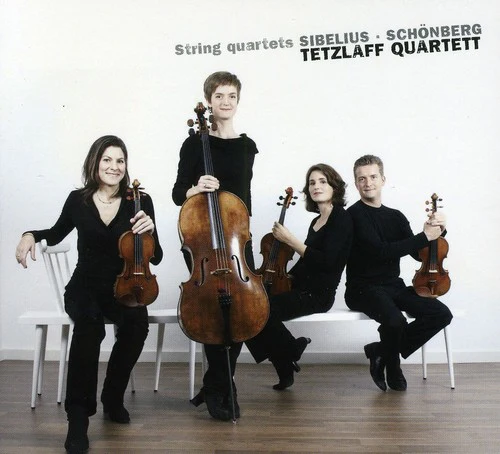
Sibelius, Schoenberg: String Quartets / Tetzlaff Quartet
Here’s a recording that offers rewards on so many levels. Two excellent, profoundly insightful performances, beautifully recorded, ought to be recommendation enough. But hearing these works side by side is fascinating and strangely moving.
Both quartets have tended to be seen as problematic: transition works rather than fully focused statements. The Schoenberg – so we’re told – shows him repeatedly teetering on the edge of the atonal chasm before drawing back in relief.
The Sibelius is said to sit, not entirely comfortably, between the neo-classicism of the Third Symphony and the dark explorations of the Fourth – and does it really work as chamber music? But after the Tetzlaff Quartet’s performances these issues seem barely relevant. Here are two composers courageously entering new imaginative worlds, and opening up vistas that surprise and even delight.
It’s wonderful to hear the Schoenberg played not only with such flawless intonation, but also with such understanding for the way the music thinks harmonically. If there’s less angst than usual, the gains in tenderness, delicacy and in sense of overall musical shape strike a deeper vein of authenticity.
The slow movement of the Sibelius is glorious: poised and eloquent, it shows its composer rediscovering the possibilities of the simplest tonal harmonies at a time when Schoenberg was rejecting them. And at last here’s a performance of the Vivace second movement that makes this music sound as though it really was conceived for four solo strings – not as a string orchestra manqué. So, top recommendations for both works, and an inspired coupling – don’t hesitate.
Performance: 5 (out of 5); Sound: 5 (out of 5) star
-- Stephen Johnson, BBC Music Magazine
Both quartets have tended to be seen as problematic: transition works rather than fully focused statements. The Schoenberg – so we’re told – shows him repeatedly teetering on the edge of the atonal chasm before drawing back in relief.
The Sibelius is said to sit, not entirely comfortably, between the neo-classicism of the Third Symphony and the dark explorations of the Fourth – and does it really work as chamber music? But after the Tetzlaff Quartet’s performances these issues seem barely relevant. Here are two composers courageously entering new imaginative worlds, and opening up vistas that surprise and even delight.
It’s wonderful to hear the Schoenberg played not only with such flawless intonation, but also with such understanding for the way the music thinks harmonically. If there’s less angst than usual, the gains in tenderness, delicacy and in sense of overall musical shape strike a deeper vein of authenticity.
The slow movement of the Sibelius is glorious: poised and eloquent, it shows its composer rediscovering the possibilities of the simplest tonal harmonies at a time when Schoenberg was rejecting them. And at last here’s a performance of the Vivace second movement that makes this music sound as though it really was conceived for four solo strings – not as a string orchestra manqué. So, top recommendations for both works, and an inspired coupling – don’t hesitate.
Performance: 5 (out of 5); Sound: 5 (out of 5) star
-- Stephen Johnson, BBC Music Magazine
Here’s a recording that offers rewards on so many levels. Two excellent, profoundly insightful performances, beautifully recorded, ought to be recommendation enough. But hearing these works side by side is fascinating and strangely moving.
Both quartets have tended to be seen as problematic: transition works rather than fully focused statements. The Schoenberg – so we’re told – shows him repeatedly teetering on the edge of the atonal chasm before drawing back in relief.
The Sibelius is said to sit, not entirely comfortably, between the neo-classicism of the Third Symphony and the dark explorations of the Fourth – and does it really work as chamber music? But after the Tetzlaff Quartet’s performances these issues seem barely relevant. Here are two composers courageously entering new imaginative worlds, and opening up vistas that surprise and even delight.
It’s wonderful to hear the Schoenberg played not only with such flawless intonation, but also with such understanding for the way the music thinks harmonically. If there’s less angst than usual, the gains in tenderness, delicacy and in sense of overall musical shape strike a deeper vein of authenticity.
The slow movement of the Sibelius is glorious: poised and eloquent, it shows its composer rediscovering the possibilities of the simplest tonal harmonies at a time when Schoenberg was rejecting them. And at last here’s a performance of the Vivace second movement that makes this music sound as though it really was conceived for four solo strings – not as a string orchestra manqué. So, top recommendations for both works, and an inspired coupling – don’t hesitate.
Performance: 5 (out of 5); Sound: 5 (out of 5) star
-- Stephen Johnson, BBC Music Magazine
Both quartets have tended to be seen as problematic: transition works rather than fully focused statements. The Schoenberg – so we’re told – shows him repeatedly teetering on the edge of the atonal chasm before drawing back in relief.
The Sibelius is said to sit, not entirely comfortably, between the neo-classicism of the Third Symphony and the dark explorations of the Fourth – and does it really work as chamber music? But after the Tetzlaff Quartet’s performances these issues seem barely relevant. Here are two composers courageously entering new imaginative worlds, and opening up vistas that surprise and even delight.
It’s wonderful to hear the Schoenberg played not only with such flawless intonation, but also with such understanding for the way the music thinks harmonically. If there’s less angst than usual, the gains in tenderness, delicacy and in sense of overall musical shape strike a deeper vein of authenticity.
The slow movement of the Sibelius is glorious: poised and eloquent, it shows its composer rediscovering the possibilities of the simplest tonal harmonies at a time when Schoenberg was rejecting them. And at last here’s a performance of the Vivace second movement that makes this music sound as though it really was conceived for four solo strings – not as a string orchestra manqué. So, top recommendations for both works, and an inspired coupling – don’t hesitate.
Performance: 5 (out of 5); Sound: 5 (out of 5) star
-- Stephen Johnson, BBC Music Magazine
$5.25
Original: $14.99
-65%Sibelius, Schoenberg: String Quartets / Tetzlaff Quartet—
$14.99
$5.25Description
Here’s a recording that offers rewards on so many levels. Two excellent, profoundly insightful performances, beautifully recorded, ought to be recommendation enough. But hearing these works side by side is fascinating and strangely moving.
Both quartets have tended to be seen as problematic: transition works rather than fully focused statements. The Schoenberg – so we’re told – shows him repeatedly teetering on the edge of the atonal chasm before drawing back in relief.
The Sibelius is said to sit, not entirely comfortably, between the neo-classicism of the Third Symphony and the dark explorations of the Fourth – and does it really work as chamber music? But after the Tetzlaff Quartet’s performances these issues seem barely relevant. Here are two composers courageously entering new imaginative worlds, and opening up vistas that surprise and even delight.
It’s wonderful to hear the Schoenberg played not only with such flawless intonation, but also with such understanding for the way the music thinks harmonically. If there’s less angst than usual, the gains in tenderness, delicacy and in sense of overall musical shape strike a deeper vein of authenticity.
The slow movement of the Sibelius is glorious: poised and eloquent, it shows its composer rediscovering the possibilities of the simplest tonal harmonies at a time when Schoenberg was rejecting them. And at last here’s a performance of the Vivace second movement that makes this music sound as though it really was conceived for four solo strings – not as a string orchestra manqué. So, top recommendations for both works, and an inspired coupling – don’t hesitate.
Performance: 5 (out of 5); Sound: 5 (out of 5) star
-- Stephen Johnson, BBC Music Magazine
Both quartets have tended to be seen as problematic: transition works rather than fully focused statements. The Schoenberg – so we’re told – shows him repeatedly teetering on the edge of the atonal chasm before drawing back in relief.
The Sibelius is said to sit, not entirely comfortably, between the neo-classicism of the Third Symphony and the dark explorations of the Fourth – and does it really work as chamber music? But after the Tetzlaff Quartet’s performances these issues seem barely relevant. Here are two composers courageously entering new imaginative worlds, and opening up vistas that surprise and even delight.
It’s wonderful to hear the Schoenberg played not only with such flawless intonation, but also with such understanding for the way the music thinks harmonically. If there’s less angst than usual, the gains in tenderness, delicacy and in sense of overall musical shape strike a deeper vein of authenticity.
The slow movement of the Sibelius is glorious: poised and eloquent, it shows its composer rediscovering the possibilities of the simplest tonal harmonies at a time when Schoenberg was rejecting them. And at last here’s a performance of the Vivace second movement that makes this music sound as though it really was conceived for four solo strings – not as a string orchestra manqué. So, top recommendations for both works, and an inspired coupling – don’t hesitate.
Performance: 5 (out of 5); Sound: 5 (out of 5) star
-- Stephen Johnson, BBC Music Magazine