🎉 Up to 70% Off Selected ItemsShop Sale

1 / 2
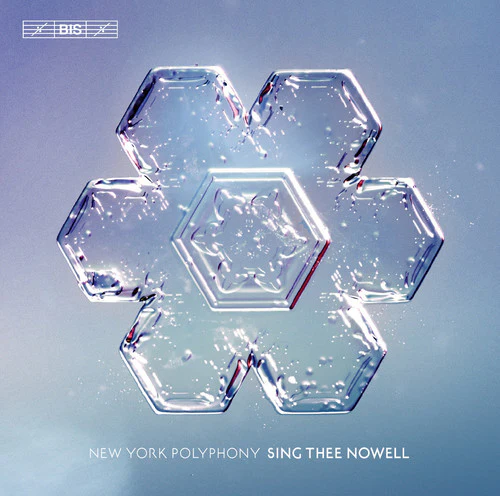
Sing Thee Nowell / New York Polyphony
This new Christmas recording from the male vocal quartet New York Polyphony treads a traditional path–organizing the program sequentially according to the Christian church calendar (from Advent through Epiphany) and primarily sticking to works with familiar texts and sometimes tunes–but from the outset gives notice that the musical settings will not necessarily be the ones you know–which can be a very good thing, or not quite so much. The familiar chant melody of the Advent hymn Veni Emmanuel opens the disc, the four voices in perfect unison–until an unexpected, biting dissonance on the words “Gaude! Gaude!”, repeated in each verse. While in the rest of the piece composer Andrew Smith couches the basic chant melody in a pleasing framework of combined modern and ancient harmonic ideas, this recurring, deliberately ear-grating sound (especially so with these singers’ superbly-tuned, super-vibrant voices!) seems forced and, unless there’s some kind of intended irony–a bitter call to “Rejoice!” for the coming of the Son of God?–this use of extreme dissonance just doesn’t make sense. As always with these things, others will disagree–and no one can deny either the singers’ individual vocal beauty or the impressive ensemble polish.
That said, throughout the rest of the program we hear many more modern settings of ancient and oft-treated texts, including two excellent ones from New York Polyphony countertenor Geoffrey Williams–Adam lay ybounden and There is no rose, the latter an ingenious and absolutely lovely joining of the text to the S.S. Wesley hymn tune “Hereford”, with added “alleluias”. In a nice programming touch (which I’m surprised isn’t adopted more often on recordings like this) three other settings of that same text are included, from the famous 15th-century “original” from the Trinity Carol Roll to John Scott’s decidedly “modern” realization and Richard Rodney Bennett’s masterful melding of old and new style, music that somehow simultaneously resides comfortably in both the 15th and 21st centuries.
We’re also treated to three versions of the text “Out of your sleep”, including one by the abovementioned Andrew Smith, who in this case casts the music in a harmonic world in which the dissonances that he obviously loves (and who doesn’t, in the right context?) beautifully and effectively enhance the expressive impact of music and text. The other two are the “original” 15th-century version from the Selden Manuscript, characterized by assertive, lively rhythms and oft-repeated phrases, and Richard Rodney Bennett’s equally rousing setting, included, along with the above-mentioned There is no rose, in his set of Five Carols, which are all performed here with the addition of sopranos Sarah Brailey and Elizabeth Baber Weaver. Although these performances of the Bennett carols are very well done, I prefer hearing them with a larger ensemble, which gives them a fuller-bodied sound in which you don’t notice individual voices–The Cambridge Singers’ renditions (Collegium), for instance.
The quartet’s bass, Craig Phillips, contributes two excellent pieces (under the name Alexander Craig)–a beautiful harmonization of the traditional Basque carol known as Gabriel’s Message and, a highlight of the disc, an original setting of a James Joyce poem, “Sleep Now”. You can’t complain about the lovely ensemble sound in Victoria’s beloved O magnum mysterium, but there’s something missing interpretively. The heart of the work, that incredible few bars where all is suspended, where the music perfectly captures and defines that precious, surprising moment where we are awestruck by the one who was worthy to bear Christ the Lord: “O beata Virgo…”, this, one of the most affecting moments in all of music, is rendered here as just another part of the piece. Even those delicious dissonances–yes, dissonances!–just go by without a scratch.
There are many other pieces on the program (24 in all), including a few more Renaissance motets and a very interesting modern setting of a not-so-familiar text, O pia virgo (O blessed Virgin), written for New York Polyphony by Michael McGlynn. It’s another of those skillful blends of ancient and new, and it suits the singers very well. As does all of this music, especially evident in the consistent command of ensemble technique, the presence that’s both easy and confident, and the kind of uniform vocal inflection and expressive nuance that only comes with a devoted and close personal and artistic relationship. In spite of a few reservations, I really enjoyed this recording–especially for the works by Geoffrey Williams, Alexander Craig, and Michael McGlynn, and a very fine rendition of the oft-recorded Bethlehem Down by Peter Warlock. It’s impossible not to be impressed with the work these four singers have produced in their previous releases, and this one joins the group’s much earlier (2007) Christmas disc, I Sing the Birth (with a slightly different vocal lineup) as one that will get plenty of play during the holiday season.
-- David Vernier, ClassicsToday.com [12/2014]
That said, throughout the rest of the program we hear many more modern settings of ancient and oft-treated texts, including two excellent ones from New York Polyphony countertenor Geoffrey Williams–Adam lay ybounden and There is no rose, the latter an ingenious and absolutely lovely joining of the text to the S.S. Wesley hymn tune “Hereford”, with added “alleluias”. In a nice programming touch (which I’m surprised isn’t adopted more often on recordings like this) three other settings of that same text are included, from the famous 15th-century “original” from the Trinity Carol Roll to John Scott’s decidedly “modern” realization and Richard Rodney Bennett’s masterful melding of old and new style, music that somehow simultaneously resides comfortably in both the 15th and 21st centuries.
We’re also treated to three versions of the text “Out of your sleep”, including one by the abovementioned Andrew Smith, who in this case casts the music in a harmonic world in which the dissonances that he obviously loves (and who doesn’t, in the right context?) beautifully and effectively enhance the expressive impact of music and text. The other two are the “original” 15th-century version from the Selden Manuscript, characterized by assertive, lively rhythms and oft-repeated phrases, and Richard Rodney Bennett’s equally rousing setting, included, along with the above-mentioned There is no rose, in his set of Five Carols, which are all performed here with the addition of sopranos Sarah Brailey and Elizabeth Baber Weaver. Although these performances of the Bennett carols are very well done, I prefer hearing them with a larger ensemble, which gives them a fuller-bodied sound in which you don’t notice individual voices–The Cambridge Singers’ renditions (Collegium), for instance.
The quartet’s bass, Craig Phillips, contributes two excellent pieces (under the name Alexander Craig)–a beautiful harmonization of the traditional Basque carol known as Gabriel’s Message and, a highlight of the disc, an original setting of a James Joyce poem, “Sleep Now”. You can’t complain about the lovely ensemble sound in Victoria’s beloved O magnum mysterium, but there’s something missing interpretively. The heart of the work, that incredible few bars where all is suspended, where the music perfectly captures and defines that precious, surprising moment where we are awestruck by the one who was worthy to bear Christ the Lord: “O beata Virgo…”, this, one of the most affecting moments in all of music, is rendered here as just another part of the piece. Even those delicious dissonances–yes, dissonances!–just go by without a scratch.
There are many other pieces on the program (24 in all), including a few more Renaissance motets and a very interesting modern setting of a not-so-familiar text, O pia virgo (O blessed Virgin), written for New York Polyphony by Michael McGlynn. It’s another of those skillful blends of ancient and new, and it suits the singers very well. As does all of this music, especially evident in the consistent command of ensemble technique, the presence that’s both easy and confident, and the kind of uniform vocal inflection and expressive nuance that only comes with a devoted and close personal and artistic relationship. In spite of a few reservations, I really enjoyed this recording–especially for the works by Geoffrey Williams, Alexander Craig, and Michael McGlynn, and a very fine rendition of the oft-recorded Bethlehem Down by Peter Warlock. It’s impossible not to be impressed with the work these four singers have produced in their previous releases, and this one joins the group’s much earlier (2007) Christmas disc, I Sing the Birth (with a slightly different vocal lineup) as one that will get plenty of play during the holiday season.
-- David Vernier, ClassicsToday.com [12/2014]
This new Christmas recording from the male vocal quartet New York Polyphony treads a traditional path–organizing the program sequentially according to the Christian church calendar (from Advent through Epiphany) and primarily sticking to works with familiar texts and sometimes tunes–but from the outset gives notice that the musical settings will not necessarily be the ones you know–which can be a very good thing, or not quite so much. The familiar chant melody of the Advent hymn Veni Emmanuel opens the disc, the four voices in perfect unison–until an unexpected, biting dissonance on the words “Gaude! Gaude!”, repeated in each verse. While in the rest of the piece composer Andrew Smith couches the basic chant melody in a pleasing framework of combined modern and ancient harmonic ideas, this recurring, deliberately ear-grating sound (especially so with these singers’ superbly-tuned, super-vibrant voices!) seems forced and, unless there’s some kind of intended irony–a bitter call to “Rejoice!” for the coming of the Son of God?–this use of extreme dissonance just doesn’t make sense. As always with these things, others will disagree–and no one can deny either the singers’ individual vocal beauty or the impressive ensemble polish.
That said, throughout the rest of the program we hear many more modern settings of ancient and oft-treated texts, including two excellent ones from New York Polyphony countertenor Geoffrey Williams–Adam lay ybounden and There is no rose, the latter an ingenious and absolutely lovely joining of the text to the S.S. Wesley hymn tune “Hereford”, with added “alleluias”. In a nice programming touch (which I’m surprised isn’t adopted more often on recordings like this) three other settings of that same text are included, from the famous 15th-century “original” from the Trinity Carol Roll to John Scott’s decidedly “modern” realization and Richard Rodney Bennett’s masterful melding of old and new style, music that somehow simultaneously resides comfortably in both the 15th and 21st centuries.
We’re also treated to three versions of the text “Out of your sleep”, including one by the abovementioned Andrew Smith, who in this case casts the music in a harmonic world in which the dissonances that he obviously loves (and who doesn’t, in the right context?) beautifully and effectively enhance the expressive impact of music and text. The other two are the “original” 15th-century version from the Selden Manuscript, characterized by assertive, lively rhythms and oft-repeated phrases, and Richard Rodney Bennett’s equally rousing setting, included, along with the above-mentioned There is no rose, in his set of Five Carols, which are all performed here with the addition of sopranos Sarah Brailey and Elizabeth Baber Weaver. Although these performances of the Bennett carols are very well done, I prefer hearing them with a larger ensemble, which gives them a fuller-bodied sound in which you don’t notice individual voices–The Cambridge Singers’ renditions (Collegium), for instance.
The quartet’s bass, Craig Phillips, contributes two excellent pieces (under the name Alexander Craig)–a beautiful harmonization of the traditional Basque carol known as Gabriel’s Message and, a highlight of the disc, an original setting of a James Joyce poem, “Sleep Now”. You can’t complain about the lovely ensemble sound in Victoria’s beloved O magnum mysterium, but there’s something missing interpretively. The heart of the work, that incredible few bars where all is suspended, where the music perfectly captures and defines that precious, surprising moment where we are awestruck by the one who was worthy to bear Christ the Lord: “O beata Virgo…”, this, one of the most affecting moments in all of music, is rendered here as just another part of the piece. Even those delicious dissonances–yes, dissonances!–just go by without a scratch.
There are many other pieces on the program (24 in all), including a few more Renaissance motets and a very interesting modern setting of a not-so-familiar text, O pia virgo (O blessed Virgin), written for New York Polyphony by Michael McGlynn. It’s another of those skillful blends of ancient and new, and it suits the singers very well. As does all of this music, especially evident in the consistent command of ensemble technique, the presence that’s both easy and confident, and the kind of uniform vocal inflection and expressive nuance that only comes with a devoted and close personal and artistic relationship. In spite of a few reservations, I really enjoyed this recording–especially for the works by Geoffrey Williams, Alexander Craig, and Michael McGlynn, and a very fine rendition of the oft-recorded Bethlehem Down by Peter Warlock. It’s impossible not to be impressed with the work these four singers have produced in their previous releases, and this one joins the group’s much earlier (2007) Christmas disc, I Sing the Birth (with a slightly different vocal lineup) as one that will get plenty of play during the holiday season.
-- David Vernier, ClassicsToday.com [12/2014]
That said, throughout the rest of the program we hear many more modern settings of ancient and oft-treated texts, including two excellent ones from New York Polyphony countertenor Geoffrey Williams–Adam lay ybounden and There is no rose, the latter an ingenious and absolutely lovely joining of the text to the S.S. Wesley hymn tune “Hereford”, with added “alleluias”. In a nice programming touch (which I’m surprised isn’t adopted more often on recordings like this) three other settings of that same text are included, from the famous 15th-century “original” from the Trinity Carol Roll to John Scott’s decidedly “modern” realization and Richard Rodney Bennett’s masterful melding of old and new style, music that somehow simultaneously resides comfortably in both the 15th and 21st centuries.
We’re also treated to three versions of the text “Out of your sleep”, including one by the abovementioned Andrew Smith, who in this case casts the music in a harmonic world in which the dissonances that he obviously loves (and who doesn’t, in the right context?) beautifully and effectively enhance the expressive impact of music and text. The other two are the “original” 15th-century version from the Selden Manuscript, characterized by assertive, lively rhythms and oft-repeated phrases, and Richard Rodney Bennett’s equally rousing setting, included, along with the above-mentioned There is no rose, in his set of Five Carols, which are all performed here with the addition of sopranos Sarah Brailey and Elizabeth Baber Weaver. Although these performances of the Bennett carols are very well done, I prefer hearing them with a larger ensemble, which gives them a fuller-bodied sound in which you don’t notice individual voices–The Cambridge Singers’ renditions (Collegium), for instance.
The quartet’s bass, Craig Phillips, contributes two excellent pieces (under the name Alexander Craig)–a beautiful harmonization of the traditional Basque carol known as Gabriel’s Message and, a highlight of the disc, an original setting of a James Joyce poem, “Sleep Now”. You can’t complain about the lovely ensemble sound in Victoria’s beloved O magnum mysterium, but there’s something missing interpretively. The heart of the work, that incredible few bars where all is suspended, where the music perfectly captures and defines that precious, surprising moment where we are awestruck by the one who was worthy to bear Christ the Lord: “O beata Virgo…”, this, one of the most affecting moments in all of music, is rendered here as just another part of the piece. Even those delicious dissonances–yes, dissonances!–just go by without a scratch.
There are many other pieces on the program (24 in all), including a few more Renaissance motets and a very interesting modern setting of a not-so-familiar text, O pia virgo (O blessed Virgin), written for New York Polyphony by Michael McGlynn. It’s another of those skillful blends of ancient and new, and it suits the singers very well. As does all of this music, especially evident in the consistent command of ensemble technique, the presence that’s both easy and confident, and the kind of uniform vocal inflection and expressive nuance that only comes with a devoted and close personal and artistic relationship. In spite of a few reservations, I really enjoyed this recording–especially for the works by Geoffrey Williams, Alexander Craig, and Michael McGlynn, and a very fine rendition of the oft-recorded Bethlehem Down by Peter Warlock. It’s impossible not to be impressed with the work these four singers have produced in their previous releases, and this one joins the group’s much earlier (2007) Christmas disc, I Sing the Birth (with a slightly different vocal lineup) as one that will get plenty of play during the holiday season.
-- David Vernier, ClassicsToday.com [12/2014]
$15.99
Sing Thee Nowell / New York Polyphony—
$15.99
Description
This new Christmas recording from the male vocal quartet New York Polyphony treads a traditional path–organizing the program sequentially according to the Christian church calendar (from Advent through Epiphany) and primarily sticking to works with familiar texts and sometimes tunes–but from the outset gives notice that the musical settings will not necessarily be the ones you know–which can be a very good thing, or not quite so much. The familiar chant melody of the Advent hymn Veni Emmanuel opens the disc, the four voices in perfect unison–until an unexpected, biting dissonance on the words “Gaude! Gaude!”, repeated in each verse. While in the rest of the piece composer Andrew Smith couches the basic chant melody in a pleasing framework of combined modern and ancient harmonic ideas, this recurring, deliberately ear-grating sound (especially so with these singers’ superbly-tuned, super-vibrant voices!) seems forced and, unless there’s some kind of intended irony–a bitter call to “Rejoice!” for the coming of the Son of God?–this use of extreme dissonance just doesn’t make sense. As always with these things, others will disagree–and no one can deny either the singers’ individual vocal beauty or the impressive ensemble polish.
That said, throughout the rest of the program we hear many more modern settings of ancient and oft-treated texts, including two excellent ones from New York Polyphony countertenor Geoffrey Williams–Adam lay ybounden and There is no rose, the latter an ingenious and absolutely lovely joining of the text to the S.S. Wesley hymn tune “Hereford”, with added “alleluias”. In a nice programming touch (which I’m surprised isn’t adopted more often on recordings like this) three other settings of that same text are included, from the famous 15th-century “original” from the Trinity Carol Roll to John Scott’s decidedly “modern” realization and Richard Rodney Bennett’s masterful melding of old and new style, music that somehow simultaneously resides comfortably in both the 15th and 21st centuries.
We’re also treated to three versions of the text “Out of your sleep”, including one by the abovementioned Andrew Smith, who in this case casts the music in a harmonic world in which the dissonances that he obviously loves (and who doesn’t, in the right context?) beautifully and effectively enhance the expressive impact of music and text. The other two are the “original” 15th-century version from the Selden Manuscript, characterized by assertive, lively rhythms and oft-repeated phrases, and Richard Rodney Bennett’s equally rousing setting, included, along with the above-mentioned There is no rose, in his set of Five Carols, which are all performed here with the addition of sopranos Sarah Brailey and Elizabeth Baber Weaver. Although these performances of the Bennett carols are very well done, I prefer hearing them with a larger ensemble, which gives them a fuller-bodied sound in which you don’t notice individual voices–The Cambridge Singers’ renditions (Collegium), for instance.
The quartet’s bass, Craig Phillips, contributes two excellent pieces (under the name Alexander Craig)–a beautiful harmonization of the traditional Basque carol known as Gabriel’s Message and, a highlight of the disc, an original setting of a James Joyce poem, “Sleep Now”. You can’t complain about the lovely ensemble sound in Victoria’s beloved O magnum mysterium, but there’s something missing interpretively. The heart of the work, that incredible few bars where all is suspended, where the music perfectly captures and defines that precious, surprising moment where we are awestruck by the one who was worthy to bear Christ the Lord: “O beata Virgo…”, this, one of the most affecting moments in all of music, is rendered here as just another part of the piece. Even those delicious dissonances–yes, dissonances!–just go by without a scratch.
There are many other pieces on the program (24 in all), including a few more Renaissance motets and a very interesting modern setting of a not-so-familiar text, O pia virgo (O blessed Virgin), written for New York Polyphony by Michael McGlynn. It’s another of those skillful blends of ancient and new, and it suits the singers very well. As does all of this music, especially evident in the consistent command of ensemble technique, the presence that’s both easy and confident, and the kind of uniform vocal inflection and expressive nuance that only comes with a devoted and close personal and artistic relationship. In spite of a few reservations, I really enjoyed this recording–especially for the works by Geoffrey Williams, Alexander Craig, and Michael McGlynn, and a very fine rendition of the oft-recorded Bethlehem Down by Peter Warlock. It’s impossible not to be impressed with the work these four singers have produced in their previous releases, and this one joins the group’s much earlier (2007) Christmas disc, I Sing the Birth (with a slightly different vocal lineup) as one that will get plenty of play during the holiday season.
-- David Vernier, ClassicsToday.com [12/2014]
That said, throughout the rest of the program we hear many more modern settings of ancient and oft-treated texts, including two excellent ones from New York Polyphony countertenor Geoffrey Williams–Adam lay ybounden and There is no rose, the latter an ingenious and absolutely lovely joining of the text to the S.S. Wesley hymn tune “Hereford”, with added “alleluias”. In a nice programming touch (which I’m surprised isn’t adopted more often on recordings like this) three other settings of that same text are included, from the famous 15th-century “original” from the Trinity Carol Roll to John Scott’s decidedly “modern” realization and Richard Rodney Bennett’s masterful melding of old and new style, music that somehow simultaneously resides comfortably in both the 15th and 21st centuries.
We’re also treated to three versions of the text “Out of your sleep”, including one by the abovementioned Andrew Smith, who in this case casts the music in a harmonic world in which the dissonances that he obviously loves (and who doesn’t, in the right context?) beautifully and effectively enhance the expressive impact of music and text. The other two are the “original” 15th-century version from the Selden Manuscript, characterized by assertive, lively rhythms and oft-repeated phrases, and Richard Rodney Bennett’s equally rousing setting, included, along with the above-mentioned There is no rose, in his set of Five Carols, which are all performed here with the addition of sopranos Sarah Brailey and Elizabeth Baber Weaver. Although these performances of the Bennett carols are very well done, I prefer hearing them with a larger ensemble, which gives them a fuller-bodied sound in which you don’t notice individual voices–The Cambridge Singers’ renditions (Collegium), for instance.
The quartet’s bass, Craig Phillips, contributes two excellent pieces (under the name Alexander Craig)–a beautiful harmonization of the traditional Basque carol known as Gabriel’s Message and, a highlight of the disc, an original setting of a James Joyce poem, “Sleep Now”. You can’t complain about the lovely ensemble sound in Victoria’s beloved O magnum mysterium, but there’s something missing interpretively. The heart of the work, that incredible few bars where all is suspended, where the music perfectly captures and defines that precious, surprising moment where we are awestruck by the one who was worthy to bear Christ the Lord: “O beata Virgo…”, this, one of the most affecting moments in all of music, is rendered here as just another part of the piece. Even those delicious dissonances–yes, dissonances!–just go by without a scratch.
There are many other pieces on the program (24 in all), including a few more Renaissance motets and a very interesting modern setting of a not-so-familiar text, O pia virgo (O blessed Virgin), written for New York Polyphony by Michael McGlynn. It’s another of those skillful blends of ancient and new, and it suits the singers very well. As does all of this music, especially evident in the consistent command of ensemble technique, the presence that’s both easy and confident, and the kind of uniform vocal inflection and expressive nuance that only comes with a devoted and close personal and artistic relationship. In spite of a few reservations, I really enjoyed this recording–especially for the works by Geoffrey Williams, Alexander Craig, and Michael McGlynn, and a very fine rendition of the oft-recorded Bethlehem Down by Peter Warlock. It’s impossible not to be impressed with the work these four singers have produced in their previous releases, and this one joins the group’s much earlier (2007) Christmas disc, I Sing the Birth (with a slightly different vocal lineup) as one that will get plenty of play during the holiday season.
-- David Vernier, ClassicsToday.com [12/2014]