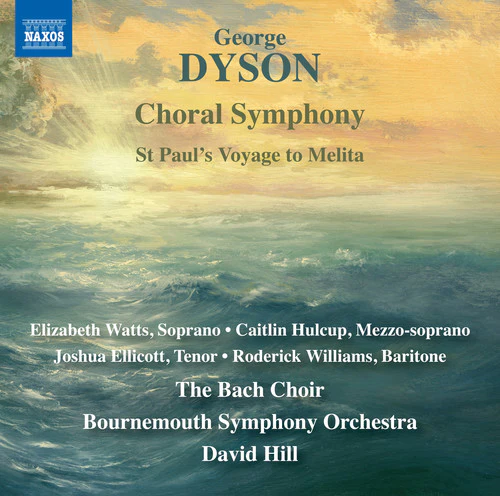
Stanford: Choral Music / Hill, Bach Choir, Bournemouth Symphony
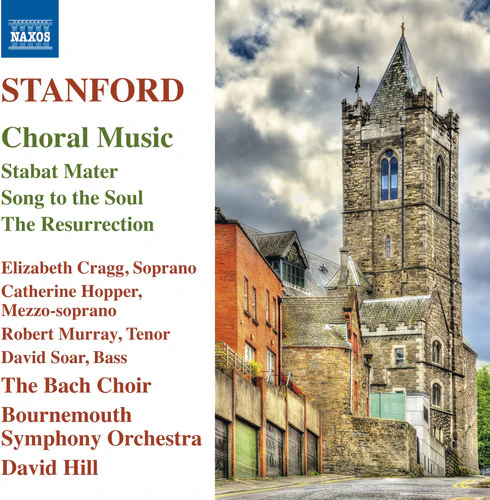
Choral music was central to Charles Villiers Stanford's life as a composer. Balancing solemnity with rapturous affirmation. The Resurrection was his first major choral work, written while he was studying under Carl Reinecke in Leipzig and anticipating Mahler's use of Klopstock's eponymous poem in his "Resurrection" Symphony. The dramatic, at times almost operatic and Wagnerian Stabat Mater is a cantata with two purely orchestral movements suggestive of a large-scale symphony, while Song to the Soul contains some of Stanford's most exhilarating utterances, though it was never performed in his lifetime.
Choral music was central to Charles Villiers Stanford's life as a composer. Balancing solemnity with rapturous affirmation. The Resurrection was his first major choral work, written while he was studying under Carl Reinecke in Leipzig and anticipating Mahler's use of Klopstock's eponymous poem in his "Resurrection" Symphony. The dramatic, at times almost operatic and Wagnerian Stabat Mater is a cantata with two purely orchestral movements suggestive of a large-scale symphony, while Song to the Soul contains some of Stanford's most exhilarating utterances, though it was never performed in his lifetime.
Original: $13.99
-65%$13.99
$4.90Description
Choral music was central to Charles Villiers Stanford's life as a composer. Balancing solemnity with rapturous affirmation. The Resurrection was his first major choral work, written while he was studying under Carl Reinecke in Leipzig and anticipating Mahler's use of Klopstock's eponymous poem in his "Resurrection" Symphony. The dramatic, at times almost operatic and Wagnerian Stabat Mater is a cantata with two purely orchestral movements suggestive of a large-scale symphony, while Song to the Soul contains some of Stanford's most exhilarating utterances, though it was never performed in his lifetime.