🎉 Up to 70% Off Selected ItemsShop Sale

1 / 2
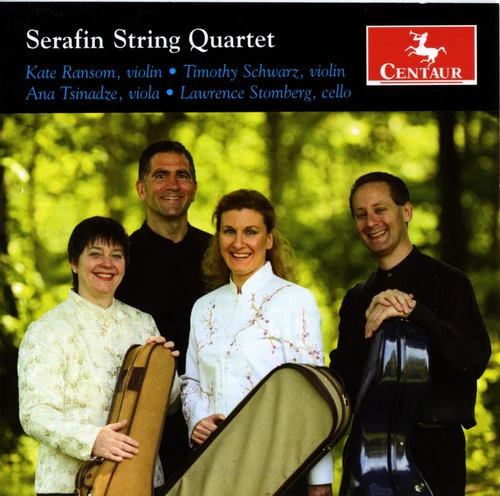
Still, Dvorak, Barber, Gershwin / Serafin String Quartet
QUARTET AMERICAN STYLE: POSTCARDS FROM THE AMERICAN MUSICAL PAST • Serafin Str Qrt • CENTAUR 3050 (65:52)
STILL Danzas de Panama. DVO?ÁK String Quartet No. 12 in F, op. 96, “American”.BARBER String Quartet in b, op. 11. GERSHWIN Lullaby
In the informative notes that accompany this disc, writer Renée Silberman asks: “What is ‘American music’—a school of American composition? Musical institutions? High art or folk art? Traditions of the Native Americans, of Blacks, of immigrants and visitors?” As Silberman suggests, it is all but impossible to explain what makes music “American.” Like the striking diversity that makes up our people’s DNA, American music is not readily susceptible to description or categorization, let alone definition. It is remarkable, therefore, that all-American music programs bode so well in the concert hall or on record, as evidenced by the album for consideration here, which I believe marks the debut of the Serafin Quartet, a string ensemble based in Wilmington, Delaware.
The album begins and ends on a lighter note, with William Grant Still’s Danzas de Panama and George Gershwin’s well-known Lullaby. In the former work, a delightful suite inspired by Still’s perennial fascination with the music of African slaves and Caribbean people, the Serafins provide idiomatic and rhythmically engaging performances. In the Gershwin work, the ensemble’s relatively quick pace prevents the premature onset of slumber and makes the music sound less repetitive—and in truth more interesting—than it is. In Dvo?ák’s “American” Quartet, the Serafins play with impressive accuracy and drive, and the silvery tone of the violin of the ensemble’s leader—a Sanctus Serafin—is particularly delightful. If, at the end of the day, I still gravitate towards the Panocha Quartet’s more nuanced interpretation, the Serafin’s comparatively clear-eyed approach is undeniably valid. I have no reservations whatsoever about the ensemble’s performance of the Barber String Quartet. The Serafins are less driven than the Emerson Quartet, and their more flexible tempo allows the Brahmsian pathos of this work to shine through. Violinist Timothy Schwartz’s and cellist Lawrence Stomberg’s contributions in the Molto Adagio—most often heard in the arrangement known as the Adagio for Strings—deserve special note. (In the interest of full disclosure, I note that since this recording was made in 2009, Schwartz has left the ensemble.)
The engineering is excellent. In sum, this is a memorable disc that is guaranteed to provide much enjoyment to chamber music enthusiasts.
FANFARE: Radu A. Lelutiu
QUARTET AMERICAN STYLE: POSTCARDS FROM THE AMERICAN MUSICAL PAST • Serafin Str Qrt • CENTAUR 3050 (65:52)
STILL Danzas de Panama. DVO?ÁK String Quartet No. 12 in F, op. 96, “American”.BARBER String Quartet in b, op. 11. GERSHWIN Lullaby
In the informative notes that accompany this disc, writer Renée Silberman asks: “What is ‘American music’—a school of American composition? Musical institutions? High art or folk art? Traditions of the Native Americans, of Blacks, of immigrants and visitors?” As Silberman suggests, it is all but impossible to explain what makes music “American.” Like the striking diversity that makes up our people’s DNA, American music is not readily susceptible to description or categorization, let alone definition. It is remarkable, therefore, that all-American music programs bode so well in the concert hall or on record, as evidenced by the album for consideration here, which I believe marks the debut of the Serafin Quartet, a string ensemble based in Wilmington, Delaware.
The album begins and ends on a lighter note, with William Grant Still’s Danzas de Panama and George Gershwin’s well-known Lullaby. In the former work, a delightful suite inspired by Still’s perennial fascination with the music of African slaves and Caribbean people, the Serafins provide idiomatic and rhythmically engaging performances. In the Gershwin work, the ensemble’s relatively quick pace prevents the premature onset of slumber and makes the music sound less repetitive—and in truth more interesting—than it is. In Dvo?ák’s “American” Quartet, the Serafins play with impressive accuracy and drive, and the silvery tone of the violin of the ensemble’s leader—a Sanctus Serafin—is particularly delightful. If, at the end of the day, I still gravitate towards the Panocha Quartet’s more nuanced interpretation, the Serafin’s comparatively clear-eyed approach is undeniably valid. I have no reservations whatsoever about the ensemble’s performance of the Barber String Quartet. The Serafins are less driven than the Emerson Quartet, and their more flexible tempo allows the Brahmsian pathos of this work to shine through. Violinist Timothy Schwartz’s and cellist Lawrence Stomberg’s contributions in the Molto Adagio—most often heard in the arrangement known as the Adagio for Strings—deserve special note. (In the interest of full disclosure, I note that since this recording was made in 2009, Schwartz has left the ensemble.)
The engineering is excellent. In sum, this is a memorable disc that is guaranteed to provide much enjoyment to chamber music enthusiasts.
FANFARE: Radu A. Lelutiu
$18.99
Still, Dvorak, Barber, Gershwin / Serafin String Quartet—
$18.99
Description
QUARTET AMERICAN STYLE: POSTCARDS FROM THE AMERICAN MUSICAL PAST • Serafin Str Qrt • CENTAUR 3050 (65:52)
STILL Danzas de Panama. DVO?ÁK String Quartet No. 12 in F, op. 96, “American”.BARBER String Quartet in b, op. 11. GERSHWIN Lullaby
In the informative notes that accompany this disc, writer Renée Silberman asks: “What is ‘American music’—a school of American composition? Musical institutions? High art or folk art? Traditions of the Native Americans, of Blacks, of immigrants and visitors?” As Silberman suggests, it is all but impossible to explain what makes music “American.” Like the striking diversity that makes up our people’s DNA, American music is not readily susceptible to description or categorization, let alone definition. It is remarkable, therefore, that all-American music programs bode so well in the concert hall or on record, as evidenced by the album for consideration here, which I believe marks the debut of the Serafin Quartet, a string ensemble based in Wilmington, Delaware.
The album begins and ends on a lighter note, with William Grant Still’s Danzas de Panama and George Gershwin’s well-known Lullaby. In the former work, a delightful suite inspired by Still’s perennial fascination with the music of African slaves and Caribbean people, the Serafins provide idiomatic and rhythmically engaging performances. In the Gershwin work, the ensemble’s relatively quick pace prevents the premature onset of slumber and makes the music sound less repetitive—and in truth more interesting—than it is. In Dvo?ák’s “American” Quartet, the Serafins play with impressive accuracy and drive, and the silvery tone of the violin of the ensemble’s leader—a Sanctus Serafin—is particularly delightful. If, at the end of the day, I still gravitate towards the Panocha Quartet’s more nuanced interpretation, the Serafin’s comparatively clear-eyed approach is undeniably valid. I have no reservations whatsoever about the ensemble’s performance of the Barber String Quartet. The Serafins are less driven than the Emerson Quartet, and their more flexible tempo allows the Brahmsian pathos of this work to shine through. Violinist Timothy Schwartz’s and cellist Lawrence Stomberg’s contributions in the Molto Adagio—most often heard in the arrangement known as the Adagio for Strings—deserve special note. (In the interest of full disclosure, I note that since this recording was made in 2009, Schwartz has left the ensemble.)
The engineering is excellent. In sum, this is a memorable disc that is guaranteed to provide much enjoyment to chamber music enthusiasts.
FANFARE: Radu A. Lelutiu






















