🎉 Up to 70% Off Selected ItemsShop Sale

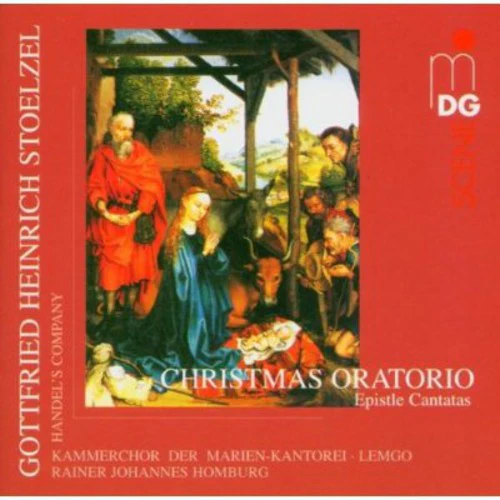
Stölzel: Christmas Oratorio - Epistle Cantatas
Unlike the cantatas discussed in my review of Gottfried Stölzel's 1736/37 so-called "Christmas Oratorio" on CPO (type Q4082 in Search Reviews), these, composed in 1728 and intended for use during Christmas, are more musically substantive (but still concise) and offer some outstanding arias and duets. In addition, we hear recitatives that in harmonic and melodic effect are far more than just functional devices--and the choral sections, while relatively short, are also very well crafted, showing the work of a composer adept at devising solid thematic material and knowing how to keep it interesting. The stylistic similarities to Bach will be obvious to anyone familiar with the cantatas of the slightly older master (he was five years Stölzel's senior), and if you really try, your imagination may trick you into believing you're hearing a direct reference or two--a little thematic slice here, an orchestral flourish there--and certainly Stölzel's use of compound meter in the duet aria "Heller Aufgang aus der Höhe" with obbligato violin (from the opening cantata) is a page right out of any number of Bach's works in the genre.
But the high quality of the writing, especially in the attractively shaped arias, bespeaks a composer with some fine ideas of his own. Try the alto/bass duet in the above-mentioned cantata, or the soprano solo in the following work, a lovely melody that dances liltingly along accompanied by oboes and strings. Here and throughout, soprano Christine Rembeck shows easy confidence to go with her beautiful voice, and her ornaments are attractive and effective. In fact, all of the singers are first rate, taking to their "roles" with obvious appreciation for such singable and satisfying music. There are some unusual features of scoring, such as the alto aria in the Christmas cantata Kündlich groß ist das gottselige Geheimnis, with its eerie continuo doubling and violins weaving around above the voice in thirds.
The oboe concerto is a feisty work that wastes not a note, from the lively opening Allegro to the short Andante that begins in faux-passacaglia fashion with only upper strings accompanying the soloist. The third movement is a compact Allegro with enough challenging flourishes and fleeting runs to satisfy an oboist looking for a few moments to show off. Stölzel shows imagination in his chorale harmonizations--from the trumpet-tinged In diesem Licht kannst Du sehen to the simple and direct Gib mir, o Jesu, nur heilige gute Gedanken (which many listeners will recognize as "Lobet den Herren").
The recording is somewhat spacious and heavy on the resonance, which lends a hugeness to the sound that swallows some detail in the tutti sections. And--typically and irritatingly--MDG provides only German texts (with no accompanying track numbers). On first listen, I thought I was not going to have a whole lot to say about this music--but the more I listened, the more I enjoyed, and it's likely you'll do the same. These are really fine works that competent church choirs and accomplished college and community choral groups should seriously consider as alternatives to programs typically heavy on Bach and Handel.
--David Vernier, ClassicsToday.com
But the high quality of the writing, especially in the attractively shaped arias, bespeaks a composer with some fine ideas of his own. Try the alto/bass duet in the above-mentioned cantata, or the soprano solo in the following work, a lovely melody that dances liltingly along accompanied by oboes and strings. Here and throughout, soprano Christine Rembeck shows easy confidence to go with her beautiful voice, and her ornaments are attractive and effective. In fact, all of the singers are first rate, taking to their "roles" with obvious appreciation for such singable and satisfying music. There are some unusual features of scoring, such as the alto aria in the Christmas cantata Kündlich groß ist das gottselige Geheimnis, with its eerie continuo doubling and violins weaving around above the voice in thirds.
The oboe concerto is a feisty work that wastes not a note, from the lively opening Allegro to the short Andante that begins in faux-passacaglia fashion with only upper strings accompanying the soloist. The third movement is a compact Allegro with enough challenging flourishes and fleeting runs to satisfy an oboist looking for a few moments to show off. Stölzel shows imagination in his chorale harmonizations--from the trumpet-tinged In diesem Licht kannst Du sehen to the simple and direct Gib mir, o Jesu, nur heilige gute Gedanken (which many listeners will recognize as "Lobet den Herren").
The recording is somewhat spacious and heavy on the resonance, which lends a hugeness to the sound that swallows some detail in the tutti sections. And--typically and irritatingly--MDG provides only German texts (with no accompanying track numbers). On first listen, I thought I was not going to have a whole lot to say about this music--but the more I listened, the more I enjoyed, and it's likely you'll do the same. These are really fine works that competent church choirs and accomplished college and community choral groups should seriously consider as alternatives to programs typically heavy on Bach and Handel.
--David Vernier, ClassicsToday.com
Unlike the cantatas discussed in my review of Gottfried Stölzel's 1736/37 so-called "Christmas Oratorio" on CPO (type Q4082 in Search Reviews), these, composed in 1728 and intended for use during Christmas, are more musically substantive (but still concise) and offer some outstanding arias and duets. In addition, we hear recitatives that in harmonic and melodic effect are far more than just functional devices--and the choral sections, while relatively short, are also very well crafted, showing the work of a composer adept at devising solid thematic material and knowing how to keep it interesting. The stylistic similarities to Bach will be obvious to anyone familiar with the cantatas of the slightly older master (he was five years Stölzel's senior), and if you really try, your imagination may trick you into believing you're hearing a direct reference or two--a little thematic slice here, an orchestral flourish there--and certainly Stölzel's use of compound meter in the duet aria "Heller Aufgang aus der Höhe" with obbligato violin (from the opening cantata) is a page right out of any number of Bach's works in the genre.
But the high quality of the writing, especially in the attractively shaped arias, bespeaks a composer with some fine ideas of his own. Try the alto/bass duet in the above-mentioned cantata, or the soprano solo in the following work, a lovely melody that dances liltingly along accompanied by oboes and strings. Here and throughout, soprano Christine Rembeck shows easy confidence to go with her beautiful voice, and her ornaments are attractive and effective. In fact, all of the singers are first rate, taking to their "roles" with obvious appreciation for such singable and satisfying music. There are some unusual features of scoring, such as the alto aria in the Christmas cantata Kündlich groß ist das gottselige Geheimnis, with its eerie continuo doubling and violins weaving around above the voice in thirds.
The oboe concerto is a feisty work that wastes not a note, from the lively opening Allegro to the short Andante that begins in faux-passacaglia fashion with only upper strings accompanying the soloist. The third movement is a compact Allegro with enough challenging flourishes and fleeting runs to satisfy an oboist looking for a few moments to show off. Stölzel shows imagination in his chorale harmonizations--from the trumpet-tinged In diesem Licht kannst Du sehen to the simple and direct Gib mir, o Jesu, nur heilige gute Gedanken (which many listeners will recognize as "Lobet den Herren").
The recording is somewhat spacious and heavy on the resonance, which lends a hugeness to the sound that swallows some detail in the tutti sections. And--typically and irritatingly--MDG provides only German texts (with no accompanying track numbers). On first listen, I thought I was not going to have a whole lot to say about this music--but the more I listened, the more I enjoyed, and it's likely you'll do the same. These are really fine works that competent church choirs and accomplished college and community choral groups should seriously consider as alternatives to programs typically heavy on Bach and Handel.
--David Vernier, ClassicsToday.com
But the high quality of the writing, especially in the attractively shaped arias, bespeaks a composer with some fine ideas of his own. Try the alto/bass duet in the above-mentioned cantata, or the soprano solo in the following work, a lovely melody that dances liltingly along accompanied by oboes and strings. Here and throughout, soprano Christine Rembeck shows easy confidence to go with her beautiful voice, and her ornaments are attractive and effective. In fact, all of the singers are first rate, taking to their "roles" with obvious appreciation for such singable and satisfying music. There are some unusual features of scoring, such as the alto aria in the Christmas cantata Kündlich groß ist das gottselige Geheimnis, with its eerie continuo doubling and violins weaving around above the voice in thirds.
The oboe concerto is a feisty work that wastes not a note, from the lively opening Allegro to the short Andante that begins in faux-passacaglia fashion with only upper strings accompanying the soloist. The third movement is a compact Allegro with enough challenging flourishes and fleeting runs to satisfy an oboist looking for a few moments to show off. Stölzel shows imagination in his chorale harmonizations--from the trumpet-tinged In diesem Licht kannst Du sehen to the simple and direct Gib mir, o Jesu, nur heilige gute Gedanken (which many listeners will recognize as "Lobet den Herren").
The recording is somewhat spacious and heavy on the resonance, which lends a hugeness to the sound that swallows some detail in the tutti sections. And--typically and irritatingly--MDG provides only German texts (with no accompanying track numbers). On first listen, I thought I was not going to have a whole lot to say about this music--but the more I listened, the more I enjoyed, and it's likely you'll do the same. These are really fine works that competent church choirs and accomplished college and community choral groups should seriously consider as alternatives to programs typically heavy on Bach and Handel.
--David Vernier, ClassicsToday.com
$6.30
Original: $17.99
-65%Stölzel: Christmas Oratorio - Epistle Cantatas—
$17.99
$6.30Description
Unlike the cantatas discussed in my review of Gottfried Stölzel's 1736/37 so-called "Christmas Oratorio" on CPO (type Q4082 in Search Reviews), these, composed in 1728 and intended for use during Christmas, are more musically substantive (but still concise) and offer some outstanding arias and duets. In addition, we hear recitatives that in harmonic and melodic effect are far more than just functional devices--and the choral sections, while relatively short, are also very well crafted, showing the work of a composer adept at devising solid thematic material and knowing how to keep it interesting. The stylistic similarities to Bach will be obvious to anyone familiar with the cantatas of the slightly older master (he was five years Stölzel's senior), and if you really try, your imagination may trick you into believing you're hearing a direct reference or two--a little thematic slice here, an orchestral flourish there--and certainly Stölzel's use of compound meter in the duet aria "Heller Aufgang aus der Höhe" with obbligato violin (from the opening cantata) is a page right out of any number of Bach's works in the genre.
But the high quality of the writing, especially in the attractively shaped arias, bespeaks a composer with some fine ideas of his own. Try the alto/bass duet in the above-mentioned cantata, or the soprano solo in the following work, a lovely melody that dances liltingly along accompanied by oboes and strings. Here and throughout, soprano Christine Rembeck shows easy confidence to go with her beautiful voice, and her ornaments are attractive and effective. In fact, all of the singers are first rate, taking to their "roles" with obvious appreciation for such singable and satisfying music. There are some unusual features of scoring, such as the alto aria in the Christmas cantata Kündlich groß ist das gottselige Geheimnis, with its eerie continuo doubling and violins weaving around above the voice in thirds.
The oboe concerto is a feisty work that wastes not a note, from the lively opening Allegro to the short Andante that begins in faux-passacaglia fashion with only upper strings accompanying the soloist. The third movement is a compact Allegro with enough challenging flourishes and fleeting runs to satisfy an oboist looking for a few moments to show off. Stölzel shows imagination in his chorale harmonizations--from the trumpet-tinged In diesem Licht kannst Du sehen to the simple and direct Gib mir, o Jesu, nur heilige gute Gedanken (which many listeners will recognize as "Lobet den Herren").
The recording is somewhat spacious and heavy on the resonance, which lends a hugeness to the sound that swallows some detail in the tutti sections. And--typically and irritatingly--MDG provides only German texts (with no accompanying track numbers). On first listen, I thought I was not going to have a whole lot to say about this music--but the more I listened, the more I enjoyed, and it's likely you'll do the same. These are really fine works that competent church choirs and accomplished college and community choral groups should seriously consider as alternatives to programs typically heavy on Bach and Handel.
--David Vernier, ClassicsToday.com
But the high quality of the writing, especially in the attractively shaped arias, bespeaks a composer with some fine ideas of his own. Try the alto/bass duet in the above-mentioned cantata, or the soprano solo in the following work, a lovely melody that dances liltingly along accompanied by oboes and strings. Here and throughout, soprano Christine Rembeck shows easy confidence to go with her beautiful voice, and her ornaments are attractive and effective. In fact, all of the singers are first rate, taking to their "roles" with obvious appreciation for such singable and satisfying music. There are some unusual features of scoring, such as the alto aria in the Christmas cantata Kündlich groß ist das gottselige Geheimnis, with its eerie continuo doubling and violins weaving around above the voice in thirds.
The oboe concerto is a feisty work that wastes not a note, from the lively opening Allegro to the short Andante that begins in faux-passacaglia fashion with only upper strings accompanying the soloist. The third movement is a compact Allegro with enough challenging flourishes and fleeting runs to satisfy an oboist looking for a few moments to show off. Stölzel shows imagination in his chorale harmonizations--from the trumpet-tinged In diesem Licht kannst Du sehen to the simple and direct Gib mir, o Jesu, nur heilige gute Gedanken (which many listeners will recognize as "Lobet den Herren").
The recording is somewhat spacious and heavy on the resonance, which lends a hugeness to the sound that swallows some detail in the tutti sections. And--typically and irritatingly--MDG provides only German texts (with no accompanying track numbers). On first listen, I thought I was not going to have a whole lot to say about this music--but the more I listened, the more I enjoyed, and it's likely you'll do the same. These are really fine works that competent church choirs and accomplished college and community choral groups should seriously consider as alternatives to programs typically heavy on Bach and Handel.
--David Vernier, ClassicsToday.com