🎉 Up to 70% Off Selected ItemsShop Sale

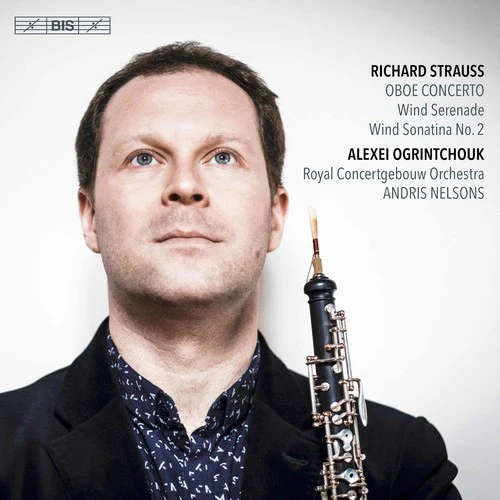
Strauss: Oboe Concerto, Sonata & Sonatina No. 2 / Nelsons, Royal Concertgebouw
Despite his advanced age and the chaos surrounding him, Richard Strauss remained highly productive well into the 1940's. As the Second World War was coming to an end in 1944-45, the eighty-year-old composer was working on his Oboe Concerto and Sonatina No. 2 for winds, as well as the Metamorphosen for strings. While the latter work was an explicit response to the destruction Strauss was witnessing, in the Concerto and the Sonatina the composer seemed to be turning his mind away from the events surrounding him. There is a pastoral quality to the oboe concerto, with a highly tuneful solo part and more than occasional touches of nostalgia for the 18th century. Similarly, Strauss headed the score of the sonatina with a dedication ''to the spirit of the immortal Mozart at the end of a life full of thankfulness''. To an extent, one might say that Strauss at the end of his life returned to the musical models of his youth. It is therefore fitting that these two works frame the Serenade in E flat major for wind ensemble, composed more than sixty years earlier in the tradition of entertainment music by Schubert and Mendelssohn. Alexei Ogrintchouk, one of today's leading oboists, has proven himself in previous recordings for BIS ranging from Bach to Nikos Skalkottas and Antal Dorati. With sterling support from the Royal Concertgebouw Orchestra conducted by Andris Nelsons, he here makes light of the considerable difficulties of the solo part of the oboe concerto, and also directs his colleagues from the orchestra's wind section in the works for wind ensemble.
-----
REVIEW:
Late Strauss has a sound very different from the sumptuous, huge-orchestra one of earlier Strauss, and the 1945 Concerto for Oboe and Small Orchestra, one of the composer’s final works, shows this quite clearly. The live recording of the concerto for BIS by Alexei Ogrintchouk is a very fine, well-played one, and the conducting by Andris Nelsons is sensitive and nicely paced.
Ogrintchouk is both oboist and conductor in the other works on the SACD, which are studio recordings. The short, charming, lively and quite self-assured Serenade for 13 Wind Instruments is from the opposite, earliest part of Strauss’ career, dating to 1881.
The final work on this disc is much more substantial — longer than the other two put together. The label Sonatina therefore seems something of a misnomer. It features very skillful wind writing — a Strauss characteristic that does not always get adequate attention — and an overall warm and mellow sound somewhat reminiscent of that of Brahms. Strauss was something of a natural in wind writing, as the excellent playing on this recording makes abundantly clear.
– Infodad.com
-----
REVIEW:
Late Strauss has a sound very different from the sumptuous, huge-orchestra one of earlier Strauss, and the 1945 Concerto for Oboe and Small Orchestra, one of the composer’s final works, shows this quite clearly. The live recording of the concerto for BIS by Alexei Ogrintchouk is a very fine, well-played one, and the conducting by Andris Nelsons is sensitive and nicely paced.
Ogrintchouk is both oboist and conductor in the other works on the SACD, which are studio recordings. The short, charming, lively and quite self-assured Serenade for 13 Wind Instruments is from the opposite, earliest part of Strauss’ career, dating to 1881.
The final work on this disc is much more substantial — longer than the other two put together. The label Sonatina therefore seems something of a misnomer. It features very skillful wind writing — a Strauss characteristic that does not always get adequate attention — and an overall warm and mellow sound somewhat reminiscent of that of Brahms. Strauss was something of a natural in wind writing, as the excellent playing on this recording makes abundantly clear.
– Infodad.com
Despite his advanced age and the chaos surrounding him, Richard Strauss remained highly productive well into the 1940's. As the Second World War was coming to an end in 1944-45, the eighty-year-old composer was working on his Oboe Concerto and Sonatina No. 2 for winds, as well as the Metamorphosen for strings. While the latter work was an explicit response to the destruction Strauss was witnessing, in the Concerto and the Sonatina the composer seemed to be turning his mind away from the events surrounding him. There is a pastoral quality to the oboe concerto, with a highly tuneful solo part and more than occasional touches of nostalgia for the 18th century. Similarly, Strauss headed the score of the sonatina with a dedication ''to the spirit of the immortal Mozart at the end of a life full of thankfulness''. To an extent, one might say that Strauss at the end of his life returned to the musical models of his youth. It is therefore fitting that these two works frame the Serenade in E flat major for wind ensemble, composed more than sixty years earlier in the tradition of entertainment music by Schubert and Mendelssohn. Alexei Ogrintchouk, one of today's leading oboists, has proven himself in previous recordings for BIS ranging from Bach to Nikos Skalkottas and Antal Dorati. With sterling support from the Royal Concertgebouw Orchestra conducted by Andris Nelsons, he here makes light of the considerable difficulties of the solo part of the oboe concerto, and also directs his colleagues from the orchestra's wind section in the works for wind ensemble.
-----
REVIEW:
Late Strauss has a sound very different from the sumptuous, huge-orchestra one of earlier Strauss, and the 1945 Concerto for Oboe and Small Orchestra, one of the composer’s final works, shows this quite clearly. The live recording of the concerto for BIS by Alexei Ogrintchouk is a very fine, well-played one, and the conducting by Andris Nelsons is sensitive and nicely paced.
Ogrintchouk is both oboist and conductor in the other works on the SACD, which are studio recordings. The short, charming, lively and quite self-assured Serenade for 13 Wind Instruments is from the opposite, earliest part of Strauss’ career, dating to 1881.
The final work on this disc is much more substantial — longer than the other two put together. The label Sonatina therefore seems something of a misnomer. It features very skillful wind writing — a Strauss characteristic that does not always get adequate attention — and an overall warm and mellow sound somewhat reminiscent of that of Brahms. Strauss was something of a natural in wind writing, as the excellent playing on this recording makes abundantly clear.
– Infodad.com
-----
REVIEW:
Late Strauss has a sound very different from the sumptuous, huge-orchestra one of earlier Strauss, and the 1945 Concerto for Oboe and Small Orchestra, one of the composer’s final works, shows this quite clearly. The live recording of the concerto for BIS by Alexei Ogrintchouk is a very fine, well-played one, and the conducting by Andris Nelsons is sensitive and nicely paced.
Ogrintchouk is both oboist and conductor in the other works on the SACD, which are studio recordings. The short, charming, lively and quite self-assured Serenade for 13 Wind Instruments is from the opposite, earliest part of Strauss’ career, dating to 1881.
The final work on this disc is much more substantial — longer than the other two put together. The label Sonatina therefore seems something of a misnomer. It features very skillful wind writing — a Strauss characteristic that does not always get adequate attention — and an overall warm and mellow sound somewhat reminiscent of that of Brahms. Strauss was something of a natural in wind writing, as the excellent playing on this recording makes abundantly clear.
– Infodad.com
$7.70
Original: $21.99
-65%Strauss: Oboe Concerto, Sonata & Sonatina No. 2 / Nelsons, Royal Concertgebouw—
$21.99
$7.70Description
Despite his advanced age and the chaos surrounding him, Richard Strauss remained highly productive well into the 1940's. As the Second World War was coming to an end in 1944-45, the eighty-year-old composer was working on his Oboe Concerto and Sonatina No. 2 for winds, as well as the Metamorphosen for strings. While the latter work was an explicit response to the destruction Strauss was witnessing, in the Concerto and the Sonatina the composer seemed to be turning his mind away from the events surrounding him. There is a pastoral quality to the oboe concerto, with a highly tuneful solo part and more than occasional touches of nostalgia for the 18th century. Similarly, Strauss headed the score of the sonatina with a dedication ''to the spirit of the immortal Mozart at the end of a life full of thankfulness''. To an extent, one might say that Strauss at the end of his life returned to the musical models of his youth. It is therefore fitting that these two works frame the Serenade in E flat major for wind ensemble, composed more than sixty years earlier in the tradition of entertainment music by Schubert and Mendelssohn. Alexei Ogrintchouk, one of today's leading oboists, has proven himself in previous recordings for BIS ranging from Bach to Nikos Skalkottas and Antal Dorati. With sterling support from the Royal Concertgebouw Orchestra conducted by Andris Nelsons, he here makes light of the considerable difficulties of the solo part of the oboe concerto, and also directs his colleagues from the orchestra's wind section in the works for wind ensemble.
-----
REVIEW:
Late Strauss has a sound very different from the sumptuous, huge-orchestra one of earlier Strauss, and the 1945 Concerto for Oboe and Small Orchestra, one of the composer’s final works, shows this quite clearly. The live recording of the concerto for BIS by Alexei Ogrintchouk is a very fine, well-played one, and the conducting by Andris Nelsons is sensitive and nicely paced.
Ogrintchouk is both oboist and conductor in the other works on the SACD, which are studio recordings. The short, charming, lively and quite self-assured Serenade for 13 Wind Instruments is from the opposite, earliest part of Strauss’ career, dating to 1881.
The final work on this disc is much more substantial — longer than the other two put together. The label Sonatina therefore seems something of a misnomer. It features very skillful wind writing — a Strauss characteristic that does not always get adequate attention — and an overall warm and mellow sound somewhat reminiscent of that of Brahms. Strauss was something of a natural in wind writing, as the excellent playing on this recording makes abundantly clear.
– Infodad.com
-----
REVIEW:
Late Strauss has a sound very different from the sumptuous, huge-orchestra one of earlier Strauss, and the 1945 Concerto for Oboe and Small Orchestra, one of the composer’s final works, shows this quite clearly. The live recording of the concerto for BIS by Alexei Ogrintchouk is a very fine, well-played one, and the conducting by Andris Nelsons is sensitive and nicely paced.
Ogrintchouk is both oboist and conductor in the other works on the SACD, which are studio recordings. The short, charming, lively and quite self-assured Serenade for 13 Wind Instruments is from the opposite, earliest part of Strauss’ career, dating to 1881.
The final work on this disc is much more substantial — longer than the other two put together. The label Sonatina therefore seems something of a misnomer. It features very skillful wind writing — a Strauss characteristic that does not always get adequate attention — and an overall warm and mellow sound somewhat reminiscent of that of Brahms. Strauss was something of a natural in wind writing, as the excellent playing on this recording makes abundantly clear.
– Infodad.com