🎉 Up to 70% Off Selected ItemsShop Sale

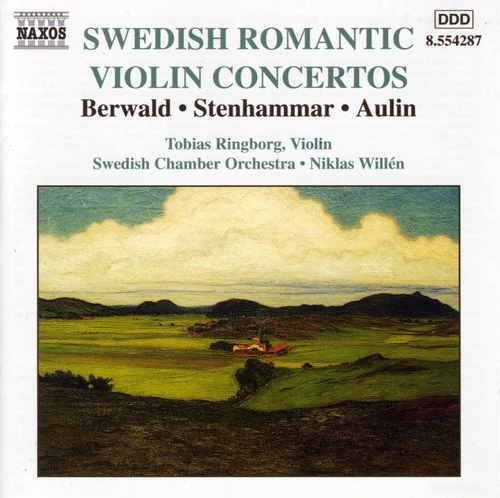
Swedish Romantic Violin Concertos - Berwald, Aulin, Et Al
Poised on the northern margin of Europe, Swedish composers struggled to have their voices heard but built a strong national musical culture during the course of the 19th century. The works for violin and orchestra collected on this disc have little obviously Swedish content, such as folk tunes. Rather, the composers can be heard drawing on the models of the musical giants of their day, asserting that Swedish music was ready for comparison on equal terms with that of central Europe.
Written early in the century, Franz Berwald's youthful concerto is an eccentric work that stretches the classical tradition. Fragmented melodies and military figures in the outer movements frame a very brief Adagio. Jumping to the end of the century, Wilhelm Stenhammar and Tor Aulin composed under the influence of Bruch, Brahms and Schumann. Stenhammar's Romances are predominantly lyrical, allowing young soloist Tobias Ringborg's attractive singing tone to shine. Aulin's Concerto no 3 is dramatic and impassioned; with many striking unaccompanied passages and austere dialogues between violin and orchestra. Despite the obvious influences, this work has an originality of rhetoric and style that make it the real discovery here.
Written early in the century, Franz Berwald's youthful concerto is an eccentric work that stretches the classical tradition. Fragmented melodies and military figures in the outer movements frame a very brief Adagio. Jumping to the end of the century, Wilhelm Stenhammar and Tor Aulin composed under the influence of Bruch, Brahms and Schumann. Stenhammar's Romances are predominantly lyrical, allowing young soloist Tobias Ringborg's attractive singing tone to shine. Aulin's Concerto no 3 is dramatic and impassioned; with many striking unaccompanied passages and austere dialogues between violin and orchestra. Despite the obvious influences, this work has an originality of rhetoric and style that make it the real discovery here.
Poised on the northern margin of Europe, Swedish composers struggled to have their voices heard but built a strong national musical culture during the course of the 19th century. The works for violin and orchestra collected on this disc have little obviously Swedish content, such as folk tunes. Rather, the composers can be heard drawing on the models of the musical giants of their day, asserting that Swedish music was ready for comparison on equal terms with that of central Europe.
Written early in the century, Franz Berwald's youthful concerto is an eccentric work that stretches the classical tradition. Fragmented melodies and military figures in the outer movements frame a very brief Adagio. Jumping to the end of the century, Wilhelm Stenhammar and Tor Aulin composed under the influence of Bruch, Brahms and Schumann. Stenhammar's Romances are predominantly lyrical, allowing young soloist Tobias Ringborg's attractive singing tone to shine. Aulin's Concerto no 3 is dramatic and impassioned; with many striking unaccompanied passages and austere dialogues between violin and orchestra. Despite the obvious influences, this work has an originality of rhetoric and style that make it the real discovery here.
Written early in the century, Franz Berwald's youthful concerto is an eccentric work that stretches the classical tradition. Fragmented melodies and military figures in the outer movements frame a very brief Adagio. Jumping to the end of the century, Wilhelm Stenhammar and Tor Aulin composed under the influence of Bruch, Brahms and Schumann. Stenhammar's Romances are predominantly lyrical, allowing young soloist Tobias Ringborg's attractive singing tone to shine. Aulin's Concerto no 3 is dramatic and impassioned; with many striking unaccompanied passages and austere dialogues between violin and orchestra. Despite the obvious influences, this work has an originality of rhetoric and style that make it the real discovery here.
$7.00
Original: $19.99
-65%Swedish Romantic Violin Concertos - Berwald, Aulin, Et Al—
$19.99
$7.00Description
Poised on the northern margin of Europe, Swedish composers struggled to have their voices heard but built a strong national musical culture during the course of the 19th century. The works for violin and orchestra collected on this disc have little obviously Swedish content, such as folk tunes. Rather, the composers can be heard drawing on the models of the musical giants of their day, asserting that Swedish music was ready for comparison on equal terms with that of central Europe.
Written early in the century, Franz Berwald's youthful concerto is an eccentric work that stretches the classical tradition. Fragmented melodies and military figures in the outer movements frame a very brief Adagio. Jumping to the end of the century, Wilhelm Stenhammar and Tor Aulin composed under the influence of Bruch, Brahms and Schumann. Stenhammar's Romances are predominantly lyrical, allowing young soloist Tobias Ringborg's attractive singing tone to shine. Aulin's Concerto no 3 is dramatic and impassioned; with many striking unaccompanied passages and austere dialogues between violin and orchestra. Despite the obvious influences, this work has an originality of rhetoric and style that make it the real discovery here.
Written early in the century, Franz Berwald's youthful concerto is an eccentric work that stretches the classical tradition. Fragmented melodies and military figures in the outer movements frame a very brief Adagio. Jumping to the end of the century, Wilhelm Stenhammar and Tor Aulin composed under the influence of Bruch, Brahms and Schumann. Stenhammar's Romances are predominantly lyrical, allowing young soloist Tobias Ringborg's attractive singing tone to shine. Aulin's Concerto no 3 is dramatic and impassioned; with many striking unaccompanied passages and austere dialogues between violin and orchestra. Despite the obvious influences, this work has an originality of rhetoric and style that make it the real discovery here.