🎉 Up to 70% Off Selected ItemsShop Sale

1 / 2
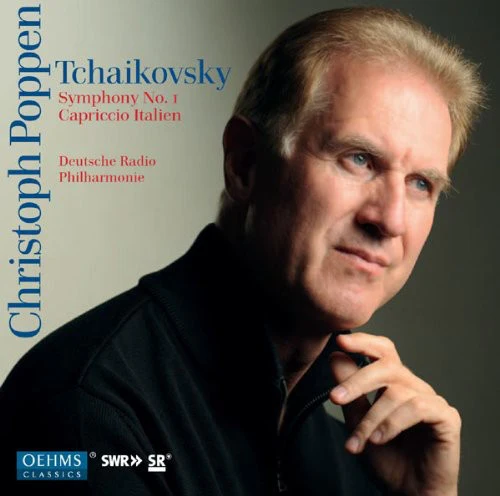
Tchaikovsky: Symphony No. 1; Capriccio Italien / Poppen, German Radio Orchestra Kaiserslautern
TCHAIKOVSKY Symphony No. 1 in g, “Winter Dreams.” Capriccio Italien • Christoph Poppen, cond; Southwest German RO • OEHMS 760 (57:57) Live: Saarbrücken 12/2007; Mainz 1/2010
This appears to be a sequel to Tchaikovsky’s Fourth with Poppen, reviewed in Fanfare 33:3. Is it part of an emerging cycle? I don’t know. I was not overly enthused with the earlier release, only because I felt Poppen’s reading of the Fourth, one of the composer’s more nervous-tic-ridden scores, needed a bit more in the way of the frenzied and the frenetic than the performance delivered. I concluded that if Poppen had brought as much urgency to the symphony as he did to the 1812 Overture that complemented it on the disc, the venture would have been more successful.
Tchaikovsky’s “Winter Dreams” Symphony is another animal altogether. Aside from the flash of drama here and there, the work is one of the composer’s loveliest lyrical creations. For Tchaikovsky, this first-born among his symphonies was perhaps his greatest labor of love. He worked on it tirelessly for at least eight years, from 1866 to 1874, making constant and sometime drastic revisions. I’d even go so far as to say that if he had left only four symphonies instead of six, the Second and Third would not be missed, for neither surpasses the First in formal construction, handling of materials, or sheer melodic inspiration.
My last encounter with a “new” Tchaikovsky First was a 1995 Arte Nova recording with Samuel Friedmann leading the Nizhny Novgorod Philharmonic, reviewed in 32:1. I thought it was very good, not quite equal perhaps to my longtime favorite with Michael Tilson Thomas and the Boston Symphony Orchestra on a 1970 Deutsche Grammophon recording, but still quite successful in capturing Tchaikovsky’s musical portraiture.
Much the same may be said of this recent recording by Poppen and his Southwest German Radio Orchestra forces. The recording has excellent perspective and presence, and Poppen’s reading of the score is well balanced and nicely characterized. I especially liked his fantasy-spun Adagio (“Land of Desolation, Land of Mists”), which morphs perfectly from a feeling of finding oneself alone and forlorn into that most human of reactions to such circumstances, escape into a state of semi-conscious reverie.
With so many recordings of the symphony and the Capriccio Italien (nearly 100 of the latter!) competing for your attention and dollars, it would be a tough case to make that Poppen’s, at full price, can lay claim to being better than any number of others. Just saying it’s at least as good as any number of others, and perhaps better than a few, seems to me recommendation enough, should you happen to be in the market for a new recording of these works.
FANFARE: Jerry Dubins
TCHAIKOVSKY Symphony No. 1 in g, “Winter Dreams.” Capriccio Italien • Christoph Poppen, cond; Southwest German RO • OEHMS 760 (57:57) Live: Saarbrücken 12/2007; Mainz 1/2010
This appears to be a sequel to Tchaikovsky’s Fourth with Poppen, reviewed in Fanfare 33:3. Is it part of an emerging cycle? I don’t know. I was not overly enthused with the earlier release, only because I felt Poppen’s reading of the Fourth, one of the composer’s more nervous-tic-ridden scores, needed a bit more in the way of the frenzied and the frenetic than the performance delivered. I concluded that if Poppen had brought as much urgency to the symphony as he did to the 1812 Overture that complemented it on the disc, the venture would have been more successful.
Tchaikovsky’s “Winter Dreams” Symphony is another animal altogether. Aside from the flash of drama here and there, the work is one of the composer’s loveliest lyrical creations. For Tchaikovsky, this first-born among his symphonies was perhaps his greatest labor of love. He worked on it tirelessly for at least eight years, from 1866 to 1874, making constant and sometime drastic revisions. I’d even go so far as to say that if he had left only four symphonies instead of six, the Second and Third would not be missed, for neither surpasses the First in formal construction, handling of materials, or sheer melodic inspiration.
My last encounter with a “new” Tchaikovsky First was a 1995 Arte Nova recording with Samuel Friedmann leading the Nizhny Novgorod Philharmonic, reviewed in 32:1. I thought it was very good, not quite equal perhaps to my longtime favorite with Michael Tilson Thomas and the Boston Symphony Orchestra on a 1970 Deutsche Grammophon recording, but still quite successful in capturing Tchaikovsky’s musical portraiture.
Much the same may be said of this recent recording by Poppen and his Southwest German Radio Orchestra forces. The recording has excellent perspective and presence, and Poppen’s reading of the score is well balanced and nicely characterized. I especially liked his fantasy-spun Adagio (“Land of Desolation, Land of Mists”), which morphs perfectly from a feeling of finding oneself alone and forlorn into that most human of reactions to such circumstances, escape into a state of semi-conscious reverie.
With so many recordings of the symphony and the Capriccio Italien (nearly 100 of the latter!) competing for your attention and dollars, it would be a tough case to make that Poppen’s, at full price, can lay claim to being better than any number of others. Just saying it’s at least as good as any number of others, and perhaps better than a few, seems to me recommendation enough, should you happen to be in the market for a new recording of these works.
FANFARE: Jerry Dubins
$2.62
Original: $7.49
-65%Tchaikovsky: Symphony No. 1; Capriccio Italien / Poppen, German Radio Orchestra Kaiserslautern—
$7.49
$2.62Description
TCHAIKOVSKY Symphony No. 1 in g, “Winter Dreams.” Capriccio Italien • Christoph Poppen, cond; Southwest German RO • OEHMS 760 (57:57) Live: Saarbrücken 12/2007; Mainz 1/2010
This appears to be a sequel to Tchaikovsky’s Fourth with Poppen, reviewed in Fanfare 33:3. Is it part of an emerging cycle? I don’t know. I was not overly enthused with the earlier release, only because I felt Poppen’s reading of the Fourth, one of the composer’s more nervous-tic-ridden scores, needed a bit more in the way of the frenzied and the frenetic than the performance delivered. I concluded that if Poppen had brought as much urgency to the symphony as he did to the 1812 Overture that complemented it on the disc, the venture would have been more successful.
Tchaikovsky’s “Winter Dreams” Symphony is another animal altogether. Aside from the flash of drama here and there, the work is one of the composer’s loveliest lyrical creations. For Tchaikovsky, this first-born among his symphonies was perhaps his greatest labor of love. He worked on it tirelessly for at least eight years, from 1866 to 1874, making constant and sometime drastic revisions. I’d even go so far as to say that if he had left only four symphonies instead of six, the Second and Third would not be missed, for neither surpasses the First in formal construction, handling of materials, or sheer melodic inspiration.
My last encounter with a “new” Tchaikovsky First was a 1995 Arte Nova recording with Samuel Friedmann leading the Nizhny Novgorod Philharmonic, reviewed in 32:1. I thought it was very good, not quite equal perhaps to my longtime favorite with Michael Tilson Thomas and the Boston Symphony Orchestra on a 1970 Deutsche Grammophon recording, but still quite successful in capturing Tchaikovsky’s musical portraiture.
Much the same may be said of this recent recording by Poppen and his Southwest German Radio Orchestra forces. The recording has excellent perspective and presence, and Poppen’s reading of the score is well balanced and nicely characterized. I especially liked his fantasy-spun Adagio (“Land of Desolation, Land of Mists”), which morphs perfectly from a feeling of finding oneself alone and forlorn into that most human of reactions to such circumstances, escape into a state of semi-conscious reverie.
With so many recordings of the symphony and the Capriccio Italien (nearly 100 of the latter!) competing for your attention and dollars, it would be a tough case to make that Poppen’s, at full price, can lay claim to being better than any number of others. Just saying it’s at least as good as any number of others, and perhaps better than a few, seems to me recommendation enough, should you happen to be in the market for a new recording of these works.
FANFARE: Jerry Dubins