🎉 Up to 70% Off Selected ItemsShop Sale

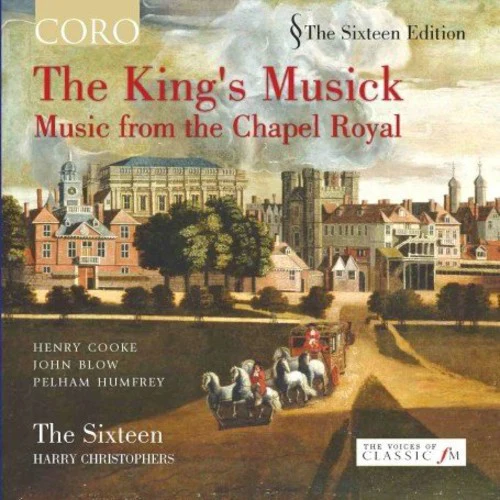
The King's Musick - Music From The Chapel Royal / The Sixteen
The major figure on this disc is Pelham Humfrey (1647–74), who is represented by seven anthems, though four of them are very brief, the shortest works on the disc. Two of his larger works, O Lord, my God (which leads the program) and By the waters of Babylon were on Nicholas McGegan’s Humfrey disc (16:5), and the shorter Wilt thou forgive that sin (also known as a hymn to God the Father) has been recorded more than a few times. The only anthem credited to John Blow (1649-1708), I will hearken, seems to be a first recording, one of two dozen symphony anthems that he wrote for the Chapel Royal. Henry Cooke (c. 1615–72), not to be confused with several Cookes who lived in other eras, is missing from every catalog I checked, so the two anthems here seem to be the first recordings of the composer. William Turner (1651–1740) is listed here only because he contributed to the “Club” Anthem (I will always give thanks), a piece of juvenilia composed by three young singers at the Chapel Royal. Judging by style, Humfrey wrote the beginning and the largest share, Turner wrote the bass solo that follows, and Blow wrote the rest. Turner is known for The king shall rejoice, written for the coronation of James II, a work that has been lost, though Simon Preston substituted another work for it in his recording (11:1).
The three principal names have more than this in common, for they were the first three masters of the choristers of the Chapel Royal after the Restoration. Training a dozen boys after the tradition had been interrupted for 11 years would have been difficult, but Captain Cooke simply went around and drafted the ablest boys from the country’s choral foundations. When he died in 1672, Humfrey succeeded him and married his daughter, but he lived only two years longer. Blow followed for the next 35 years. The anthems heard on this disc combine solo verses and choral sections with symphonies, lengthy interludes played by a consort of violins (there are only four here, with two theorbos and organ), replacing the sackbuts and cornets of earlier times.
O Lord, my God certainly deserves pride of place here, but Put me not to rebuke and O Lord, thou hast searched me out demonstrate that Cooke, his teacher, laid the foundation for the Restoration school of composition, for half of the dozen boys that started under him in 1661 made names for themselves. This is an unusually well-made collection, sharply focused in content, and beautifully sung and played in The Sixteen’s familiar style. The verse soloists are gratifying, a contrast to the embarrassing work sometimes heard from cathedral choirs that record this repertoire. An earlier disc of this kind (it also included O Lord, my God, though Purcell and Locke furnished most of the contents) was a similarly titled Erato LP by John Eliot Gardiner. (The notes here seem to quote all of the same contemporaries as Gardiner cited.) This is the finest survey of the Chapel Royal since that issue.
FANFARE: J. F. Weber
The three principal names have more than this in common, for they were the first three masters of the choristers of the Chapel Royal after the Restoration. Training a dozen boys after the tradition had been interrupted for 11 years would have been difficult, but Captain Cooke simply went around and drafted the ablest boys from the country’s choral foundations. When he died in 1672, Humfrey succeeded him and married his daughter, but he lived only two years longer. Blow followed for the next 35 years. The anthems heard on this disc combine solo verses and choral sections with symphonies, lengthy interludes played by a consort of violins (there are only four here, with two theorbos and organ), replacing the sackbuts and cornets of earlier times.
O Lord, my God certainly deserves pride of place here, but Put me not to rebuke and O Lord, thou hast searched me out demonstrate that Cooke, his teacher, laid the foundation for the Restoration school of composition, for half of the dozen boys that started under him in 1661 made names for themselves. This is an unusually well-made collection, sharply focused in content, and beautifully sung and played in The Sixteen’s familiar style. The verse soloists are gratifying, a contrast to the embarrassing work sometimes heard from cathedral choirs that record this repertoire. An earlier disc of this kind (it also included O Lord, my God, though Purcell and Locke furnished most of the contents) was a similarly titled Erato LP by John Eliot Gardiner. (The notes here seem to quote all of the same contemporaries as Gardiner cited.) This is the finest survey of the Chapel Royal since that issue.
FANFARE: J. F. Weber
The major figure on this disc is Pelham Humfrey (1647–74), who is represented by seven anthems, though four of them are very brief, the shortest works on the disc. Two of his larger works, O Lord, my God (which leads the program) and By the waters of Babylon were on Nicholas McGegan’s Humfrey disc (16:5), and the shorter Wilt thou forgive that sin (also known as a hymn to God the Father) has been recorded more than a few times. The only anthem credited to John Blow (1649-1708), I will hearken, seems to be a first recording, one of two dozen symphony anthems that he wrote for the Chapel Royal. Henry Cooke (c. 1615–72), not to be confused with several Cookes who lived in other eras, is missing from every catalog I checked, so the two anthems here seem to be the first recordings of the composer. William Turner (1651–1740) is listed here only because he contributed to the “Club” Anthem (I will always give thanks), a piece of juvenilia composed by three young singers at the Chapel Royal. Judging by style, Humfrey wrote the beginning and the largest share, Turner wrote the bass solo that follows, and Blow wrote the rest. Turner is known for The king shall rejoice, written for the coronation of James II, a work that has been lost, though Simon Preston substituted another work for it in his recording (11:1).
The three principal names have more than this in common, for they were the first three masters of the choristers of the Chapel Royal after the Restoration. Training a dozen boys after the tradition had been interrupted for 11 years would have been difficult, but Captain Cooke simply went around and drafted the ablest boys from the country’s choral foundations. When he died in 1672, Humfrey succeeded him and married his daughter, but he lived only two years longer. Blow followed for the next 35 years. The anthems heard on this disc combine solo verses and choral sections with symphonies, lengthy interludes played by a consort of violins (there are only four here, with two theorbos and organ), replacing the sackbuts and cornets of earlier times.
O Lord, my God certainly deserves pride of place here, but Put me not to rebuke and O Lord, thou hast searched me out demonstrate that Cooke, his teacher, laid the foundation for the Restoration school of composition, for half of the dozen boys that started under him in 1661 made names for themselves. This is an unusually well-made collection, sharply focused in content, and beautifully sung and played in The Sixteen’s familiar style. The verse soloists are gratifying, a contrast to the embarrassing work sometimes heard from cathedral choirs that record this repertoire. An earlier disc of this kind (it also included O Lord, my God, though Purcell and Locke furnished most of the contents) was a similarly titled Erato LP by John Eliot Gardiner. (The notes here seem to quote all of the same contemporaries as Gardiner cited.) This is the finest survey of the Chapel Royal since that issue.
FANFARE: J. F. Weber
The three principal names have more than this in common, for they were the first three masters of the choristers of the Chapel Royal after the Restoration. Training a dozen boys after the tradition had been interrupted for 11 years would have been difficult, but Captain Cooke simply went around and drafted the ablest boys from the country’s choral foundations. When he died in 1672, Humfrey succeeded him and married his daughter, but he lived only two years longer. Blow followed for the next 35 years. The anthems heard on this disc combine solo verses and choral sections with symphonies, lengthy interludes played by a consort of violins (there are only four here, with two theorbos and organ), replacing the sackbuts and cornets of earlier times.
O Lord, my God certainly deserves pride of place here, but Put me not to rebuke and O Lord, thou hast searched me out demonstrate that Cooke, his teacher, laid the foundation for the Restoration school of composition, for half of the dozen boys that started under him in 1661 made names for themselves. This is an unusually well-made collection, sharply focused in content, and beautifully sung and played in The Sixteen’s familiar style. The verse soloists are gratifying, a contrast to the embarrassing work sometimes heard from cathedral choirs that record this repertoire. An earlier disc of this kind (it also included O Lord, my God, though Purcell and Locke furnished most of the contents) was a similarly titled Erato LP by John Eliot Gardiner. (The notes here seem to quote all of the same contemporaries as Gardiner cited.) This is the finest survey of the Chapel Royal since that issue.
FANFARE: J. F. Weber
$6.65
Original: $18.99
-65%The King's Musick - Music From The Chapel Royal / The Sixteen—
$18.99
$6.65Description
The major figure on this disc is Pelham Humfrey (1647–74), who is represented by seven anthems, though four of them are very brief, the shortest works on the disc. Two of his larger works, O Lord, my God (which leads the program) and By the waters of Babylon were on Nicholas McGegan’s Humfrey disc (16:5), and the shorter Wilt thou forgive that sin (also known as a hymn to God the Father) has been recorded more than a few times. The only anthem credited to John Blow (1649-1708), I will hearken, seems to be a first recording, one of two dozen symphony anthems that he wrote for the Chapel Royal. Henry Cooke (c. 1615–72), not to be confused with several Cookes who lived in other eras, is missing from every catalog I checked, so the two anthems here seem to be the first recordings of the composer. William Turner (1651–1740) is listed here only because he contributed to the “Club” Anthem (I will always give thanks), a piece of juvenilia composed by three young singers at the Chapel Royal. Judging by style, Humfrey wrote the beginning and the largest share, Turner wrote the bass solo that follows, and Blow wrote the rest. Turner is known for The king shall rejoice, written for the coronation of James II, a work that has been lost, though Simon Preston substituted another work for it in his recording (11:1).
The three principal names have more than this in common, for they were the first three masters of the choristers of the Chapel Royal after the Restoration. Training a dozen boys after the tradition had been interrupted for 11 years would have been difficult, but Captain Cooke simply went around and drafted the ablest boys from the country’s choral foundations. When he died in 1672, Humfrey succeeded him and married his daughter, but he lived only two years longer. Blow followed for the next 35 years. The anthems heard on this disc combine solo verses and choral sections with symphonies, lengthy interludes played by a consort of violins (there are only four here, with two theorbos and organ), replacing the sackbuts and cornets of earlier times.
O Lord, my God certainly deserves pride of place here, but Put me not to rebuke and O Lord, thou hast searched me out demonstrate that Cooke, his teacher, laid the foundation for the Restoration school of composition, for half of the dozen boys that started under him in 1661 made names for themselves. This is an unusually well-made collection, sharply focused in content, and beautifully sung and played in The Sixteen’s familiar style. The verse soloists are gratifying, a contrast to the embarrassing work sometimes heard from cathedral choirs that record this repertoire. An earlier disc of this kind (it also included O Lord, my God, though Purcell and Locke furnished most of the contents) was a similarly titled Erato LP by John Eliot Gardiner. (The notes here seem to quote all of the same contemporaries as Gardiner cited.) This is the finest survey of the Chapel Royal since that issue.
FANFARE: J. F. Weber
The three principal names have more than this in common, for they were the first three masters of the choristers of the Chapel Royal after the Restoration. Training a dozen boys after the tradition had been interrupted for 11 years would have been difficult, but Captain Cooke simply went around and drafted the ablest boys from the country’s choral foundations. When he died in 1672, Humfrey succeeded him and married his daughter, but he lived only two years longer. Blow followed for the next 35 years. The anthems heard on this disc combine solo verses and choral sections with symphonies, lengthy interludes played by a consort of violins (there are only four here, with two theorbos and organ), replacing the sackbuts and cornets of earlier times.
O Lord, my God certainly deserves pride of place here, but Put me not to rebuke and O Lord, thou hast searched me out demonstrate that Cooke, his teacher, laid the foundation for the Restoration school of composition, for half of the dozen boys that started under him in 1661 made names for themselves. This is an unusually well-made collection, sharply focused in content, and beautifully sung and played in The Sixteen’s familiar style. The verse soloists are gratifying, a contrast to the embarrassing work sometimes heard from cathedral choirs that record this repertoire. An earlier disc of this kind (it also included O Lord, my God, though Purcell and Locke furnished most of the contents) was a similarly titled Erato LP by John Eliot Gardiner. (The notes here seem to quote all of the same contemporaries as Gardiner cited.) This is the finest survey of the Chapel Royal since that issue.
FANFARE: J. F. Weber