🎉 Up to 70% Off Selected ItemsShop Sale

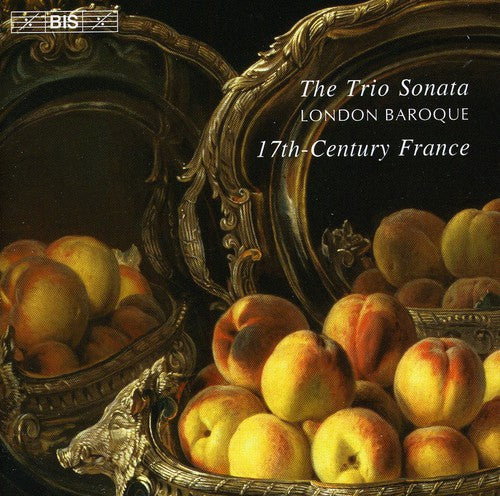
The Trio Sonata - Lully, Couperin, Etc / London Baroque
This is the second of a planned series of eight discs promising to trace the development of the trio sonata, the archetypal Baroque chamber form. The first, devoted to music from London Baroque’s home country, was reviewed in Fanfare 28:3 with considerable enthusiasm by Laura Rónai, and by myself elsewhere in a review that largely mirrored my colleague’s findings. Now London Baroque has turned its attention to what was happening during the same period across the English Channel, with equally commendable results.
The ambivalent French attitude to the sonata, an Italian invention, was famously and sardonically expressed in the words of playwright Fontenelle: “Sonate, que me veux-tu” (literally “Sonata, what do you want from me?”). A more balanced view came from the theorist François Raguenet who, although a stern critic of Italian opera, declared that he had “never met with a master in France but what agreed that the Italians knew much better how to turn and vary a trio than the French.” A number of French masters, indeed, sought to integrate the spirit of the Italian sonata, specifically the Corellian sonata, into their own style, among whom François Couperin attempted a fusion that reached a climax in the two sets of L’apothéoses , dedicated respectively to Corelli (1724) and Lully (1725). (Both have already been recorded by London Baroque on BIS CD1275, not reviewed in Fanfare. )
The selection made by London Baroque provides a representative cross section of writing in trio style, taking us chronologically from Lully to Clérambault (one assumes the series will include a second French disc devoted to the 18th century), and managing to include at least one unfamiliar name in the shape of Jean Nicolas Geoffroy (?–1694), a shadowy figure whose obscurity is not helped by the fact that there was more than one composer of that name working in Paris at the time. According to gambist Charles Medlam’s note, his Dialogues were probably originally intended for organ, but they work well enough in this form, if too diffuse to lay any claim to the structural balance of the true trio sonata. Much the same can be said of the little pieces by Louis Couperin, which provide no indication as to instrumentation. Lully’s trios for the ceremony of Le coucher du Roi , performed daily at Versailles by the petits violons , do achieve true equality between the two violins, but, true to form, the Italian-born Lully firmly implanted French style on the music. Although Marais’s Pièces en trio (1692) were the first works to be published in France in trio form, they are in fact a collection of mostly dance movements that following tradition could be arranged in suites. As such, they too bear little relationship to the true trio sonata, preferring to explore the French love of varying sonorities rather than the symmetrical balance of the Italian sonata, an observation that applies equally to the Suite by Gaspard le Roux (1660–1707).
It is only with the next generation that an awareness of the Italian model emerges. François Couperin’s La Superbe is well named, being a majestic work that pays overt homage to Corelli in the suspensions of its opening movement, and the fugal writing of the second, while Jean-Féry Rebel’s tombeau in honor of Lully largely remains loyal to native style, but also betrays Italian leanings in some dazzling solo violin-writing and furious tremolandos in its fourth movement. Most Italianate of all is the work by Louis-Nicolas Clérambault, significantly the only one included here to bear the name “sonata.”
With the proviso that, as with the disc of English works, London Baroque’s style of playing manifestly owes more to the 18th than the 17th century, these performances can be thoroughly recommended. The technical expertise, splendid sense of balance between the players, finesse, and spirited approach are by now all familiar assets, while the music is of generally high quality and well worth hearing. The engineering occasionally imparts a glassiness to the violins’s upper register, but is otherwise fine. I look forward to further issues in this interesting series.
FANFARE: Brian Robins
This is the second of a planned series of eight discs promising to trace the development of the trio sonata, the archetypal Baroque chamber form. The first, devoted to music from London Baroque’s home country, was reviewed in Fanfare 28:3 with considerable enthusiasm by Laura Rónai, and by myself elsewhere in a review that largely mirrored my colleague’s findings. Now London Baroque has turned its attention to what was happening during the same period across the English Channel, with equally commendable results.
The ambivalent French attitude to the sonata, an Italian invention, was famously and sardonically expressed in the words of playwright Fontenelle: “Sonate, que me veux-tu” (literally “Sonata, what do you want from me?”). A more balanced view came from the theorist François Raguenet who, although a stern critic of Italian opera, declared that he had “never met with a master in France but what agreed that the Italians knew much better how to turn and vary a trio than the French.” A number of French masters, indeed, sought to integrate the spirit of the Italian sonata, specifically the Corellian sonata, into their own style, among whom François Couperin attempted a fusion that reached a climax in the two sets of L’apothéoses , dedicated respectively to Corelli (1724) and Lully (1725). (Both have already been recorded by London Baroque on BIS CD1275, not reviewed in Fanfare. )
The selection made by London Baroque provides a representative cross section of writing in trio style, taking us chronologically from Lully to Clérambault (one assumes the series will include a second French disc devoted to the 18th century), and managing to include at least one unfamiliar name in the shape of Jean Nicolas Geoffroy (?–1694), a shadowy figure whose obscurity is not helped by the fact that there was more than one composer of that name working in Paris at the time. According to gambist Charles Medlam’s note, his Dialogues were probably originally intended for organ, but they work well enough in this form, if too diffuse to lay any claim to the structural balance of the true trio sonata. Much the same can be said of the little pieces by Louis Couperin, which provide no indication as to instrumentation. Lully’s trios for the ceremony of Le coucher du Roi , performed daily at Versailles by the petits violons , do achieve true equality between the two violins, but, true to form, the Italian-born Lully firmly implanted French style on the music. Although Marais’s Pièces en trio (1692) were the first works to be published in France in trio form, they are in fact a collection of mostly dance movements that following tradition could be arranged in suites. As such, they too bear little relationship to the true trio sonata, preferring to explore the French love of varying sonorities rather than the symmetrical balance of the Italian sonata, an observation that applies equally to the Suite by Gaspard le Roux (1660–1707).
It is only with the next generation that an awareness of the Italian model emerges. François Couperin’s La Superbe is well named, being a majestic work that pays overt homage to Corelli in the suspensions of its opening movement, and the fugal writing of the second, while Jean-Féry Rebel’s tombeau in honor of Lully largely remains loyal to native style, but also betrays Italian leanings in some dazzling solo violin-writing and furious tremolandos in its fourth movement. Most Italianate of all is the work by Louis-Nicolas Clérambault, significantly the only one included here to bear the name “sonata.”
With the proviso that, as with the disc of English works, London Baroque’s style of playing manifestly owes more to the 18th than the 17th century, these performances can be thoroughly recommended. The technical expertise, splendid sense of balance between the players, finesse, and spirited approach are by now all familiar assets, while the music is of generally high quality and well worth hearing. The engineering occasionally imparts a glassiness to the violins’s upper register, but is otherwise fine. I look forward to further issues in this interesting series.
FANFARE: Brian Robins
$7.70
Original: $21.99
-65%The Trio Sonata - Lully, Couperin, Etc / London Baroque—
$21.99
$7.70Description
This is the second of a planned series of eight discs promising to trace the development of the trio sonata, the archetypal Baroque chamber form. The first, devoted to music from London Baroque’s home country, was reviewed in Fanfare 28:3 with considerable enthusiasm by Laura Rónai, and by myself elsewhere in a review that largely mirrored my colleague’s findings. Now London Baroque has turned its attention to what was happening during the same period across the English Channel, with equally commendable results.
The ambivalent French attitude to the sonata, an Italian invention, was famously and sardonically expressed in the words of playwright Fontenelle: “Sonate, que me veux-tu” (literally “Sonata, what do you want from me?”). A more balanced view came from the theorist François Raguenet who, although a stern critic of Italian opera, declared that he had “never met with a master in France but what agreed that the Italians knew much better how to turn and vary a trio than the French.” A number of French masters, indeed, sought to integrate the spirit of the Italian sonata, specifically the Corellian sonata, into their own style, among whom François Couperin attempted a fusion that reached a climax in the two sets of L’apothéoses , dedicated respectively to Corelli (1724) and Lully (1725). (Both have already been recorded by London Baroque on BIS CD1275, not reviewed in Fanfare. )
The selection made by London Baroque provides a representative cross section of writing in trio style, taking us chronologically from Lully to Clérambault (one assumes the series will include a second French disc devoted to the 18th century), and managing to include at least one unfamiliar name in the shape of Jean Nicolas Geoffroy (?–1694), a shadowy figure whose obscurity is not helped by the fact that there was more than one composer of that name working in Paris at the time. According to gambist Charles Medlam’s note, his Dialogues were probably originally intended for organ, but they work well enough in this form, if too diffuse to lay any claim to the structural balance of the true trio sonata. Much the same can be said of the little pieces by Louis Couperin, which provide no indication as to instrumentation. Lully’s trios for the ceremony of Le coucher du Roi , performed daily at Versailles by the petits violons , do achieve true equality between the two violins, but, true to form, the Italian-born Lully firmly implanted French style on the music. Although Marais’s Pièces en trio (1692) were the first works to be published in France in trio form, they are in fact a collection of mostly dance movements that following tradition could be arranged in suites. As such, they too bear little relationship to the true trio sonata, preferring to explore the French love of varying sonorities rather than the symmetrical balance of the Italian sonata, an observation that applies equally to the Suite by Gaspard le Roux (1660–1707).
It is only with the next generation that an awareness of the Italian model emerges. François Couperin’s La Superbe is well named, being a majestic work that pays overt homage to Corelli in the suspensions of its opening movement, and the fugal writing of the second, while Jean-Féry Rebel’s tombeau in honor of Lully largely remains loyal to native style, but also betrays Italian leanings in some dazzling solo violin-writing and furious tremolandos in its fourth movement. Most Italianate of all is the work by Louis-Nicolas Clérambault, significantly the only one included here to bear the name “sonata.”
With the proviso that, as with the disc of English works, London Baroque’s style of playing manifestly owes more to the 18th than the 17th century, these performances can be thoroughly recommended. The technical expertise, splendid sense of balance between the players, finesse, and spirited approach are by now all familiar assets, while the music is of generally high quality and well worth hearing. The engineering occasionally imparts a glassiness to the violins’s upper register, but is otherwise fine. I look forward to further issues in this interesting series.
FANFARE: Brian Robins