🎉 Up to 70% Off Selected ItemsShop Sale

1 / 2
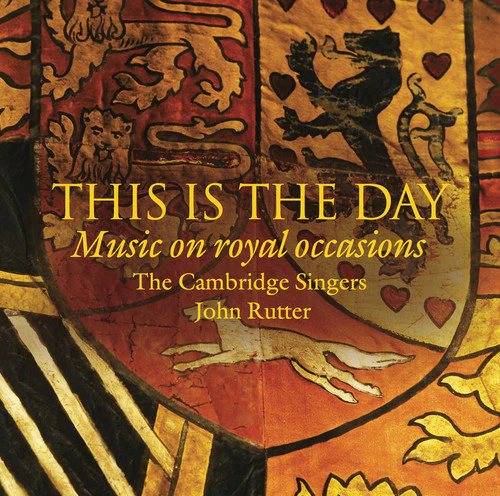
This Is The Day / Rutter, Cambridge Singers
A very good and well-conceived musical celebration of Queen Elizabeth’s Diamond Jubilee.
No doubt there will be plenty of recordings issued in 2012 to celebrate - or cash in on, the cynic might say - the Diamond Jubilee of Queen Elizabeth II. This is John Rutter’s contribution.
You may ask, what have Schubert’s psalm setting or a movement from the Brahms Requiem to do with the British royal family? It may be similarly objected that a piece such as the one by John Tavener has little to do with jubilee celebrations. After all, its sole connection with royalty is that it was sung at the funeral of Diana, Princess of Wales in 1997. The answer to such questions lies in the title of the disc. “Music on Royal Occasions” allows John Rutter to cast his net wide. In fact, all but two of the pieces included here have been performed either at a royal wedding or funeral between 1947 - the marriage of the Queen and the Duke of Edinburgh - and 2011 - the wedding of the Duke and Duchess of Cambridge. The two exceptions are the piece by Richard Rodney Bennett, which was written for the diamond wedding anniversary of the Queen and Prince Philip, and the extract from Britten’s opera, written to celebrate Queen Elizabeth’s coronation. In case you were wondering, the Schubert was sung at the 1960 wedding of Princess Margaret and Anthony Armstrong-Jones while the Brahms was heard at the funeral of Queen Elizabeth the Queen Mother in 2002: I didn’t know those last two facts but the booklet helpfully tells us which piece was heard at which royal event.
Both of the new pieces written for the 2011 Royal Wedding are included. Rutter’s own offering is a nice, readily accessible piece. To be frank - and I speak as an admirer of Rutter’s music - it’s a trifle disappointing in that it’s pretty predictably Rutter-ish. Then, to be fair, an occasion such as the Royal Wedding is one when a composer probably ought to write something that is readily appreciated by a worldwide audience. As I wrote recently, when reviewing a disc of music by Paul Mealor, I’ve revised my view of his Ubi caritas since I first heard it. At the Royal Wedding I thought it a somewhat grey piece but hearing it again on the Mealor disc I thought it came over better. However, I clearly recall thinking when I first heard it that it wasn’t a patch on the Maurice Duruflé setting and hearing the two one after the other merely confirms that view. The Mealor piece is nice and sincere but Duruflé’s fluent setting is simply inspired.
New to me was the Richard Rodney Bennett piece and I’m delighted to make its acquaintance. Written for unaccompanied choir it’s a very fine setting of the famous passage from St. Paul’s Epistle to the Corinthians - ‘If I speak with the tongues of men and angels …’ It receives a v ery fine performance, as do all the other pieces on the programme. It’s enterprising to include this unfamiliar piece and it’s equally enterprising to include the extract from Britten’s Gloriana.
Soprano Elin Manahan Thomas is on hand to sing the solos in the Mozart and Handel selections. She sings both very well, though, to my taste, her ornamentation in the Handel is a bit too florid. Incidentally, the Handel is also distinguished by excellent silvery trumpet solos by Simon Cox.
The Brahms piece is given in English. I’d much rather hear it in German but I can understand why it’s done in English here since that’s how it’s done as a separate Anglican anthem - and, presumably, that’s how it was given at the Queen Mother’s funeral. The Elgar piece that follows is the prologue to the oratorio The Apostles and it, too, is often heard as a separate anthem. I was mildly disappointed to hear it done here with organ accompaniment - though Andrew Lucas plays splendidly. It’s a bit illogical to do the Brahms with orchestra and the Elgar without; I can only think that the Aurora Orchestra isn’t sufficiently big for Elgar’s scoring.
So, to anyone who might glance at this CD on a shelf and dismiss it as ‘just another Jubilee potboiler’ I’d say: think again. I must honest and say that’s what I expected when I saw the disc advertised but I was wrong. This selection is a bit different and a bit more thoughtful and reflective than one might expect. Perhaps one should coin a phrase and say ‘don’t judge a CD by its cover’. The performances are all expertly done and the recorded sound and documentation are very good. This is a very good and well-conceived musical celebration of Queen Elizabeth’s Diamond Jubilee.
-- John Quinn, MusicWeb International
No doubt there will be plenty of recordings issued in 2012 to celebrate - or cash in on, the cynic might say - the Diamond Jubilee of Queen Elizabeth II. This is John Rutter’s contribution.
You may ask, what have Schubert’s psalm setting or a movement from the Brahms Requiem to do with the British royal family? It may be similarly objected that a piece such as the one by John Tavener has little to do with jubilee celebrations. After all, its sole connection with royalty is that it was sung at the funeral of Diana, Princess of Wales in 1997. The answer to such questions lies in the title of the disc. “Music on Royal Occasions” allows John Rutter to cast his net wide. In fact, all but two of the pieces included here have been performed either at a royal wedding or funeral between 1947 - the marriage of the Queen and the Duke of Edinburgh - and 2011 - the wedding of the Duke and Duchess of Cambridge. The two exceptions are the piece by Richard Rodney Bennett, which was written for the diamond wedding anniversary of the Queen and Prince Philip, and the extract from Britten’s opera, written to celebrate Queen Elizabeth’s coronation. In case you were wondering, the Schubert was sung at the 1960 wedding of Princess Margaret and Anthony Armstrong-Jones while the Brahms was heard at the funeral of Queen Elizabeth the Queen Mother in 2002: I didn’t know those last two facts but the booklet helpfully tells us which piece was heard at which royal event.
Both of the new pieces written for the 2011 Royal Wedding are included. Rutter’s own offering is a nice, readily accessible piece. To be frank - and I speak as an admirer of Rutter’s music - it’s a trifle disappointing in that it’s pretty predictably Rutter-ish. Then, to be fair, an occasion such as the Royal Wedding is one when a composer probably ought to write something that is readily appreciated by a worldwide audience. As I wrote recently, when reviewing a disc of music by Paul Mealor, I’ve revised my view of his Ubi caritas since I first heard it. At the Royal Wedding I thought it a somewhat grey piece but hearing it again on the Mealor disc I thought it came over better. However, I clearly recall thinking when I first heard it that it wasn’t a patch on the Maurice Duruflé setting and hearing the two one after the other merely confirms that view. The Mealor piece is nice and sincere but Duruflé’s fluent setting is simply inspired.
New to me was the Richard Rodney Bennett piece and I’m delighted to make its acquaintance. Written for unaccompanied choir it’s a very fine setting of the famous passage from St. Paul’s Epistle to the Corinthians - ‘If I speak with the tongues of men and angels …’ It receives a v ery fine performance, as do all the other pieces on the programme. It’s enterprising to include this unfamiliar piece and it’s equally enterprising to include the extract from Britten’s Gloriana.
Soprano Elin Manahan Thomas is on hand to sing the solos in the Mozart and Handel selections. She sings both very well, though, to my taste, her ornamentation in the Handel is a bit too florid. Incidentally, the Handel is also distinguished by excellent silvery trumpet solos by Simon Cox.
The Brahms piece is given in English. I’d much rather hear it in German but I can understand why it’s done in English here since that’s how it’s done as a separate Anglican anthem - and, presumably, that’s how it was given at the Queen Mother’s funeral. The Elgar piece that follows is the prologue to the oratorio The Apostles and it, too, is often heard as a separate anthem. I was mildly disappointed to hear it done here with organ accompaniment - though Andrew Lucas plays splendidly. It’s a bit illogical to do the Brahms with orchestra and the Elgar without; I can only think that the Aurora Orchestra isn’t sufficiently big for Elgar’s scoring.
So, to anyone who might glance at this CD on a shelf and dismiss it as ‘just another Jubilee potboiler’ I’d say: think again. I must honest and say that’s what I expected when I saw the disc advertised but I was wrong. This selection is a bit different and a bit more thoughtful and reflective than one might expect. Perhaps one should coin a phrase and say ‘don’t judge a CD by its cover’. The performances are all expertly done and the recorded sound and documentation are very good. This is a very good and well-conceived musical celebration of Queen Elizabeth’s Diamond Jubilee.
-- John Quinn, MusicWeb International
A very good and well-conceived musical celebration of Queen Elizabeth’s Diamond Jubilee.
No doubt there will be plenty of recordings issued in 2012 to celebrate - or cash in on, the cynic might say - the Diamond Jubilee of Queen Elizabeth II. This is John Rutter’s contribution.
You may ask, what have Schubert’s psalm setting or a movement from the Brahms Requiem to do with the British royal family? It may be similarly objected that a piece such as the one by John Tavener has little to do with jubilee celebrations. After all, its sole connection with royalty is that it was sung at the funeral of Diana, Princess of Wales in 1997. The answer to such questions lies in the title of the disc. “Music on Royal Occasions” allows John Rutter to cast his net wide. In fact, all but two of the pieces included here have been performed either at a royal wedding or funeral between 1947 - the marriage of the Queen and the Duke of Edinburgh - and 2011 - the wedding of the Duke and Duchess of Cambridge. The two exceptions are the piece by Richard Rodney Bennett, which was written for the diamond wedding anniversary of the Queen and Prince Philip, and the extract from Britten’s opera, written to celebrate Queen Elizabeth’s coronation. In case you were wondering, the Schubert was sung at the 1960 wedding of Princess Margaret and Anthony Armstrong-Jones while the Brahms was heard at the funeral of Queen Elizabeth the Queen Mother in 2002: I didn’t know those last two facts but the booklet helpfully tells us which piece was heard at which royal event.
Both of the new pieces written for the 2011 Royal Wedding are included. Rutter’s own offering is a nice, readily accessible piece. To be frank - and I speak as an admirer of Rutter’s music - it’s a trifle disappointing in that it’s pretty predictably Rutter-ish. Then, to be fair, an occasion such as the Royal Wedding is one when a composer probably ought to write something that is readily appreciated by a worldwide audience. As I wrote recently, when reviewing a disc of music by Paul Mealor, I’ve revised my view of his Ubi caritas since I first heard it. At the Royal Wedding I thought it a somewhat grey piece but hearing it again on the Mealor disc I thought it came over better. However, I clearly recall thinking when I first heard it that it wasn’t a patch on the Maurice Duruflé setting and hearing the two one after the other merely confirms that view. The Mealor piece is nice and sincere but Duruflé’s fluent setting is simply inspired.
New to me was the Richard Rodney Bennett piece and I’m delighted to make its acquaintance. Written for unaccompanied choir it’s a very fine setting of the famous passage from St. Paul’s Epistle to the Corinthians - ‘If I speak with the tongues of men and angels …’ It receives a v ery fine performance, as do all the other pieces on the programme. It’s enterprising to include this unfamiliar piece and it’s equally enterprising to include the extract from Britten’s Gloriana.
Soprano Elin Manahan Thomas is on hand to sing the solos in the Mozart and Handel selections. She sings both very well, though, to my taste, her ornamentation in the Handel is a bit too florid. Incidentally, the Handel is also distinguished by excellent silvery trumpet solos by Simon Cox.
The Brahms piece is given in English. I’d much rather hear it in German but I can understand why it’s done in English here since that’s how it’s done as a separate Anglican anthem - and, presumably, that’s how it was given at the Queen Mother’s funeral. The Elgar piece that follows is the prologue to the oratorio The Apostles and it, too, is often heard as a separate anthem. I was mildly disappointed to hear it done here with organ accompaniment - though Andrew Lucas plays splendidly. It’s a bit illogical to do the Brahms with orchestra and the Elgar without; I can only think that the Aurora Orchestra isn’t sufficiently big for Elgar’s scoring.
So, to anyone who might glance at this CD on a shelf and dismiss it as ‘just another Jubilee potboiler’ I’d say: think again. I must honest and say that’s what I expected when I saw the disc advertised but I was wrong. This selection is a bit different and a bit more thoughtful and reflective than one might expect. Perhaps one should coin a phrase and say ‘don’t judge a CD by its cover’. The performances are all expertly done and the recorded sound and documentation are very good. This is a very good and well-conceived musical celebration of Queen Elizabeth’s Diamond Jubilee.
-- John Quinn, MusicWeb International
No doubt there will be plenty of recordings issued in 2012 to celebrate - or cash in on, the cynic might say - the Diamond Jubilee of Queen Elizabeth II. This is John Rutter’s contribution.
You may ask, what have Schubert’s psalm setting or a movement from the Brahms Requiem to do with the British royal family? It may be similarly objected that a piece such as the one by John Tavener has little to do with jubilee celebrations. After all, its sole connection with royalty is that it was sung at the funeral of Diana, Princess of Wales in 1997. The answer to such questions lies in the title of the disc. “Music on Royal Occasions” allows John Rutter to cast his net wide. In fact, all but two of the pieces included here have been performed either at a royal wedding or funeral between 1947 - the marriage of the Queen and the Duke of Edinburgh - and 2011 - the wedding of the Duke and Duchess of Cambridge. The two exceptions are the piece by Richard Rodney Bennett, which was written for the diamond wedding anniversary of the Queen and Prince Philip, and the extract from Britten’s opera, written to celebrate Queen Elizabeth’s coronation. In case you were wondering, the Schubert was sung at the 1960 wedding of Princess Margaret and Anthony Armstrong-Jones while the Brahms was heard at the funeral of Queen Elizabeth the Queen Mother in 2002: I didn’t know those last two facts but the booklet helpfully tells us which piece was heard at which royal event.
Both of the new pieces written for the 2011 Royal Wedding are included. Rutter’s own offering is a nice, readily accessible piece. To be frank - and I speak as an admirer of Rutter’s music - it’s a trifle disappointing in that it’s pretty predictably Rutter-ish. Then, to be fair, an occasion such as the Royal Wedding is one when a composer probably ought to write something that is readily appreciated by a worldwide audience. As I wrote recently, when reviewing a disc of music by Paul Mealor, I’ve revised my view of his Ubi caritas since I first heard it. At the Royal Wedding I thought it a somewhat grey piece but hearing it again on the Mealor disc I thought it came over better. However, I clearly recall thinking when I first heard it that it wasn’t a patch on the Maurice Duruflé setting and hearing the two one after the other merely confirms that view. The Mealor piece is nice and sincere but Duruflé’s fluent setting is simply inspired.
New to me was the Richard Rodney Bennett piece and I’m delighted to make its acquaintance. Written for unaccompanied choir it’s a very fine setting of the famous passage from St. Paul’s Epistle to the Corinthians - ‘If I speak with the tongues of men and angels …’ It receives a v ery fine performance, as do all the other pieces on the programme. It’s enterprising to include this unfamiliar piece and it’s equally enterprising to include the extract from Britten’s Gloriana.
Soprano Elin Manahan Thomas is on hand to sing the solos in the Mozart and Handel selections. She sings both very well, though, to my taste, her ornamentation in the Handel is a bit too florid. Incidentally, the Handel is also distinguished by excellent silvery trumpet solos by Simon Cox.
The Brahms piece is given in English. I’d much rather hear it in German but I can understand why it’s done in English here since that’s how it’s done as a separate Anglican anthem - and, presumably, that’s how it was given at the Queen Mother’s funeral. The Elgar piece that follows is the prologue to the oratorio The Apostles and it, too, is often heard as a separate anthem. I was mildly disappointed to hear it done here with organ accompaniment - though Andrew Lucas plays splendidly. It’s a bit illogical to do the Brahms with orchestra and the Elgar without; I can only think that the Aurora Orchestra isn’t sufficiently big for Elgar’s scoring.
So, to anyone who might glance at this CD on a shelf and dismiss it as ‘just another Jubilee potboiler’ I’d say: think again. I must honest and say that’s what I expected when I saw the disc advertised but I was wrong. This selection is a bit different and a bit more thoughtful and reflective than one might expect. Perhaps one should coin a phrase and say ‘don’t judge a CD by its cover’. The performances are all expertly done and the recorded sound and documentation are very good. This is a very good and well-conceived musical celebration of Queen Elizabeth’s Diamond Jubilee.
-- John Quinn, MusicWeb International
$14.99
This Is The Day / Rutter, Cambridge Singers—
$14.99
Description
A very good and well-conceived musical celebration of Queen Elizabeth’s Diamond Jubilee.
No doubt there will be plenty of recordings issued in 2012 to celebrate - or cash in on, the cynic might say - the Diamond Jubilee of Queen Elizabeth II. This is John Rutter’s contribution.
You may ask, what have Schubert’s psalm setting or a movement from the Brahms Requiem to do with the British royal family? It may be similarly objected that a piece such as the one by John Tavener has little to do with jubilee celebrations. After all, its sole connection with royalty is that it was sung at the funeral of Diana, Princess of Wales in 1997. The answer to such questions lies in the title of the disc. “Music on Royal Occasions” allows John Rutter to cast his net wide. In fact, all but two of the pieces included here have been performed either at a royal wedding or funeral between 1947 - the marriage of the Queen and the Duke of Edinburgh - and 2011 - the wedding of the Duke and Duchess of Cambridge. The two exceptions are the piece by Richard Rodney Bennett, which was written for the diamond wedding anniversary of the Queen and Prince Philip, and the extract from Britten’s opera, written to celebrate Queen Elizabeth’s coronation. In case you were wondering, the Schubert was sung at the 1960 wedding of Princess Margaret and Anthony Armstrong-Jones while the Brahms was heard at the funeral of Queen Elizabeth the Queen Mother in 2002: I didn’t know those last two facts but the booklet helpfully tells us which piece was heard at which royal event.
Both of the new pieces written for the 2011 Royal Wedding are included. Rutter’s own offering is a nice, readily accessible piece. To be frank - and I speak as an admirer of Rutter’s music - it’s a trifle disappointing in that it’s pretty predictably Rutter-ish. Then, to be fair, an occasion such as the Royal Wedding is one when a composer probably ought to write something that is readily appreciated by a worldwide audience. As I wrote recently, when reviewing a disc of music by Paul Mealor, I’ve revised my view of his Ubi caritas since I first heard it. At the Royal Wedding I thought it a somewhat grey piece but hearing it again on the Mealor disc I thought it came over better. However, I clearly recall thinking when I first heard it that it wasn’t a patch on the Maurice Duruflé setting and hearing the two one after the other merely confirms that view. The Mealor piece is nice and sincere but Duruflé’s fluent setting is simply inspired.
New to me was the Richard Rodney Bennett piece and I’m delighted to make its acquaintance. Written for unaccompanied choir it’s a very fine setting of the famous passage from St. Paul’s Epistle to the Corinthians - ‘If I speak with the tongues of men and angels …’ It receives a v ery fine performance, as do all the other pieces on the programme. It’s enterprising to include this unfamiliar piece and it’s equally enterprising to include the extract from Britten’s Gloriana.
Soprano Elin Manahan Thomas is on hand to sing the solos in the Mozart and Handel selections. She sings both very well, though, to my taste, her ornamentation in the Handel is a bit too florid. Incidentally, the Handel is also distinguished by excellent silvery trumpet solos by Simon Cox.
The Brahms piece is given in English. I’d much rather hear it in German but I can understand why it’s done in English here since that’s how it’s done as a separate Anglican anthem - and, presumably, that’s how it was given at the Queen Mother’s funeral. The Elgar piece that follows is the prologue to the oratorio The Apostles and it, too, is often heard as a separate anthem. I was mildly disappointed to hear it done here with organ accompaniment - though Andrew Lucas plays splendidly. It’s a bit illogical to do the Brahms with orchestra and the Elgar without; I can only think that the Aurora Orchestra isn’t sufficiently big for Elgar’s scoring.
So, to anyone who might glance at this CD on a shelf and dismiss it as ‘just another Jubilee potboiler’ I’d say: think again. I must honest and say that’s what I expected when I saw the disc advertised but I was wrong. This selection is a bit different and a bit more thoughtful and reflective than one might expect. Perhaps one should coin a phrase and say ‘don’t judge a CD by its cover’. The performances are all expertly done and the recorded sound and documentation are very good. This is a very good and well-conceived musical celebration of Queen Elizabeth’s Diamond Jubilee.
-- John Quinn, MusicWeb International
No doubt there will be plenty of recordings issued in 2012 to celebrate - or cash in on, the cynic might say - the Diamond Jubilee of Queen Elizabeth II. This is John Rutter’s contribution.
You may ask, what have Schubert’s psalm setting or a movement from the Brahms Requiem to do with the British royal family? It may be similarly objected that a piece such as the one by John Tavener has little to do with jubilee celebrations. After all, its sole connection with royalty is that it was sung at the funeral of Diana, Princess of Wales in 1997. The answer to such questions lies in the title of the disc. “Music on Royal Occasions” allows John Rutter to cast his net wide. In fact, all but two of the pieces included here have been performed either at a royal wedding or funeral between 1947 - the marriage of the Queen and the Duke of Edinburgh - and 2011 - the wedding of the Duke and Duchess of Cambridge. The two exceptions are the piece by Richard Rodney Bennett, which was written for the diamond wedding anniversary of the Queen and Prince Philip, and the extract from Britten’s opera, written to celebrate Queen Elizabeth’s coronation. In case you were wondering, the Schubert was sung at the 1960 wedding of Princess Margaret and Anthony Armstrong-Jones while the Brahms was heard at the funeral of Queen Elizabeth the Queen Mother in 2002: I didn’t know those last two facts but the booklet helpfully tells us which piece was heard at which royal event.
Both of the new pieces written for the 2011 Royal Wedding are included. Rutter’s own offering is a nice, readily accessible piece. To be frank - and I speak as an admirer of Rutter’s music - it’s a trifle disappointing in that it’s pretty predictably Rutter-ish. Then, to be fair, an occasion such as the Royal Wedding is one when a composer probably ought to write something that is readily appreciated by a worldwide audience. As I wrote recently, when reviewing a disc of music by Paul Mealor, I’ve revised my view of his Ubi caritas since I first heard it. At the Royal Wedding I thought it a somewhat grey piece but hearing it again on the Mealor disc I thought it came over better. However, I clearly recall thinking when I first heard it that it wasn’t a patch on the Maurice Duruflé setting and hearing the two one after the other merely confirms that view. The Mealor piece is nice and sincere but Duruflé’s fluent setting is simply inspired.
New to me was the Richard Rodney Bennett piece and I’m delighted to make its acquaintance. Written for unaccompanied choir it’s a very fine setting of the famous passage from St. Paul’s Epistle to the Corinthians - ‘If I speak with the tongues of men and angels …’ It receives a v ery fine performance, as do all the other pieces on the programme. It’s enterprising to include this unfamiliar piece and it’s equally enterprising to include the extract from Britten’s Gloriana.
Soprano Elin Manahan Thomas is on hand to sing the solos in the Mozart and Handel selections. She sings both very well, though, to my taste, her ornamentation in the Handel is a bit too florid. Incidentally, the Handel is also distinguished by excellent silvery trumpet solos by Simon Cox.
The Brahms piece is given in English. I’d much rather hear it in German but I can understand why it’s done in English here since that’s how it’s done as a separate Anglican anthem - and, presumably, that’s how it was given at the Queen Mother’s funeral. The Elgar piece that follows is the prologue to the oratorio The Apostles and it, too, is often heard as a separate anthem. I was mildly disappointed to hear it done here with organ accompaniment - though Andrew Lucas plays splendidly. It’s a bit illogical to do the Brahms with orchestra and the Elgar without; I can only think that the Aurora Orchestra isn’t sufficiently big for Elgar’s scoring.
So, to anyone who might glance at this CD on a shelf and dismiss it as ‘just another Jubilee potboiler’ I’d say: think again. I must honest and say that’s what I expected when I saw the disc advertised but I was wrong. This selection is a bit different and a bit more thoughtful and reflective than one might expect. Perhaps one should coin a phrase and say ‘don’t judge a CD by its cover’. The performances are all expertly done and the recorded sound and documentation are very good. This is a very good and well-conceived musical celebration of Queen Elizabeth’s Diamond Jubilee.
-- John Quinn, MusicWeb International