🎉 Up to 70% Off Selected ItemsShop Sale

1 / 2
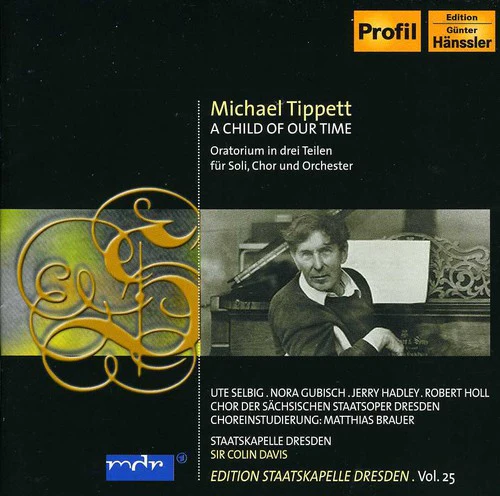
Tipett: A Child Of Our Time / Colin Davis, Ute Selbig, Et Al
A memento of what must have been a very moving occasion.
As far as I know, this is Sir Colin Davis’s second recording of Tippett’s oratorio; his first, made for Philips in 1975 and featuring such luminaries as Jessye Norman, Janet Baker and John Shirley-Quirk, has always been one of the top choices. There are also valuable performances from Pritchard (1957, the pioneering recording), Rozhdestvensky (a live BBC relay on Carlton Classics) and, not least, the composer himself (a technically fallible but nevertheless overwhelming performance with the CBSO on Naxos). Davis also performed A Child of our Time at the Barbican last December and this was recorded for LSO Live.
Sir Colin has performed a number of works by British composers during his appearances in Dresden. His acclaimed reading of Elgar’s First Symphony has already appeared in this edition and he also performed Britten’s War Requiem in 2000 in commemoration of the destruction of Dresden. Performances of A Child of our Time in Germany carry a particular charge, bringing as they do associations of atonement and reparation. This is further confirmed by the lavishly illustrated CD booklet, which provides a detailed background to the events in Europe that inspired Tippett’s oratorio. There is also some fascinating information on Dresden’s synagogue, designed, like its famous opera house, by Gottfried Semper and destroyed during the Kristallnacht of 1938. No texts are provided.
Davis, aided by the spacious acoustic of the Semper Opera House, sets a steady pace for the most part, emphasising the dramatic weight and power of his conception. The chorus is backwardly placed but such is the excellence of their diction that this is not a problem. The oratorio is paced unerringly, the chorus providing rich tone in “Steal Away” vivid characterisation of persecutors and persecuted in “Burn down their houses” followed by a sombre reading of “Go Down Moses”. The sequence of Handel-inspired recitatives and arias in the central part of the oratorio move from fear, terror, anger and, finally, acceptance. At the end Davis draws the threads together with complete mastery for the final “Deep River”.
The soloists all characterise their roles extremely vividly, and although occasionally some idiosyncratic pronunciation can make for disconcerting listening this is a relatively small blemish when we are faced with such obvious involvement. Ute Selbig possesses a bright, full soprano - she sang Sibelius’s Luonnotar in the first half of the concert at which this recording was made - and soars effortlessly over the other forces in the spirituals and elsewhere. The late Jerry Hadley sings with passionate although somewhat plaintive tone, and Robert Holl is a tower of strength in the important bass part.
Sir Colin’s reading is undoubtedly authoritative and moving, with a powerful and responsive chorus and a team of soloists who are extremely involved dramatically, although vocally more fallible than some of their counterparts on disc. I wouldn’t say this new disc superseded any of the versions listed above, but it does provide a memento of what must have been a very moving occasion in the Semperoper, and occasionally surpasses its predecessors in terms of sheer emotional commitment.
-- Ewan McCormick, MusicWeb International
As far as I know, this is Sir Colin Davis’s second recording of Tippett’s oratorio; his first, made for Philips in 1975 and featuring such luminaries as Jessye Norman, Janet Baker and John Shirley-Quirk, has always been one of the top choices. There are also valuable performances from Pritchard (1957, the pioneering recording), Rozhdestvensky (a live BBC relay on Carlton Classics) and, not least, the composer himself (a technically fallible but nevertheless overwhelming performance with the CBSO on Naxos). Davis also performed A Child of our Time at the Barbican last December and this was recorded for LSO Live.
Sir Colin has performed a number of works by British composers during his appearances in Dresden. His acclaimed reading of Elgar’s First Symphony has already appeared in this edition and he also performed Britten’s War Requiem in 2000 in commemoration of the destruction of Dresden. Performances of A Child of our Time in Germany carry a particular charge, bringing as they do associations of atonement and reparation. This is further confirmed by the lavishly illustrated CD booklet, which provides a detailed background to the events in Europe that inspired Tippett’s oratorio. There is also some fascinating information on Dresden’s synagogue, designed, like its famous opera house, by Gottfried Semper and destroyed during the Kristallnacht of 1938. No texts are provided.
Davis, aided by the spacious acoustic of the Semper Opera House, sets a steady pace for the most part, emphasising the dramatic weight and power of his conception. The chorus is backwardly placed but such is the excellence of their diction that this is not a problem. The oratorio is paced unerringly, the chorus providing rich tone in “Steal Away” vivid characterisation of persecutors and persecuted in “Burn down their houses” followed by a sombre reading of “Go Down Moses”. The sequence of Handel-inspired recitatives and arias in the central part of the oratorio move from fear, terror, anger and, finally, acceptance. At the end Davis draws the threads together with complete mastery for the final “Deep River”.
The soloists all characterise their roles extremely vividly, and although occasionally some idiosyncratic pronunciation can make for disconcerting listening this is a relatively small blemish when we are faced with such obvious involvement. Ute Selbig possesses a bright, full soprano - she sang Sibelius’s Luonnotar in the first half of the concert at which this recording was made - and soars effortlessly over the other forces in the spirituals and elsewhere. The late Jerry Hadley sings with passionate although somewhat plaintive tone, and Robert Holl is a tower of strength in the important bass part.
Sir Colin’s reading is undoubtedly authoritative and moving, with a powerful and responsive chorus and a team of soloists who are extremely involved dramatically, although vocally more fallible than some of their counterparts on disc. I wouldn’t say this new disc superseded any of the versions listed above, but it does provide a memento of what must have been a very moving occasion in the Semperoper, and occasionally surpasses its predecessors in terms of sheer emotional commitment.
-- Ewan McCormick, MusicWeb International
A memento of what must have been a very moving occasion.
As far as I know, this is Sir Colin Davis’s second recording of Tippett’s oratorio; his first, made for Philips in 1975 and featuring such luminaries as Jessye Norman, Janet Baker and John Shirley-Quirk, has always been one of the top choices. There are also valuable performances from Pritchard (1957, the pioneering recording), Rozhdestvensky (a live BBC relay on Carlton Classics) and, not least, the composer himself (a technically fallible but nevertheless overwhelming performance with the CBSO on Naxos). Davis also performed A Child of our Time at the Barbican last December and this was recorded for LSO Live.
Sir Colin has performed a number of works by British composers during his appearances in Dresden. His acclaimed reading of Elgar’s First Symphony has already appeared in this edition and he also performed Britten’s War Requiem in 2000 in commemoration of the destruction of Dresden. Performances of A Child of our Time in Germany carry a particular charge, bringing as they do associations of atonement and reparation. This is further confirmed by the lavishly illustrated CD booklet, which provides a detailed background to the events in Europe that inspired Tippett’s oratorio. There is also some fascinating information on Dresden’s synagogue, designed, like its famous opera house, by Gottfried Semper and destroyed during the Kristallnacht of 1938. No texts are provided.
Davis, aided by the spacious acoustic of the Semper Opera House, sets a steady pace for the most part, emphasising the dramatic weight and power of his conception. The chorus is backwardly placed but such is the excellence of their diction that this is not a problem. The oratorio is paced unerringly, the chorus providing rich tone in “Steal Away” vivid characterisation of persecutors and persecuted in “Burn down their houses” followed by a sombre reading of “Go Down Moses”. The sequence of Handel-inspired recitatives and arias in the central part of the oratorio move from fear, terror, anger and, finally, acceptance. At the end Davis draws the threads together with complete mastery for the final “Deep River”.
The soloists all characterise their roles extremely vividly, and although occasionally some idiosyncratic pronunciation can make for disconcerting listening this is a relatively small blemish when we are faced with such obvious involvement. Ute Selbig possesses a bright, full soprano - she sang Sibelius’s Luonnotar in the first half of the concert at which this recording was made - and soars effortlessly over the other forces in the spirituals and elsewhere. The late Jerry Hadley sings with passionate although somewhat plaintive tone, and Robert Holl is a tower of strength in the important bass part.
Sir Colin’s reading is undoubtedly authoritative and moving, with a powerful and responsive chorus and a team of soloists who are extremely involved dramatically, although vocally more fallible than some of their counterparts on disc. I wouldn’t say this new disc superseded any of the versions listed above, but it does provide a memento of what must have been a very moving occasion in the Semperoper, and occasionally surpasses its predecessors in terms of sheer emotional commitment.
-- Ewan McCormick, MusicWeb International
As far as I know, this is Sir Colin Davis’s second recording of Tippett’s oratorio; his first, made for Philips in 1975 and featuring such luminaries as Jessye Norman, Janet Baker and John Shirley-Quirk, has always been one of the top choices. There are also valuable performances from Pritchard (1957, the pioneering recording), Rozhdestvensky (a live BBC relay on Carlton Classics) and, not least, the composer himself (a technically fallible but nevertheless overwhelming performance with the CBSO on Naxos). Davis also performed A Child of our Time at the Barbican last December and this was recorded for LSO Live.
Sir Colin has performed a number of works by British composers during his appearances in Dresden. His acclaimed reading of Elgar’s First Symphony has already appeared in this edition and he also performed Britten’s War Requiem in 2000 in commemoration of the destruction of Dresden. Performances of A Child of our Time in Germany carry a particular charge, bringing as they do associations of atonement and reparation. This is further confirmed by the lavishly illustrated CD booklet, which provides a detailed background to the events in Europe that inspired Tippett’s oratorio. There is also some fascinating information on Dresden’s synagogue, designed, like its famous opera house, by Gottfried Semper and destroyed during the Kristallnacht of 1938. No texts are provided.
Davis, aided by the spacious acoustic of the Semper Opera House, sets a steady pace for the most part, emphasising the dramatic weight and power of his conception. The chorus is backwardly placed but such is the excellence of their diction that this is not a problem. The oratorio is paced unerringly, the chorus providing rich tone in “Steal Away” vivid characterisation of persecutors and persecuted in “Burn down their houses” followed by a sombre reading of “Go Down Moses”. The sequence of Handel-inspired recitatives and arias in the central part of the oratorio move from fear, terror, anger and, finally, acceptance. At the end Davis draws the threads together with complete mastery for the final “Deep River”.
The soloists all characterise their roles extremely vividly, and although occasionally some idiosyncratic pronunciation can make for disconcerting listening this is a relatively small blemish when we are faced with such obvious involvement. Ute Selbig possesses a bright, full soprano - she sang Sibelius’s Luonnotar in the first half of the concert at which this recording was made - and soars effortlessly over the other forces in the spirituals and elsewhere. The late Jerry Hadley sings with passionate although somewhat plaintive tone, and Robert Holl is a tower of strength in the important bass part.
Sir Colin’s reading is undoubtedly authoritative and moving, with a powerful and responsive chorus and a team of soloists who are extremely involved dramatically, although vocally more fallible than some of their counterparts on disc. I wouldn’t say this new disc superseded any of the versions listed above, but it does provide a memento of what must have been a very moving occasion in the Semperoper, and occasionally surpasses its predecessors in terms of sheer emotional commitment.
-- Ewan McCormick, MusicWeb International
$4.90
Original: $13.99
-65%Tipett: A Child Of Our Time / Colin Davis, Ute Selbig, Et Al—
$13.99
$4.90Description
A memento of what must have been a very moving occasion.
As far as I know, this is Sir Colin Davis’s second recording of Tippett’s oratorio; his first, made for Philips in 1975 and featuring such luminaries as Jessye Norman, Janet Baker and John Shirley-Quirk, has always been one of the top choices. There are also valuable performances from Pritchard (1957, the pioneering recording), Rozhdestvensky (a live BBC relay on Carlton Classics) and, not least, the composer himself (a technically fallible but nevertheless overwhelming performance with the CBSO on Naxos). Davis also performed A Child of our Time at the Barbican last December and this was recorded for LSO Live.
Sir Colin has performed a number of works by British composers during his appearances in Dresden. His acclaimed reading of Elgar’s First Symphony has already appeared in this edition and he also performed Britten’s War Requiem in 2000 in commemoration of the destruction of Dresden. Performances of A Child of our Time in Germany carry a particular charge, bringing as they do associations of atonement and reparation. This is further confirmed by the lavishly illustrated CD booklet, which provides a detailed background to the events in Europe that inspired Tippett’s oratorio. There is also some fascinating information on Dresden’s synagogue, designed, like its famous opera house, by Gottfried Semper and destroyed during the Kristallnacht of 1938. No texts are provided.
Davis, aided by the spacious acoustic of the Semper Opera House, sets a steady pace for the most part, emphasising the dramatic weight and power of his conception. The chorus is backwardly placed but such is the excellence of their diction that this is not a problem. The oratorio is paced unerringly, the chorus providing rich tone in “Steal Away” vivid characterisation of persecutors and persecuted in “Burn down their houses” followed by a sombre reading of “Go Down Moses”. The sequence of Handel-inspired recitatives and arias in the central part of the oratorio move from fear, terror, anger and, finally, acceptance. At the end Davis draws the threads together with complete mastery for the final “Deep River”.
The soloists all characterise their roles extremely vividly, and although occasionally some idiosyncratic pronunciation can make for disconcerting listening this is a relatively small blemish when we are faced with such obvious involvement. Ute Selbig possesses a bright, full soprano - she sang Sibelius’s Luonnotar in the first half of the concert at which this recording was made - and soars effortlessly over the other forces in the spirituals and elsewhere. The late Jerry Hadley sings with passionate although somewhat plaintive tone, and Robert Holl is a tower of strength in the important bass part.
Sir Colin’s reading is undoubtedly authoritative and moving, with a powerful and responsive chorus and a team of soloists who are extremely involved dramatically, although vocally more fallible than some of their counterparts on disc. I wouldn’t say this new disc superseded any of the versions listed above, but it does provide a memento of what must have been a very moving occasion in the Semperoper, and occasionally surpasses its predecessors in terms of sheer emotional commitment.
-- Ewan McCormick, MusicWeb International
As far as I know, this is Sir Colin Davis’s second recording of Tippett’s oratorio; his first, made for Philips in 1975 and featuring such luminaries as Jessye Norman, Janet Baker and John Shirley-Quirk, has always been one of the top choices. There are also valuable performances from Pritchard (1957, the pioneering recording), Rozhdestvensky (a live BBC relay on Carlton Classics) and, not least, the composer himself (a technically fallible but nevertheless overwhelming performance with the CBSO on Naxos). Davis also performed A Child of our Time at the Barbican last December and this was recorded for LSO Live.
Sir Colin has performed a number of works by British composers during his appearances in Dresden. His acclaimed reading of Elgar’s First Symphony has already appeared in this edition and he also performed Britten’s War Requiem in 2000 in commemoration of the destruction of Dresden. Performances of A Child of our Time in Germany carry a particular charge, bringing as they do associations of atonement and reparation. This is further confirmed by the lavishly illustrated CD booklet, which provides a detailed background to the events in Europe that inspired Tippett’s oratorio. There is also some fascinating information on Dresden’s synagogue, designed, like its famous opera house, by Gottfried Semper and destroyed during the Kristallnacht of 1938. No texts are provided.
Davis, aided by the spacious acoustic of the Semper Opera House, sets a steady pace for the most part, emphasising the dramatic weight and power of his conception. The chorus is backwardly placed but such is the excellence of their diction that this is not a problem. The oratorio is paced unerringly, the chorus providing rich tone in “Steal Away” vivid characterisation of persecutors and persecuted in “Burn down their houses” followed by a sombre reading of “Go Down Moses”. The sequence of Handel-inspired recitatives and arias in the central part of the oratorio move from fear, terror, anger and, finally, acceptance. At the end Davis draws the threads together with complete mastery for the final “Deep River”.
The soloists all characterise their roles extremely vividly, and although occasionally some idiosyncratic pronunciation can make for disconcerting listening this is a relatively small blemish when we are faced with such obvious involvement. Ute Selbig possesses a bright, full soprano - she sang Sibelius’s Luonnotar in the first half of the concert at which this recording was made - and soars effortlessly over the other forces in the spirituals and elsewhere. The late Jerry Hadley sings with passionate although somewhat plaintive tone, and Robert Holl is a tower of strength in the important bass part.
Sir Colin’s reading is undoubtedly authoritative and moving, with a powerful and responsive chorus and a team of soloists who are extremely involved dramatically, although vocally more fallible than some of their counterparts on disc. I wouldn’t say this new disc superseded any of the versions listed above, but it does provide a memento of what must have been a very moving occasion in the Semperoper, and occasionally surpasses its predecessors in terms of sheer emotional commitment.
-- Ewan McCormick, MusicWeb International