🎉 Up to 70% Off Selected ItemsShop Sale

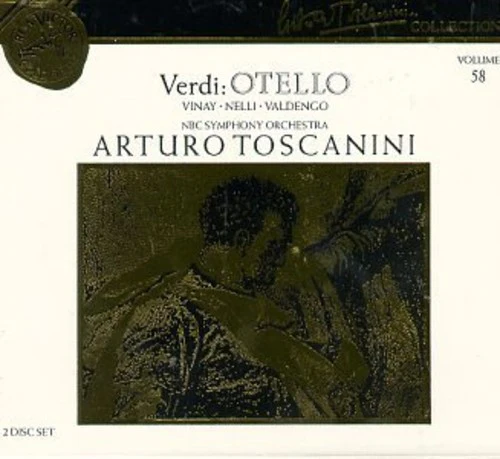
Toscanini Collection Vol 58 - Verdi: Otello
One of the century's legendary achievements on record confirms its reputation on this wellmanaged reissue. Here Toscanini's blazing intensity, his full comprehension of every facet of the score are evident throughout. In the very first scene the crackling of the fire in "Fuoco di gioia", the bubbling strings as illustration of Cassio getting drunk, the complete fidelity to the score of Valdengo's Iago tell of long preparation and immediately excite the ear. They are but harbingers of the legendary maestro's total command and of his wholehearted empathy with the opera's faultless structure and deep-felt emotions, all achieved within correct tempos and with an overview of the acts, each of which courses tautly to its inevitable conclusion. Just one little detail—the stab of pain in the orchestra at Otello's first thought of jealousy, before "Perche fai tale inchiesti"—shows just how intimately Toscanini knows his music; that and so much else left uncovered by other conductors sets him far above all, except his disciple Panizza on the equally satisfying Metropolitan performance on Music and Arts, 9/91.
The attack and dedication of chorus and orchestra are apparent throughout; so is the discipline and textual clarity on all sides. Nothing escapes Toscanini, yet at the same time nothing obtrudes in a manner that calls attention to itself—unless it be the conductor's groans and encouragement now more audible in the digital transfer. The sound remains dry but somehow this very close, confined quality accords with the work's own claustrophobic quality—if only Otello had gone out into the open air and thought about the reality of the evidence before him, he might not have been so easily caught up in Iago's web of deceit.
Valdengo's Iago continues to put all but Gobbi's (for Serafin on RCA-11/88; and Tibbett's, for Panizza) in the shade. His light, almost elegant and seemingly cheerful tone, his mordant, sinister delivery of the Credo, his insinuating and perfectly accurate delivery of the imagined Dream (Nucci ought to listen to its subtlety—Decca, 11/91) all tell of his willingness to follow Toscaninfs guidance, for he never sang so well for anyone else. This is a faultless performance. So, in terms of interpretation, is Vinay's Otello—the tormented, fearsomely commanding Moor to the life. It's only when you compare his too baritonal tone with Martinelli's (Music and Arts) or Pavarotti's incisive, Italianate delivery (Decca) or Domingo's absolute security (RCA, 3/87) that Vinay's thicker tone and the throb in it seem a shade below an ideal; but no one conveys better the sense of Otello's world falling about him. Nelli always turns out to be more satisfying than one expects, because her sincerity of purpose, her accuracy and her true tone compensate for a slightly pallid reading of Desdemona's thoughts and feelings. Certainly she makes more of the text than Dame Kin i Te Kanawa (Decca) and often sings with a finer line, while missing Rethberg's warmth on the Music and Arts version—and indeed the sense of suffering heard from Scotto (RCA/Levine). The smaller roles are all worthily taken.
Any incidental drawback should not prevent anyone hearing this overwhelming interpretation. Once the vivid storm is launched it is impossible to leave the performance until the tragic, stricken figure of Otello falls lifeless by his wronged wife's side: Toscanini identifies so sympathetically with the human condition, as did Verdi himself—and it is from Verdi, at whose feet he sat, that Toscanini learnt his trade.
-- Gramophone [3/1992]
The attack and dedication of chorus and orchestra are apparent throughout; so is the discipline and textual clarity on all sides. Nothing escapes Toscanini, yet at the same time nothing obtrudes in a manner that calls attention to itself—unless it be the conductor's groans and encouragement now more audible in the digital transfer. The sound remains dry but somehow this very close, confined quality accords with the work's own claustrophobic quality—if only Otello had gone out into the open air and thought about the reality of the evidence before him, he might not have been so easily caught up in Iago's web of deceit.
Valdengo's Iago continues to put all but Gobbi's (for Serafin on RCA-11/88; and Tibbett's, for Panizza) in the shade. His light, almost elegant and seemingly cheerful tone, his mordant, sinister delivery of the Credo, his insinuating and perfectly accurate delivery of the imagined Dream (Nucci ought to listen to its subtlety—Decca, 11/91) all tell of his willingness to follow Toscaninfs guidance, for he never sang so well for anyone else. This is a faultless performance. So, in terms of interpretation, is Vinay's Otello—the tormented, fearsomely commanding Moor to the life. It's only when you compare his too baritonal tone with Martinelli's (Music and Arts) or Pavarotti's incisive, Italianate delivery (Decca) or Domingo's absolute security (RCA, 3/87) that Vinay's thicker tone and the throb in it seem a shade below an ideal; but no one conveys better the sense of Otello's world falling about him. Nelli always turns out to be more satisfying than one expects, because her sincerity of purpose, her accuracy and her true tone compensate for a slightly pallid reading of Desdemona's thoughts and feelings. Certainly she makes more of the text than Dame Kin i Te Kanawa (Decca) and often sings with a finer line, while missing Rethberg's warmth on the Music and Arts version—and indeed the sense of suffering heard from Scotto (RCA/Levine). The smaller roles are all worthily taken.
Any incidental drawback should not prevent anyone hearing this overwhelming interpretation. Once the vivid storm is launched it is impossible to leave the performance until the tragic, stricken figure of Otello falls lifeless by his wronged wife's side: Toscanini identifies so sympathetically with the human condition, as did Verdi himself—and it is from Verdi, at whose feet he sat, that Toscanini learnt his trade.
-- Gramophone [3/1992]
One of the century's legendary achievements on record confirms its reputation on this wellmanaged reissue. Here Toscanini's blazing intensity, his full comprehension of every facet of the score are evident throughout. In the very first scene the crackling of the fire in "Fuoco di gioia", the bubbling strings as illustration of Cassio getting drunk, the complete fidelity to the score of Valdengo's Iago tell of long preparation and immediately excite the ear. They are but harbingers of the legendary maestro's total command and of his wholehearted empathy with the opera's faultless structure and deep-felt emotions, all achieved within correct tempos and with an overview of the acts, each of which courses tautly to its inevitable conclusion. Just one little detail—the stab of pain in the orchestra at Otello's first thought of jealousy, before "Perche fai tale inchiesti"—shows just how intimately Toscanini knows his music; that and so much else left uncovered by other conductors sets him far above all, except his disciple Panizza on the equally satisfying Metropolitan performance on Music and Arts, 9/91.
The attack and dedication of chorus and orchestra are apparent throughout; so is the discipline and textual clarity on all sides. Nothing escapes Toscanini, yet at the same time nothing obtrudes in a manner that calls attention to itself—unless it be the conductor's groans and encouragement now more audible in the digital transfer. The sound remains dry but somehow this very close, confined quality accords with the work's own claustrophobic quality—if only Otello had gone out into the open air and thought about the reality of the evidence before him, he might not have been so easily caught up in Iago's web of deceit.
Valdengo's Iago continues to put all but Gobbi's (for Serafin on RCA-11/88; and Tibbett's, for Panizza) in the shade. His light, almost elegant and seemingly cheerful tone, his mordant, sinister delivery of the Credo, his insinuating and perfectly accurate delivery of the imagined Dream (Nucci ought to listen to its subtlety—Decca, 11/91) all tell of his willingness to follow Toscaninfs guidance, for he never sang so well for anyone else. This is a faultless performance. So, in terms of interpretation, is Vinay's Otello—the tormented, fearsomely commanding Moor to the life. It's only when you compare his too baritonal tone with Martinelli's (Music and Arts) or Pavarotti's incisive, Italianate delivery (Decca) or Domingo's absolute security (RCA, 3/87) that Vinay's thicker tone and the throb in it seem a shade below an ideal; but no one conveys better the sense of Otello's world falling about him. Nelli always turns out to be more satisfying than one expects, because her sincerity of purpose, her accuracy and her true tone compensate for a slightly pallid reading of Desdemona's thoughts and feelings. Certainly she makes more of the text than Dame Kin i Te Kanawa (Decca) and often sings with a finer line, while missing Rethberg's warmth on the Music and Arts version—and indeed the sense of suffering heard from Scotto (RCA/Levine). The smaller roles are all worthily taken.
Any incidental drawback should not prevent anyone hearing this overwhelming interpretation. Once the vivid storm is launched it is impossible to leave the performance until the tragic, stricken figure of Otello falls lifeless by his wronged wife's side: Toscanini identifies so sympathetically with the human condition, as did Verdi himself—and it is from Verdi, at whose feet he sat, that Toscanini learnt his trade.
-- Gramophone [3/1992]
The attack and dedication of chorus and orchestra are apparent throughout; so is the discipline and textual clarity on all sides. Nothing escapes Toscanini, yet at the same time nothing obtrudes in a manner that calls attention to itself—unless it be the conductor's groans and encouragement now more audible in the digital transfer. The sound remains dry but somehow this very close, confined quality accords with the work's own claustrophobic quality—if only Otello had gone out into the open air and thought about the reality of the evidence before him, he might not have been so easily caught up in Iago's web of deceit.
Valdengo's Iago continues to put all but Gobbi's (for Serafin on RCA-11/88; and Tibbett's, for Panizza) in the shade. His light, almost elegant and seemingly cheerful tone, his mordant, sinister delivery of the Credo, his insinuating and perfectly accurate delivery of the imagined Dream (Nucci ought to listen to its subtlety—Decca, 11/91) all tell of his willingness to follow Toscaninfs guidance, for he never sang so well for anyone else. This is a faultless performance. So, in terms of interpretation, is Vinay's Otello—the tormented, fearsomely commanding Moor to the life. It's only when you compare his too baritonal tone with Martinelli's (Music and Arts) or Pavarotti's incisive, Italianate delivery (Decca) or Domingo's absolute security (RCA, 3/87) that Vinay's thicker tone and the throb in it seem a shade below an ideal; but no one conveys better the sense of Otello's world falling about him. Nelli always turns out to be more satisfying than one expects, because her sincerity of purpose, her accuracy and her true tone compensate for a slightly pallid reading of Desdemona's thoughts and feelings. Certainly she makes more of the text than Dame Kin i Te Kanawa (Decca) and often sings with a finer line, while missing Rethberg's warmth on the Music and Arts version—and indeed the sense of suffering heard from Scotto (RCA/Levine). The smaller roles are all worthily taken.
Any incidental drawback should not prevent anyone hearing this overwhelming interpretation. Once the vivid storm is launched it is impossible to leave the performance until the tragic, stricken figure of Otello falls lifeless by his wronged wife's side: Toscanini identifies so sympathetically with the human condition, as did Verdi himself—and it is from Verdi, at whose feet he sat, that Toscanini learnt his trade.
-- Gramophone [3/1992]
$11.90
Original: $33.99
-65%Toscanini Collection Vol 58 - Verdi: Otello—
$33.99
$11.90Description
One of the century's legendary achievements on record confirms its reputation on this wellmanaged reissue. Here Toscanini's blazing intensity, his full comprehension of every facet of the score are evident throughout. In the very first scene the crackling of the fire in "Fuoco di gioia", the bubbling strings as illustration of Cassio getting drunk, the complete fidelity to the score of Valdengo's Iago tell of long preparation and immediately excite the ear. They are but harbingers of the legendary maestro's total command and of his wholehearted empathy with the opera's faultless structure and deep-felt emotions, all achieved within correct tempos and with an overview of the acts, each of which courses tautly to its inevitable conclusion. Just one little detail—the stab of pain in the orchestra at Otello's first thought of jealousy, before "Perche fai tale inchiesti"—shows just how intimately Toscanini knows his music; that and so much else left uncovered by other conductors sets him far above all, except his disciple Panizza on the equally satisfying Metropolitan performance on Music and Arts, 9/91.
The attack and dedication of chorus and orchestra are apparent throughout; so is the discipline and textual clarity on all sides. Nothing escapes Toscanini, yet at the same time nothing obtrudes in a manner that calls attention to itself—unless it be the conductor's groans and encouragement now more audible in the digital transfer. The sound remains dry but somehow this very close, confined quality accords with the work's own claustrophobic quality—if only Otello had gone out into the open air and thought about the reality of the evidence before him, he might not have been so easily caught up in Iago's web of deceit.
Valdengo's Iago continues to put all but Gobbi's (for Serafin on RCA-11/88; and Tibbett's, for Panizza) in the shade. His light, almost elegant and seemingly cheerful tone, his mordant, sinister delivery of the Credo, his insinuating and perfectly accurate delivery of the imagined Dream (Nucci ought to listen to its subtlety—Decca, 11/91) all tell of his willingness to follow Toscaninfs guidance, for he never sang so well for anyone else. This is a faultless performance. So, in terms of interpretation, is Vinay's Otello—the tormented, fearsomely commanding Moor to the life. It's only when you compare his too baritonal tone with Martinelli's (Music and Arts) or Pavarotti's incisive, Italianate delivery (Decca) or Domingo's absolute security (RCA, 3/87) that Vinay's thicker tone and the throb in it seem a shade below an ideal; but no one conveys better the sense of Otello's world falling about him. Nelli always turns out to be more satisfying than one expects, because her sincerity of purpose, her accuracy and her true tone compensate for a slightly pallid reading of Desdemona's thoughts and feelings. Certainly she makes more of the text than Dame Kin i Te Kanawa (Decca) and often sings with a finer line, while missing Rethberg's warmth on the Music and Arts version—and indeed the sense of suffering heard from Scotto (RCA/Levine). The smaller roles are all worthily taken.
Any incidental drawback should not prevent anyone hearing this overwhelming interpretation. Once the vivid storm is launched it is impossible to leave the performance until the tragic, stricken figure of Otello falls lifeless by his wronged wife's side: Toscanini identifies so sympathetically with the human condition, as did Verdi himself—and it is from Verdi, at whose feet he sat, that Toscanini learnt his trade.
-- Gramophone [3/1992]
The attack and dedication of chorus and orchestra are apparent throughout; so is the discipline and textual clarity on all sides. Nothing escapes Toscanini, yet at the same time nothing obtrudes in a manner that calls attention to itself—unless it be the conductor's groans and encouragement now more audible in the digital transfer. The sound remains dry but somehow this very close, confined quality accords with the work's own claustrophobic quality—if only Otello had gone out into the open air and thought about the reality of the evidence before him, he might not have been so easily caught up in Iago's web of deceit.
Valdengo's Iago continues to put all but Gobbi's (for Serafin on RCA-11/88; and Tibbett's, for Panizza) in the shade. His light, almost elegant and seemingly cheerful tone, his mordant, sinister delivery of the Credo, his insinuating and perfectly accurate delivery of the imagined Dream (Nucci ought to listen to its subtlety—Decca, 11/91) all tell of his willingness to follow Toscaninfs guidance, for he never sang so well for anyone else. This is a faultless performance. So, in terms of interpretation, is Vinay's Otello—the tormented, fearsomely commanding Moor to the life. It's only when you compare his too baritonal tone with Martinelli's (Music and Arts) or Pavarotti's incisive, Italianate delivery (Decca) or Domingo's absolute security (RCA, 3/87) that Vinay's thicker tone and the throb in it seem a shade below an ideal; but no one conveys better the sense of Otello's world falling about him. Nelli always turns out to be more satisfying than one expects, because her sincerity of purpose, her accuracy and her true tone compensate for a slightly pallid reading of Desdemona's thoughts and feelings. Certainly she makes more of the text than Dame Kin i Te Kanawa (Decca) and often sings with a finer line, while missing Rethberg's warmth on the Music and Arts version—and indeed the sense of suffering heard from Scotto (RCA/Levine). The smaller roles are all worthily taken.
Any incidental drawback should not prevent anyone hearing this overwhelming interpretation. Once the vivid storm is launched it is impossible to leave the performance until the tragic, stricken figure of Otello falls lifeless by his wronged wife's side: Toscanini identifies so sympathetically with the human condition, as did Verdi himself—and it is from Verdi, at whose feet he sat, that Toscanini learnt his trade.
-- Gramophone [3/1992]