Towards the Flame - Scriabin & Langgaard
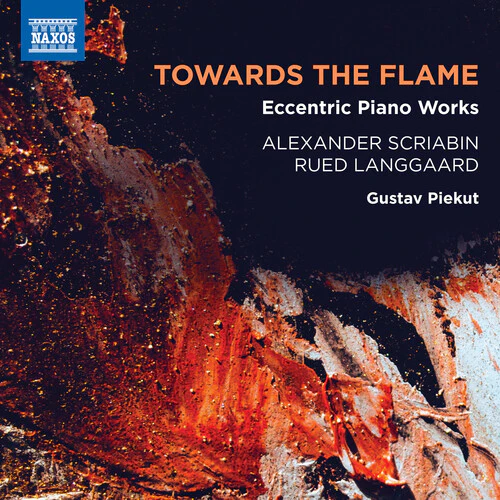
Both Scriabin and Langgaard believed that through their music they could pave the way for a spiritual revolution. The piano offered a perfect and very intimate medium for their highly personal harmonic and expressive vocabularies. Scriabin drew on daemonic associations in his Piano Sonata No. 9 to liberate the old tonal system, whereas Langgaard explored his youthful fascination with Catholicism in music of fanaticism and ecstasy. Langgaard’s The Flame Chambers and Scriabin’s Vers la flamme are feverish musical twins that exemplify both composers’ explosive intensity.
Both Scriabin and Langgaard believed that through their music they could pave the way for a spiritual revolution. The piano offered a perfect and very intimate medium for their highly personal harmonic and expressive vocabularies. Scriabin drew on daemonic associations in his Piano Sonata No. 9 to liberate the old tonal system, whereas Langgaard explored his youthful fascination with Catholicism in music of fanaticism and ecstasy. Langgaard’s The Flame Chambers and Scriabin’s Vers la flamme are feverish musical twins that exemplify both composers’ explosive intensity.
Description
Both Scriabin and Langgaard believed that through their music they could pave the way for a spiritual revolution. The piano offered a perfect and very intimate medium for their highly personal harmonic and expressive vocabularies. Scriabin drew on daemonic associations in his Piano Sonata No. 9 to liberate the old tonal system, whereas Langgaard explored his youthful fascination with Catholicism in music of fanaticism and ecstasy. Langgaard’s The Flame Chambers and Scriabin’s Vers la flamme are feverish musical twins that exemplify both composers’ explosive intensity.