🎉 Up to 70% Off Selected ItemsShop Sale

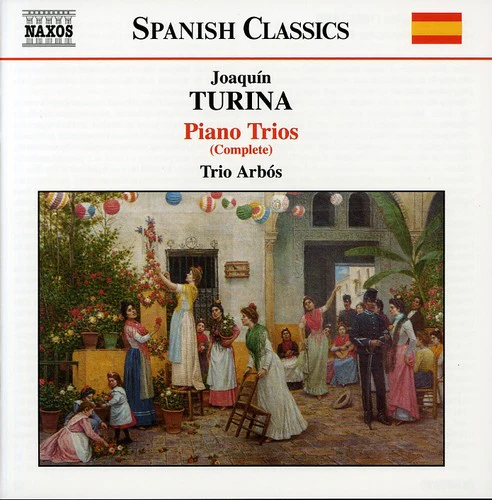
Turina: Complete Piano Trios / Trío Arbós
Madrid-based Trío Arbós offers a compellingly performed survey of Joaquin Turina's four piano trios, works that document the evolution of his singular style, which was grounded in French models but with increasing and brilliantly effective use of traditional Spanish idioms. Turina composed the F major trio (here recorded for the first time) in 1904 during his years of study in Paris, and it reflects the influence of César Franck transmitted through the tutelage of Vincent d'Indy. A stern and declamatory first movement introduction leads to an Allegro of a kinder but no less dramatic countenance. The Andante's deeply somber mood (with its stirring central section, wonderfully rendered by Arbós) is effectively whisked away by the brightly dancing scherzo in 5/4, while the grandiose Finale employs Franck's cyclic principle of restating all the work's main themes before drawing to an emphatic close.
Turina's Trio No. 1 (1926) and Trio No. 2 (1933) reflect his immersion in the music of Debussy (whose evocative style he seamlessly melded into his own), while the "fantasy trio" Círculo (1936) contains Turina's most overtly Spanish music--nowhere more so than the Mediodía (midday) movement, with its shifting moods of dancing gaiety and contemplation. The Arbós players capture and relay these elements with stunning fidelity, and overall their performance, rich in native color and rhythmic intensity, surpasses the Beckova Trio's recent recording on Chandos. Indeed, the Arbós' emotional authenticity in all four works reflects its profound identification with Turina's style. Only Naxos' bright and somewhat harsh recording is less than ideal (especially when compared with the warmer, fuller sound on Chandos); but this need not prevent anyone from enjoying this remarkable collection.
--Victor Carr Jr., ClassicsToday.com
Turina's Trio No. 1 (1926) and Trio No. 2 (1933) reflect his immersion in the music of Debussy (whose evocative style he seamlessly melded into his own), while the "fantasy trio" Círculo (1936) contains Turina's most overtly Spanish music--nowhere more so than the Mediodía (midday) movement, with its shifting moods of dancing gaiety and contemplation. The Arbós players capture and relay these elements with stunning fidelity, and overall their performance, rich in native color and rhythmic intensity, surpasses the Beckova Trio's recent recording on Chandos. Indeed, the Arbós' emotional authenticity in all four works reflects its profound identification with Turina's style. Only Naxos' bright and somewhat harsh recording is less than ideal (especially when compared with the warmer, fuller sound on Chandos); but this need not prevent anyone from enjoying this remarkable collection.
--Victor Carr Jr., ClassicsToday.com
Madrid-based Trío Arbós offers a compellingly performed survey of Joaquin Turina's four piano trios, works that document the evolution of his singular style, which was grounded in French models but with increasing and brilliantly effective use of traditional Spanish idioms. Turina composed the F major trio (here recorded for the first time) in 1904 during his years of study in Paris, and it reflects the influence of César Franck transmitted through the tutelage of Vincent d'Indy. A stern and declamatory first movement introduction leads to an Allegro of a kinder but no less dramatic countenance. The Andante's deeply somber mood (with its stirring central section, wonderfully rendered by Arbós) is effectively whisked away by the brightly dancing scherzo in 5/4, while the grandiose Finale employs Franck's cyclic principle of restating all the work's main themes before drawing to an emphatic close.
Turina's Trio No. 1 (1926) and Trio No. 2 (1933) reflect his immersion in the music of Debussy (whose evocative style he seamlessly melded into his own), while the "fantasy trio" Círculo (1936) contains Turina's most overtly Spanish music--nowhere more so than the Mediodía (midday) movement, with its shifting moods of dancing gaiety and contemplation. The Arbós players capture and relay these elements with stunning fidelity, and overall their performance, rich in native color and rhythmic intensity, surpasses the Beckova Trio's recent recording on Chandos. Indeed, the Arbós' emotional authenticity in all four works reflects its profound identification with Turina's style. Only Naxos' bright and somewhat harsh recording is less than ideal (especially when compared with the warmer, fuller sound on Chandos); but this need not prevent anyone from enjoying this remarkable collection.
--Victor Carr Jr., ClassicsToday.com
Turina's Trio No. 1 (1926) and Trio No. 2 (1933) reflect his immersion in the music of Debussy (whose evocative style he seamlessly melded into his own), while the "fantasy trio" Círculo (1936) contains Turina's most overtly Spanish music--nowhere more so than the Mediodía (midday) movement, with its shifting moods of dancing gaiety and contemplation. The Arbós players capture and relay these elements with stunning fidelity, and overall their performance, rich in native color and rhythmic intensity, surpasses the Beckova Trio's recent recording on Chandos. Indeed, the Arbós' emotional authenticity in all four works reflects its profound identification with Turina's style. Only Naxos' bright and somewhat harsh recording is less than ideal (especially when compared with the warmer, fuller sound on Chandos); but this need not prevent anyone from enjoying this remarkable collection.
--Victor Carr Jr., ClassicsToday.com
$7.00
Original: $19.99
-65%Turina: Complete Piano Trios / Trío Arbós—
$19.99
$7.00Description
Madrid-based Trío Arbós offers a compellingly performed survey of Joaquin Turina's four piano trios, works that document the evolution of his singular style, which was grounded in French models but with increasing and brilliantly effective use of traditional Spanish idioms. Turina composed the F major trio (here recorded for the first time) in 1904 during his years of study in Paris, and it reflects the influence of César Franck transmitted through the tutelage of Vincent d'Indy. A stern and declamatory first movement introduction leads to an Allegro of a kinder but no less dramatic countenance. The Andante's deeply somber mood (with its stirring central section, wonderfully rendered by Arbós) is effectively whisked away by the brightly dancing scherzo in 5/4, while the grandiose Finale employs Franck's cyclic principle of restating all the work's main themes before drawing to an emphatic close.
Turina's Trio No. 1 (1926) and Trio No. 2 (1933) reflect his immersion in the music of Debussy (whose evocative style he seamlessly melded into his own), while the "fantasy trio" Círculo (1936) contains Turina's most overtly Spanish music--nowhere more so than the Mediodía (midday) movement, with its shifting moods of dancing gaiety and contemplation. The Arbós players capture and relay these elements with stunning fidelity, and overall their performance, rich in native color and rhythmic intensity, surpasses the Beckova Trio's recent recording on Chandos. Indeed, the Arbós' emotional authenticity in all four works reflects its profound identification with Turina's style. Only Naxos' bright and somewhat harsh recording is less than ideal (especially when compared with the warmer, fuller sound on Chandos); but this need not prevent anyone from enjoying this remarkable collection.
--Victor Carr Jr., ClassicsToday.com
Turina's Trio No. 1 (1926) and Trio No. 2 (1933) reflect his immersion in the music of Debussy (whose evocative style he seamlessly melded into his own), while the "fantasy trio" Círculo (1936) contains Turina's most overtly Spanish music--nowhere more so than the Mediodía (midday) movement, with its shifting moods of dancing gaiety and contemplation. The Arbós players capture and relay these elements with stunning fidelity, and overall their performance, rich in native color and rhythmic intensity, surpasses the Beckova Trio's recent recording on Chandos. Indeed, the Arbós' emotional authenticity in all four works reflects its profound identification with Turina's style. Only Naxos' bright and somewhat harsh recording is less than ideal (especially when compared with the warmer, fuller sound on Chandos); but this need not prevent anyone from enjoying this remarkable collection.
--Victor Carr Jr., ClassicsToday.com