🎉 Up to 70% Off Selected ItemsShop Sale

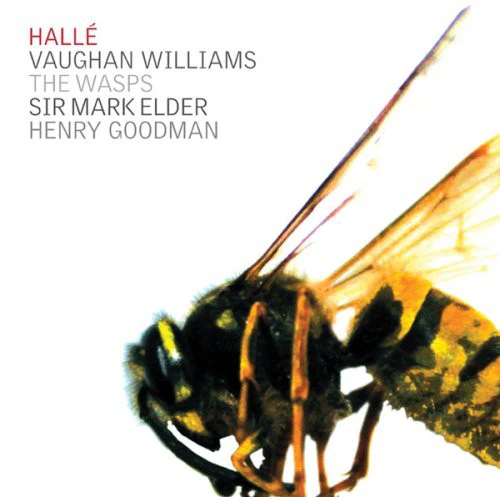
Vaughan Williams: The Wasps / Goodman, Elder, Et Al
The Hallé label shows both artistry and acumen in this release. This is something to celebrate among the legion of RVW mavens. It is the first complete recording of Vaughan Williams music for the 1909 Cambridge University production in Greek of the comic satire "the Wasps" by Aristophanes. The wide appetite of the classical music audience for Vaughan Williams is strong and not just in England. Rather like Britten and Tippett his music has travelled and enjoyed performances and nurtured enthusiasm far and wide. Mark Elder, who has done so much for the renaissance of the Hallé, is to be congratulated for his decision to associate himself with the project and for directing with such vitality. In a way the incongruity of the music in relation to the plot and satire hardly matters even where a taste of the drama is given through the David Pountney narration. I detect very little satire in this music. The music now seems inextricably and delightfully bound up in the English countryside, its cheeriness and its verdant beauty.
The narration explodes onto the scene with a strangulated scream of ‘Bastard!’ from the rough trade of Henry Goodman doing his best Ray Winstone act. Some flavour of the narration and the singing is in tr. 5 in CD1 where the tenors sing: ‘Could you not find any clean underwear?’ The whole effect is of one of those de luxe BBC Radio productions with full orchestral apparatus as in Ibsen’s Peer Gynt, Brecht’s Schweik in World War Two and in Flecker’s Hassan. The music plays over the snores, moans, speaking, salt and spleen of narrator Goodman. The overture starts to mean more when one hears the buzzing main theme sung by the chorus in ‘When we buzz’. The Hallé Chorus are in sterling voice singing like a phalanx of football thugs at one moment and classically lightly English at another (CD1 tr. 11 1:26).
CD2 includes Acts II and III. It launches with a delicate, tip-toe night march purged of all absurd overtones - sheerly delightful writing (Entr’Acte). This continues but with the absurdist gearbox fully engaged in The March Past of the Witnesses. This is RVW the far-seeing anticipating Prokofiev which he does again at 5:10 in tr. 15 where rather than Love for Three Oranges it is the Classical Symphony that is echoed/predicted. The Chorus Parabasis (CD2 tr. 7) recalls the mellifluous lilt of Serenade to Music and the writing of Vaughan Williams’ teacher Ravel. Back to spleen and bawdiness again in Pountney’s words for Melodrama (tr. 15): "Out of my way, you bunch of faggots, you pussy-footing plonkers ..." And there’s more, dear reader. This is not for the genteel auntie. Do bear in mind that here in the sung and spoken text you catch something of the football terraces and of punk. This is RVW red in tooth and claw. Then again other sections such as the flute and harp troubadourisms of Chorus and Dance (tr. 15 at 00:55) recall the writing in Sir John in Love. At the end where Procleon snores the effect predicts the somnolent Sir John Falstaff. It is equally Falstaffian - but in a different way - when he half wakes and mutters with drooling relish: "Show your daddy your dainty tussies and set them all in motion." It is a multi-faceted score - frankly fascinating.
Vaughan Williams re-scored parts of the music for the well known five movement orchestral suite. It is that suite and the overture by which most listeners will know some of this music. There is no competition for this set.
The set includes the full score of 80 minutes and incorporated dialogue of circa 25 minutes. The documentation is non-pareil with Michael Kennedy’s essay, David Pountney’s preface, full texts in English only, artist profiles and a listing of all personnel in the orchestra.
If you are interested, the full study score can be obtained from Faber Music. This is based on the editorial work of Igor Kennaway who back in the early 1990s conducted one of the best ever productions of RVW’s ‘morality’ Pilgrim’s Progress.
Some may find this an unnerving experience but it works superbly well provided you are ready for the salty dialogue. It’s a small price to pay for the fascination and delight of hearing so much familiar and unfamiliar Vaughan Williams.
- Rob Barnett, MusicWeb International
The narration explodes onto the scene with a strangulated scream of ‘Bastard!’ from the rough trade of Henry Goodman doing his best Ray Winstone act. Some flavour of the narration and the singing is in tr. 5 in CD1 where the tenors sing: ‘Could you not find any clean underwear?’ The whole effect is of one of those de luxe BBC Radio productions with full orchestral apparatus as in Ibsen’s Peer Gynt, Brecht’s Schweik in World War Two and in Flecker’s Hassan. The music plays over the snores, moans, speaking, salt and spleen of narrator Goodman. The overture starts to mean more when one hears the buzzing main theme sung by the chorus in ‘When we buzz’. The Hallé Chorus are in sterling voice singing like a phalanx of football thugs at one moment and classically lightly English at another (CD1 tr. 11 1:26).
CD2 includes Acts II and III. It launches with a delicate, tip-toe night march purged of all absurd overtones - sheerly delightful writing (Entr’Acte). This continues but with the absurdist gearbox fully engaged in The March Past of the Witnesses. This is RVW the far-seeing anticipating Prokofiev which he does again at 5:10 in tr. 15 where rather than Love for Three Oranges it is the Classical Symphony that is echoed/predicted. The Chorus Parabasis (CD2 tr. 7) recalls the mellifluous lilt of Serenade to Music and the writing of Vaughan Williams’ teacher Ravel. Back to spleen and bawdiness again in Pountney’s words for Melodrama (tr. 15): "Out of my way, you bunch of faggots, you pussy-footing plonkers ..." And there’s more, dear reader. This is not for the genteel auntie. Do bear in mind that here in the sung and spoken text you catch something of the football terraces and of punk. This is RVW red in tooth and claw. Then again other sections such as the flute and harp troubadourisms of Chorus and Dance (tr. 15 at 00:55) recall the writing in Sir John in Love. At the end where Procleon snores the effect predicts the somnolent Sir John Falstaff. It is equally Falstaffian - but in a different way - when he half wakes and mutters with drooling relish: "Show your daddy your dainty tussies and set them all in motion." It is a multi-faceted score - frankly fascinating.
Vaughan Williams re-scored parts of the music for the well known five movement orchestral suite. It is that suite and the overture by which most listeners will know some of this music. There is no competition for this set.
The set includes the full score of 80 minutes and incorporated dialogue of circa 25 minutes. The documentation is non-pareil with Michael Kennedy’s essay, David Pountney’s preface, full texts in English only, artist profiles and a listing of all personnel in the orchestra.
If you are interested, the full study score can be obtained from Faber Music. This is based on the editorial work of Igor Kennaway who back in the early 1990s conducted one of the best ever productions of RVW’s ‘morality’ Pilgrim’s Progress.
Some may find this an unnerving experience but it works superbly well provided you are ready for the salty dialogue. It’s a small price to pay for the fascination and delight of hearing so much familiar and unfamiliar Vaughan Williams.
- Rob Barnett, MusicWeb International
The Hallé label shows both artistry and acumen in this release. This is something to celebrate among the legion of RVW mavens. It is the first complete recording of Vaughan Williams music for the 1909 Cambridge University production in Greek of the comic satire "the Wasps" by Aristophanes. The wide appetite of the classical music audience for Vaughan Williams is strong and not just in England. Rather like Britten and Tippett his music has travelled and enjoyed performances and nurtured enthusiasm far and wide. Mark Elder, who has done so much for the renaissance of the Hallé, is to be congratulated for his decision to associate himself with the project and for directing with such vitality. In a way the incongruity of the music in relation to the plot and satire hardly matters even where a taste of the drama is given through the David Pountney narration. I detect very little satire in this music. The music now seems inextricably and delightfully bound up in the English countryside, its cheeriness and its verdant beauty.
The narration explodes onto the scene with a strangulated scream of ‘Bastard!’ from the rough trade of Henry Goodman doing his best Ray Winstone act. Some flavour of the narration and the singing is in tr. 5 in CD1 where the tenors sing: ‘Could you not find any clean underwear?’ The whole effect is of one of those de luxe BBC Radio productions with full orchestral apparatus as in Ibsen’s Peer Gynt, Brecht’s Schweik in World War Two and in Flecker’s Hassan. The music plays over the snores, moans, speaking, salt and spleen of narrator Goodman. The overture starts to mean more when one hears the buzzing main theme sung by the chorus in ‘When we buzz’. The Hallé Chorus are in sterling voice singing like a phalanx of football thugs at one moment and classically lightly English at another (CD1 tr. 11 1:26).
CD2 includes Acts II and III. It launches with a delicate, tip-toe night march purged of all absurd overtones - sheerly delightful writing (Entr’Acte). This continues but with the absurdist gearbox fully engaged in The March Past of the Witnesses. This is RVW the far-seeing anticipating Prokofiev which he does again at 5:10 in tr. 15 where rather than Love for Three Oranges it is the Classical Symphony that is echoed/predicted. The Chorus Parabasis (CD2 tr. 7) recalls the mellifluous lilt of Serenade to Music and the writing of Vaughan Williams’ teacher Ravel. Back to spleen and bawdiness again in Pountney’s words for Melodrama (tr. 15): "Out of my way, you bunch of faggots, you pussy-footing plonkers ..." And there’s more, dear reader. This is not for the genteel auntie. Do bear in mind that here in the sung and spoken text you catch something of the football terraces and of punk. This is RVW red in tooth and claw. Then again other sections such as the flute and harp troubadourisms of Chorus and Dance (tr. 15 at 00:55) recall the writing in Sir John in Love. At the end where Procleon snores the effect predicts the somnolent Sir John Falstaff. It is equally Falstaffian - but in a different way - when he half wakes and mutters with drooling relish: "Show your daddy your dainty tussies and set them all in motion." It is a multi-faceted score - frankly fascinating.
Vaughan Williams re-scored parts of the music for the well known five movement orchestral suite. It is that suite and the overture by which most listeners will know some of this music. There is no competition for this set.
The set includes the full score of 80 minutes and incorporated dialogue of circa 25 minutes. The documentation is non-pareil with Michael Kennedy’s essay, David Pountney’s preface, full texts in English only, artist profiles and a listing of all personnel in the orchestra.
If you are interested, the full study score can be obtained from Faber Music. This is based on the editorial work of Igor Kennaway who back in the early 1990s conducted one of the best ever productions of RVW’s ‘morality’ Pilgrim’s Progress.
Some may find this an unnerving experience but it works superbly well provided you are ready for the salty dialogue. It’s a small price to pay for the fascination and delight of hearing so much familiar and unfamiliar Vaughan Williams.
- Rob Barnett, MusicWeb International
The narration explodes onto the scene with a strangulated scream of ‘Bastard!’ from the rough trade of Henry Goodman doing his best Ray Winstone act. Some flavour of the narration and the singing is in tr. 5 in CD1 where the tenors sing: ‘Could you not find any clean underwear?’ The whole effect is of one of those de luxe BBC Radio productions with full orchestral apparatus as in Ibsen’s Peer Gynt, Brecht’s Schweik in World War Two and in Flecker’s Hassan. The music plays over the snores, moans, speaking, salt and spleen of narrator Goodman. The overture starts to mean more when one hears the buzzing main theme sung by the chorus in ‘When we buzz’. The Hallé Chorus are in sterling voice singing like a phalanx of football thugs at one moment and classically lightly English at another (CD1 tr. 11 1:26).
CD2 includes Acts II and III. It launches with a delicate, tip-toe night march purged of all absurd overtones - sheerly delightful writing (Entr’Acte). This continues but with the absurdist gearbox fully engaged in The March Past of the Witnesses. This is RVW the far-seeing anticipating Prokofiev which he does again at 5:10 in tr. 15 where rather than Love for Three Oranges it is the Classical Symphony that is echoed/predicted. The Chorus Parabasis (CD2 tr. 7) recalls the mellifluous lilt of Serenade to Music and the writing of Vaughan Williams’ teacher Ravel. Back to spleen and bawdiness again in Pountney’s words for Melodrama (tr. 15): "Out of my way, you bunch of faggots, you pussy-footing plonkers ..." And there’s more, dear reader. This is not for the genteel auntie. Do bear in mind that here in the sung and spoken text you catch something of the football terraces and of punk. This is RVW red in tooth and claw. Then again other sections such as the flute and harp troubadourisms of Chorus and Dance (tr. 15 at 00:55) recall the writing in Sir John in Love. At the end where Procleon snores the effect predicts the somnolent Sir John Falstaff. It is equally Falstaffian - but in a different way - when he half wakes and mutters with drooling relish: "Show your daddy your dainty tussies and set them all in motion." It is a multi-faceted score - frankly fascinating.
Vaughan Williams re-scored parts of the music for the well known five movement orchestral suite. It is that suite and the overture by which most listeners will know some of this music. There is no competition for this set.
The set includes the full score of 80 minutes and incorporated dialogue of circa 25 minutes. The documentation is non-pareil with Michael Kennedy’s essay, David Pountney’s preface, full texts in English only, artist profiles and a listing of all personnel in the orchestra.
If you are interested, the full study score can be obtained from Faber Music. This is based on the editorial work of Igor Kennaway who back in the early 1990s conducted one of the best ever productions of RVW’s ‘morality’ Pilgrim’s Progress.
Some may find this an unnerving experience but it works superbly well provided you are ready for the salty dialogue. It’s a small price to pay for the fascination and delight of hearing so much familiar and unfamiliar Vaughan Williams.
- Rob Barnett, MusicWeb International
$7.35
Original: $20.99
-65%Vaughan Williams: The Wasps / Goodman, Elder, Et Al—
$20.99
$7.35Description
The Hallé label shows both artistry and acumen in this release. This is something to celebrate among the legion of RVW mavens. It is the first complete recording of Vaughan Williams music for the 1909 Cambridge University production in Greek of the comic satire "the Wasps" by Aristophanes. The wide appetite of the classical music audience for Vaughan Williams is strong and not just in England. Rather like Britten and Tippett his music has travelled and enjoyed performances and nurtured enthusiasm far and wide. Mark Elder, who has done so much for the renaissance of the Hallé, is to be congratulated for his decision to associate himself with the project and for directing with such vitality. In a way the incongruity of the music in relation to the plot and satire hardly matters even where a taste of the drama is given through the David Pountney narration. I detect very little satire in this music. The music now seems inextricably and delightfully bound up in the English countryside, its cheeriness and its verdant beauty.
The narration explodes onto the scene with a strangulated scream of ‘Bastard!’ from the rough trade of Henry Goodman doing his best Ray Winstone act. Some flavour of the narration and the singing is in tr. 5 in CD1 where the tenors sing: ‘Could you not find any clean underwear?’ The whole effect is of one of those de luxe BBC Radio productions with full orchestral apparatus as in Ibsen’s Peer Gynt, Brecht’s Schweik in World War Two and in Flecker’s Hassan. The music plays over the snores, moans, speaking, salt and spleen of narrator Goodman. The overture starts to mean more when one hears the buzzing main theme sung by the chorus in ‘When we buzz’. The Hallé Chorus are in sterling voice singing like a phalanx of football thugs at one moment and classically lightly English at another (CD1 tr. 11 1:26).
CD2 includes Acts II and III. It launches with a delicate, tip-toe night march purged of all absurd overtones - sheerly delightful writing (Entr’Acte). This continues but with the absurdist gearbox fully engaged in The March Past of the Witnesses. This is RVW the far-seeing anticipating Prokofiev which he does again at 5:10 in tr. 15 where rather than Love for Three Oranges it is the Classical Symphony that is echoed/predicted. The Chorus Parabasis (CD2 tr. 7) recalls the mellifluous lilt of Serenade to Music and the writing of Vaughan Williams’ teacher Ravel. Back to spleen and bawdiness again in Pountney’s words for Melodrama (tr. 15): "Out of my way, you bunch of faggots, you pussy-footing plonkers ..." And there’s more, dear reader. This is not for the genteel auntie. Do bear in mind that here in the sung and spoken text you catch something of the football terraces and of punk. This is RVW red in tooth and claw. Then again other sections such as the flute and harp troubadourisms of Chorus and Dance (tr. 15 at 00:55) recall the writing in Sir John in Love. At the end where Procleon snores the effect predicts the somnolent Sir John Falstaff. It is equally Falstaffian - but in a different way - when he half wakes and mutters with drooling relish: "Show your daddy your dainty tussies and set them all in motion." It is a multi-faceted score - frankly fascinating.
Vaughan Williams re-scored parts of the music for the well known five movement orchestral suite. It is that suite and the overture by which most listeners will know some of this music. There is no competition for this set.
The set includes the full score of 80 minutes and incorporated dialogue of circa 25 minutes. The documentation is non-pareil with Michael Kennedy’s essay, David Pountney’s preface, full texts in English only, artist profiles and a listing of all personnel in the orchestra.
If you are interested, the full study score can be obtained from Faber Music. This is based on the editorial work of Igor Kennaway who back in the early 1990s conducted one of the best ever productions of RVW’s ‘morality’ Pilgrim’s Progress.
Some may find this an unnerving experience but it works superbly well provided you are ready for the salty dialogue. It’s a small price to pay for the fascination and delight of hearing so much familiar and unfamiliar Vaughan Williams.
- Rob Barnett, MusicWeb International
The narration explodes onto the scene with a strangulated scream of ‘Bastard!’ from the rough trade of Henry Goodman doing his best Ray Winstone act. Some flavour of the narration and the singing is in tr. 5 in CD1 where the tenors sing: ‘Could you not find any clean underwear?’ The whole effect is of one of those de luxe BBC Radio productions with full orchestral apparatus as in Ibsen’s Peer Gynt, Brecht’s Schweik in World War Two and in Flecker’s Hassan. The music plays over the snores, moans, speaking, salt and spleen of narrator Goodman. The overture starts to mean more when one hears the buzzing main theme sung by the chorus in ‘When we buzz’. The Hallé Chorus are in sterling voice singing like a phalanx of football thugs at one moment and classically lightly English at another (CD1 tr. 11 1:26).
CD2 includes Acts II and III. It launches with a delicate, tip-toe night march purged of all absurd overtones - sheerly delightful writing (Entr’Acte). This continues but with the absurdist gearbox fully engaged in The March Past of the Witnesses. This is RVW the far-seeing anticipating Prokofiev which he does again at 5:10 in tr. 15 where rather than Love for Three Oranges it is the Classical Symphony that is echoed/predicted. The Chorus Parabasis (CD2 tr. 7) recalls the mellifluous lilt of Serenade to Music and the writing of Vaughan Williams’ teacher Ravel. Back to spleen and bawdiness again in Pountney’s words for Melodrama (tr. 15): "Out of my way, you bunch of faggots, you pussy-footing plonkers ..." And there’s more, dear reader. This is not for the genteel auntie. Do bear in mind that here in the sung and spoken text you catch something of the football terraces and of punk. This is RVW red in tooth and claw. Then again other sections such as the flute and harp troubadourisms of Chorus and Dance (tr. 15 at 00:55) recall the writing in Sir John in Love. At the end where Procleon snores the effect predicts the somnolent Sir John Falstaff. It is equally Falstaffian - but in a different way - when he half wakes and mutters with drooling relish: "Show your daddy your dainty tussies and set them all in motion." It is a multi-faceted score - frankly fascinating.
Vaughan Williams re-scored parts of the music for the well known five movement orchestral suite. It is that suite and the overture by which most listeners will know some of this music. There is no competition for this set.
The set includes the full score of 80 minutes and incorporated dialogue of circa 25 minutes. The documentation is non-pareil with Michael Kennedy’s essay, David Pountney’s preface, full texts in English only, artist profiles and a listing of all personnel in the orchestra.
If you are interested, the full study score can be obtained from Faber Music. This is based on the editorial work of Igor Kennaway who back in the early 1990s conducted one of the best ever productions of RVW’s ‘morality’ Pilgrim’s Progress.
Some may find this an unnerving experience but it works superbly well provided you are ready for the salty dialogue. It’s a small price to pay for the fascination and delight of hearing so much familiar and unfamiliar Vaughan Williams.
- Rob Barnett, MusicWeb International






















