🎉 Up to 70% Off Selected ItemsShop Sale

1 / 2
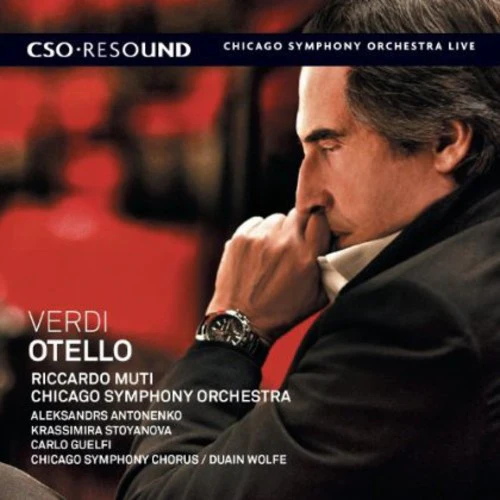
Verdi: Otello / Antonenko, Stoyanova, Muti, Chicago
Also available on Super Audio CD
VERDI Otello • Riccardo Muti, cond; Aleksandrs Antonenko ( Otello ); Krassimira Stoyanova ( Desdemona ); Carlo Guelfi ( Iago ); Juan Francisco Gatell ( Cassio ); Barbara Di Castri ( Emilia ); Eric Owens ( Lodovico ); Chicago SO & Ch • CSO RESOUND 9011301 (2 SACDs: 135:57 Text and Translation)
Riccardo Muti’s Otello derives from three concert performances given at Chicago’s Orchestra Hall in 2011. The recording combines the excitement of a live performance with the virtues of an excellently engineered studio effort that brilliantly captures orchestral and choral detail within a huge dynamic range. CSO Resound provides a booklet that includes essays and a libretto, and there’s no applause or audience sound.
Muti’s masterful conducting of Verdi’s greatest tragic opera would make this an important Otello to hear even if it weren’t for its generally strong vocal performances. In the first act’s storm and sequence of choruses, Muti’s slightly restrained tempos resemble Fürtwangler’s more than the forward momentum of Kleiber or Toscanini, but he generates taut excitement through control of dynamics, precise rhythm, and steady, logical pacing. The Chicago Symphony, which performed the opera under Solti, plays wonderfully well. Throughout the performance, Muti has the orchestra make subtle differences in articulation from what one traditionally hears.
A unique feature of this recording is the inclusion of a rarely heard revision of the busy ensemble that closes act III that Verdi made for a Paris production in 1894, seven years after Otello ’s La Scala premiere. The last operatic music that Verdi composed, its musical and dramatic quality is equal to that of the more familiar concertato , but its increased clarity allows Iago’s asides to be heard more clearly.
Aleksandrs Antonenko sang Otello with Muti conducting (with a different Iago and Desdemona) in Salzburg in 2008, and judging from the excerpts that I’ve seen of that performance, he improved significantly by the time of the Chicago performances. He has the right (and rare) heroic voice for Otello, and he sings musically and technically well, with comfortable-sounding Italian in a performance that begins strongly, but gains conviction in the two final acts. While he doesn’t yet imprint the role with the kind of distinctive personality that its greatest interpreters have done, singing and acting Otello tends to be a career-long process, and Antonenko sings the part far better than Cura, Galouzine, Botha, or Heppner, to name some other tenors who have undertaken the role, A.D. (After Domingo). It remains to be seen whether Jonas Kaufmann can summon the vocal power to sing the part live, but the two Otello excerpts on his recent Verdi recital are a very promising sign that perhaps, not too long from now, two castable Otellos (Kaufmann and Antonenko) may walk the earth.
The wobble in baritone Carlo Guelfi’s delivery of Iago’s first line, “È infranto l’artimon,” warns of vocal trouble, and it turns out that he lacks the required power and the ability to sing sustained notes in the drinking song, and more importantly, in the Credo. Actually, Guelfi does well with the lighter, insinuating side of of Iago’s music, such as the dialogue with Roderigo in act I, and much of act III. There’s pleasure to be had in hearing an Italian baritone in the role, but a successful Iago must be able to really sing, not just do well with role’s parlando aspects. Many a worthy Otello recording has been undermined by odd casting of Iago; I’m thinking of Fischer-Dieskau, Schöffler, Glossop, and Leiferkus. Then there are baritones whose voices are right, but whose characterizations are insufficient: Protti, Capuccilli, even Milnes. Giuseppe Valdengo, in Toscanini’s recording, demonstrates what’s possible in a performance that’s both magnificently characterized and beautifully sung.
An experienced Desdemona, Krassimira Stoyanova gives a strong performance, singing with focused, lovely tone, if not achieving the poignancy of the greatest Desdemonas in act IV: Tebaldi, Freni, de los Angeles. The smaller parts are all efficiently performed, with no particular singer standing out.
Defining what makes a great performance of Otello is straightforward. The opera requires an authoritative, exciting conductor, plus three perfectly cast singers. Good sound is a bonus, but not essential. Del Monaco and Domingo are each essential Otellos to hear, but I think of their many performances as a composite and wouldn’t single out any one particular recording. I’m particularly fond of the espressivo quality that Ramon Vinay and Jon Vickers bring to the role, and recommend the Met video with Vickers, MacNeil, and Scotto, conducted by Levine. Toscanini’s recording is thrilling, though not expansive enough in some of the opera’s lyrical music. I enjoy Solti’s first recording, with the under-appreciated Otello of Carlo Cossuta and beautiful singing by Margaret Price. But the greatest recorded Otello that I know—indeed one of the greatest of all preserved operatic performances—is the 1938 Met broadcast, conducted not only with manic energy, but with uncommon flexibility and imagination, by Ettore Panizza. Giovanni Martinelli’s splendid Otello and Elizabeth Rethberg’s Desdemona are the important interpretations of their day, and Lawrence Tibbett’s is the greatest recorded portrayal of Iago.
FANFARE: Paul Orgel
VERDI Otello • Riccardo Muti, cond; Aleksandrs Antonenko ( Otello ); Krassimira Stoyanova ( Desdemona ); Carlo Guelfi ( Iago ); Juan Francisco Gatell ( Cassio ); Barbara Di Castri ( Emilia ); Eric Owens ( Lodovico ); Chicago SO & Ch • CSO RESOUND 9011301 (2 SACDs: 135:57 Text and Translation)
Riccardo Muti’s Otello derives from three concert performances given at Chicago’s Orchestra Hall in 2011. The recording combines the excitement of a live performance with the virtues of an excellently engineered studio effort that brilliantly captures orchestral and choral detail within a huge dynamic range. CSO Resound provides a booklet that includes essays and a libretto, and there’s no applause or audience sound.
Muti’s masterful conducting of Verdi’s greatest tragic opera would make this an important Otello to hear even if it weren’t for its generally strong vocal performances. In the first act’s storm and sequence of choruses, Muti’s slightly restrained tempos resemble Fürtwangler’s more than the forward momentum of Kleiber or Toscanini, but he generates taut excitement through control of dynamics, precise rhythm, and steady, logical pacing. The Chicago Symphony, which performed the opera under Solti, plays wonderfully well. Throughout the performance, Muti has the orchestra make subtle differences in articulation from what one traditionally hears.
A unique feature of this recording is the inclusion of a rarely heard revision of the busy ensemble that closes act III that Verdi made for a Paris production in 1894, seven years after Otello ’s La Scala premiere. The last operatic music that Verdi composed, its musical and dramatic quality is equal to that of the more familiar concertato , but its increased clarity allows Iago’s asides to be heard more clearly.
Aleksandrs Antonenko sang Otello with Muti conducting (with a different Iago and Desdemona) in Salzburg in 2008, and judging from the excerpts that I’ve seen of that performance, he improved significantly by the time of the Chicago performances. He has the right (and rare) heroic voice for Otello, and he sings musically and technically well, with comfortable-sounding Italian in a performance that begins strongly, but gains conviction in the two final acts. While he doesn’t yet imprint the role with the kind of distinctive personality that its greatest interpreters have done, singing and acting Otello tends to be a career-long process, and Antonenko sings the part far better than Cura, Galouzine, Botha, or Heppner, to name some other tenors who have undertaken the role, A.D. (After Domingo). It remains to be seen whether Jonas Kaufmann can summon the vocal power to sing the part live, but the two Otello excerpts on his recent Verdi recital are a very promising sign that perhaps, not too long from now, two castable Otellos (Kaufmann and Antonenko) may walk the earth.
The wobble in baritone Carlo Guelfi’s delivery of Iago’s first line, “È infranto l’artimon,” warns of vocal trouble, and it turns out that he lacks the required power and the ability to sing sustained notes in the drinking song, and more importantly, in the Credo. Actually, Guelfi does well with the lighter, insinuating side of of Iago’s music, such as the dialogue with Roderigo in act I, and much of act III. There’s pleasure to be had in hearing an Italian baritone in the role, but a successful Iago must be able to really sing, not just do well with role’s parlando aspects. Many a worthy Otello recording has been undermined by odd casting of Iago; I’m thinking of Fischer-Dieskau, Schöffler, Glossop, and Leiferkus. Then there are baritones whose voices are right, but whose characterizations are insufficient: Protti, Capuccilli, even Milnes. Giuseppe Valdengo, in Toscanini’s recording, demonstrates what’s possible in a performance that’s both magnificently characterized and beautifully sung.
An experienced Desdemona, Krassimira Stoyanova gives a strong performance, singing with focused, lovely tone, if not achieving the poignancy of the greatest Desdemonas in act IV: Tebaldi, Freni, de los Angeles. The smaller parts are all efficiently performed, with no particular singer standing out.
Defining what makes a great performance of Otello is straightforward. The opera requires an authoritative, exciting conductor, plus three perfectly cast singers. Good sound is a bonus, but not essential. Del Monaco and Domingo are each essential Otellos to hear, but I think of their many performances as a composite and wouldn’t single out any one particular recording. I’m particularly fond of the espressivo quality that Ramon Vinay and Jon Vickers bring to the role, and recommend the Met video with Vickers, MacNeil, and Scotto, conducted by Levine. Toscanini’s recording is thrilling, though not expansive enough in some of the opera’s lyrical music. I enjoy Solti’s first recording, with the under-appreciated Otello of Carlo Cossuta and beautiful singing by Margaret Price. But the greatest recorded Otello that I know—indeed one of the greatest of all preserved operatic performances—is the 1938 Met broadcast, conducted not only with manic energy, but with uncommon flexibility and imagination, by Ettore Panizza. Giovanni Martinelli’s splendid Otello and Elizabeth Rethberg’s Desdemona are the important interpretations of their day, and Lawrence Tibbett’s is the greatest recorded portrayal of Iago.
FANFARE: Paul Orgel
Also available on Super Audio CD
VERDI Otello • Riccardo Muti, cond; Aleksandrs Antonenko ( Otello ); Krassimira Stoyanova ( Desdemona ); Carlo Guelfi ( Iago ); Juan Francisco Gatell ( Cassio ); Barbara Di Castri ( Emilia ); Eric Owens ( Lodovico ); Chicago SO & Ch • CSO RESOUND 9011301 (2 SACDs: 135:57 Text and Translation)
Riccardo Muti’s Otello derives from three concert performances given at Chicago’s Orchestra Hall in 2011. The recording combines the excitement of a live performance with the virtues of an excellently engineered studio effort that brilliantly captures orchestral and choral detail within a huge dynamic range. CSO Resound provides a booklet that includes essays and a libretto, and there’s no applause or audience sound.
Muti’s masterful conducting of Verdi’s greatest tragic opera would make this an important Otello to hear even if it weren’t for its generally strong vocal performances. In the first act’s storm and sequence of choruses, Muti’s slightly restrained tempos resemble Fürtwangler’s more than the forward momentum of Kleiber or Toscanini, but he generates taut excitement through control of dynamics, precise rhythm, and steady, logical pacing. The Chicago Symphony, which performed the opera under Solti, plays wonderfully well. Throughout the performance, Muti has the orchestra make subtle differences in articulation from what one traditionally hears.
A unique feature of this recording is the inclusion of a rarely heard revision of the busy ensemble that closes act III that Verdi made for a Paris production in 1894, seven years after Otello ’s La Scala premiere. The last operatic music that Verdi composed, its musical and dramatic quality is equal to that of the more familiar concertato , but its increased clarity allows Iago’s asides to be heard more clearly.
Aleksandrs Antonenko sang Otello with Muti conducting (with a different Iago and Desdemona) in Salzburg in 2008, and judging from the excerpts that I’ve seen of that performance, he improved significantly by the time of the Chicago performances. He has the right (and rare) heroic voice for Otello, and he sings musically and technically well, with comfortable-sounding Italian in a performance that begins strongly, but gains conviction in the two final acts. While he doesn’t yet imprint the role with the kind of distinctive personality that its greatest interpreters have done, singing and acting Otello tends to be a career-long process, and Antonenko sings the part far better than Cura, Galouzine, Botha, or Heppner, to name some other tenors who have undertaken the role, A.D. (After Domingo). It remains to be seen whether Jonas Kaufmann can summon the vocal power to sing the part live, but the two Otello excerpts on his recent Verdi recital are a very promising sign that perhaps, not too long from now, two castable Otellos (Kaufmann and Antonenko) may walk the earth.
The wobble in baritone Carlo Guelfi’s delivery of Iago’s first line, “È infranto l’artimon,” warns of vocal trouble, and it turns out that he lacks the required power and the ability to sing sustained notes in the drinking song, and more importantly, in the Credo. Actually, Guelfi does well with the lighter, insinuating side of of Iago’s music, such as the dialogue with Roderigo in act I, and much of act III. There’s pleasure to be had in hearing an Italian baritone in the role, but a successful Iago must be able to really sing, not just do well with role’s parlando aspects. Many a worthy Otello recording has been undermined by odd casting of Iago; I’m thinking of Fischer-Dieskau, Schöffler, Glossop, and Leiferkus. Then there are baritones whose voices are right, but whose characterizations are insufficient: Protti, Capuccilli, even Milnes. Giuseppe Valdengo, in Toscanini’s recording, demonstrates what’s possible in a performance that’s both magnificently characterized and beautifully sung.
An experienced Desdemona, Krassimira Stoyanova gives a strong performance, singing with focused, lovely tone, if not achieving the poignancy of the greatest Desdemonas in act IV: Tebaldi, Freni, de los Angeles. The smaller parts are all efficiently performed, with no particular singer standing out.
Defining what makes a great performance of Otello is straightforward. The opera requires an authoritative, exciting conductor, plus three perfectly cast singers. Good sound is a bonus, but not essential. Del Monaco and Domingo are each essential Otellos to hear, but I think of their many performances as a composite and wouldn’t single out any one particular recording. I’m particularly fond of the espressivo quality that Ramon Vinay and Jon Vickers bring to the role, and recommend the Met video with Vickers, MacNeil, and Scotto, conducted by Levine. Toscanini’s recording is thrilling, though not expansive enough in some of the opera’s lyrical music. I enjoy Solti’s first recording, with the under-appreciated Otello of Carlo Cossuta and beautiful singing by Margaret Price. But the greatest recorded Otello that I know—indeed one of the greatest of all preserved operatic performances—is the 1938 Met broadcast, conducted not only with manic energy, but with uncommon flexibility and imagination, by Ettore Panizza. Giovanni Martinelli’s splendid Otello and Elizabeth Rethberg’s Desdemona are the important interpretations of their day, and Lawrence Tibbett’s is the greatest recorded portrayal of Iago.
FANFARE: Paul Orgel
VERDI Otello • Riccardo Muti, cond; Aleksandrs Antonenko ( Otello ); Krassimira Stoyanova ( Desdemona ); Carlo Guelfi ( Iago ); Juan Francisco Gatell ( Cassio ); Barbara Di Castri ( Emilia ); Eric Owens ( Lodovico ); Chicago SO & Ch • CSO RESOUND 9011301 (2 SACDs: 135:57 Text and Translation)
Riccardo Muti’s Otello derives from three concert performances given at Chicago’s Orchestra Hall in 2011. The recording combines the excitement of a live performance with the virtues of an excellently engineered studio effort that brilliantly captures orchestral and choral detail within a huge dynamic range. CSO Resound provides a booklet that includes essays and a libretto, and there’s no applause or audience sound.
Muti’s masterful conducting of Verdi’s greatest tragic opera would make this an important Otello to hear even if it weren’t for its generally strong vocal performances. In the first act’s storm and sequence of choruses, Muti’s slightly restrained tempos resemble Fürtwangler’s more than the forward momentum of Kleiber or Toscanini, but he generates taut excitement through control of dynamics, precise rhythm, and steady, logical pacing. The Chicago Symphony, which performed the opera under Solti, plays wonderfully well. Throughout the performance, Muti has the orchestra make subtle differences in articulation from what one traditionally hears.
A unique feature of this recording is the inclusion of a rarely heard revision of the busy ensemble that closes act III that Verdi made for a Paris production in 1894, seven years after Otello ’s La Scala premiere. The last operatic music that Verdi composed, its musical and dramatic quality is equal to that of the more familiar concertato , but its increased clarity allows Iago’s asides to be heard more clearly.
Aleksandrs Antonenko sang Otello with Muti conducting (with a different Iago and Desdemona) in Salzburg in 2008, and judging from the excerpts that I’ve seen of that performance, he improved significantly by the time of the Chicago performances. He has the right (and rare) heroic voice for Otello, and he sings musically and technically well, with comfortable-sounding Italian in a performance that begins strongly, but gains conviction in the two final acts. While he doesn’t yet imprint the role with the kind of distinctive personality that its greatest interpreters have done, singing and acting Otello tends to be a career-long process, and Antonenko sings the part far better than Cura, Galouzine, Botha, or Heppner, to name some other tenors who have undertaken the role, A.D. (After Domingo). It remains to be seen whether Jonas Kaufmann can summon the vocal power to sing the part live, but the two Otello excerpts on his recent Verdi recital are a very promising sign that perhaps, not too long from now, two castable Otellos (Kaufmann and Antonenko) may walk the earth.
The wobble in baritone Carlo Guelfi’s delivery of Iago’s first line, “È infranto l’artimon,” warns of vocal trouble, and it turns out that he lacks the required power and the ability to sing sustained notes in the drinking song, and more importantly, in the Credo. Actually, Guelfi does well with the lighter, insinuating side of of Iago’s music, such as the dialogue with Roderigo in act I, and much of act III. There’s pleasure to be had in hearing an Italian baritone in the role, but a successful Iago must be able to really sing, not just do well with role’s parlando aspects. Many a worthy Otello recording has been undermined by odd casting of Iago; I’m thinking of Fischer-Dieskau, Schöffler, Glossop, and Leiferkus. Then there are baritones whose voices are right, but whose characterizations are insufficient: Protti, Capuccilli, even Milnes. Giuseppe Valdengo, in Toscanini’s recording, demonstrates what’s possible in a performance that’s both magnificently characterized and beautifully sung.
An experienced Desdemona, Krassimira Stoyanova gives a strong performance, singing with focused, lovely tone, if not achieving the poignancy of the greatest Desdemonas in act IV: Tebaldi, Freni, de los Angeles. The smaller parts are all efficiently performed, with no particular singer standing out.
Defining what makes a great performance of Otello is straightforward. The opera requires an authoritative, exciting conductor, plus three perfectly cast singers. Good sound is a bonus, but not essential. Del Monaco and Domingo are each essential Otellos to hear, but I think of their many performances as a composite and wouldn’t single out any one particular recording. I’m particularly fond of the espressivo quality that Ramon Vinay and Jon Vickers bring to the role, and recommend the Met video with Vickers, MacNeil, and Scotto, conducted by Levine. Toscanini’s recording is thrilling, though not expansive enough in some of the opera’s lyrical music. I enjoy Solti’s first recording, with the under-appreciated Otello of Carlo Cossuta and beautiful singing by Margaret Price. But the greatest recorded Otello that I know—indeed one of the greatest of all preserved operatic performances—is the 1938 Met broadcast, conducted not only with manic energy, but with uncommon flexibility and imagination, by Ettore Panizza. Giovanni Martinelli’s splendid Otello and Elizabeth Rethberg’s Desdemona are the important interpretations of their day, and Lawrence Tibbett’s is the greatest recorded portrayal of Iago.
FANFARE: Paul Orgel
$13.30
Original: $37.99
-65%Verdi: Otello / Antonenko, Stoyanova, Muti, Chicago—
$37.99
$13.30Description
Also available on Super Audio CD
VERDI Otello • Riccardo Muti, cond; Aleksandrs Antonenko ( Otello ); Krassimira Stoyanova ( Desdemona ); Carlo Guelfi ( Iago ); Juan Francisco Gatell ( Cassio ); Barbara Di Castri ( Emilia ); Eric Owens ( Lodovico ); Chicago SO & Ch • CSO RESOUND 9011301 (2 SACDs: 135:57 Text and Translation)
Riccardo Muti’s Otello derives from three concert performances given at Chicago’s Orchestra Hall in 2011. The recording combines the excitement of a live performance with the virtues of an excellently engineered studio effort that brilliantly captures orchestral and choral detail within a huge dynamic range. CSO Resound provides a booklet that includes essays and a libretto, and there’s no applause or audience sound.
Muti’s masterful conducting of Verdi’s greatest tragic opera would make this an important Otello to hear even if it weren’t for its generally strong vocal performances. In the first act’s storm and sequence of choruses, Muti’s slightly restrained tempos resemble Fürtwangler’s more than the forward momentum of Kleiber or Toscanini, but he generates taut excitement through control of dynamics, precise rhythm, and steady, logical pacing. The Chicago Symphony, which performed the opera under Solti, plays wonderfully well. Throughout the performance, Muti has the orchestra make subtle differences in articulation from what one traditionally hears.
A unique feature of this recording is the inclusion of a rarely heard revision of the busy ensemble that closes act III that Verdi made for a Paris production in 1894, seven years after Otello ’s La Scala premiere. The last operatic music that Verdi composed, its musical and dramatic quality is equal to that of the more familiar concertato , but its increased clarity allows Iago’s asides to be heard more clearly.
Aleksandrs Antonenko sang Otello with Muti conducting (with a different Iago and Desdemona) in Salzburg in 2008, and judging from the excerpts that I’ve seen of that performance, he improved significantly by the time of the Chicago performances. He has the right (and rare) heroic voice for Otello, and he sings musically and technically well, with comfortable-sounding Italian in a performance that begins strongly, but gains conviction in the two final acts. While he doesn’t yet imprint the role with the kind of distinctive personality that its greatest interpreters have done, singing and acting Otello tends to be a career-long process, and Antonenko sings the part far better than Cura, Galouzine, Botha, or Heppner, to name some other tenors who have undertaken the role, A.D. (After Domingo). It remains to be seen whether Jonas Kaufmann can summon the vocal power to sing the part live, but the two Otello excerpts on his recent Verdi recital are a very promising sign that perhaps, not too long from now, two castable Otellos (Kaufmann and Antonenko) may walk the earth.
The wobble in baritone Carlo Guelfi’s delivery of Iago’s first line, “È infranto l’artimon,” warns of vocal trouble, and it turns out that he lacks the required power and the ability to sing sustained notes in the drinking song, and more importantly, in the Credo. Actually, Guelfi does well with the lighter, insinuating side of of Iago’s music, such as the dialogue with Roderigo in act I, and much of act III. There’s pleasure to be had in hearing an Italian baritone in the role, but a successful Iago must be able to really sing, not just do well with role’s parlando aspects. Many a worthy Otello recording has been undermined by odd casting of Iago; I’m thinking of Fischer-Dieskau, Schöffler, Glossop, and Leiferkus. Then there are baritones whose voices are right, but whose characterizations are insufficient: Protti, Capuccilli, even Milnes. Giuseppe Valdengo, in Toscanini’s recording, demonstrates what’s possible in a performance that’s both magnificently characterized and beautifully sung.
An experienced Desdemona, Krassimira Stoyanova gives a strong performance, singing with focused, lovely tone, if not achieving the poignancy of the greatest Desdemonas in act IV: Tebaldi, Freni, de los Angeles. The smaller parts are all efficiently performed, with no particular singer standing out.
Defining what makes a great performance of Otello is straightforward. The opera requires an authoritative, exciting conductor, plus three perfectly cast singers. Good sound is a bonus, but not essential. Del Monaco and Domingo are each essential Otellos to hear, but I think of their many performances as a composite and wouldn’t single out any one particular recording. I’m particularly fond of the espressivo quality that Ramon Vinay and Jon Vickers bring to the role, and recommend the Met video with Vickers, MacNeil, and Scotto, conducted by Levine. Toscanini’s recording is thrilling, though not expansive enough in some of the opera’s lyrical music. I enjoy Solti’s first recording, with the under-appreciated Otello of Carlo Cossuta and beautiful singing by Margaret Price. But the greatest recorded Otello that I know—indeed one of the greatest of all preserved operatic performances—is the 1938 Met broadcast, conducted not only with manic energy, but with uncommon flexibility and imagination, by Ettore Panizza. Giovanni Martinelli’s splendid Otello and Elizabeth Rethberg’s Desdemona are the important interpretations of their day, and Lawrence Tibbett’s is the greatest recorded portrayal of Iago.
FANFARE: Paul Orgel
VERDI Otello • Riccardo Muti, cond; Aleksandrs Antonenko ( Otello ); Krassimira Stoyanova ( Desdemona ); Carlo Guelfi ( Iago ); Juan Francisco Gatell ( Cassio ); Barbara Di Castri ( Emilia ); Eric Owens ( Lodovico ); Chicago SO & Ch • CSO RESOUND 9011301 (2 SACDs: 135:57 Text and Translation)
Riccardo Muti’s Otello derives from three concert performances given at Chicago’s Orchestra Hall in 2011. The recording combines the excitement of a live performance with the virtues of an excellently engineered studio effort that brilliantly captures orchestral and choral detail within a huge dynamic range. CSO Resound provides a booklet that includes essays and a libretto, and there’s no applause or audience sound.
Muti’s masterful conducting of Verdi’s greatest tragic opera would make this an important Otello to hear even if it weren’t for its generally strong vocal performances. In the first act’s storm and sequence of choruses, Muti’s slightly restrained tempos resemble Fürtwangler’s more than the forward momentum of Kleiber or Toscanini, but he generates taut excitement through control of dynamics, precise rhythm, and steady, logical pacing. The Chicago Symphony, which performed the opera under Solti, plays wonderfully well. Throughout the performance, Muti has the orchestra make subtle differences in articulation from what one traditionally hears.
A unique feature of this recording is the inclusion of a rarely heard revision of the busy ensemble that closes act III that Verdi made for a Paris production in 1894, seven years after Otello ’s La Scala premiere. The last operatic music that Verdi composed, its musical and dramatic quality is equal to that of the more familiar concertato , but its increased clarity allows Iago’s asides to be heard more clearly.
Aleksandrs Antonenko sang Otello with Muti conducting (with a different Iago and Desdemona) in Salzburg in 2008, and judging from the excerpts that I’ve seen of that performance, he improved significantly by the time of the Chicago performances. He has the right (and rare) heroic voice for Otello, and he sings musically and technically well, with comfortable-sounding Italian in a performance that begins strongly, but gains conviction in the two final acts. While he doesn’t yet imprint the role with the kind of distinctive personality that its greatest interpreters have done, singing and acting Otello tends to be a career-long process, and Antonenko sings the part far better than Cura, Galouzine, Botha, or Heppner, to name some other tenors who have undertaken the role, A.D. (After Domingo). It remains to be seen whether Jonas Kaufmann can summon the vocal power to sing the part live, but the two Otello excerpts on his recent Verdi recital are a very promising sign that perhaps, not too long from now, two castable Otellos (Kaufmann and Antonenko) may walk the earth.
The wobble in baritone Carlo Guelfi’s delivery of Iago’s first line, “È infranto l’artimon,” warns of vocal trouble, and it turns out that he lacks the required power and the ability to sing sustained notes in the drinking song, and more importantly, in the Credo. Actually, Guelfi does well with the lighter, insinuating side of of Iago’s music, such as the dialogue with Roderigo in act I, and much of act III. There’s pleasure to be had in hearing an Italian baritone in the role, but a successful Iago must be able to really sing, not just do well with role’s parlando aspects. Many a worthy Otello recording has been undermined by odd casting of Iago; I’m thinking of Fischer-Dieskau, Schöffler, Glossop, and Leiferkus. Then there are baritones whose voices are right, but whose characterizations are insufficient: Protti, Capuccilli, even Milnes. Giuseppe Valdengo, in Toscanini’s recording, demonstrates what’s possible in a performance that’s both magnificently characterized and beautifully sung.
An experienced Desdemona, Krassimira Stoyanova gives a strong performance, singing with focused, lovely tone, if not achieving the poignancy of the greatest Desdemonas in act IV: Tebaldi, Freni, de los Angeles. The smaller parts are all efficiently performed, with no particular singer standing out.
Defining what makes a great performance of Otello is straightforward. The opera requires an authoritative, exciting conductor, plus three perfectly cast singers. Good sound is a bonus, but not essential. Del Monaco and Domingo are each essential Otellos to hear, but I think of their many performances as a composite and wouldn’t single out any one particular recording. I’m particularly fond of the espressivo quality that Ramon Vinay and Jon Vickers bring to the role, and recommend the Met video with Vickers, MacNeil, and Scotto, conducted by Levine. Toscanini’s recording is thrilling, though not expansive enough in some of the opera’s lyrical music. I enjoy Solti’s first recording, with the under-appreciated Otello of Carlo Cossuta and beautiful singing by Margaret Price. But the greatest recorded Otello that I know—indeed one of the greatest of all preserved operatic performances—is the 1938 Met broadcast, conducted not only with manic energy, but with uncommon flexibility and imagination, by Ettore Panizza. Giovanni Martinelli’s splendid Otello and Elizabeth Rethberg’s Desdemona are the important interpretations of their day, and Lawrence Tibbett’s is the greatest recorded portrayal of Iago.
FANFARE: Paul Orgel