🎉 Up to 70% Off Selected ItemsShop Sale

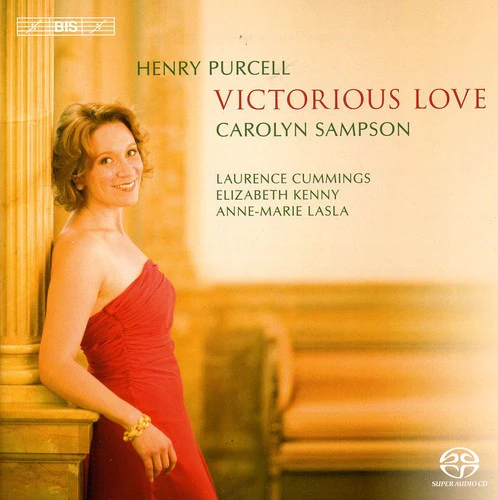
Victorious Love - Purcell / Sampson, Cummings, Kenny, Et Al
This is a hybrid Super Audio CD playable on both regular and Super Audio CD players.
-----

More Sampson and delight: first-class Purcell like this is much too rare
-- Gramophone [12/2007]
A fine flowing line, great virtuoso technique yet also expressive feeling.
Purcell’s song output is extensive. Zimmerman, in his analytical catalogue of his music, the Z numbers in the heading, identifies five categories. All are represented in the nineteen songs of this anthology from Carolyn Sampson.
The fullest coverage is of the seven songs from Purcell’s semi-operas, four from The Fairy Queen. ‘Now the night is chas’d away’ (tr. 9), the first song in Act 4, is given pacy, gleeful treatment by Sampson and, while there’s no chorus on hand to supply the choral repeats, the concluding instrumental ritornello has matching verve. The first song in Act 5, ‘Thrice happy lovers’ (tr. 11), Juno’s blessing, is delivered smilingly yet with enough virtuoso display to impress, the aria section, “Be to one another true” (1:40) quieter as befits its more serious manner yet still with pleasingly varied, regal application of ornamentation in repeated phrases. Sampson’s style throughout has absolute assurance. The first song in Act 3 (tr. 17), is of a more philosophic nature, with an instrumental version as prelude so you can admire its courtly progress, climax and gentle falling away. The music and performance perfectly mirrors the bittersweet ambivalence of the text exemplified in the opening line, ‘If love’s a sweet passion, why does it torment?’. Lastly ‘O let me weep’, the Plaint (tr. 4), a self-contained little scena added to Act 5 in the 1693 revival where the mourning for the departed lover and isolation of the singer is echoed by obbligato solo violin. Sampson and violinist Sarah Sexton maintain a delicate balance between stark plainness, as in the violin’s first echo of the singer’s “sighs” and the naturally florid embellishment of the melodic line, in particular at cadences. So after a display of this kind by the violin from 4:21 the quiet voice entry is more affecting and the sotto voce pathos of the closing section, “He’s gone”, punctuated from 6:30 by one note violin sighs, are the more effective. Emma Kirkby’s 1982 recording in her Purcell song anthology (L’Oiseau-Lyre 475 9109), timing at 6:32 in comparison with Sampson’s 7:23, is more urgent and plangent against which the steady ground bass makes for tension through contrast. Sampson presents a more savoured, Italianate outpouring of grief.
There are three other semi-opera items. From Act 3 of The Indian Queen ‘I attempt from love’s sickness to fly in vain’ (tr. 13) is treated by Sampson as a light, soubrettish sort of song, comely enough, with a fluent, airy delivery, graceful ornamentation and an effective pause at the beginning of the final refrain, enjoying mulling over the experience. However, the animation of ‘They tell us that you might powers above’ (tr. 5) from Act 4 is, I feel, overdone for this more serious song whose second strain seems thrust forward so that its closing semiquaver clusters, however delicately delivered by Sampson, seem breathless. The instrumental version which follows, timing at 1:15 against the comparable opening verse’s 1:04, has more suitable breadth. Nancy Argenta’s opening verse in 1995 in her Purcell song anthology (Virgin 5 61866 2) is 6 seconds slower than Sampson’s, which gives it a somewhat more intent nature. Sampson’s last semi-opera item, from Act 5 of King Arthur, is ‘Fairest isle’ (tr. 15), Venus’ song with a nicely graced instrumental prelude that sets the tone for the luxuriant smooth, flowing, serene singing with intimate continuo and more elaborate ornamentation for the second verse tempered by quieter delivery. I find the effect beautifully jewel-like though some might feel it excessive.
Another Zimmerman category is songs in incidental music for the theatre of which there are three on this SACD. The disc takes its title from the upbeat concluding section (tr. 1 2:30) of ‘Sweeter than roses’, exuberantly delivered after the soft opulence of the vocal opening enhanced by sultry theorbo and expressive bass viol, all finely controlled with vivid “trembling” and focus on the keyword “kiss”. ‘Music for a while’ (tr. 8) also begins softly, the tone here notably clean, opening out at “wond’ring” and with sensitively added ornamentation for the repetitions of “eas’d” so that very addition seems part of the relaxation expressed. ‘Man is for the woman made’ (tr. 6) is performed by Sampson as a party piece, including a tipsy rising glissando on “liquor” and an outrageous but terrific virtuoso roulade on “serenade”.
Of the category songs in odes comes just ‘The bashful Thames’ (tr. 12) from the Yorkshire Feast Song. Two violins take the original obbligato accompaniment for two recorders here which makes for a more refined backing to which Sampson provides a stylish front, making the contrast tell between the cowed descents of “drooping” and confident ascents of “tow’ring”.
Sampson sings six of Purcell’s secular solo songs. The second, more elaborate setting of ‘If music be the food of love’ (tr. 10) is one of contemplative virtuosity, taking in thrumming demisemiquavers to illustrate “joy”. ‘O solitude’ (tr. 16) is plainer but kept flowing and intense because of its remorseless ground bass. Sampson’s soft close is movingly evocative of the title and subject of the song’s veneration. But Argenta’s 1992 recording here is calmer, with a little more space, timing at 5:26 against Sampson’s 5:18, with just archlute accompaniment more inward and contemplative, a quieter, plainer delivery, the wide vocal range from middle C to high G effective enough without further emphasis. Sampson’s account has bass viol too, making the ground bass more prominent while Sampson makes the text more dramatic, partly through more ornamentation which shows both more imagination and artifice. ‘From silent shades’ (tr. 7) is the mad song of Bess of Bedlam with contrasting tempi mirroring mood swings, slowing at the vision of the dead loved one, then from Sampson a display of warbling elegy with an electrifying octave glissando rising at “forth”, but in the main coming across as a crafted, almost documentary study of a sad state. She isn’t as wonderfully direct or has such touchingly naïve brightness of tone and simplicity of presentation as Emma Kirkby who is pacier, 3:43 against Sampson’s 4:31, lighter yet more dramatic. Sampson offers us a more lingering experience with fine shaping of line and more contrasted sections. ‘The fatal hour’ (tr. 2) begins in elaborate declamation but after Sampson’s poised and tender “Sure when you go, my heart will break” is transformed into a more flowing love song. ‘Oh! fair Cedaria’ (tr. 14) is supremely crafted and sung as it moves from an opening section of swooning admiration, through a central happy contemplation of the loved one’s beauty and charms to a closing “pity me” appeal. Based on a jig, ‘When first Amintas sued for a kiss’ (tr. 3) is a jolly, racy piece allowing singer and harpsichord to let their hair down with tempi artfully varied to point the story. Sampson is more forthright and dramatic, with denser and busier accompaniment than Emma Kirkby’s lute alone. Kirkby is quieter but with a very knowing manner and subtler variation of pace.
Finally Sampson gives us two of Purcell’s sacred songs. ‘Tell me, some pitying angel’, the Blessed Virgin’s expostulation (tr. 18) is a scena tracing Mary’s emotions when the 12-year-old Jesus goes missing. Sampson’s opening well conveys the initial flood of anxiety soon tempered by a more contemplative hoping he is safe. Then there’s a more intimate manner of tender care questioning why he disappeared. But I felt Sampson’s repeated calls to Gabriel a touch too swift for full dramatic and anguished impact. Sampson makes the second section, “Me Judah’s daughters once caress’d” a happy recollection and the contrast at the close of trusting the God but fearing for the child is finely poised. Nancy Argenta’s 1992 recording isn’t as varied and tender early on as Sampson’s but does give the calls to Gabriel more urgency and space, more contrast to the third section, “Now fatal change” and a more vivid questioning perplexity to the fourth, “How shall my soul its motions guide”. Lastly from Sampson, an Evening Hymn, ‘Now that the sun hath veil’d his light’ (tr. 19), with just theorbo accompaniment, is presented as an intimate nocturne, the voice softly complementing, smooth yet flowing, the presentation much plainer than hitherto with not a trill in sight, a refreshing close which shows Sampson and her accomplices still have the capacity to surprise.
To sum up, this is a well varied selection, as stylishly sung as those by Argenta and Kirkby. The inclusion of the ‘authentic’ instrumental versions of some songs is a welcome bonus. The SACD recording brings both intimacy and spaciousness, placing you in vivid proximity to the singer and players. Moreover, in a fascinating booklet note Elizabeth Kenny refers to an intention to make the disc different with flexibility in interpretation and use of instruments reflecting the way Purcell’s music was transmitted in the half century after his death rather than seeking a more chaste, urtext manner. As I’ve noted above, where Sampson is at her most daring she’s most striking. Not everything comes off: in ‘They tell us that you mighty powers’ and the Blessed Virgin’s expostulation I feel the momentum sometimes impairs the emotive impact. But mostly there’s a fine flowing line, great virtuoso technique yet also expressive feeling fully revealing Purcell is one of the greatest English song writers.
-- Michael Greenhalgh, MusicWeb International
-----
More Sampson and delight: first-class Purcell like this is much too rare
-- Gramophone [12/2007]
A fine flowing line, great virtuoso technique yet also expressive feeling.
Purcell’s song output is extensive. Zimmerman, in his analytical catalogue of his music, the Z numbers in the heading, identifies five categories. All are represented in the nineteen songs of this anthology from Carolyn Sampson.
The fullest coverage is of the seven songs from Purcell’s semi-operas, four from The Fairy Queen. ‘Now the night is chas’d away’ (tr. 9), the first song in Act 4, is given pacy, gleeful treatment by Sampson and, while there’s no chorus on hand to supply the choral repeats, the concluding instrumental ritornello has matching verve. The first song in Act 5, ‘Thrice happy lovers’ (tr. 11), Juno’s blessing, is delivered smilingly yet with enough virtuoso display to impress, the aria section, “Be to one another true” (1:40) quieter as befits its more serious manner yet still with pleasingly varied, regal application of ornamentation in repeated phrases. Sampson’s style throughout has absolute assurance. The first song in Act 3 (tr. 17), is of a more philosophic nature, with an instrumental version as prelude so you can admire its courtly progress, climax and gentle falling away. The music and performance perfectly mirrors the bittersweet ambivalence of the text exemplified in the opening line, ‘If love’s a sweet passion, why does it torment?’. Lastly ‘O let me weep’, the Plaint (tr. 4), a self-contained little scena added to Act 5 in the 1693 revival where the mourning for the departed lover and isolation of the singer is echoed by obbligato solo violin. Sampson and violinist Sarah Sexton maintain a delicate balance between stark plainness, as in the violin’s first echo of the singer’s “sighs” and the naturally florid embellishment of the melodic line, in particular at cadences. So after a display of this kind by the violin from 4:21 the quiet voice entry is more affecting and the sotto voce pathos of the closing section, “He’s gone”, punctuated from 6:30 by one note violin sighs, are the more effective. Emma Kirkby’s 1982 recording in her Purcell song anthology (L’Oiseau-Lyre 475 9109), timing at 6:32 in comparison with Sampson’s 7:23, is more urgent and plangent against which the steady ground bass makes for tension through contrast. Sampson presents a more savoured, Italianate outpouring of grief.
There are three other semi-opera items. From Act 3 of The Indian Queen ‘I attempt from love’s sickness to fly in vain’ (tr. 13) is treated by Sampson as a light, soubrettish sort of song, comely enough, with a fluent, airy delivery, graceful ornamentation and an effective pause at the beginning of the final refrain, enjoying mulling over the experience. However, the animation of ‘They tell us that you might powers above’ (tr. 5) from Act 4 is, I feel, overdone for this more serious song whose second strain seems thrust forward so that its closing semiquaver clusters, however delicately delivered by Sampson, seem breathless. The instrumental version which follows, timing at 1:15 against the comparable opening verse’s 1:04, has more suitable breadth. Nancy Argenta’s opening verse in 1995 in her Purcell song anthology (Virgin 5 61866 2) is 6 seconds slower than Sampson’s, which gives it a somewhat more intent nature. Sampson’s last semi-opera item, from Act 5 of King Arthur, is ‘Fairest isle’ (tr. 15), Venus’ song with a nicely graced instrumental prelude that sets the tone for the luxuriant smooth, flowing, serene singing with intimate continuo and more elaborate ornamentation for the second verse tempered by quieter delivery. I find the effect beautifully jewel-like though some might feel it excessive.
Another Zimmerman category is songs in incidental music for the theatre of which there are three on this SACD. The disc takes its title from the upbeat concluding section (tr. 1 2:30) of ‘Sweeter than roses’, exuberantly delivered after the soft opulence of the vocal opening enhanced by sultry theorbo and expressive bass viol, all finely controlled with vivid “trembling” and focus on the keyword “kiss”. ‘Music for a while’ (tr. 8) also begins softly, the tone here notably clean, opening out at “wond’ring” and with sensitively added ornamentation for the repetitions of “eas’d” so that very addition seems part of the relaxation expressed. ‘Man is for the woman made’ (tr. 6) is performed by Sampson as a party piece, including a tipsy rising glissando on “liquor” and an outrageous but terrific virtuoso roulade on “serenade”.
Of the category songs in odes comes just ‘The bashful Thames’ (tr. 12) from the Yorkshire Feast Song. Two violins take the original obbligato accompaniment for two recorders here which makes for a more refined backing to which Sampson provides a stylish front, making the contrast tell between the cowed descents of “drooping” and confident ascents of “tow’ring”.
Sampson sings six of Purcell’s secular solo songs. The second, more elaborate setting of ‘If music be the food of love’ (tr. 10) is one of contemplative virtuosity, taking in thrumming demisemiquavers to illustrate “joy”. ‘O solitude’ (tr. 16) is plainer but kept flowing and intense because of its remorseless ground bass. Sampson’s soft close is movingly evocative of the title and subject of the song’s veneration. But Argenta’s 1992 recording here is calmer, with a little more space, timing at 5:26 against Sampson’s 5:18, with just archlute accompaniment more inward and contemplative, a quieter, plainer delivery, the wide vocal range from middle C to high G effective enough without further emphasis. Sampson’s account has bass viol too, making the ground bass more prominent while Sampson makes the text more dramatic, partly through more ornamentation which shows both more imagination and artifice. ‘From silent shades’ (tr. 7) is the mad song of Bess of Bedlam with contrasting tempi mirroring mood swings, slowing at the vision of the dead loved one, then from Sampson a display of warbling elegy with an electrifying octave glissando rising at “forth”, but in the main coming across as a crafted, almost documentary study of a sad state. She isn’t as wonderfully direct or has such touchingly naïve brightness of tone and simplicity of presentation as Emma Kirkby who is pacier, 3:43 against Sampson’s 4:31, lighter yet more dramatic. Sampson offers us a more lingering experience with fine shaping of line and more contrasted sections. ‘The fatal hour’ (tr. 2) begins in elaborate declamation but after Sampson’s poised and tender “Sure when you go, my heart will break” is transformed into a more flowing love song. ‘Oh! fair Cedaria’ (tr. 14) is supremely crafted and sung as it moves from an opening section of swooning admiration, through a central happy contemplation of the loved one’s beauty and charms to a closing “pity me” appeal. Based on a jig, ‘When first Amintas sued for a kiss’ (tr. 3) is a jolly, racy piece allowing singer and harpsichord to let their hair down with tempi artfully varied to point the story. Sampson is more forthright and dramatic, with denser and busier accompaniment than Emma Kirkby’s lute alone. Kirkby is quieter but with a very knowing manner and subtler variation of pace.
Finally Sampson gives us two of Purcell’s sacred songs. ‘Tell me, some pitying angel’, the Blessed Virgin’s expostulation (tr. 18) is a scena tracing Mary’s emotions when the 12-year-old Jesus goes missing. Sampson’s opening well conveys the initial flood of anxiety soon tempered by a more contemplative hoping he is safe. Then there’s a more intimate manner of tender care questioning why he disappeared. But I felt Sampson’s repeated calls to Gabriel a touch too swift for full dramatic and anguished impact. Sampson makes the second section, “Me Judah’s daughters once caress’d” a happy recollection and the contrast at the close of trusting the God but fearing for the child is finely poised. Nancy Argenta’s 1992 recording isn’t as varied and tender early on as Sampson’s but does give the calls to Gabriel more urgency and space, more contrast to the third section, “Now fatal change” and a more vivid questioning perplexity to the fourth, “How shall my soul its motions guide”. Lastly from Sampson, an Evening Hymn, ‘Now that the sun hath veil’d his light’ (tr. 19), with just theorbo accompaniment, is presented as an intimate nocturne, the voice softly complementing, smooth yet flowing, the presentation much plainer than hitherto with not a trill in sight, a refreshing close which shows Sampson and her accomplices still have the capacity to surprise.
To sum up, this is a well varied selection, as stylishly sung as those by Argenta and Kirkby. The inclusion of the ‘authentic’ instrumental versions of some songs is a welcome bonus. The SACD recording brings both intimacy and spaciousness, placing you in vivid proximity to the singer and players. Moreover, in a fascinating booklet note Elizabeth Kenny refers to an intention to make the disc different with flexibility in interpretation and use of instruments reflecting the way Purcell’s music was transmitted in the half century after his death rather than seeking a more chaste, urtext manner. As I’ve noted above, where Sampson is at her most daring she’s most striking. Not everything comes off: in ‘They tell us that you mighty powers’ and the Blessed Virgin’s expostulation I feel the momentum sometimes impairs the emotive impact. But mostly there’s a fine flowing line, great virtuoso technique yet also expressive feeling fully revealing Purcell is one of the greatest English song writers.
-- Michael Greenhalgh, MusicWeb International
This is a hybrid Super Audio CD playable on both regular and Super Audio CD players.
-----
More Sampson and delight: first-class Purcell like this is much too rare
-- Gramophone [12/2007]
A fine flowing line, great virtuoso technique yet also expressive feeling.
Purcell’s song output is extensive. Zimmerman, in his analytical catalogue of his music, the Z numbers in the heading, identifies five categories. All are represented in the nineteen songs of this anthology from Carolyn Sampson.
The fullest coverage is of the seven songs from Purcell’s semi-operas, four from The Fairy Queen. ‘Now the night is chas’d away’ (tr. 9), the first song in Act 4, is given pacy, gleeful treatment by Sampson and, while there’s no chorus on hand to supply the choral repeats, the concluding instrumental ritornello has matching verve. The first song in Act 5, ‘Thrice happy lovers’ (tr. 11), Juno’s blessing, is delivered smilingly yet with enough virtuoso display to impress, the aria section, “Be to one another true” (1:40) quieter as befits its more serious manner yet still with pleasingly varied, regal application of ornamentation in repeated phrases. Sampson’s style throughout has absolute assurance. The first song in Act 3 (tr. 17), is of a more philosophic nature, with an instrumental version as prelude so you can admire its courtly progress, climax and gentle falling away. The music and performance perfectly mirrors the bittersweet ambivalence of the text exemplified in the opening line, ‘If love’s a sweet passion, why does it torment?’. Lastly ‘O let me weep’, the Plaint (tr. 4), a self-contained little scena added to Act 5 in the 1693 revival where the mourning for the departed lover and isolation of the singer is echoed by obbligato solo violin. Sampson and violinist Sarah Sexton maintain a delicate balance between stark plainness, as in the violin’s first echo of the singer’s “sighs” and the naturally florid embellishment of the melodic line, in particular at cadences. So after a display of this kind by the violin from 4:21 the quiet voice entry is more affecting and the sotto voce pathos of the closing section, “He’s gone”, punctuated from 6:30 by one note violin sighs, are the more effective. Emma Kirkby’s 1982 recording in her Purcell song anthology (L’Oiseau-Lyre 475 9109), timing at 6:32 in comparison with Sampson’s 7:23, is more urgent and plangent against which the steady ground bass makes for tension through contrast. Sampson presents a more savoured, Italianate outpouring of grief.
There are three other semi-opera items. From Act 3 of The Indian Queen ‘I attempt from love’s sickness to fly in vain’ (tr. 13) is treated by Sampson as a light, soubrettish sort of song, comely enough, with a fluent, airy delivery, graceful ornamentation and an effective pause at the beginning of the final refrain, enjoying mulling over the experience. However, the animation of ‘They tell us that you might powers above’ (tr. 5) from Act 4 is, I feel, overdone for this more serious song whose second strain seems thrust forward so that its closing semiquaver clusters, however delicately delivered by Sampson, seem breathless. The instrumental version which follows, timing at 1:15 against the comparable opening verse’s 1:04, has more suitable breadth. Nancy Argenta’s opening verse in 1995 in her Purcell song anthology (Virgin 5 61866 2) is 6 seconds slower than Sampson’s, which gives it a somewhat more intent nature. Sampson’s last semi-opera item, from Act 5 of King Arthur, is ‘Fairest isle’ (tr. 15), Venus’ song with a nicely graced instrumental prelude that sets the tone for the luxuriant smooth, flowing, serene singing with intimate continuo and more elaborate ornamentation for the second verse tempered by quieter delivery. I find the effect beautifully jewel-like though some might feel it excessive.
Another Zimmerman category is songs in incidental music for the theatre of which there are three on this SACD. The disc takes its title from the upbeat concluding section (tr. 1 2:30) of ‘Sweeter than roses’, exuberantly delivered after the soft opulence of the vocal opening enhanced by sultry theorbo and expressive bass viol, all finely controlled with vivid “trembling” and focus on the keyword “kiss”. ‘Music for a while’ (tr. 8) also begins softly, the tone here notably clean, opening out at “wond’ring” and with sensitively added ornamentation for the repetitions of “eas’d” so that very addition seems part of the relaxation expressed. ‘Man is for the woman made’ (tr. 6) is performed by Sampson as a party piece, including a tipsy rising glissando on “liquor” and an outrageous but terrific virtuoso roulade on “serenade”.
Of the category songs in odes comes just ‘The bashful Thames’ (tr. 12) from the Yorkshire Feast Song. Two violins take the original obbligato accompaniment for two recorders here which makes for a more refined backing to which Sampson provides a stylish front, making the contrast tell between the cowed descents of “drooping” and confident ascents of “tow’ring”.
Sampson sings six of Purcell’s secular solo songs. The second, more elaborate setting of ‘If music be the food of love’ (tr. 10) is one of contemplative virtuosity, taking in thrumming demisemiquavers to illustrate “joy”. ‘O solitude’ (tr. 16) is plainer but kept flowing and intense because of its remorseless ground bass. Sampson’s soft close is movingly evocative of the title and subject of the song’s veneration. But Argenta’s 1992 recording here is calmer, with a little more space, timing at 5:26 against Sampson’s 5:18, with just archlute accompaniment more inward and contemplative, a quieter, plainer delivery, the wide vocal range from middle C to high G effective enough without further emphasis. Sampson’s account has bass viol too, making the ground bass more prominent while Sampson makes the text more dramatic, partly through more ornamentation which shows both more imagination and artifice. ‘From silent shades’ (tr. 7) is the mad song of Bess of Bedlam with contrasting tempi mirroring mood swings, slowing at the vision of the dead loved one, then from Sampson a display of warbling elegy with an electrifying octave glissando rising at “forth”, but in the main coming across as a crafted, almost documentary study of a sad state. She isn’t as wonderfully direct or has such touchingly naïve brightness of tone and simplicity of presentation as Emma Kirkby who is pacier, 3:43 against Sampson’s 4:31, lighter yet more dramatic. Sampson offers us a more lingering experience with fine shaping of line and more contrasted sections. ‘The fatal hour’ (tr. 2) begins in elaborate declamation but after Sampson’s poised and tender “Sure when you go, my heart will break” is transformed into a more flowing love song. ‘Oh! fair Cedaria’ (tr. 14) is supremely crafted and sung as it moves from an opening section of swooning admiration, through a central happy contemplation of the loved one’s beauty and charms to a closing “pity me” appeal. Based on a jig, ‘When first Amintas sued for a kiss’ (tr. 3) is a jolly, racy piece allowing singer and harpsichord to let their hair down with tempi artfully varied to point the story. Sampson is more forthright and dramatic, with denser and busier accompaniment than Emma Kirkby’s lute alone. Kirkby is quieter but with a very knowing manner and subtler variation of pace.
Finally Sampson gives us two of Purcell’s sacred songs. ‘Tell me, some pitying angel’, the Blessed Virgin’s expostulation (tr. 18) is a scena tracing Mary’s emotions when the 12-year-old Jesus goes missing. Sampson’s opening well conveys the initial flood of anxiety soon tempered by a more contemplative hoping he is safe. Then there’s a more intimate manner of tender care questioning why he disappeared. But I felt Sampson’s repeated calls to Gabriel a touch too swift for full dramatic and anguished impact. Sampson makes the second section, “Me Judah’s daughters once caress’d” a happy recollection and the contrast at the close of trusting the God but fearing for the child is finely poised. Nancy Argenta’s 1992 recording isn’t as varied and tender early on as Sampson’s but does give the calls to Gabriel more urgency and space, more contrast to the third section, “Now fatal change” and a more vivid questioning perplexity to the fourth, “How shall my soul its motions guide”. Lastly from Sampson, an Evening Hymn, ‘Now that the sun hath veil’d his light’ (tr. 19), with just theorbo accompaniment, is presented as an intimate nocturne, the voice softly complementing, smooth yet flowing, the presentation much plainer than hitherto with not a trill in sight, a refreshing close which shows Sampson and her accomplices still have the capacity to surprise.
To sum up, this is a well varied selection, as stylishly sung as those by Argenta and Kirkby. The inclusion of the ‘authentic’ instrumental versions of some songs is a welcome bonus. The SACD recording brings both intimacy and spaciousness, placing you in vivid proximity to the singer and players. Moreover, in a fascinating booklet note Elizabeth Kenny refers to an intention to make the disc different with flexibility in interpretation and use of instruments reflecting the way Purcell’s music was transmitted in the half century after his death rather than seeking a more chaste, urtext manner. As I’ve noted above, where Sampson is at her most daring she’s most striking. Not everything comes off: in ‘They tell us that you mighty powers’ and the Blessed Virgin’s expostulation I feel the momentum sometimes impairs the emotive impact. But mostly there’s a fine flowing line, great virtuoso technique yet also expressive feeling fully revealing Purcell is one of the greatest English song writers.
-- Michael Greenhalgh, MusicWeb International
-----
More Sampson and delight: first-class Purcell like this is much too rare
-- Gramophone [12/2007]
A fine flowing line, great virtuoso technique yet also expressive feeling.
Purcell’s song output is extensive. Zimmerman, in his analytical catalogue of his music, the Z numbers in the heading, identifies five categories. All are represented in the nineteen songs of this anthology from Carolyn Sampson.
The fullest coverage is of the seven songs from Purcell’s semi-operas, four from The Fairy Queen. ‘Now the night is chas’d away’ (tr. 9), the first song in Act 4, is given pacy, gleeful treatment by Sampson and, while there’s no chorus on hand to supply the choral repeats, the concluding instrumental ritornello has matching verve. The first song in Act 5, ‘Thrice happy lovers’ (tr. 11), Juno’s blessing, is delivered smilingly yet with enough virtuoso display to impress, the aria section, “Be to one another true” (1:40) quieter as befits its more serious manner yet still with pleasingly varied, regal application of ornamentation in repeated phrases. Sampson’s style throughout has absolute assurance. The first song in Act 3 (tr. 17), is of a more philosophic nature, with an instrumental version as prelude so you can admire its courtly progress, climax and gentle falling away. The music and performance perfectly mirrors the bittersweet ambivalence of the text exemplified in the opening line, ‘If love’s a sweet passion, why does it torment?’. Lastly ‘O let me weep’, the Plaint (tr. 4), a self-contained little scena added to Act 5 in the 1693 revival where the mourning for the departed lover and isolation of the singer is echoed by obbligato solo violin. Sampson and violinist Sarah Sexton maintain a delicate balance between stark plainness, as in the violin’s first echo of the singer’s “sighs” and the naturally florid embellishment of the melodic line, in particular at cadences. So after a display of this kind by the violin from 4:21 the quiet voice entry is more affecting and the sotto voce pathos of the closing section, “He’s gone”, punctuated from 6:30 by one note violin sighs, are the more effective. Emma Kirkby’s 1982 recording in her Purcell song anthology (L’Oiseau-Lyre 475 9109), timing at 6:32 in comparison with Sampson’s 7:23, is more urgent and plangent against which the steady ground bass makes for tension through contrast. Sampson presents a more savoured, Italianate outpouring of grief.
There are three other semi-opera items. From Act 3 of The Indian Queen ‘I attempt from love’s sickness to fly in vain’ (tr. 13) is treated by Sampson as a light, soubrettish sort of song, comely enough, with a fluent, airy delivery, graceful ornamentation and an effective pause at the beginning of the final refrain, enjoying mulling over the experience. However, the animation of ‘They tell us that you might powers above’ (tr. 5) from Act 4 is, I feel, overdone for this more serious song whose second strain seems thrust forward so that its closing semiquaver clusters, however delicately delivered by Sampson, seem breathless. The instrumental version which follows, timing at 1:15 against the comparable opening verse’s 1:04, has more suitable breadth. Nancy Argenta’s opening verse in 1995 in her Purcell song anthology (Virgin 5 61866 2) is 6 seconds slower than Sampson’s, which gives it a somewhat more intent nature. Sampson’s last semi-opera item, from Act 5 of King Arthur, is ‘Fairest isle’ (tr. 15), Venus’ song with a nicely graced instrumental prelude that sets the tone for the luxuriant smooth, flowing, serene singing with intimate continuo and more elaborate ornamentation for the second verse tempered by quieter delivery. I find the effect beautifully jewel-like though some might feel it excessive.
Another Zimmerman category is songs in incidental music for the theatre of which there are three on this SACD. The disc takes its title from the upbeat concluding section (tr. 1 2:30) of ‘Sweeter than roses’, exuberantly delivered after the soft opulence of the vocal opening enhanced by sultry theorbo and expressive bass viol, all finely controlled with vivid “trembling” and focus on the keyword “kiss”. ‘Music for a while’ (tr. 8) also begins softly, the tone here notably clean, opening out at “wond’ring” and with sensitively added ornamentation for the repetitions of “eas’d” so that very addition seems part of the relaxation expressed. ‘Man is for the woman made’ (tr. 6) is performed by Sampson as a party piece, including a tipsy rising glissando on “liquor” and an outrageous but terrific virtuoso roulade on “serenade”.
Of the category songs in odes comes just ‘The bashful Thames’ (tr. 12) from the Yorkshire Feast Song. Two violins take the original obbligato accompaniment for two recorders here which makes for a more refined backing to which Sampson provides a stylish front, making the contrast tell between the cowed descents of “drooping” and confident ascents of “tow’ring”.
Sampson sings six of Purcell’s secular solo songs. The second, more elaborate setting of ‘If music be the food of love’ (tr. 10) is one of contemplative virtuosity, taking in thrumming demisemiquavers to illustrate “joy”. ‘O solitude’ (tr. 16) is plainer but kept flowing and intense because of its remorseless ground bass. Sampson’s soft close is movingly evocative of the title and subject of the song’s veneration. But Argenta’s 1992 recording here is calmer, with a little more space, timing at 5:26 against Sampson’s 5:18, with just archlute accompaniment more inward and contemplative, a quieter, plainer delivery, the wide vocal range from middle C to high G effective enough without further emphasis. Sampson’s account has bass viol too, making the ground bass more prominent while Sampson makes the text more dramatic, partly through more ornamentation which shows both more imagination and artifice. ‘From silent shades’ (tr. 7) is the mad song of Bess of Bedlam with contrasting tempi mirroring mood swings, slowing at the vision of the dead loved one, then from Sampson a display of warbling elegy with an electrifying octave glissando rising at “forth”, but in the main coming across as a crafted, almost documentary study of a sad state. She isn’t as wonderfully direct or has such touchingly naïve brightness of tone and simplicity of presentation as Emma Kirkby who is pacier, 3:43 against Sampson’s 4:31, lighter yet more dramatic. Sampson offers us a more lingering experience with fine shaping of line and more contrasted sections. ‘The fatal hour’ (tr. 2) begins in elaborate declamation but after Sampson’s poised and tender “Sure when you go, my heart will break” is transformed into a more flowing love song. ‘Oh! fair Cedaria’ (tr. 14) is supremely crafted and sung as it moves from an opening section of swooning admiration, through a central happy contemplation of the loved one’s beauty and charms to a closing “pity me” appeal. Based on a jig, ‘When first Amintas sued for a kiss’ (tr. 3) is a jolly, racy piece allowing singer and harpsichord to let their hair down with tempi artfully varied to point the story. Sampson is more forthright and dramatic, with denser and busier accompaniment than Emma Kirkby’s lute alone. Kirkby is quieter but with a very knowing manner and subtler variation of pace.
Finally Sampson gives us two of Purcell’s sacred songs. ‘Tell me, some pitying angel’, the Blessed Virgin’s expostulation (tr. 18) is a scena tracing Mary’s emotions when the 12-year-old Jesus goes missing. Sampson’s opening well conveys the initial flood of anxiety soon tempered by a more contemplative hoping he is safe. Then there’s a more intimate manner of tender care questioning why he disappeared. But I felt Sampson’s repeated calls to Gabriel a touch too swift for full dramatic and anguished impact. Sampson makes the second section, “Me Judah’s daughters once caress’d” a happy recollection and the contrast at the close of trusting the God but fearing for the child is finely poised. Nancy Argenta’s 1992 recording isn’t as varied and tender early on as Sampson’s but does give the calls to Gabriel more urgency and space, more contrast to the third section, “Now fatal change” and a more vivid questioning perplexity to the fourth, “How shall my soul its motions guide”. Lastly from Sampson, an Evening Hymn, ‘Now that the sun hath veil’d his light’ (tr. 19), with just theorbo accompaniment, is presented as an intimate nocturne, the voice softly complementing, smooth yet flowing, the presentation much plainer than hitherto with not a trill in sight, a refreshing close which shows Sampson and her accomplices still have the capacity to surprise.
To sum up, this is a well varied selection, as stylishly sung as those by Argenta and Kirkby. The inclusion of the ‘authentic’ instrumental versions of some songs is a welcome bonus. The SACD recording brings both intimacy and spaciousness, placing you in vivid proximity to the singer and players. Moreover, in a fascinating booklet note Elizabeth Kenny refers to an intention to make the disc different with flexibility in interpretation and use of instruments reflecting the way Purcell’s music was transmitted in the half century after his death rather than seeking a more chaste, urtext manner. As I’ve noted above, where Sampson is at her most daring she’s most striking. Not everything comes off: in ‘They tell us that you mighty powers’ and the Blessed Virgin’s expostulation I feel the momentum sometimes impairs the emotive impact. But mostly there’s a fine flowing line, great virtuoso technique yet also expressive feeling fully revealing Purcell is one of the greatest English song writers.
-- Michael Greenhalgh, MusicWeb International
$21.99
Victorious Love - Purcell / Sampson, Cummings, Kenny, Et Al—
$21.99
Description
This is a hybrid Super Audio CD playable on both regular and Super Audio CD players.
-----
More Sampson and delight: first-class Purcell like this is much too rare
-- Gramophone [12/2007]
A fine flowing line, great virtuoso technique yet also expressive feeling.
Purcell’s song output is extensive. Zimmerman, in his analytical catalogue of his music, the Z numbers in the heading, identifies five categories. All are represented in the nineteen songs of this anthology from Carolyn Sampson.
The fullest coverage is of the seven songs from Purcell’s semi-operas, four from The Fairy Queen. ‘Now the night is chas’d away’ (tr. 9), the first song in Act 4, is given pacy, gleeful treatment by Sampson and, while there’s no chorus on hand to supply the choral repeats, the concluding instrumental ritornello has matching verve. The first song in Act 5, ‘Thrice happy lovers’ (tr. 11), Juno’s blessing, is delivered smilingly yet with enough virtuoso display to impress, the aria section, “Be to one another true” (1:40) quieter as befits its more serious manner yet still with pleasingly varied, regal application of ornamentation in repeated phrases. Sampson’s style throughout has absolute assurance. The first song in Act 3 (tr. 17), is of a more philosophic nature, with an instrumental version as prelude so you can admire its courtly progress, climax and gentle falling away. The music and performance perfectly mirrors the bittersweet ambivalence of the text exemplified in the opening line, ‘If love’s a sweet passion, why does it torment?’. Lastly ‘O let me weep’, the Plaint (tr. 4), a self-contained little scena added to Act 5 in the 1693 revival where the mourning for the departed lover and isolation of the singer is echoed by obbligato solo violin. Sampson and violinist Sarah Sexton maintain a delicate balance between stark plainness, as in the violin’s first echo of the singer’s “sighs” and the naturally florid embellishment of the melodic line, in particular at cadences. So after a display of this kind by the violin from 4:21 the quiet voice entry is more affecting and the sotto voce pathos of the closing section, “He’s gone”, punctuated from 6:30 by one note violin sighs, are the more effective. Emma Kirkby’s 1982 recording in her Purcell song anthology (L’Oiseau-Lyre 475 9109), timing at 6:32 in comparison with Sampson’s 7:23, is more urgent and plangent against which the steady ground bass makes for tension through contrast. Sampson presents a more savoured, Italianate outpouring of grief.
There are three other semi-opera items. From Act 3 of The Indian Queen ‘I attempt from love’s sickness to fly in vain’ (tr. 13) is treated by Sampson as a light, soubrettish sort of song, comely enough, with a fluent, airy delivery, graceful ornamentation and an effective pause at the beginning of the final refrain, enjoying mulling over the experience. However, the animation of ‘They tell us that you might powers above’ (tr. 5) from Act 4 is, I feel, overdone for this more serious song whose second strain seems thrust forward so that its closing semiquaver clusters, however delicately delivered by Sampson, seem breathless. The instrumental version which follows, timing at 1:15 against the comparable opening verse’s 1:04, has more suitable breadth. Nancy Argenta’s opening verse in 1995 in her Purcell song anthology (Virgin 5 61866 2) is 6 seconds slower than Sampson’s, which gives it a somewhat more intent nature. Sampson’s last semi-opera item, from Act 5 of King Arthur, is ‘Fairest isle’ (tr. 15), Venus’ song with a nicely graced instrumental prelude that sets the tone for the luxuriant smooth, flowing, serene singing with intimate continuo and more elaborate ornamentation for the second verse tempered by quieter delivery. I find the effect beautifully jewel-like though some might feel it excessive.
Another Zimmerman category is songs in incidental music for the theatre of which there are three on this SACD. The disc takes its title from the upbeat concluding section (tr. 1 2:30) of ‘Sweeter than roses’, exuberantly delivered after the soft opulence of the vocal opening enhanced by sultry theorbo and expressive bass viol, all finely controlled with vivid “trembling” and focus on the keyword “kiss”. ‘Music for a while’ (tr. 8) also begins softly, the tone here notably clean, opening out at “wond’ring” and with sensitively added ornamentation for the repetitions of “eas’d” so that very addition seems part of the relaxation expressed. ‘Man is for the woman made’ (tr. 6) is performed by Sampson as a party piece, including a tipsy rising glissando on “liquor” and an outrageous but terrific virtuoso roulade on “serenade”.
Of the category songs in odes comes just ‘The bashful Thames’ (tr. 12) from the Yorkshire Feast Song. Two violins take the original obbligato accompaniment for two recorders here which makes for a more refined backing to which Sampson provides a stylish front, making the contrast tell between the cowed descents of “drooping” and confident ascents of “tow’ring”.
Sampson sings six of Purcell’s secular solo songs. The second, more elaborate setting of ‘If music be the food of love’ (tr. 10) is one of contemplative virtuosity, taking in thrumming demisemiquavers to illustrate “joy”. ‘O solitude’ (tr. 16) is plainer but kept flowing and intense because of its remorseless ground bass. Sampson’s soft close is movingly evocative of the title and subject of the song’s veneration. But Argenta’s 1992 recording here is calmer, with a little more space, timing at 5:26 against Sampson’s 5:18, with just archlute accompaniment more inward and contemplative, a quieter, plainer delivery, the wide vocal range from middle C to high G effective enough without further emphasis. Sampson’s account has bass viol too, making the ground bass more prominent while Sampson makes the text more dramatic, partly through more ornamentation which shows both more imagination and artifice. ‘From silent shades’ (tr. 7) is the mad song of Bess of Bedlam with contrasting tempi mirroring mood swings, slowing at the vision of the dead loved one, then from Sampson a display of warbling elegy with an electrifying octave glissando rising at “forth”, but in the main coming across as a crafted, almost documentary study of a sad state. She isn’t as wonderfully direct or has such touchingly naïve brightness of tone and simplicity of presentation as Emma Kirkby who is pacier, 3:43 against Sampson’s 4:31, lighter yet more dramatic. Sampson offers us a more lingering experience with fine shaping of line and more contrasted sections. ‘The fatal hour’ (tr. 2) begins in elaborate declamation but after Sampson’s poised and tender “Sure when you go, my heart will break” is transformed into a more flowing love song. ‘Oh! fair Cedaria’ (tr. 14) is supremely crafted and sung as it moves from an opening section of swooning admiration, through a central happy contemplation of the loved one’s beauty and charms to a closing “pity me” appeal. Based on a jig, ‘When first Amintas sued for a kiss’ (tr. 3) is a jolly, racy piece allowing singer and harpsichord to let their hair down with tempi artfully varied to point the story. Sampson is more forthright and dramatic, with denser and busier accompaniment than Emma Kirkby’s lute alone. Kirkby is quieter but with a very knowing manner and subtler variation of pace.
Finally Sampson gives us two of Purcell’s sacred songs. ‘Tell me, some pitying angel’, the Blessed Virgin’s expostulation (tr. 18) is a scena tracing Mary’s emotions when the 12-year-old Jesus goes missing. Sampson’s opening well conveys the initial flood of anxiety soon tempered by a more contemplative hoping he is safe. Then there’s a more intimate manner of tender care questioning why he disappeared. But I felt Sampson’s repeated calls to Gabriel a touch too swift for full dramatic and anguished impact. Sampson makes the second section, “Me Judah’s daughters once caress’d” a happy recollection and the contrast at the close of trusting the God but fearing for the child is finely poised. Nancy Argenta’s 1992 recording isn’t as varied and tender early on as Sampson’s but does give the calls to Gabriel more urgency and space, more contrast to the third section, “Now fatal change” and a more vivid questioning perplexity to the fourth, “How shall my soul its motions guide”. Lastly from Sampson, an Evening Hymn, ‘Now that the sun hath veil’d his light’ (tr. 19), with just theorbo accompaniment, is presented as an intimate nocturne, the voice softly complementing, smooth yet flowing, the presentation much plainer than hitherto with not a trill in sight, a refreshing close which shows Sampson and her accomplices still have the capacity to surprise.
To sum up, this is a well varied selection, as stylishly sung as those by Argenta and Kirkby. The inclusion of the ‘authentic’ instrumental versions of some songs is a welcome bonus. The SACD recording brings both intimacy and spaciousness, placing you in vivid proximity to the singer and players. Moreover, in a fascinating booklet note Elizabeth Kenny refers to an intention to make the disc different with flexibility in interpretation and use of instruments reflecting the way Purcell’s music was transmitted in the half century after his death rather than seeking a more chaste, urtext manner. As I’ve noted above, where Sampson is at her most daring she’s most striking. Not everything comes off: in ‘They tell us that you mighty powers’ and the Blessed Virgin’s expostulation I feel the momentum sometimes impairs the emotive impact. But mostly there’s a fine flowing line, great virtuoso technique yet also expressive feeling fully revealing Purcell is one of the greatest English song writers.
-- Michael Greenhalgh, MusicWeb International
-----
More Sampson and delight: first-class Purcell like this is much too rare
-- Gramophone [12/2007]
A fine flowing line, great virtuoso technique yet also expressive feeling.
Purcell’s song output is extensive. Zimmerman, in his analytical catalogue of his music, the Z numbers in the heading, identifies five categories. All are represented in the nineteen songs of this anthology from Carolyn Sampson.
The fullest coverage is of the seven songs from Purcell’s semi-operas, four from The Fairy Queen. ‘Now the night is chas’d away’ (tr. 9), the first song in Act 4, is given pacy, gleeful treatment by Sampson and, while there’s no chorus on hand to supply the choral repeats, the concluding instrumental ritornello has matching verve. The first song in Act 5, ‘Thrice happy lovers’ (tr. 11), Juno’s blessing, is delivered smilingly yet with enough virtuoso display to impress, the aria section, “Be to one another true” (1:40) quieter as befits its more serious manner yet still with pleasingly varied, regal application of ornamentation in repeated phrases. Sampson’s style throughout has absolute assurance. The first song in Act 3 (tr. 17), is of a more philosophic nature, with an instrumental version as prelude so you can admire its courtly progress, climax and gentle falling away. The music and performance perfectly mirrors the bittersweet ambivalence of the text exemplified in the opening line, ‘If love’s a sweet passion, why does it torment?’. Lastly ‘O let me weep’, the Plaint (tr. 4), a self-contained little scena added to Act 5 in the 1693 revival where the mourning for the departed lover and isolation of the singer is echoed by obbligato solo violin. Sampson and violinist Sarah Sexton maintain a delicate balance between stark plainness, as in the violin’s first echo of the singer’s “sighs” and the naturally florid embellishment of the melodic line, in particular at cadences. So after a display of this kind by the violin from 4:21 the quiet voice entry is more affecting and the sotto voce pathos of the closing section, “He’s gone”, punctuated from 6:30 by one note violin sighs, are the more effective. Emma Kirkby’s 1982 recording in her Purcell song anthology (L’Oiseau-Lyre 475 9109), timing at 6:32 in comparison with Sampson’s 7:23, is more urgent and plangent against which the steady ground bass makes for tension through contrast. Sampson presents a more savoured, Italianate outpouring of grief.
There are three other semi-opera items. From Act 3 of The Indian Queen ‘I attempt from love’s sickness to fly in vain’ (tr. 13) is treated by Sampson as a light, soubrettish sort of song, comely enough, with a fluent, airy delivery, graceful ornamentation and an effective pause at the beginning of the final refrain, enjoying mulling over the experience. However, the animation of ‘They tell us that you might powers above’ (tr. 5) from Act 4 is, I feel, overdone for this more serious song whose second strain seems thrust forward so that its closing semiquaver clusters, however delicately delivered by Sampson, seem breathless. The instrumental version which follows, timing at 1:15 against the comparable opening verse’s 1:04, has more suitable breadth. Nancy Argenta’s opening verse in 1995 in her Purcell song anthology (Virgin 5 61866 2) is 6 seconds slower than Sampson’s, which gives it a somewhat more intent nature. Sampson’s last semi-opera item, from Act 5 of King Arthur, is ‘Fairest isle’ (tr. 15), Venus’ song with a nicely graced instrumental prelude that sets the tone for the luxuriant smooth, flowing, serene singing with intimate continuo and more elaborate ornamentation for the second verse tempered by quieter delivery. I find the effect beautifully jewel-like though some might feel it excessive.
Another Zimmerman category is songs in incidental music for the theatre of which there are three on this SACD. The disc takes its title from the upbeat concluding section (tr. 1 2:30) of ‘Sweeter than roses’, exuberantly delivered after the soft opulence of the vocal opening enhanced by sultry theorbo and expressive bass viol, all finely controlled with vivid “trembling” and focus on the keyword “kiss”. ‘Music for a while’ (tr. 8) also begins softly, the tone here notably clean, opening out at “wond’ring” and with sensitively added ornamentation for the repetitions of “eas’d” so that very addition seems part of the relaxation expressed. ‘Man is for the woman made’ (tr. 6) is performed by Sampson as a party piece, including a tipsy rising glissando on “liquor” and an outrageous but terrific virtuoso roulade on “serenade”.
Of the category songs in odes comes just ‘The bashful Thames’ (tr. 12) from the Yorkshire Feast Song. Two violins take the original obbligato accompaniment for two recorders here which makes for a more refined backing to which Sampson provides a stylish front, making the contrast tell between the cowed descents of “drooping” and confident ascents of “tow’ring”.
Sampson sings six of Purcell’s secular solo songs. The second, more elaborate setting of ‘If music be the food of love’ (tr. 10) is one of contemplative virtuosity, taking in thrumming demisemiquavers to illustrate “joy”. ‘O solitude’ (tr. 16) is plainer but kept flowing and intense because of its remorseless ground bass. Sampson’s soft close is movingly evocative of the title and subject of the song’s veneration. But Argenta’s 1992 recording here is calmer, with a little more space, timing at 5:26 against Sampson’s 5:18, with just archlute accompaniment more inward and contemplative, a quieter, plainer delivery, the wide vocal range from middle C to high G effective enough without further emphasis. Sampson’s account has bass viol too, making the ground bass more prominent while Sampson makes the text more dramatic, partly through more ornamentation which shows both more imagination and artifice. ‘From silent shades’ (tr. 7) is the mad song of Bess of Bedlam with contrasting tempi mirroring mood swings, slowing at the vision of the dead loved one, then from Sampson a display of warbling elegy with an electrifying octave glissando rising at “forth”, but in the main coming across as a crafted, almost documentary study of a sad state. She isn’t as wonderfully direct or has such touchingly naïve brightness of tone and simplicity of presentation as Emma Kirkby who is pacier, 3:43 against Sampson’s 4:31, lighter yet more dramatic. Sampson offers us a more lingering experience with fine shaping of line and more contrasted sections. ‘The fatal hour’ (tr. 2) begins in elaborate declamation but after Sampson’s poised and tender “Sure when you go, my heart will break” is transformed into a more flowing love song. ‘Oh! fair Cedaria’ (tr. 14) is supremely crafted and sung as it moves from an opening section of swooning admiration, through a central happy contemplation of the loved one’s beauty and charms to a closing “pity me” appeal. Based on a jig, ‘When first Amintas sued for a kiss’ (tr. 3) is a jolly, racy piece allowing singer and harpsichord to let their hair down with tempi artfully varied to point the story. Sampson is more forthright and dramatic, with denser and busier accompaniment than Emma Kirkby’s lute alone. Kirkby is quieter but with a very knowing manner and subtler variation of pace.
Finally Sampson gives us two of Purcell’s sacred songs. ‘Tell me, some pitying angel’, the Blessed Virgin’s expostulation (tr. 18) is a scena tracing Mary’s emotions when the 12-year-old Jesus goes missing. Sampson’s opening well conveys the initial flood of anxiety soon tempered by a more contemplative hoping he is safe. Then there’s a more intimate manner of tender care questioning why he disappeared. But I felt Sampson’s repeated calls to Gabriel a touch too swift for full dramatic and anguished impact. Sampson makes the second section, “Me Judah’s daughters once caress’d” a happy recollection and the contrast at the close of trusting the God but fearing for the child is finely poised. Nancy Argenta’s 1992 recording isn’t as varied and tender early on as Sampson’s but does give the calls to Gabriel more urgency and space, more contrast to the third section, “Now fatal change” and a more vivid questioning perplexity to the fourth, “How shall my soul its motions guide”. Lastly from Sampson, an Evening Hymn, ‘Now that the sun hath veil’d his light’ (tr. 19), with just theorbo accompaniment, is presented as an intimate nocturne, the voice softly complementing, smooth yet flowing, the presentation much plainer than hitherto with not a trill in sight, a refreshing close which shows Sampson and her accomplices still have the capacity to surprise.
To sum up, this is a well varied selection, as stylishly sung as those by Argenta and Kirkby. The inclusion of the ‘authentic’ instrumental versions of some songs is a welcome bonus. The SACD recording brings both intimacy and spaciousness, placing you in vivid proximity to the singer and players. Moreover, in a fascinating booklet note Elizabeth Kenny refers to an intention to make the disc different with flexibility in interpretation and use of instruments reflecting the way Purcell’s music was transmitted in the half century after his death rather than seeking a more chaste, urtext manner. As I’ve noted above, where Sampson is at her most daring she’s most striking. Not everything comes off: in ‘They tell us that you mighty powers’ and the Blessed Virgin’s expostulation I feel the momentum sometimes impairs the emotive impact. But mostly there’s a fine flowing line, great virtuoso technique yet also expressive feeling fully revealing Purcell is one of the greatest English song writers.
-- Michael Greenhalgh, MusicWeb International