🎉 Up to 70% Off Selected ItemsShop Sale

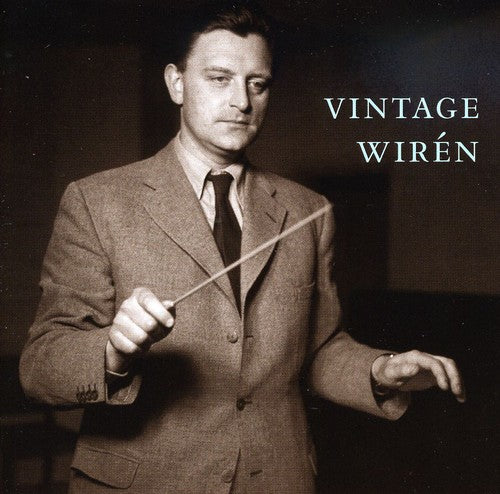
Vintage Wiren
WIRÉN Concert Overture No. 2. 1 Serenade for String Orchestra. 2 Ironiska småstycken (Ironic pieces) for Piano. 4 Piano Sonatina. 5 Miniature Suite for Violin & Piano. 6 Cello Sonatina. 9 Cello Concerto. 3,9 Sinfonietta 4,8 • 1 Tor Mann, 2 Sixten Eckerberg, 3 Sixten Ehrling, cond; 1 Stockholm R O; 2 Gothenberg S O; 4 Camilla Kinberg; 5 Stig Ribbing (pn); 6 Sven Karpe (vn); Dag Wirén ( 6 pn, 8 cond); 9 Maurice Maréchal (vc); 9 Harry Ebert (pn); 3 Gustav Gröndahl (vc) • CAPRICE 21761, mono (79:47)
Arné Wirén was a Swedish bass who recorded with (among others) Hjördis Schymberg, Bette Björling, and Erik Sædén. This Wirén’s first name was Dag (1905-1986), and I was rather relieved to discover online that he “is not widely known outside his native Sweden, though his music began gaining notice internationally on recordings in the decade following his death. His first serious compositions date to the 1930s and divulge a neo-Classicism tinged by a Romantic warmth.” So if this is your introduction to Dag Wirén, as it was mine, there’s the skinny on him.
This disc, titled Vintage Wirén, presents what are possibly the first recordings of these pieces. I say “possibly” because of the obscurity of these recordings in the West, and the fact that the liner notes don’t volunteer this information. (Whatever happened to the days when record companies told you EVERYTHING—whether or not the recordings were first versions or not, whether or not they’ve ever been on LP and/or CD before, who the performers are, etc.? This is the bane of modern record collecting, and reviewing. Modern-day record labels generally tell you very little or nothing.) This CD was initially reviewed by James A. Altena in Fanfare 33:6, and I am indebted to him for explaining that “Tonsåttaren,” who is listed as the pianist in the Miniature Suite and conductor of the Sinfonietta, is the composer himself.
What one hears on this disc are light but well-crafted works of the style I tend to call “popular neo-Classic.” The “Andante espressivo” of the Serenade for String Orchestra, for instance, strongly resembles the contemporary work of young Sam Barber or Copland in his popular phase, although the entire serenade shows the influence of both Stenhammar and of Prokofiev’s “Classical” Symphony. This is not a bad thing, and Wirén very obviously had a sense of humor, as his music practically bristles with it. The notes claim this the single most popular contemporary Swedish classical piece in existence, though later on in the notes they explain that it wasn’t issued in its entirely until 1949, nine years after it was recorded.
The Ironic Pieces for piano also runs in the Prokofiev vein, although Wirén purposely avoids some of the spikier harmonies of that style. Camilla Kinberg plays them with tremendous drive, finesses, and—yes—humor, particularly in the “Promenade” which starts and ends with a light tread but, in the middle, stomps around noisily with solid whacking notes in the bass.
The problem I had with the piano Sonatina was not the quality of the music, which was fine, but the condition of the records. All of these seem to have been pressed off-center, which causes the phenomenon known as a “swinging copy.” This, in turn, makes the pitch constantly fluctuate. What’s so annoying is that this is an easily correctable flaw: just get a turntable with a removable spindle. Put the record on the turntable with the spindle in, then remove it and start playing it at a slower speed (like 33 rpm). Watch how the grooves “swing,” and then very gently tap the edge of the disc with your fingernail until it looks more centered and regular. It works every time.
The Miniature Suite for Violin and Piano starts with a fairly innocuous, 49-second opening, but the Adagio is considerably interesting and moody. The remaining movements, though brief and lighthearted, are a bit less humorous or frivolous. So, too, is the Cello Sonatina, played well by Maréchal and pianist Ebert, who at this time (1940) was the regular accompanist for tenor Jussi Björling. My one complaint about this piece was that it seemed to be recorded rather distantly.
Even better, as both a piece and as a recording, is the Cello Concerto, though the soloist (Gröndahl) is not as secure in his bowing or intonation as Maréchal. On the other hand Sixten Ehrling, heard here in a very early recorded example of his work, shows why he was considered one of Sweden’s better conductors. This work’s moody, more serious quality reveals Wirén to have been a fine composer who might have developed more seriously had his beloved “Serenade” not taken over the imagination of the public. He creates a fine feeling of suspense in the “call-and-response” style of the concerto, and at roughly 16 minutes it does not overstay its welcome.
The transfers are, for the most part, masterfully done. Remastering engineer Marie Wisén (if I translate the word “Redaktör” correctly) has removed all traces of record sound, leaving just the music to be savored without damaging the quality of the string tone, always a hazardous operation. My only complaint is that she did not then boost the treble to restore some of the upper frequencies, which makes these recordings sound muffled. I was able to obtain good quality sound, however, by turning the treble control on my amplifier all the way up. Otherwise, recommended.
FANFARE: Lynn René Bayley
WIRÉN Concert Overture No. 2. 1 Serenade for String Orchestra. 2 Ironiska småstycken (Ironic pieces) for Piano. 4 Piano Sonatina. 5 Miniature Suite for Violin & Piano. 6 Cello Sonatina. 9 Cello Concerto. 3,9 Sinfonietta 4,8 • 1 Tor Mann, 2 Sixten Eckerberg, 3 Sixten Ehrling, cond; 1 Stockholm R O; 2 Gothenberg S O; 4 Camilla Kinberg; 5 Stig Ribbing (pn); 6 Sven Karpe (vn); Dag Wirén ( 6 pn, 8 cond); 9 Maurice Maréchal (vc); 9 Harry Ebert (pn); 3 Gustav Gröndahl (vc) • CAPRICE 21761, mono (79:47)
Arné Wirén was a Swedish bass who recorded with (among others) Hjördis Schymberg, Bette Björling, and Erik Sædén. This Wirén’s first name was Dag (1905-1986), and I was rather relieved to discover online that he “is not widely known outside his native Sweden, though his music began gaining notice internationally on recordings in the decade following his death. His first serious compositions date to the 1930s and divulge a neo-Classicism tinged by a Romantic warmth.” So if this is your introduction to Dag Wirén, as it was mine, there’s the skinny on him.
This disc, titled Vintage Wirén, presents what are possibly the first recordings of these pieces. I say “possibly” because of the obscurity of these recordings in the West, and the fact that the liner notes don’t volunteer this information. (Whatever happened to the days when record companies told you EVERYTHING—whether or not the recordings were first versions or not, whether or not they’ve ever been on LP and/or CD before, who the performers are, etc.? This is the bane of modern record collecting, and reviewing. Modern-day record labels generally tell you very little or nothing.) This CD was initially reviewed by James A. Altena in Fanfare 33:6, and I am indebted to him for explaining that “Tonsåttaren,” who is listed as the pianist in the Miniature Suite and conductor of the Sinfonietta, is the composer himself.
What one hears on this disc are light but well-crafted works of the style I tend to call “popular neo-Classic.” The “Andante espressivo” of the Serenade for String Orchestra, for instance, strongly resembles the contemporary work of young Sam Barber or Copland in his popular phase, although the entire serenade shows the influence of both Stenhammar and of Prokofiev’s “Classical” Symphony. This is not a bad thing, and Wirén very obviously had a sense of humor, as his music practically bristles with it. The notes claim this the single most popular contemporary Swedish classical piece in existence, though later on in the notes they explain that it wasn’t issued in its entirely until 1949, nine years after it was recorded.
The Ironic Pieces for piano also runs in the Prokofiev vein, although Wirén purposely avoids some of the spikier harmonies of that style. Camilla Kinberg plays them with tremendous drive, finesses, and—yes—humor, particularly in the “Promenade” which starts and ends with a light tread but, in the middle, stomps around noisily with solid whacking notes in the bass.
The problem I had with the piano Sonatina was not the quality of the music, which was fine, but the condition of the records. All of these seem to have been pressed off-center, which causes the phenomenon known as a “swinging copy.” This, in turn, makes the pitch constantly fluctuate. What’s so annoying is that this is an easily correctable flaw: just get a turntable with a removable spindle. Put the record on the turntable with the spindle in, then remove it and start playing it at a slower speed (like 33 rpm). Watch how the grooves “swing,” and then very gently tap the edge of the disc with your fingernail until it looks more centered and regular. It works every time.
The Miniature Suite for Violin and Piano starts with a fairly innocuous, 49-second opening, but the Adagio is considerably interesting and moody. The remaining movements, though brief and lighthearted, are a bit less humorous or frivolous. So, too, is the Cello Sonatina, played well by Maréchal and pianist Ebert, who at this time (1940) was the regular accompanist for tenor Jussi Björling. My one complaint about this piece was that it seemed to be recorded rather distantly.
Even better, as both a piece and as a recording, is the Cello Concerto, though the soloist (Gröndahl) is not as secure in his bowing or intonation as Maréchal. On the other hand Sixten Ehrling, heard here in a very early recorded example of his work, shows why he was considered one of Sweden’s better conductors. This work’s moody, more serious quality reveals Wirén to have been a fine composer who might have developed more seriously had his beloved “Serenade” not taken over the imagination of the public. He creates a fine feeling of suspense in the “call-and-response” style of the concerto, and at roughly 16 minutes it does not overstay its welcome.
The transfers are, for the most part, masterfully done. Remastering engineer Marie Wisén (if I translate the word “Redaktör” correctly) has removed all traces of record sound, leaving just the music to be savored without damaging the quality of the string tone, always a hazardous operation. My only complaint is that she did not then boost the treble to restore some of the upper frequencies, which makes these recordings sound muffled. I was able to obtain good quality sound, however, by turning the treble control on my amplifier all the way up. Otherwise, recommended.
FANFARE: Lynn René Bayley
$20.99
Vintage Wiren—
$20.99
Description
WIRÉN Concert Overture No. 2. 1 Serenade for String Orchestra. 2 Ironiska småstycken (Ironic pieces) for Piano. 4 Piano Sonatina. 5 Miniature Suite for Violin & Piano. 6 Cello Sonatina. 9 Cello Concerto. 3,9 Sinfonietta 4,8 • 1 Tor Mann, 2 Sixten Eckerberg, 3 Sixten Ehrling, cond; 1 Stockholm R O; 2 Gothenberg S O; 4 Camilla Kinberg; 5 Stig Ribbing (pn); 6 Sven Karpe (vn); Dag Wirén ( 6 pn, 8 cond); 9 Maurice Maréchal (vc); 9 Harry Ebert (pn); 3 Gustav Gröndahl (vc) • CAPRICE 21761, mono (79:47)
Arné Wirén was a Swedish bass who recorded with (among others) Hjördis Schymberg, Bette Björling, and Erik Sædén. This Wirén’s first name was Dag (1905-1986), and I was rather relieved to discover online that he “is not widely known outside his native Sweden, though his music began gaining notice internationally on recordings in the decade following his death. His first serious compositions date to the 1930s and divulge a neo-Classicism tinged by a Romantic warmth.” So if this is your introduction to Dag Wirén, as it was mine, there’s the skinny on him.
This disc, titled Vintage Wirén, presents what are possibly the first recordings of these pieces. I say “possibly” because of the obscurity of these recordings in the West, and the fact that the liner notes don’t volunteer this information. (Whatever happened to the days when record companies told you EVERYTHING—whether or not the recordings were first versions or not, whether or not they’ve ever been on LP and/or CD before, who the performers are, etc.? This is the bane of modern record collecting, and reviewing. Modern-day record labels generally tell you very little or nothing.) This CD was initially reviewed by James A. Altena in Fanfare 33:6, and I am indebted to him for explaining that “Tonsåttaren,” who is listed as the pianist in the Miniature Suite and conductor of the Sinfonietta, is the composer himself.
What one hears on this disc are light but well-crafted works of the style I tend to call “popular neo-Classic.” The “Andante espressivo” of the Serenade for String Orchestra, for instance, strongly resembles the contemporary work of young Sam Barber or Copland in his popular phase, although the entire serenade shows the influence of both Stenhammar and of Prokofiev’s “Classical” Symphony. This is not a bad thing, and Wirén very obviously had a sense of humor, as his music practically bristles with it. The notes claim this the single most popular contemporary Swedish classical piece in existence, though later on in the notes they explain that it wasn’t issued in its entirely until 1949, nine years after it was recorded.
The Ironic Pieces for piano also runs in the Prokofiev vein, although Wirén purposely avoids some of the spikier harmonies of that style. Camilla Kinberg plays them with tremendous drive, finesses, and—yes—humor, particularly in the “Promenade” which starts and ends with a light tread but, in the middle, stomps around noisily with solid whacking notes in the bass.
The problem I had with the piano Sonatina was not the quality of the music, which was fine, but the condition of the records. All of these seem to have been pressed off-center, which causes the phenomenon known as a “swinging copy.” This, in turn, makes the pitch constantly fluctuate. What’s so annoying is that this is an easily correctable flaw: just get a turntable with a removable spindle. Put the record on the turntable with the spindle in, then remove it and start playing it at a slower speed (like 33 rpm). Watch how the grooves “swing,” and then very gently tap the edge of the disc with your fingernail until it looks more centered and regular. It works every time.
The Miniature Suite for Violin and Piano starts with a fairly innocuous, 49-second opening, but the Adagio is considerably interesting and moody. The remaining movements, though brief and lighthearted, are a bit less humorous or frivolous. So, too, is the Cello Sonatina, played well by Maréchal and pianist Ebert, who at this time (1940) was the regular accompanist for tenor Jussi Björling. My one complaint about this piece was that it seemed to be recorded rather distantly.
Even better, as both a piece and as a recording, is the Cello Concerto, though the soloist (Gröndahl) is not as secure in his bowing or intonation as Maréchal. On the other hand Sixten Ehrling, heard here in a very early recorded example of his work, shows why he was considered one of Sweden’s better conductors. This work’s moody, more serious quality reveals Wirén to have been a fine composer who might have developed more seriously had his beloved “Serenade” not taken over the imagination of the public. He creates a fine feeling of suspense in the “call-and-response” style of the concerto, and at roughly 16 minutes it does not overstay its welcome.
The transfers are, for the most part, masterfully done. Remastering engineer Marie Wisén (if I translate the word “Redaktör” correctly) has removed all traces of record sound, leaving just the music to be savored without damaging the quality of the string tone, always a hazardous operation. My only complaint is that she did not then boost the treble to restore some of the upper frequencies, which makes these recordings sound muffled. I was able to obtain good quality sound, however, by turning the treble control on my amplifier all the way up. Otherwise, recommended.
FANFARE: Lynn René Bayley