🎉 Up to 70% Off Selected ItemsShop Sale

1 / 2
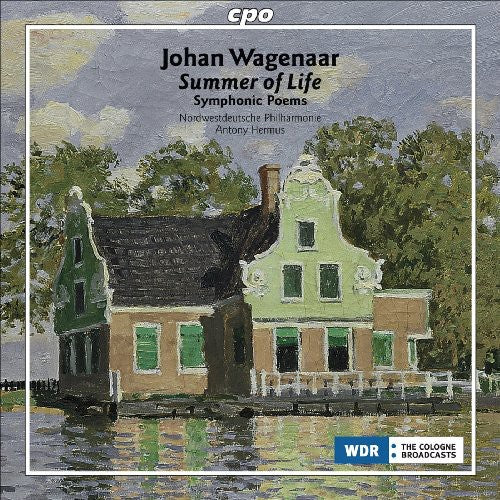
Wagenaar: Summer Of Life, Taming Of The Shrew Overture / Hermus, Nordwestdeutsche Philharmonie
WAGENAAR De getemde feeks: Overture. Levenszomer. Saul en David. Romantisch Intermezzo. Frithjofs Meerfahrt • Antony Hermus, cond; NW German Phil • CPO 777 479-2 (50:16)
Outside of the Netherlands, the music of Johan Wagenaar (1862–1941) is not well known. Its most prominent bid for worldwide dissemination, conductor Riccardo Chailly’s Decca CD with the Royal Concertgebouw Orchestra, was issued almost 20 years ago. (It seems like it was almost yesterday.) Of course it was deleted during the previous decade’s Great Cultural Purge, but those who want it badly enough might be able to find a used copy, or an ArkivMusic CD-R reincarnation. (It is not currently listed on their Web site, but it may well be cycled back into circulation if enough people request it.) It overlaps the present CD in the overture to De getemde feeks (The Taming of the Shrew) and Saul en David . An earlier recording of Frithjofs Meerfahrt (“Frithiof’s Sea Voyage”) can be found on a disc of Dutch overtures in which the Netherlands Radio Philharmonic Orchestra is conducted by Jac van Steen, but that has become scarce as well. Those who are interested in exploring Wagenaar’s music probably will gravitate to the present release, then, unless money is no object, or unless they are particularly persistent.
I was curious about Wagenaar back in the early 1990s because I mistakenly thought that he had been the composition and harmony teacher of Bernard Herrmann. Actually, that was Bernard Wagenaar, who was no relation to Johan! I was glad to discover Johan Wagenaar’s music, however, for its (Richard) Straussian opulence and its salubrious affect. Those qualities are expressed most strongly in the concert overture, dating from 1909, which opens this CD—a good example of putting one’s best foot forward. Wagenaar doesn’t try to translate Shakespeare’s play into music. Instead, he contents himself with creating a positive, masculine mood, and his success in doing so is appealing enough.
Strauss often is cited as Wagenaar’s strongest influence, and then Berlioz, but it takes only a little imagination to hear his indebtedness to Brahms, and perhaps even a glance or two eastward at Glazunov. Elgar, who composed his own virtual tribute to Strauss in his orchestral work In the South , also can be compared to Wagenaar … or rather, the other way around, since Wagenaar’s music lacks the creativity of Elgar’s, to say nothing of Strauss’s. Still, one can argue that there can never be too much late-Romantic music, and Wagenaar’s works, while not revolutionary, are very satisfying when they are judged on their own terms. Levenszomer (“Summer of Life”) is a voluble expression of human happiness—perhaps the composer’s own, having found success after an impecunious childhood. Frithjofs Meerfahrt lacks many of the musical cues composers generally use to suggest Fahr ting on the Meer , or the Meer itself, and an episode involving two sea monsters is hardly impressive, so perhaps it is best to hear it as absolute music—it succeeds rather well as that. The same is true for the Intermezzo , which is more Romantisch stylistically than in the sense of amorousness. Saul and David naturally features an important part for the harp. Its inspiration was a painting by Rembrandt—no longer thought to be authentic, however. Again, Wagenaar’s skilled but generalized response encourages one to hear the score as accomplished absolute music, and to leave it at that.
The present selection sticks to music composed before 1910, so a second volume might be in the works. (Knowing cpo’s habits, that actually seems likely.) The Northwest German Philharmonia can’t compete with the Royal Concertgebouw’s tonal allure, but there’s nothing at all embarrassing about these performances. Antony Hermus knows his way around the music and keeps it from stagnating, although Chailly believes in it too, and almost succeeds in hiding the moments—not very many, mind you—when Wagenaar’s inspiration flags. In the absence of Chailly, though, this cpo disc makes Wagenaar’s case well enough.
FANFARE: Raymond Tuttle
WAGENAAR De getemde feeks: Overture. Levenszomer. Saul en David. Romantisch Intermezzo. Frithjofs Meerfahrt • Antony Hermus, cond; NW German Phil • CPO 777 479-2 (50:16)
Outside of the Netherlands, the music of Johan Wagenaar (1862–1941) is not well known. Its most prominent bid for worldwide dissemination, conductor Riccardo Chailly’s Decca CD with the Royal Concertgebouw Orchestra, was issued almost 20 years ago. (It seems like it was almost yesterday.) Of course it was deleted during the previous decade’s Great Cultural Purge, but those who want it badly enough might be able to find a used copy, or an ArkivMusic CD-R reincarnation. (It is not currently listed on their Web site, but it may well be cycled back into circulation if enough people request it.) It overlaps the present CD in the overture to De getemde feeks (The Taming of the Shrew) and Saul en David . An earlier recording of Frithjofs Meerfahrt (“Frithiof’s Sea Voyage”) can be found on a disc of Dutch overtures in which the Netherlands Radio Philharmonic Orchestra is conducted by Jac van Steen, but that has become scarce as well. Those who are interested in exploring Wagenaar’s music probably will gravitate to the present release, then, unless money is no object, or unless they are particularly persistent.
I was curious about Wagenaar back in the early 1990s because I mistakenly thought that he had been the composition and harmony teacher of Bernard Herrmann. Actually, that was Bernard Wagenaar, who was no relation to Johan! I was glad to discover Johan Wagenaar’s music, however, for its (Richard) Straussian opulence and its salubrious affect. Those qualities are expressed most strongly in the concert overture, dating from 1909, which opens this CD—a good example of putting one’s best foot forward. Wagenaar doesn’t try to translate Shakespeare’s play into music. Instead, he contents himself with creating a positive, masculine mood, and his success in doing so is appealing enough.
Strauss often is cited as Wagenaar’s strongest influence, and then Berlioz, but it takes only a little imagination to hear his indebtedness to Brahms, and perhaps even a glance or two eastward at Glazunov. Elgar, who composed his own virtual tribute to Strauss in his orchestral work In the South , also can be compared to Wagenaar … or rather, the other way around, since Wagenaar’s music lacks the creativity of Elgar’s, to say nothing of Strauss’s. Still, one can argue that there can never be too much late-Romantic music, and Wagenaar’s works, while not revolutionary, are very satisfying when they are judged on their own terms. Levenszomer (“Summer of Life”) is a voluble expression of human happiness—perhaps the composer’s own, having found success after an impecunious childhood. Frithjofs Meerfahrt lacks many of the musical cues composers generally use to suggest Fahr ting on the Meer , or the Meer itself, and an episode involving two sea monsters is hardly impressive, so perhaps it is best to hear it as absolute music—it succeeds rather well as that. The same is true for the Intermezzo , which is more Romantisch stylistically than in the sense of amorousness. Saul and David naturally features an important part for the harp. Its inspiration was a painting by Rembrandt—no longer thought to be authentic, however. Again, Wagenaar’s skilled but generalized response encourages one to hear the score as accomplished absolute music, and to leave it at that.
The present selection sticks to music composed before 1910, so a second volume might be in the works. (Knowing cpo’s habits, that actually seems likely.) The Northwest German Philharmonia can’t compete with the Royal Concertgebouw’s tonal allure, but there’s nothing at all embarrassing about these performances. Antony Hermus knows his way around the music and keeps it from stagnating, although Chailly believes in it too, and almost succeeds in hiding the moments—not very many, mind you—when Wagenaar’s inspiration flags. In the absence of Chailly, though, this cpo disc makes Wagenaar’s case well enough.
FANFARE: Raymond Tuttle
$13.99
Wagenaar: Summer Of Life, Taming Of The Shrew Overture / Hermus, Nordwestdeutsche Philharmonie—
$13.99
Description
WAGENAAR De getemde feeks: Overture. Levenszomer. Saul en David. Romantisch Intermezzo. Frithjofs Meerfahrt • Antony Hermus, cond; NW German Phil • CPO 777 479-2 (50:16)
Outside of the Netherlands, the music of Johan Wagenaar (1862–1941) is not well known. Its most prominent bid for worldwide dissemination, conductor Riccardo Chailly’s Decca CD with the Royal Concertgebouw Orchestra, was issued almost 20 years ago. (It seems like it was almost yesterday.) Of course it was deleted during the previous decade’s Great Cultural Purge, but those who want it badly enough might be able to find a used copy, or an ArkivMusic CD-R reincarnation. (It is not currently listed on their Web site, but it may well be cycled back into circulation if enough people request it.) It overlaps the present CD in the overture to De getemde feeks (The Taming of the Shrew) and Saul en David . An earlier recording of Frithjofs Meerfahrt (“Frithiof’s Sea Voyage”) can be found on a disc of Dutch overtures in which the Netherlands Radio Philharmonic Orchestra is conducted by Jac van Steen, but that has become scarce as well. Those who are interested in exploring Wagenaar’s music probably will gravitate to the present release, then, unless money is no object, or unless they are particularly persistent.
I was curious about Wagenaar back in the early 1990s because I mistakenly thought that he had been the composition and harmony teacher of Bernard Herrmann. Actually, that was Bernard Wagenaar, who was no relation to Johan! I was glad to discover Johan Wagenaar’s music, however, for its (Richard) Straussian opulence and its salubrious affect. Those qualities are expressed most strongly in the concert overture, dating from 1909, which opens this CD—a good example of putting one’s best foot forward. Wagenaar doesn’t try to translate Shakespeare’s play into music. Instead, he contents himself with creating a positive, masculine mood, and his success in doing so is appealing enough.
Strauss often is cited as Wagenaar’s strongest influence, and then Berlioz, but it takes only a little imagination to hear his indebtedness to Brahms, and perhaps even a glance or two eastward at Glazunov. Elgar, who composed his own virtual tribute to Strauss in his orchestral work In the South , also can be compared to Wagenaar … or rather, the other way around, since Wagenaar’s music lacks the creativity of Elgar’s, to say nothing of Strauss’s. Still, one can argue that there can never be too much late-Romantic music, and Wagenaar’s works, while not revolutionary, are very satisfying when they are judged on their own terms. Levenszomer (“Summer of Life”) is a voluble expression of human happiness—perhaps the composer’s own, having found success after an impecunious childhood. Frithjofs Meerfahrt lacks many of the musical cues composers generally use to suggest Fahr ting on the Meer , or the Meer itself, and an episode involving two sea monsters is hardly impressive, so perhaps it is best to hear it as absolute music—it succeeds rather well as that. The same is true for the Intermezzo , which is more Romantisch stylistically than in the sense of amorousness. Saul and David naturally features an important part for the harp. Its inspiration was a painting by Rembrandt—no longer thought to be authentic, however. Again, Wagenaar’s skilled but generalized response encourages one to hear the score as accomplished absolute music, and to leave it at that.
The present selection sticks to music composed before 1910, so a second volume might be in the works. (Knowing cpo’s habits, that actually seems likely.) The Northwest German Philharmonia can’t compete with the Royal Concertgebouw’s tonal allure, but there’s nothing at all embarrassing about these performances. Antony Hermus knows his way around the music and keeps it from stagnating, although Chailly believes in it too, and almost succeeds in hiding the moments—not very many, mind you—when Wagenaar’s inspiration flags. In the absence of Chailly, though, this cpo disc makes Wagenaar’s case well enough.
FANFARE: Raymond Tuttle