🎉 Up to 70% Off Selected ItemsShop Sale

1 / 2
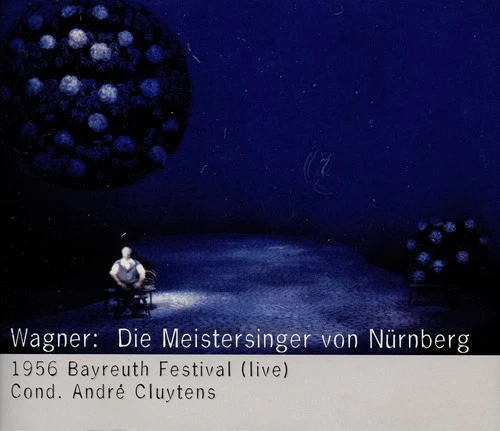
Wagner: Die Meistersinger Von Nürnberg / Cluytens, Et Al
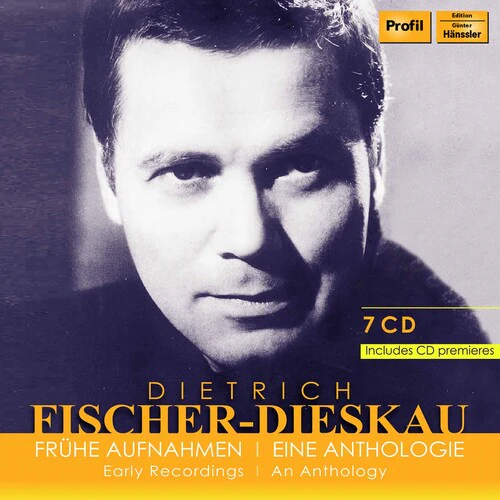
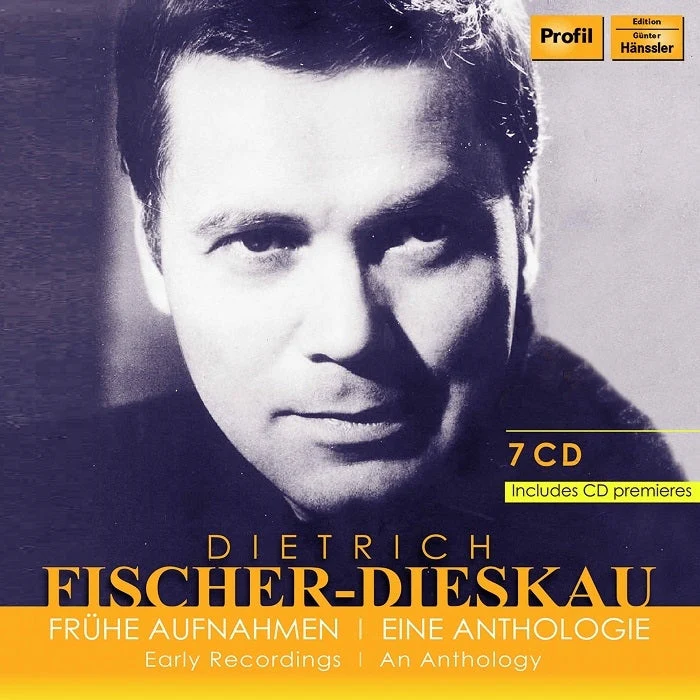
On the 1956 set from Bayreuth [the role of Kothner] is taken by no lesser artist than Fischer-Dieskau, who presents to the life the precise, fussy keeper of the seal, none better on any recording of the work. But there is hardly a poor performance from any singer. Windgassen, who rarely undertook Walther, sings the part with untiring freshness and life, phrasing with a long line and an innate musicality that make Walther's music for once a pleasure to hear from start to finish. Brouwenstijn is his lull-throated if not very individual Eva. Stolze's David is predictably vivid, Schmitt-Walther's pedantic, unexaggerated Beckmesser a nice change from the then-customary caricature. Greindl's Pogner is not ideally steady but imbued with eloquent diction and feeling.
The clinching performance is Hotter's Sachs, profoundly satisfying in its depth of feeling, its understanding of every facet of Sachs's complex character, and he gives his two monologues a musing. interior quality that goes to the heart of the matter. Vocally, he starts a shade tired - not surprising when he was also that festivals Wotan - but, crucially, by the start of Act 2 he strikes his best form. This set would be worth hearing for him alone.
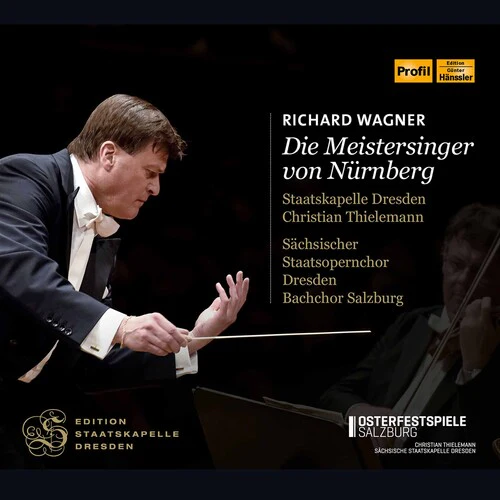
Cluytens's conducting is not on the Knappertsbusch level, rather matter-of-fact in the first two acts, much more inspired in Act 3—but in any case nothing can dim the quality here of the handpicked Bayreuth forces. Unfortunately this recording, unlike the other two, has moments of poor sound, but it is never unsatisfactory enough to mar the performance's many assets.
-- Gramophone [10/1998]
The clinching performance is Hotter's Sachs, profoundly satisfying in its depth of feeling, its understanding of every facet of Sachs's complex character, and he gives his two monologues a musing. interior quality that goes to the heart of the matter. Vocally, he starts a shade tired - not surprising when he was also that festivals Wotan - but, crucially, by the start of Act 2 he strikes his best form. This set would be worth hearing for him alone.
Cluytens's conducting is not on the Knappertsbusch level, rather matter-of-fact in the first two acts, much more inspired in Act 3—but in any case nothing can dim the quality here of the handpicked Bayreuth forces. Unfortunately this recording, unlike the other two, has moments of poor sound, but it is never unsatisfactory enough to mar the performance's many assets.
-- Gramophone [10/1998]
On the 1956 set from Bayreuth [the role of Kothner] is taken by no lesser artist than Fischer-Dieskau, who presents to the life the precise, fussy keeper of the seal, none better on any recording of the work. But there is hardly a poor performance from any singer. Windgassen, who rarely undertook Walther, sings the part with untiring freshness and life, phrasing with a long line and an innate musicality that make Walther's music for once a pleasure to hear from start to finish. Brouwenstijn is his lull-throated if not very individual Eva. Stolze's David is predictably vivid, Schmitt-Walther's pedantic, unexaggerated Beckmesser a nice change from the then-customary caricature. Greindl's Pogner is not ideally steady but imbued with eloquent diction and feeling.
The clinching performance is Hotter's Sachs, profoundly satisfying in its depth of feeling, its understanding of every facet of Sachs's complex character, and he gives his two monologues a musing. interior quality that goes to the heart of the matter. Vocally, he starts a shade tired - not surprising when he was also that festivals Wotan - but, crucially, by the start of Act 2 he strikes his best form. This set would be worth hearing for him alone.
Cluytens's conducting is not on the Knappertsbusch level, rather matter-of-fact in the first two acts, much more inspired in Act 3—but in any case nothing can dim the quality here of the handpicked Bayreuth forces. Unfortunately this recording, unlike the other two, has moments of poor sound, but it is never unsatisfactory enough to mar the performance's many assets.
-- Gramophone [10/1998]
The clinching performance is Hotter's Sachs, profoundly satisfying in its depth of feeling, its understanding of every facet of Sachs's complex character, and he gives his two monologues a musing. interior quality that goes to the heart of the matter. Vocally, he starts a shade tired - not surprising when he was also that festivals Wotan - but, crucially, by the start of Act 2 he strikes his best form. This set would be worth hearing for him alone.
Cluytens's conducting is not on the Knappertsbusch level, rather matter-of-fact in the first two acts, much more inspired in Act 3—but in any case nothing can dim the quality here of the handpicked Bayreuth forces. Unfortunately this recording, unlike the other two, has moments of poor sound, but it is never unsatisfactory enough to mar the performance's many assets.
-- Gramophone [10/1998]
$27.99
Wagner: Die Meistersinger Von Nürnberg / Cluytens, Et Al—
$27.99
Description
On the 1956 set from Bayreuth [the role of Kothner] is taken by no lesser artist than Fischer-Dieskau, who presents to the life the precise, fussy keeper of the seal, none better on any recording of the work. But there is hardly a poor performance from any singer. Windgassen, who rarely undertook Walther, sings the part with untiring freshness and life, phrasing with a long line and an innate musicality that make Walther's music for once a pleasure to hear from start to finish. Brouwenstijn is his lull-throated if not very individual Eva. Stolze's David is predictably vivid, Schmitt-Walther's pedantic, unexaggerated Beckmesser a nice change from the then-customary caricature. Greindl's Pogner is not ideally steady but imbued with eloquent diction and feeling.
The clinching performance is Hotter's Sachs, profoundly satisfying in its depth of feeling, its understanding of every facet of Sachs's complex character, and he gives his two monologues a musing. interior quality that goes to the heart of the matter. Vocally, he starts a shade tired - not surprising when he was also that festivals Wotan - but, crucially, by the start of Act 2 he strikes his best form. This set would be worth hearing for him alone.
Cluytens's conducting is not on the Knappertsbusch level, rather matter-of-fact in the first two acts, much more inspired in Act 3—but in any case nothing can dim the quality here of the handpicked Bayreuth forces. Unfortunately this recording, unlike the other two, has moments of poor sound, but it is never unsatisfactory enough to mar the performance's many assets.
-- Gramophone [10/1998]
The clinching performance is Hotter's Sachs, profoundly satisfying in its depth of feeling, its understanding of every facet of Sachs's complex character, and he gives his two monologues a musing. interior quality that goes to the heart of the matter. Vocally, he starts a shade tired - not surprising when he was also that festivals Wotan - but, crucially, by the start of Act 2 he strikes his best form. This set would be worth hearing for him alone.
Cluytens's conducting is not on the Knappertsbusch level, rather matter-of-fact in the first two acts, much more inspired in Act 3—but in any case nothing can dim the quality here of the handpicked Bayreuth forces. Unfortunately this recording, unlike the other two, has moments of poor sound, but it is never unsatisfactory enough to mar the performance's many assets.
-- Gramophone [10/1998]