🎉 Up to 70% Off Selected ItemsShop Sale

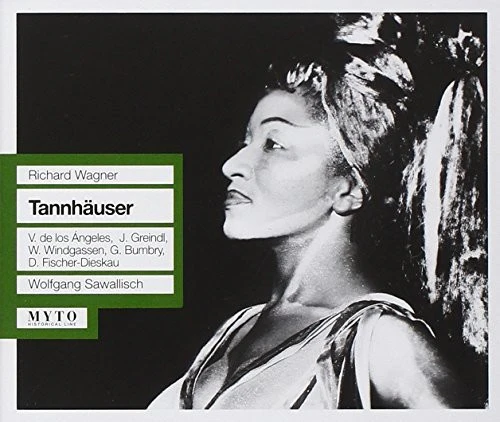
Wagner: Tannhauser / Sawallisch, Windgassen, Fischer-dieskau, Bumbry
This is not to be confused with the (rightly) famous Philips recording with almost the same cast from a year later, also from Bayreuth. I find this performance somewhat more compelling–it has an energy that the ’62 does not: rarely have I heard the choral moments sound so passionate, whether in outrage or prayer, and I’ve always thought that this opera, more than any other of Wagner’s, needs all the energy it can get. In addition, Grace Bumbry, in her Bayreuth debut (at the moment when the color barrier was lifted) is even better here, singing with a wild security and insinuation that ravishes the ear and, yes, Tannhäuser’s soul. She’s an intensely interesting Venus, sneaky, believable, and somewhat terrifying.
Wolfgang Windgassen is a bit better as well after a really bad off-key start; the voice seems darker than the following year. And his Rome Narrative is riveting, pathetic, and a true tour de force–and he has plenty of voice left, even so late in the evening. His operatic voyage from entranced to rueful to loving to crazed and then to more crazed is shatteringly portrayed.
Victoria de los Angeles preceded Anja Silja as Elisabeth, and she is in her full glory here. Nobody sounds like de los Angeles; arguments were made at one time that her Carmen sounded as if she had just come from a convent–but could that be any more perfect for Elisabeth? Her tonal purity is ideal for “Dich teure Halle” and the last-act prayer, and she lacks only the last smidge of desperation and grandeur for her supplications near the end of Act 2. But what a sound–so gentle and loving, so unadulterated! The other cast difference is the inclusion of Dietrich Fischer-Dieskau as Wolfram. Again, can anyone sing or feel this music better? The empathy, the dignity, the gorgeous tone are all unique.
Josef Greindl, who seems to have sung every performance of everything throughout the 1960s, is a gruff Landgraf who nonetheless is fair and loving. And popping up from ensembles and offering the occasional solo is Gerhard Stolze, singing with an instantly recognizable timbre as Walther, and happily sounding nothing like either Mime or Herod. The rest are superb. Wolfgang Sawallich’s contribution needs no vote from me; this is his opera, brilliantly formed. The hybrid edition used may trouble some listeners: It’s essentially the 1845 Dresden, but with the 1861 Venusberg music. It doesn’t bother me a bit. The sound, by the way, is excellent mono.
My first choice for this opera remains Solti’s for Helga Dernesch’s Elisabeth and Christa Ludwig’s Venus, as well as René Kollo’s youthful Tannhäuser, not to mention the recording itself and Solti’s passion. But this one, at half the price, is very tempting.
-- Robert Levine, ClassicsToday.com
Wolfgang Windgassen is a bit better as well after a really bad off-key start; the voice seems darker than the following year. And his Rome Narrative is riveting, pathetic, and a true tour de force–and he has plenty of voice left, even so late in the evening. His operatic voyage from entranced to rueful to loving to crazed and then to more crazed is shatteringly portrayed.
Victoria de los Angeles preceded Anja Silja as Elisabeth, and she is in her full glory here. Nobody sounds like de los Angeles; arguments were made at one time that her Carmen sounded as if she had just come from a convent–but could that be any more perfect for Elisabeth? Her tonal purity is ideal for “Dich teure Halle” and the last-act prayer, and she lacks only the last smidge of desperation and grandeur for her supplications near the end of Act 2. But what a sound–so gentle and loving, so unadulterated! The other cast difference is the inclusion of Dietrich Fischer-Dieskau as Wolfram. Again, can anyone sing or feel this music better? The empathy, the dignity, the gorgeous tone are all unique.
Josef Greindl, who seems to have sung every performance of everything throughout the 1960s, is a gruff Landgraf who nonetheless is fair and loving. And popping up from ensembles and offering the occasional solo is Gerhard Stolze, singing with an instantly recognizable timbre as Walther, and happily sounding nothing like either Mime or Herod. The rest are superb. Wolfgang Sawallich’s contribution needs no vote from me; this is his opera, brilliantly formed. The hybrid edition used may trouble some listeners: It’s essentially the 1845 Dresden, but with the 1861 Venusberg music. It doesn’t bother me a bit. The sound, by the way, is excellent mono.
My first choice for this opera remains Solti’s for Helga Dernesch’s Elisabeth and Christa Ludwig’s Venus, as well as René Kollo’s youthful Tannhäuser, not to mention the recording itself and Solti’s passion. But this one, at half the price, is very tempting.
-- Robert Levine, ClassicsToday.com
This is not to be confused with the (rightly) famous Philips recording with almost the same cast from a year later, also from Bayreuth. I find this performance somewhat more compelling–it has an energy that the ’62 does not: rarely have I heard the choral moments sound so passionate, whether in outrage or prayer, and I’ve always thought that this opera, more than any other of Wagner’s, needs all the energy it can get. In addition, Grace Bumbry, in her Bayreuth debut (at the moment when the color barrier was lifted) is even better here, singing with a wild security and insinuation that ravishes the ear and, yes, Tannhäuser’s soul. She’s an intensely interesting Venus, sneaky, believable, and somewhat terrifying.
Wolfgang Windgassen is a bit better as well after a really bad off-key start; the voice seems darker than the following year. And his Rome Narrative is riveting, pathetic, and a true tour de force–and he has plenty of voice left, even so late in the evening. His operatic voyage from entranced to rueful to loving to crazed and then to more crazed is shatteringly portrayed.
Victoria de los Angeles preceded Anja Silja as Elisabeth, and she is in her full glory here. Nobody sounds like de los Angeles; arguments were made at one time that her Carmen sounded as if she had just come from a convent–but could that be any more perfect for Elisabeth? Her tonal purity is ideal for “Dich teure Halle” and the last-act prayer, and she lacks only the last smidge of desperation and grandeur for her supplications near the end of Act 2. But what a sound–so gentle and loving, so unadulterated! The other cast difference is the inclusion of Dietrich Fischer-Dieskau as Wolfram. Again, can anyone sing or feel this music better? The empathy, the dignity, the gorgeous tone are all unique.
Josef Greindl, who seems to have sung every performance of everything throughout the 1960s, is a gruff Landgraf who nonetheless is fair and loving. And popping up from ensembles and offering the occasional solo is Gerhard Stolze, singing with an instantly recognizable timbre as Walther, and happily sounding nothing like either Mime or Herod. The rest are superb. Wolfgang Sawallich’s contribution needs no vote from me; this is his opera, brilliantly formed. The hybrid edition used may trouble some listeners: It’s essentially the 1845 Dresden, but with the 1861 Venusberg music. It doesn’t bother me a bit. The sound, by the way, is excellent mono.
My first choice for this opera remains Solti’s for Helga Dernesch’s Elisabeth and Christa Ludwig’s Venus, as well as René Kollo’s youthful Tannhäuser, not to mention the recording itself and Solti’s passion. But this one, at half the price, is very tempting.
-- Robert Levine, ClassicsToday.com
Wolfgang Windgassen is a bit better as well after a really bad off-key start; the voice seems darker than the following year. And his Rome Narrative is riveting, pathetic, and a true tour de force–and he has plenty of voice left, even so late in the evening. His operatic voyage from entranced to rueful to loving to crazed and then to more crazed is shatteringly portrayed.
Victoria de los Angeles preceded Anja Silja as Elisabeth, and she is in her full glory here. Nobody sounds like de los Angeles; arguments were made at one time that her Carmen sounded as if she had just come from a convent–but could that be any more perfect for Elisabeth? Her tonal purity is ideal for “Dich teure Halle” and the last-act prayer, and she lacks only the last smidge of desperation and grandeur for her supplications near the end of Act 2. But what a sound–so gentle and loving, so unadulterated! The other cast difference is the inclusion of Dietrich Fischer-Dieskau as Wolfram. Again, can anyone sing or feel this music better? The empathy, the dignity, the gorgeous tone are all unique.
Josef Greindl, who seems to have sung every performance of everything throughout the 1960s, is a gruff Landgraf who nonetheless is fair and loving. And popping up from ensembles and offering the occasional solo is Gerhard Stolze, singing with an instantly recognizable timbre as Walther, and happily sounding nothing like either Mime or Herod. The rest are superb. Wolfgang Sawallich’s contribution needs no vote from me; this is his opera, brilliantly formed. The hybrid edition used may trouble some listeners: It’s essentially the 1845 Dresden, but with the 1861 Venusberg music. It doesn’t bother me a bit. The sound, by the way, is excellent mono.
My first choice for this opera remains Solti’s for Helga Dernesch’s Elisabeth and Christa Ludwig’s Venus, as well as René Kollo’s youthful Tannhäuser, not to mention the recording itself and Solti’s passion. But this one, at half the price, is very tempting.
-- Robert Levine, ClassicsToday.com
$4.90
Original: $13.99
-65%Wagner: Tannhauser / Sawallisch, Windgassen, Fischer-dieskau, Bumbry—
$13.99
$4.90Description
This is not to be confused with the (rightly) famous Philips recording with almost the same cast from a year later, also from Bayreuth. I find this performance somewhat more compelling–it has an energy that the ’62 does not: rarely have I heard the choral moments sound so passionate, whether in outrage or prayer, and I’ve always thought that this opera, more than any other of Wagner’s, needs all the energy it can get. In addition, Grace Bumbry, in her Bayreuth debut (at the moment when the color barrier was lifted) is even better here, singing with a wild security and insinuation that ravishes the ear and, yes, Tannhäuser’s soul. She’s an intensely interesting Venus, sneaky, believable, and somewhat terrifying.
Wolfgang Windgassen is a bit better as well after a really bad off-key start; the voice seems darker than the following year. And his Rome Narrative is riveting, pathetic, and a true tour de force–and he has plenty of voice left, even so late in the evening. His operatic voyage from entranced to rueful to loving to crazed and then to more crazed is shatteringly portrayed.
Victoria de los Angeles preceded Anja Silja as Elisabeth, and she is in her full glory here. Nobody sounds like de los Angeles; arguments were made at one time that her Carmen sounded as if she had just come from a convent–but could that be any more perfect for Elisabeth? Her tonal purity is ideal for “Dich teure Halle” and the last-act prayer, and she lacks only the last smidge of desperation and grandeur for her supplications near the end of Act 2. But what a sound–so gentle and loving, so unadulterated! The other cast difference is the inclusion of Dietrich Fischer-Dieskau as Wolfram. Again, can anyone sing or feel this music better? The empathy, the dignity, the gorgeous tone are all unique.
Josef Greindl, who seems to have sung every performance of everything throughout the 1960s, is a gruff Landgraf who nonetheless is fair and loving. And popping up from ensembles and offering the occasional solo is Gerhard Stolze, singing with an instantly recognizable timbre as Walther, and happily sounding nothing like either Mime or Herod. The rest are superb. Wolfgang Sawallich’s contribution needs no vote from me; this is his opera, brilliantly formed. The hybrid edition used may trouble some listeners: It’s essentially the 1845 Dresden, but with the 1861 Venusberg music. It doesn’t bother me a bit. The sound, by the way, is excellent mono.
My first choice for this opera remains Solti’s for Helga Dernesch’s Elisabeth and Christa Ludwig’s Venus, as well as René Kollo’s youthful Tannhäuser, not to mention the recording itself and Solti’s passion. But this one, at half the price, is very tempting.
-- Robert Levine, ClassicsToday.com
Wolfgang Windgassen is a bit better as well after a really bad off-key start; the voice seems darker than the following year. And his Rome Narrative is riveting, pathetic, and a true tour de force–and he has plenty of voice left, even so late in the evening. His operatic voyage from entranced to rueful to loving to crazed and then to more crazed is shatteringly portrayed.
Victoria de los Angeles preceded Anja Silja as Elisabeth, and she is in her full glory here. Nobody sounds like de los Angeles; arguments were made at one time that her Carmen sounded as if she had just come from a convent–but could that be any more perfect for Elisabeth? Her tonal purity is ideal for “Dich teure Halle” and the last-act prayer, and she lacks only the last smidge of desperation and grandeur for her supplications near the end of Act 2. But what a sound–so gentle and loving, so unadulterated! The other cast difference is the inclusion of Dietrich Fischer-Dieskau as Wolfram. Again, can anyone sing or feel this music better? The empathy, the dignity, the gorgeous tone are all unique.
Josef Greindl, who seems to have sung every performance of everything throughout the 1960s, is a gruff Landgraf who nonetheless is fair and loving. And popping up from ensembles and offering the occasional solo is Gerhard Stolze, singing with an instantly recognizable timbre as Walther, and happily sounding nothing like either Mime or Herod. The rest are superb. Wolfgang Sawallich’s contribution needs no vote from me; this is his opera, brilliantly formed. The hybrid edition used may trouble some listeners: It’s essentially the 1845 Dresden, but with the 1861 Venusberg music. It doesn’t bother me a bit. The sound, by the way, is excellent mono.
My first choice for this opera remains Solti’s for Helga Dernesch’s Elisabeth and Christa Ludwig’s Venus, as well as René Kollo’s youthful Tannhäuser, not to mention the recording itself and Solti’s passion. But this one, at half the price, is very tempting.
-- Robert Levine, ClassicsToday.com