🎉 Up to 70% Off Selected ItemsShop Sale

1 / 2
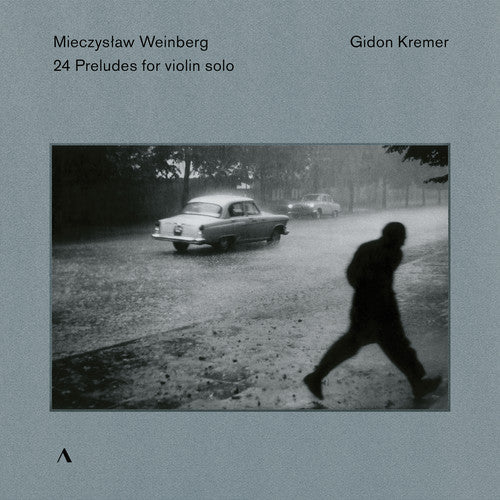
Weinberg: 24 Preludes for Violin Solo / Kremer
Mieczyslaw Weinberg composed his 24 solo cello Preludes in the late 1960s for Mstislav Rostropovich. The pieces are terse, aphoristic, and unpredictable, redolent of Shostakovich’s late-period chamber works, or the miniatures of Kurtag. Although Rostropovich never played the Preludes, something of this cellist’s exuberant spirit can be found in Josef Feigelson’s emotive, large-scale performance on Naxos. The same holds true for Gidon Kremer, who has transcribed the Preludes for violin.
Although one loses the the cello’s bass-to-treble-register tessitura, Kremer compensates by intensifying dynamic contrasts and articulations. As a result, the repeated phrases of Nos. 2 and 19 sound fascinatingly quirky and obsessive here, rather than merely playful. On the other hand, the violin arguably lends itself better to No. 7’s rapidly spinning figurations. On violin, the Sarabande (No. 18) takes on a stentorian character quite different from the cello’s warmer resonant overtones. The elegant concluding Menuet (No. 24) falls within the cello’s tenor and mezzo-soprano ranges in such a way that the long lines suggest a seamless conversation between two singers. By contrast, the music’s high-lying range on the violin conveys a completely different impression: ethereal, otherworldly.
I wouldn’t want to be without Feigelson’s standard-setting recording of Weinberg’s original cello versions, yet Kremer’s effective arrangements and fiercely focused interpretations deserve equal consideration. Allow these pieces to grow on you over time; they’re well worth your attention.
– ClassicsToday (Jed Distler)
Although one loses the the cello’s bass-to-treble-register tessitura, Kremer compensates by intensifying dynamic contrasts and articulations. As a result, the repeated phrases of Nos. 2 and 19 sound fascinatingly quirky and obsessive here, rather than merely playful. On the other hand, the violin arguably lends itself better to No. 7’s rapidly spinning figurations. On violin, the Sarabande (No. 18) takes on a stentorian character quite different from the cello’s warmer resonant overtones. The elegant concluding Menuet (No. 24) falls within the cello’s tenor and mezzo-soprano ranges in such a way that the long lines suggest a seamless conversation between two singers. By contrast, the music’s high-lying range on the violin conveys a completely different impression: ethereal, otherworldly.
I wouldn’t want to be without Feigelson’s standard-setting recording of Weinberg’s original cello versions, yet Kremer’s effective arrangements and fiercely focused interpretations deserve equal consideration. Allow these pieces to grow on you over time; they’re well worth your attention.
– ClassicsToday (Jed Distler)
Mieczyslaw Weinberg composed his 24 solo cello Preludes in the late 1960s for Mstislav Rostropovich. The pieces are terse, aphoristic, and unpredictable, redolent of Shostakovich’s late-period chamber works, or the miniatures of Kurtag. Although Rostropovich never played the Preludes, something of this cellist’s exuberant spirit can be found in Josef Feigelson’s emotive, large-scale performance on Naxos. The same holds true for Gidon Kremer, who has transcribed the Preludes for violin.
Although one loses the the cello’s bass-to-treble-register tessitura, Kremer compensates by intensifying dynamic contrasts and articulations. As a result, the repeated phrases of Nos. 2 and 19 sound fascinatingly quirky and obsessive here, rather than merely playful. On the other hand, the violin arguably lends itself better to No. 7’s rapidly spinning figurations. On violin, the Sarabande (No. 18) takes on a stentorian character quite different from the cello’s warmer resonant overtones. The elegant concluding Menuet (No. 24) falls within the cello’s tenor and mezzo-soprano ranges in such a way that the long lines suggest a seamless conversation between two singers. By contrast, the music’s high-lying range on the violin conveys a completely different impression: ethereal, otherworldly.
I wouldn’t want to be without Feigelson’s standard-setting recording of Weinberg’s original cello versions, yet Kremer’s effective arrangements and fiercely focused interpretations deserve equal consideration. Allow these pieces to grow on you over time; they’re well worth your attention.
– ClassicsToday (Jed Distler)
Although one loses the the cello’s bass-to-treble-register tessitura, Kremer compensates by intensifying dynamic contrasts and articulations. As a result, the repeated phrases of Nos. 2 and 19 sound fascinatingly quirky and obsessive here, rather than merely playful. On the other hand, the violin arguably lends itself better to No. 7’s rapidly spinning figurations. On violin, the Sarabande (No. 18) takes on a stentorian character quite different from the cello’s warmer resonant overtones. The elegant concluding Menuet (No. 24) falls within the cello’s tenor and mezzo-soprano ranges in such a way that the long lines suggest a seamless conversation between two singers. By contrast, the music’s high-lying range on the violin conveys a completely different impression: ethereal, otherworldly.
I wouldn’t want to be without Feigelson’s standard-setting recording of Weinberg’s original cello versions, yet Kremer’s effective arrangements and fiercely focused interpretations deserve equal consideration. Allow these pieces to grow on you over time; they’re well worth your attention.
– ClassicsToday (Jed Distler)
$27.99
Weinberg: 24 Preludes for Violin Solo / Kremer—
$27.99
Description
Mieczyslaw Weinberg composed his 24 solo cello Preludes in the late 1960s for Mstislav Rostropovich. The pieces are terse, aphoristic, and unpredictable, redolent of Shostakovich’s late-period chamber works, or the miniatures of Kurtag. Although Rostropovich never played the Preludes, something of this cellist’s exuberant spirit can be found in Josef Feigelson’s emotive, large-scale performance on Naxos. The same holds true for Gidon Kremer, who has transcribed the Preludes for violin.
Although one loses the the cello’s bass-to-treble-register tessitura, Kremer compensates by intensifying dynamic contrasts and articulations. As a result, the repeated phrases of Nos. 2 and 19 sound fascinatingly quirky and obsessive here, rather than merely playful. On the other hand, the violin arguably lends itself better to No. 7’s rapidly spinning figurations. On violin, the Sarabande (No. 18) takes on a stentorian character quite different from the cello’s warmer resonant overtones. The elegant concluding Menuet (No. 24) falls within the cello’s tenor and mezzo-soprano ranges in such a way that the long lines suggest a seamless conversation between two singers. By contrast, the music’s high-lying range on the violin conveys a completely different impression: ethereal, otherworldly.
I wouldn’t want to be without Feigelson’s standard-setting recording of Weinberg’s original cello versions, yet Kremer’s effective arrangements and fiercely focused interpretations deserve equal consideration. Allow these pieces to grow on you over time; they’re well worth your attention.
– ClassicsToday (Jed Distler)
Although one loses the the cello’s bass-to-treble-register tessitura, Kremer compensates by intensifying dynamic contrasts and articulations. As a result, the repeated phrases of Nos. 2 and 19 sound fascinatingly quirky and obsessive here, rather than merely playful. On the other hand, the violin arguably lends itself better to No. 7’s rapidly spinning figurations. On violin, the Sarabande (No. 18) takes on a stentorian character quite different from the cello’s warmer resonant overtones. The elegant concluding Menuet (No. 24) falls within the cello’s tenor and mezzo-soprano ranges in such a way that the long lines suggest a seamless conversation between two singers. By contrast, the music’s high-lying range on the violin conveys a completely different impression: ethereal, otherworldly.
I wouldn’t want to be without Feigelson’s standard-setting recording of Weinberg’s original cello versions, yet Kremer’s effective arrangements and fiercely focused interpretations deserve equal consideration. Allow these pieces to grow on you over time; they’re well worth your attention.
– ClassicsToday (Jed Distler)