🎉 Up to 70% Off Selected ItemsShop Sale

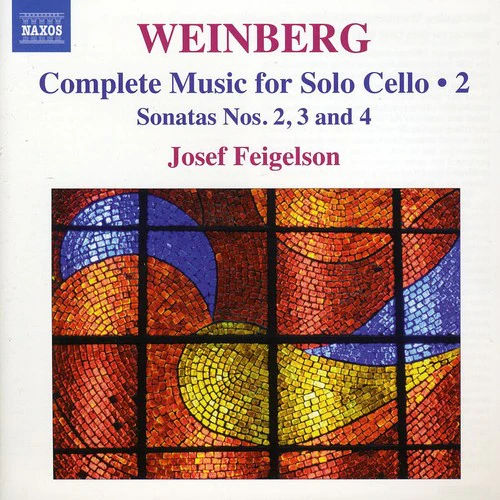
Weinberg: Complete Music For Solo Cello Vol 2 / Josef Feigelson
Emotional Soviet solo cello. If that’s what you’re looking for, this is hard to beat.
Mieczyslaw Weinberg’s solo cello sonatas are considerably more interesting than his preludes for the same instrument, which I reviewed here a few months ago. They aren’t a direct response to Bach, but very much Weinberg himself, a voice not far removed from Shostakovich’s, but with occasional added flavors of Jewish melody and jazz.
These sonatas are all very much of their composer: recognizably Soviet, emotionally quite austere, harmonically bittersweet. But they are written fluently and there are terrific moments: the transition from slow movement to impassioned finale in Sonata No 2, the uncommonly charming allegretto in No 3, the ethereal muted presto of the same sonata, and the otherworldly original andante to No 4, in which cellist Josef Feigelson (who also wrote the excellent notes) points out traces of Hindemith.
On the other hand, this music won’t have mass appeal. The occasional grayness of the writing — we don’t quite have Shostakovich’s emotional range here — and the fact that Weinberg’s style appears not to have changed very much between 1964 and 1986 means that this is the kind of disc you only put on the stereo when you’re in a very specific mood, or if you’re a very specific listener. That isn’t true of Weinberg’s stunning cello concerto, a rich, generous masterwork which works through a series of lush tunes in one broad emotional circle, and I think that my slight bitterness here may be due to the fact that I was expecting something along those lines and didn’t get it. The cello concerto is currently only available on Brilliant, in its live Rostropovich box, though Chandos has recorded a similarly good cello fantasy so there may be hope.
Josef Feigelson recorded this disc, and its companion, as a compendium of Weinberg’s complete cello music in the 1990s, very shortly after the composer’s death - learning the sonatas from the original manuscripts. Certainly his playing here is not to be faulted, and, as was true of the first volume, a more impassioned advocate of the music is hard to imagine. The sound is not too close, the cello tone full and darkly rich. Weinberg’s masterwork for the instrument remains the astonishing Cello Concerto, but these sonatas are very good in their way too. If you’ve been waiting for moody Soviet solo cello work, your ship has come in.
-- Brian Reinhart, MusicWeb International
Mieczyslaw Weinberg’s solo cello sonatas are considerably more interesting than his preludes for the same instrument, which I reviewed here a few months ago. They aren’t a direct response to Bach, but very much Weinberg himself, a voice not far removed from Shostakovich’s, but with occasional added flavors of Jewish melody and jazz.
These sonatas are all very much of their composer: recognizably Soviet, emotionally quite austere, harmonically bittersweet. But they are written fluently and there are terrific moments: the transition from slow movement to impassioned finale in Sonata No 2, the uncommonly charming allegretto in No 3, the ethereal muted presto of the same sonata, and the otherworldly original andante to No 4, in which cellist Josef Feigelson (who also wrote the excellent notes) points out traces of Hindemith.
On the other hand, this music won’t have mass appeal. The occasional grayness of the writing — we don’t quite have Shostakovich’s emotional range here — and the fact that Weinberg’s style appears not to have changed very much between 1964 and 1986 means that this is the kind of disc you only put on the stereo when you’re in a very specific mood, or if you’re a very specific listener. That isn’t true of Weinberg’s stunning cello concerto, a rich, generous masterwork which works through a series of lush tunes in one broad emotional circle, and I think that my slight bitterness here may be due to the fact that I was expecting something along those lines and didn’t get it. The cello concerto is currently only available on Brilliant, in its live Rostropovich box, though Chandos has recorded a similarly good cello fantasy so there may be hope.
Josef Feigelson recorded this disc, and its companion, as a compendium of Weinberg’s complete cello music in the 1990s, very shortly after the composer’s death - learning the sonatas from the original manuscripts. Certainly his playing here is not to be faulted, and, as was true of the first volume, a more impassioned advocate of the music is hard to imagine. The sound is not too close, the cello tone full and darkly rich. Weinberg’s masterwork for the instrument remains the astonishing Cello Concerto, but these sonatas are very good in their way too. If you’ve been waiting for moody Soviet solo cello work, your ship has come in.
-- Brian Reinhart, MusicWeb International
Emotional Soviet solo cello. If that’s what you’re looking for, this is hard to beat.
Mieczyslaw Weinberg’s solo cello sonatas are considerably more interesting than his preludes for the same instrument, which I reviewed here a few months ago. They aren’t a direct response to Bach, but very much Weinberg himself, a voice not far removed from Shostakovich’s, but with occasional added flavors of Jewish melody and jazz.
These sonatas are all very much of their composer: recognizably Soviet, emotionally quite austere, harmonically bittersweet. But they are written fluently and there are terrific moments: the transition from slow movement to impassioned finale in Sonata No 2, the uncommonly charming allegretto in No 3, the ethereal muted presto of the same sonata, and the otherworldly original andante to No 4, in which cellist Josef Feigelson (who also wrote the excellent notes) points out traces of Hindemith.
On the other hand, this music won’t have mass appeal. The occasional grayness of the writing — we don’t quite have Shostakovich’s emotional range here — and the fact that Weinberg’s style appears not to have changed very much between 1964 and 1986 means that this is the kind of disc you only put on the stereo when you’re in a very specific mood, or if you’re a very specific listener. That isn’t true of Weinberg’s stunning cello concerto, a rich, generous masterwork which works through a series of lush tunes in one broad emotional circle, and I think that my slight bitterness here may be due to the fact that I was expecting something along those lines and didn’t get it. The cello concerto is currently only available on Brilliant, in its live Rostropovich box, though Chandos has recorded a similarly good cello fantasy so there may be hope.
Josef Feigelson recorded this disc, and its companion, as a compendium of Weinberg’s complete cello music in the 1990s, very shortly after the composer’s death - learning the sonatas from the original manuscripts. Certainly his playing here is not to be faulted, and, as was true of the first volume, a more impassioned advocate of the music is hard to imagine. The sound is not too close, the cello tone full and darkly rich. Weinberg’s masterwork for the instrument remains the astonishing Cello Concerto, but these sonatas are very good in their way too. If you’ve been waiting for moody Soviet solo cello work, your ship has come in.
-- Brian Reinhart, MusicWeb International
Mieczyslaw Weinberg’s solo cello sonatas are considerably more interesting than his preludes for the same instrument, which I reviewed here a few months ago. They aren’t a direct response to Bach, but very much Weinberg himself, a voice not far removed from Shostakovich’s, but with occasional added flavors of Jewish melody and jazz.
These sonatas are all very much of their composer: recognizably Soviet, emotionally quite austere, harmonically bittersweet. But they are written fluently and there are terrific moments: the transition from slow movement to impassioned finale in Sonata No 2, the uncommonly charming allegretto in No 3, the ethereal muted presto of the same sonata, and the otherworldly original andante to No 4, in which cellist Josef Feigelson (who also wrote the excellent notes) points out traces of Hindemith.
On the other hand, this music won’t have mass appeal. The occasional grayness of the writing — we don’t quite have Shostakovich’s emotional range here — and the fact that Weinberg’s style appears not to have changed very much between 1964 and 1986 means that this is the kind of disc you only put on the stereo when you’re in a very specific mood, or if you’re a very specific listener. That isn’t true of Weinberg’s stunning cello concerto, a rich, generous masterwork which works through a series of lush tunes in one broad emotional circle, and I think that my slight bitterness here may be due to the fact that I was expecting something along those lines and didn’t get it. The cello concerto is currently only available on Brilliant, in its live Rostropovich box, though Chandos has recorded a similarly good cello fantasy so there may be hope.
Josef Feigelson recorded this disc, and its companion, as a compendium of Weinberg’s complete cello music in the 1990s, very shortly after the composer’s death - learning the sonatas from the original manuscripts. Certainly his playing here is not to be faulted, and, as was true of the first volume, a more impassioned advocate of the music is hard to imagine. The sound is not too close, the cello tone full and darkly rich. Weinberg’s masterwork for the instrument remains the astonishing Cello Concerto, but these sonatas are very good in their way too. If you’ve been waiting for moody Soviet solo cello work, your ship has come in.
-- Brian Reinhart, MusicWeb International
$19.99
Weinberg: Complete Music For Solo Cello Vol 2 / Josef Feigelson—
$19.99
Description
Emotional Soviet solo cello. If that’s what you’re looking for, this is hard to beat.
Mieczyslaw Weinberg’s solo cello sonatas are considerably more interesting than his preludes for the same instrument, which I reviewed here a few months ago. They aren’t a direct response to Bach, but very much Weinberg himself, a voice not far removed from Shostakovich’s, but with occasional added flavors of Jewish melody and jazz.
These sonatas are all very much of their composer: recognizably Soviet, emotionally quite austere, harmonically bittersweet. But they are written fluently and there are terrific moments: the transition from slow movement to impassioned finale in Sonata No 2, the uncommonly charming allegretto in No 3, the ethereal muted presto of the same sonata, and the otherworldly original andante to No 4, in which cellist Josef Feigelson (who also wrote the excellent notes) points out traces of Hindemith.
On the other hand, this music won’t have mass appeal. The occasional grayness of the writing — we don’t quite have Shostakovich’s emotional range here — and the fact that Weinberg’s style appears not to have changed very much between 1964 and 1986 means that this is the kind of disc you only put on the stereo when you’re in a very specific mood, or if you’re a very specific listener. That isn’t true of Weinberg’s stunning cello concerto, a rich, generous masterwork which works through a series of lush tunes in one broad emotional circle, and I think that my slight bitterness here may be due to the fact that I was expecting something along those lines and didn’t get it. The cello concerto is currently only available on Brilliant, in its live Rostropovich box, though Chandos has recorded a similarly good cello fantasy so there may be hope.
Josef Feigelson recorded this disc, and its companion, as a compendium of Weinberg’s complete cello music in the 1990s, very shortly after the composer’s death - learning the sonatas from the original manuscripts. Certainly his playing here is not to be faulted, and, as was true of the first volume, a more impassioned advocate of the music is hard to imagine. The sound is not too close, the cello tone full and darkly rich. Weinberg’s masterwork for the instrument remains the astonishing Cello Concerto, but these sonatas are very good in their way too. If you’ve been waiting for moody Soviet solo cello work, your ship has come in.
-- Brian Reinhart, MusicWeb International
Mieczyslaw Weinberg’s solo cello sonatas are considerably more interesting than his preludes for the same instrument, which I reviewed here a few months ago. They aren’t a direct response to Bach, but very much Weinberg himself, a voice not far removed from Shostakovich’s, but with occasional added flavors of Jewish melody and jazz.
These sonatas are all very much of their composer: recognizably Soviet, emotionally quite austere, harmonically bittersweet. But they are written fluently and there are terrific moments: the transition from slow movement to impassioned finale in Sonata No 2, the uncommonly charming allegretto in No 3, the ethereal muted presto of the same sonata, and the otherworldly original andante to No 4, in which cellist Josef Feigelson (who also wrote the excellent notes) points out traces of Hindemith.
On the other hand, this music won’t have mass appeal. The occasional grayness of the writing — we don’t quite have Shostakovich’s emotional range here — and the fact that Weinberg’s style appears not to have changed very much between 1964 and 1986 means that this is the kind of disc you only put on the stereo when you’re in a very specific mood, or if you’re a very specific listener. That isn’t true of Weinberg’s stunning cello concerto, a rich, generous masterwork which works through a series of lush tunes in one broad emotional circle, and I think that my slight bitterness here may be due to the fact that I was expecting something along those lines and didn’t get it. The cello concerto is currently only available on Brilliant, in its live Rostropovich box, though Chandos has recorded a similarly good cello fantasy so there may be hope.
Josef Feigelson recorded this disc, and its companion, as a compendium of Weinberg’s complete cello music in the 1990s, very shortly after the composer’s death - learning the sonatas from the original manuscripts. Certainly his playing here is not to be faulted, and, as was true of the first volume, a more impassioned advocate of the music is hard to imagine. The sound is not too close, the cello tone full and darkly rich. Weinberg’s masterwork for the instrument remains the astonishing Cello Concerto, but these sonatas are very good in their way too. If you’ve been waiting for moody Soviet solo cello work, your ship has come in.
-- Brian Reinhart, MusicWeb International