🎉 Up to 70% Off Selected ItemsShop Sale

1 / 2
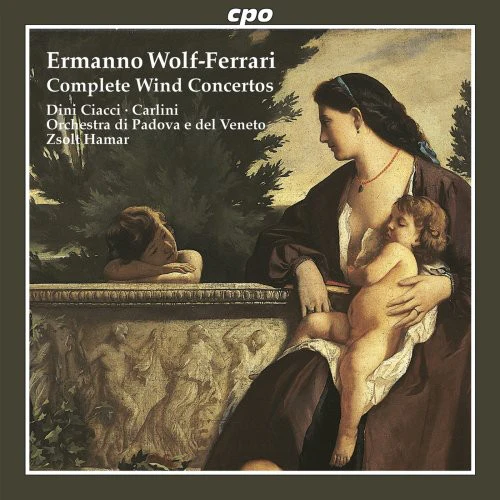
Wolf-ferrari: Complete Wind Concertos / Ciacci, Hamar
WOLF-FERRARI Concertino in A, “Idillio.” Suite-Concertino in F. 1 Concertino in A? • Zsolt Hamar, cond; Diego Dini Ciacci (ob, hn); Paolo Carlini (bn); 1 Padova and Veneto O • cpo 777 157 (70:07)
Considering this album’s genial, melodic music, it really is amazing how Wolf-Ferrari has, until comparatively recently, been represented in the catalogs only with recordings of his operatic overtures and intermezzos, especially those of The Jewels of the Madonna, Susanna’s Secret , and The School for Fathers . Thankfully, the situation is now changing; cpo, for example, has already released his Violin Concerto in D and Serenade for Strings (cpo 777 271), and his Cello Concerto with the Sinfonia brevis (cpo 777 278). This new release follows the rival 2006 Talent recording of all three works with Hans Rotman conducting the Westsächisches Symphonie Orchester with Piet Van Bockstal (oboe and English horn) and Luc Loubry (bassoon). This Talent recording so enthused one reviewer that he placed it (elsewhere) as one of his recordings of the year.
Wolf-Ferrari (1876–1948) was born in Venice, Italy, the son of a German father and an Italian mother. He enjoyed early success with his operas and he also distinguished himself in the genres of chamber music and concertante wind music. The three works on this album, all cast in four short movements, are scored for small orchestras. All are comparatively late works. In each, soloists and orchestra are equal partners. The “Idillio” Concertino, premiered in 1933, is written in a light late-Romantic vein with string orchestra augmented by two horns imparting something of a bucolic character. It is reminiscent of the neo-Classical style of Respighi, especially in the Scherzo, where staccato chords from the oboe and answering strings are reminiscent of Respighi’s hen from The Birds . Both Dini Ciacci and Van Bockstal please with the latter just that bit snappier and more extroverted in the jolly outer movements. The hauntingly beautiful Adagio, taken at a much slower pace by Dini Ciacci and Hamar, is distinguished by some delectable string phrasing. The cpo players also make magic of the atmospheric Notturno opening movement of the Suite-Concertino for bassoon and small orchestra (1933), Hamar drawing lovely limpid music from his strings; and if you thought a bassoon could never be romantic, then you should listen to Carlini’s tender love song that is the Canzone (Andante cantabile). Loubry, on Talent, is more bubbly in the presto Strimpellata movement
Wolf-Ferrari’s Concertino for English horn, strings, and two horns was premiered posthumously in Salzburg in 1955. Listening to the Capriccio second movement, and the Finale, one might imagine commedia dell’arte characters, the English horn’s buffoonery, sometimes encouraged by prankish horns, contrasts with the strings’ frequent censorious tones; Stravinsky’s Pulcinella comes to mind. Once again, the affecting melancholy of Carlini’s English horn solo, combined with misty, atmospheric strings, lifts another exquisite Wolf-Ferrari Adagio, the horns adding perspective and heightening the elegiac mood.
Highly recommended, this new cpo release, by virtue of the beauty of its slow movements, eclipses its rival Talent recording.
FANFARE: Ian Lace
WOLF-FERRARI Concertino in A, “Idillio.” Suite-Concertino in F. 1 Concertino in A? • Zsolt Hamar, cond; Diego Dini Ciacci (ob, hn); Paolo Carlini (bn); 1 Padova and Veneto O • cpo 777 157 (70:07)
Considering this album’s genial, melodic music, it really is amazing how Wolf-Ferrari has, until comparatively recently, been represented in the catalogs only with recordings of his operatic overtures and intermezzos, especially those of The Jewels of the Madonna, Susanna’s Secret , and The School for Fathers . Thankfully, the situation is now changing; cpo, for example, has already released his Violin Concerto in D and Serenade for Strings (cpo 777 271), and his Cello Concerto with the Sinfonia brevis (cpo 777 278). This new release follows the rival 2006 Talent recording of all three works with Hans Rotman conducting the Westsächisches Symphonie Orchester with Piet Van Bockstal (oboe and English horn) and Luc Loubry (bassoon). This Talent recording so enthused one reviewer that he placed it (elsewhere) as one of his recordings of the year.
Wolf-Ferrari (1876–1948) was born in Venice, Italy, the son of a German father and an Italian mother. He enjoyed early success with his operas and he also distinguished himself in the genres of chamber music and concertante wind music. The three works on this album, all cast in four short movements, are scored for small orchestras. All are comparatively late works. In each, soloists and orchestra are equal partners. The “Idillio” Concertino, premiered in 1933, is written in a light late-Romantic vein with string orchestra augmented by two horns imparting something of a bucolic character. It is reminiscent of the neo-Classical style of Respighi, especially in the Scherzo, where staccato chords from the oboe and answering strings are reminiscent of Respighi’s hen from The Birds . Both Dini Ciacci and Van Bockstal please with the latter just that bit snappier and more extroverted in the jolly outer movements. The hauntingly beautiful Adagio, taken at a much slower pace by Dini Ciacci and Hamar, is distinguished by some delectable string phrasing. The cpo players also make magic of the atmospheric Notturno opening movement of the Suite-Concertino for bassoon and small orchestra (1933), Hamar drawing lovely limpid music from his strings; and if you thought a bassoon could never be romantic, then you should listen to Carlini’s tender love song that is the Canzone (Andante cantabile). Loubry, on Talent, is more bubbly in the presto Strimpellata movement
Wolf-Ferrari’s Concertino for English horn, strings, and two horns was premiered posthumously in Salzburg in 1955. Listening to the Capriccio second movement, and the Finale, one might imagine commedia dell’arte characters, the English horn’s buffoonery, sometimes encouraged by prankish horns, contrasts with the strings’ frequent censorious tones; Stravinsky’s Pulcinella comes to mind. Once again, the affecting melancholy of Carlini’s English horn solo, combined with misty, atmospheric strings, lifts another exquisite Wolf-Ferrari Adagio, the horns adding perspective and heightening the elegiac mood.
Highly recommended, this new cpo release, by virtue of the beauty of its slow movements, eclipses its rival Talent recording.
FANFARE: Ian Lace
$18.99
Wolf-ferrari: Complete Wind Concertos / Ciacci, Hamar—
$18.99
Description
WOLF-FERRARI Concertino in A, “Idillio.” Suite-Concertino in F. 1 Concertino in A? • Zsolt Hamar, cond; Diego Dini Ciacci (ob, hn); Paolo Carlini (bn); 1 Padova and Veneto O • cpo 777 157 (70:07)
Considering this album’s genial, melodic music, it really is amazing how Wolf-Ferrari has, until comparatively recently, been represented in the catalogs only with recordings of his operatic overtures and intermezzos, especially those of The Jewels of the Madonna, Susanna’s Secret , and The School for Fathers . Thankfully, the situation is now changing; cpo, for example, has already released his Violin Concerto in D and Serenade for Strings (cpo 777 271), and his Cello Concerto with the Sinfonia brevis (cpo 777 278). This new release follows the rival 2006 Talent recording of all three works with Hans Rotman conducting the Westsächisches Symphonie Orchester with Piet Van Bockstal (oboe and English horn) and Luc Loubry (bassoon). This Talent recording so enthused one reviewer that he placed it (elsewhere) as one of his recordings of the year.
Wolf-Ferrari (1876–1948) was born in Venice, Italy, the son of a German father and an Italian mother. He enjoyed early success with his operas and he also distinguished himself in the genres of chamber music and concertante wind music. The three works on this album, all cast in four short movements, are scored for small orchestras. All are comparatively late works. In each, soloists and orchestra are equal partners. The “Idillio” Concertino, premiered in 1933, is written in a light late-Romantic vein with string orchestra augmented by two horns imparting something of a bucolic character. It is reminiscent of the neo-Classical style of Respighi, especially in the Scherzo, where staccato chords from the oboe and answering strings are reminiscent of Respighi’s hen from The Birds . Both Dini Ciacci and Van Bockstal please with the latter just that bit snappier and more extroverted in the jolly outer movements. The hauntingly beautiful Adagio, taken at a much slower pace by Dini Ciacci and Hamar, is distinguished by some delectable string phrasing. The cpo players also make magic of the atmospheric Notturno opening movement of the Suite-Concertino for bassoon and small orchestra (1933), Hamar drawing lovely limpid music from his strings; and if you thought a bassoon could never be romantic, then you should listen to Carlini’s tender love song that is the Canzone (Andante cantabile). Loubry, on Talent, is more bubbly in the presto Strimpellata movement
Wolf-Ferrari’s Concertino for English horn, strings, and two horns was premiered posthumously in Salzburg in 1955. Listening to the Capriccio second movement, and the Finale, one might imagine commedia dell’arte characters, the English horn’s buffoonery, sometimes encouraged by prankish horns, contrasts with the strings’ frequent censorious tones; Stravinsky’s Pulcinella comes to mind. Once again, the affecting melancholy of Carlini’s English horn solo, combined with misty, atmospheric strings, lifts another exquisite Wolf-Ferrari Adagio, the horns adding perspective and heightening the elegiac mood.
Highly recommended, this new cpo release, by virtue of the beauty of its slow movements, eclipses its rival Talent recording.
FANFARE: Ian Lace