🎉 Up to 70% Off Selected ItemsShop Sale

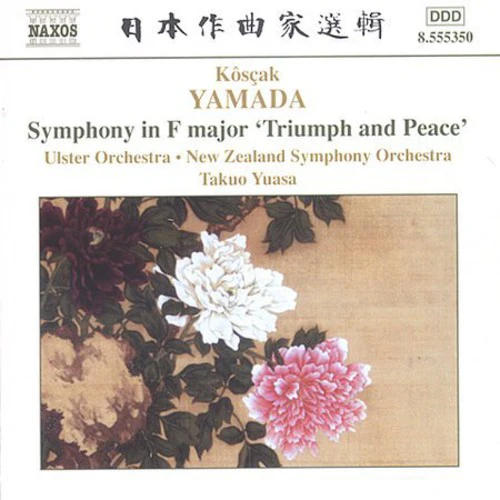
Yamada: Symphony "Triumph & Peace," Madara No Hana, The Dark Gate / Yuasa, Ulster Orchestra
Thanks to the thorough liner notes written by Morihide Katayama, I learned from this release that Kôsçak Yamada is considered the “father” of Japanese orchestral composition—the overture (1912) and symphony (1912) are claimed to be the first such scores composed in Japan. My curiosity was whetted when I read that Yamada, born in 1886, first encountered music through exposure to military bands and Anglican hymn tunes (though his father was born into the prevailing samurai class, his mother’s family was at some point converted to Protestantism), and at age eighteen traveled to Europe to study with, among others, Max Bruch at the Berlin Musikhochschule. From this unusual background, I was hoping to discover a Japanese Charles Ives. No such luck, at least from the evidence of the earliest works here (Yamada’s compositional career continued on until his death in 1965, though a cerebral hemorrhage in 1948 apparently restricted him to small-scale songs). The brief (under four minutes) overture is, to my ears, pure Mendelssohn in melody and spirit, and the symphony, somewhat more serious in form and content, sweeps through intimations of Dvo?ák, Beethoven, and Schumann, comfortable in its old-fashioned, pastoral style, and certainly without a trace of the Sturm und Drang suggested by the title. Katayama suggests that this title may have been added after WW I began in 1914; he also posits that the conservatism of these works may be due to their being student works submitted to Yamada’s composition teacher, Karl Leopold Wolf, reflecting the staid German instruction and required mimicry of models.
Certainly, there is a profound difference in tone and intent in the two symphonic poems composed in 1913. The brooding harmonies, more colorful orchestration, occasional bombastic eruptions, and less formal constraints of The Dark Gate point to the influence of Richard Strauss, and there’s even a hint of Scriabinesque mystery. Some credit, however, should go to Yamada’s ability as a psychological scene-painter, since the music was inspired by a poem describing the anxiety felt by a group of sightless persons unable to escape from behind a large gate. Likewise, the symbolism of death and paradise in Madara No Hana finds its voice in lush, Impressionistic orchestration (including a tenor saxophone!) and outbursts that suggest a familiarity with Mussorgsky as well as Scriabin.
Interestingly, Katayama mentions that Yamada came to the US in 1918–19 and conducted the New York Symphony Orchestra (now Philharmonic) twice in Carnegie-Hall concerts of his own music. What he does not relate is that Yamada’s desire to become established as a composer/conductor in the West was, ironically, apparently hindered by his fluency in Western compositional styles; American audiences wanted something exotic, and at this time Yamada’s music lacked Japanese character. By 1921, however, Yamada composed a symphony, Inno Meiji, that combined traditional Japanese instruments with a symphony orchestra, anticipating post-WW II trends, and whatever confluence of styles he might have subsequently devised remain so-far unheard by the bulk of non-Japanese listeners. Perhaps Naxos will document Inno Meiji, and some of Yamada’s later work. In the meantime, the historical and curiosity factors outweigh the sheer musical pleasures of this initial release.
Art Lange, FANFARE
Certainly, there is a profound difference in tone and intent in the two symphonic poems composed in 1913. The brooding harmonies, more colorful orchestration, occasional bombastic eruptions, and less formal constraints of The Dark Gate point to the influence of Richard Strauss, and there’s even a hint of Scriabinesque mystery. Some credit, however, should go to Yamada’s ability as a psychological scene-painter, since the music was inspired by a poem describing the anxiety felt by a group of sightless persons unable to escape from behind a large gate. Likewise, the symbolism of death and paradise in Madara No Hana finds its voice in lush, Impressionistic orchestration (including a tenor saxophone!) and outbursts that suggest a familiarity with Mussorgsky as well as Scriabin.
Interestingly, Katayama mentions that Yamada came to the US in 1918–19 and conducted the New York Symphony Orchestra (now Philharmonic) twice in Carnegie-Hall concerts of his own music. What he does not relate is that Yamada’s desire to become established as a composer/conductor in the West was, ironically, apparently hindered by his fluency in Western compositional styles; American audiences wanted something exotic, and at this time Yamada’s music lacked Japanese character. By 1921, however, Yamada composed a symphony, Inno Meiji, that combined traditional Japanese instruments with a symphony orchestra, anticipating post-WW II trends, and whatever confluence of styles he might have subsequently devised remain so-far unheard by the bulk of non-Japanese listeners. Perhaps Naxos will document Inno Meiji, and some of Yamada’s later work. In the meantime, the historical and curiosity factors outweigh the sheer musical pleasures of this initial release.
Art Lange, FANFARE
Thanks to the thorough liner notes written by Morihide Katayama, I learned from this release that Kôsçak Yamada is considered the “father” of Japanese orchestral composition—the overture (1912) and symphony (1912) are claimed to be the first such scores composed in Japan. My curiosity was whetted when I read that Yamada, born in 1886, first encountered music through exposure to military bands and Anglican hymn tunes (though his father was born into the prevailing samurai class, his mother’s family was at some point converted to Protestantism), and at age eighteen traveled to Europe to study with, among others, Max Bruch at the Berlin Musikhochschule. From this unusual background, I was hoping to discover a Japanese Charles Ives. No such luck, at least from the evidence of the earliest works here (Yamada’s compositional career continued on until his death in 1965, though a cerebral hemorrhage in 1948 apparently restricted him to small-scale songs). The brief (under four minutes) overture is, to my ears, pure Mendelssohn in melody and spirit, and the symphony, somewhat more serious in form and content, sweeps through intimations of Dvo?ák, Beethoven, and Schumann, comfortable in its old-fashioned, pastoral style, and certainly without a trace of the Sturm und Drang suggested by the title. Katayama suggests that this title may have been added after WW I began in 1914; he also posits that the conservatism of these works may be due to their being student works submitted to Yamada’s composition teacher, Karl Leopold Wolf, reflecting the staid German instruction and required mimicry of models.
Certainly, there is a profound difference in tone and intent in the two symphonic poems composed in 1913. The brooding harmonies, more colorful orchestration, occasional bombastic eruptions, and less formal constraints of The Dark Gate point to the influence of Richard Strauss, and there’s even a hint of Scriabinesque mystery. Some credit, however, should go to Yamada’s ability as a psychological scene-painter, since the music was inspired by a poem describing the anxiety felt by a group of sightless persons unable to escape from behind a large gate. Likewise, the symbolism of death and paradise in Madara No Hana finds its voice in lush, Impressionistic orchestration (including a tenor saxophone!) and outbursts that suggest a familiarity with Mussorgsky as well as Scriabin.
Interestingly, Katayama mentions that Yamada came to the US in 1918–19 and conducted the New York Symphony Orchestra (now Philharmonic) twice in Carnegie-Hall concerts of his own music. What he does not relate is that Yamada’s desire to become established as a composer/conductor in the West was, ironically, apparently hindered by his fluency in Western compositional styles; American audiences wanted something exotic, and at this time Yamada’s music lacked Japanese character. By 1921, however, Yamada composed a symphony, Inno Meiji, that combined traditional Japanese instruments with a symphony orchestra, anticipating post-WW II trends, and whatever confluence of styles he might have subsequently devised remain so-far unheard by the bulk of non-Japanese listeners. Perhaps Naxos will document Inno Meiji, and some of Yamada’s later work. In the meantime, the historical and curiosity factors outweigh the sheer musical pleasures of this initial release.
Art Lange, FANFARE
Certainly, there is a profound difference in tone and intent in the two symphonic poems composed in 1913. The brooding harmonies, more colorful orchestration, occasional bombastic eruptions, and less formal constraints of The Dark Gate point to the influence of Richard Strauss, and there’s even a hint of Scriabinesque mystery. Some credit, however, should go to Yamada’s ability as a psychological scene-painter, since the music was inspired by a poem describing the anxiety felt by a group of sightless persons unable to escape from behind a large gate. Likewise, the symbolism of death and paradise in Madara No Hana finds its voice in lush, Impressionistic orchestration (including a tenor saxophone!) and outbursts that suggest a familiarity with Mussorgsky as well as Scriabin.
Interestingly, Katayama mentions that Yamada came to the US in 1918–19 and conducted the New York Symphony Orchestra (now Philharmonic) twice in Carnegie-Hall concerts of his own music. What he does not relate is that Yamada’s desire to become established as a composer/conductor in the West was, ironically, apparently hindered by his fluency in Western compositional styles; American audiences wanted something exotic, and at this time Yamada’s music lacked Japanese character. By 1921, however, Yamada composed a symphony, Inno Meiji, that combined traditional Japanese instruments with a symphony orchestra, anticipating post-WW II trends, and whatever confluence of styles he might have subsequently devised remain so-far unheard by the bulk of non-Japanese listeners. Perhaps Naxos will document Inno Meiji, and some of Yamada’s later work. In the meantime, the historical and curiosity factors outweigh the sheer musical pleasures of this initial release.
Art Lange, FANFARE
$7.00
Original: $19.99
-65%Yamada: Symphony "Triumph & Peace," Madara No Hana, The Dark Gate / Yuasa, Ulster Orchestra—
$19.99
$7.00Description
Thanks to the thorough liner notes written by Morihide Katayama, I learned from this release that Kôsçak Yamada is considered the “father” of Japanese orchestral composition—the overture (1912) and symphony (1912) are claimed to be the first such scores composed in Japan. My curiosity was whetted when I read that Yamada, born in 1886, first encountered music through exposure to military bands and Anglican hymn tunes (though his father was born into the prevailing samurai class, his mother’s family was at some point converted to Protestantism), and at age eighteen traveled to Europe to study with, among others, Max Bruch at the Berlin Musikhochschule. From this unusual background, I was hoping to discover a Japanese Charles Ives. No such luck, at least from the evidence of the earliest works here (Yamada’s compositional career continued on until his death in 1965, though a cerebral hemorrhage in 1948 apparently restricted him to small-scale songs). The brief (under four minutes) overture is, to my ears, pure Mendelssohn in melody and spirit, and the symphony, somewhat more serious in form and content, sweeps through intimations of Dvo?ák, Beethoven, and Schumann, comfortable in its old-fashioned, pastoral style, and certainly without a trace of the Sturm und Drang suggested by the title. Katayama suggests that this title may have been added after WW I began in 1914; he also posits that the conservatism of these works may be due to their being student works submitted to Yamada’s composition teacher, Karl Leopold Wolf, reflecting the staid German instruction and required mimicry of models.
Certainly, there is a profound difference in tone and intent in the two symphonic poems composed in 1913. The brooding harmonies, more colorful orchestration, occasional bombastic eruptions, and less formal constraints of The Dark Gate point to the influence of Richard Strauss, and there’s even a hint of Scriabinesque mystery. Some credit, however, should go to Yamada’s ability as a psychological scene-painter, since the music was inspired by a poem describing the anxiety felt by a group of sightless persons unable to escape from behind a large gate. Likewise, the symbolism of death and paradise in Madara No Hana finds its voice in lush, Impressionistic orchestration (including a tenor saxophone!) and outbursts that suggest a familiarity with Mussorgsky as well as Scriabin.
Interestingly, Katayama mentions that Yamada came to the US in 1918–19 and conducted the New York Symphony Orchestra (now Philharmonic) twice in Carnegie-Hall concerts of his own music. What he does not relate is that Yamada’s desire to become established as a composer/conductor in the West was, ironically, apparently hindered by his fluency in Western compositional styles; American audiences wanted something exotic, and at this time Yamada’s music lacked Japanese character. By 1921, however, Yamada composed a symphony, Inno Meiji, that combined traditional Japanese instruments with a symphony orchestra, anticipating post-WW II trends, and whatever confluence of styles he might have subsequently devised remain so-far unheard by the bulk of non-Japanese listeners. Perhaps Naxos will document Inno Meiji, and some of Yamada’s later work. In the meantime, the historical and curiosity factors outweigh the sheer musical pleasures of this initial release.
Art Lange, FANFARE
Certainly, there is a profound difference in tone and intent in the two symphonic poems composed in 1913. The brooding harmonies, more colorful orchestration, occasional bombastic eruptions, and less formal constraints of The Dark Gate point to the influence of Richard Strauss, and there’s even a hint of Scriabinesque mystery. Some credit, however, should go to Yamada’s ability as a psychological scene-painter, since the music was inspired by a poem describing the anxiety felt by a group of sightless persons unable to escape from behind a large gate. Likewise, the symbolism of death and paradise in Madara No Hana finds its voice in lush, Impressionistic orchestration (including a tenor saxophone!) and outbursts that suggest a familiarity with Mussorgsky as well as Scriabin.
Interestingly, Katayama mentions that Yamada came to the US in 1918–19 and conducted the New York Symphony Orchestra (now Philharmonic) twice in Carnegie-Hall concerts of his own music. What he does not relate is that Yamada’s desire to become established as a composer/conductor in the West was, ironically, apparently hindered by his fluency in Western compositional styles; American audiences wanted something exotic, and at this time Yamada’s music lacked Japanese character. By 1921, however, Yamada composed a symphony, Inno Meiji, that combined traditional Japanese instruments with a symphony orchestra, anticipating post-WW II trends, and whatever confluence of styles he might have subsequently devised remain so-far unheard by the bulk of non-Japanese listeners. Perhaps Naxos will document Inno Meiji, and some of Yamada’s later work. In the meantime, the historical and curiosity factors outweigh the sheer musical pleasures of this initial release.
Art Lange, FANFARE