🎉 Up to 70% Off Selected ItemsShop Sale

1 / 2
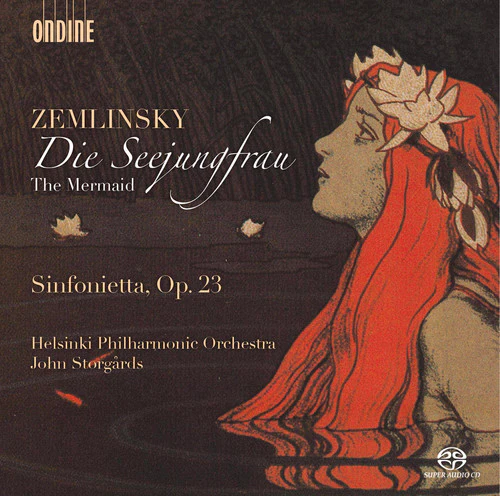
Zemlinsky: Die Seejungfrau, Sinfonietta / Storgards, Helsinki Philharmonic
Zemlinsky’s Die Seejungfrau has been recorded at least seven times, but this newcomer has some special qualities. It is without question the most gorgeously played and opulently engineered, which is saying a lot. After all, Chailly and the Concertgebouw (Decca) aren’t exactly slouches, and neither for that matter is Zemlinsky authority Antony Beaumont with the Czech Philharmonic (Chandos). It was Beaumont, in fact, who produced this new critical edition, restoring some five minutes of music to the central movement, including perhaps the work’s most convincing climax and interesting harmonies. So for that reason alone this performance, conducted by Storgards with 100% conviction and confidence, is worth having.
The work itself remains problematic. Thematically it owes quite a bit to Tchaikovsky–Francesca da Rimini in its “motto” theme, and the slow movement of the Fifth Symphony elsewhere. Its three movements can very easily come off as relatively undifferentiated sonic blobs due to Zemlinsky’s habit of immediately resorting to lyrical noodling just as things start to get moving. Each part seems to end five or six times before it actually stops, with the loud closing bars of Part Two sounding especially gratuitous. But the music is so beautiful from moment to moment, and so brilliantly scored, that in a performance like this one the defects hardly matter. If you’re a fan of Seejungfrau, this is now the version to own, and if you aren’t a fan, this one might make you one.
As to the coupling, well, here’s a story. At least two other very good recordings of Seejungfrau come in tandem with the Sinfonietta–Dausgaard’s and Conlon’s. This version, though, is the premiere recording of a recent rescoring for chamber orchestra by one Roland Freisitzer. I am not going to accuse Freisitzer of parasitically attaching himself to the coattails of the great (like Anthony Paine, for example, with his abominable Elgar Third Symphony), because no one is making a living creating alternate versions of works by Zemlinsky. On the other hand, the justification offered for disfiguring a late masterpiece by claiming to make it more playable by chamber orchestras just won’t wash, for several reasons.
First of all, there’s plenty of great music already written for chamber orchestra. No one needs Zemlinsky’s Sinfonietta any more than we need the recent silly, pint-sized arrangement of Mahler’s Second Symphony and other such curiosities–especially on recordings. Second, Zemlinsky’s Sinfonietta is scored for a fairly modest ensemble as it is–basically only double winds and standard brass, with no tuba. Freisitzer eliminates the three percussion parts, but adds a piano, pointlessly. His choices beg the question of just what constitutes a “chamber orchestra.” After all, if the Tapiola Sinfonietta under Mario Venzago can play Bruckner’s Fifth Symphony, then Zemlinsky’s Sinfonietta certainly stands squarely within the realm of possibility. Finally, it seems singularly strange, not to say conceptually confused, to couple a carefully prepared critical edition of Seejungfrau with a mongrel deconstruction of the Sinfonietta. Do Zemlinsky’s own ideas matter or not? The scoring of the Sinfonietta, even more than with Seejungrau, constitutes one of the most telling and original aspects of the work. This was a bad idea, despite the fact that the arrangement is excellently played by Storgards and members of the Helsinki Phil.
So because the recording of Seejungrau is so terrific, and perfectly fine recordings of the Sinfonietta are not that hard to find (including Beaumont’s, differently coupled), I am going to base the rating for this release mostly on the former, and largely ignore the latter. Seejungfrau really is that good.
-- ClassicsToday.com
The work itself remains problematic. Thematically it owes quite a bit to Tchaikovsky–Francesca da Rimini in its “motto” theme, and the slow movement of the Fifth Symphony elsewhere. Its three movements can very easily come off as relatively undifferentiated sonic blobs due to Zemlinsky’s habit of immediately resorting to lyrical noodling just as things start to get moving. Each part seems to end five or six times before it actually stops, with the loud closing bars of Part Two sounding especially gratuitous. But the music is so beautiful from moment to moment, and so brilliantly scored, that in a performance like this one the defects hardly matter. If you’re a fan of Seejungfrau, this is now the version to own, and if you aren’t a fan, this one might make you one.
As to the coupling, well, here’s a story. At least two other very good recordings of Seejungfrau come in tandem with the Sinfonietta–Dausgaard’s and Conlon’s. This version, though, is the premiere recording of a recent rescoring for chamber orchestra by one Roland Freisitzer. I am not going to accuse Freisitzer of parasitically attaching himself to the coattails of the great (like Anthony Paine, for example, with his abominable Elgar Third Symphony), because no one is making a living creating alternate versions of works by Zemlinsky. On the other hand, the justification offered for disfiguring a late masterpiece by claiming to make it more playable by chamber orchestras just won’t wash, for several reasons.
First of all, there’s plenty of great music already written for chamber orchestra. No one needs Zemlinsky’s Sinfonietta any more than we need the recent silly, pint-sized arrangement of Mahler’s Second Symphony and other such curiosities–especially on recordings. Second, Zemlinsky’s Sinfonietta is scored for a fairly modest ensemble as it is–basically only double winds and standard brass, with no tuba. Freisitzer eliminates the three percussion parts, but adds a piano, pointlessly. His choices beg the question of just what constitutes a “chamber orchestra.” After all, if the Tapiola Sinfonietta under Mario Venzago can play Bruckner’s Fifth Symphony, then Zemlinsky’s Sinfonietta certainly stands squarely within the realm of possibility. Finally, it seems singularly strange, not to say conceptually confused, to couple a carefully prepared critical edition of Seejungfrau with a mongrel deconstruction of the Sinfonietta. Do Zemlinsky’s own ideas matter or not? The scoring of the Sinfonietta, even more than with Seejungrau, constitutes one of the most telling and original aspects of the work. This was a bad idea, despite the fact that the arrangement is excellently played by Storgards and members of the Helsinki Phil.
So because the recording of Seejungrau is so terrific, and perfectly fine recordings of the Sinfonietta are not that hard to find (including Beaumont’s, differently coupled), I am going to base the rating for this release mostly on the former, and largely ignore the latter. Seejungfrau really is that good.
-- ClassicsToday.com
Zemlinsky’s Die Seejungfrau has been recorded at least seven times, but this newcomer has some special qualities. It is without question the most gorgeously played and opulently engineered, which is saying a lot. After all, Chailly and the Concertgebouw (Decca) aren’t exactly slouches, and neither for that matter is Zemlinsky authority Antony Beaumont with the Czech Philharmonic (Chandos). It was Beaumont, in fact, who produced this new critical edition, restoring some five minutes of music to the central movement, including perhaps the work’s most convincing climax and interesting harmonies. So for that reason alone this performance, conducted by Storgards with 100% conviction and confidence, is worth having.
The work itself remains problematic. Thematically it owes quite a bit to Tchaikovsky–Francesca da Rimini in its “motto” theme, and the slow movement of the Fifth Symphony elsewhere. Its three movements can very easily come off as relatively undifferentiated sonic blobs due to Zemlinsky’s habit of immediately resorting to lyrical noodling just as things start to get moving. Each part seems to end five or six times before it actually stops, with the loud closing bars of Part Two sounding especially gratuitous. But the music is so beautiful from moment to moment, and so brilliantly scored, that in a performance like this one the defects hardly matter. If you’re a fan of Seejungfrau, this is now the version to own, and if you aren’t a fan, this one might make you one.
As to the coupling, well, here’s a story. At least two other very good recordings of Seejungfrau come in tandem with the Sinfonietta–Dausgaard’s and Conlon’s. This version, though, is the premiere recording of a recent rescoring for chamber orchestra by one Roland Freisitzer. I am not going to accuse Freisitzer of parasitically attaching himself to the coattails of the great (like Anthony Paine, for example, with his abominable Elgar Third Symphony), because no one is making a living creating alternate versions of works by Zemlinsky. On the other hand, the justification offered for disfiguring a late masterpiece by claiming to make it more playable by chamber orchestras just won’t wash, for several reasons.
First of all, there’s plenty of great music already written for chamber orchestra. No one needs Zemlinsky’s Sinfonietta any more than we need the recent silly, pint-sized arrangement of Mahler’s Second Symphony and other such curiosities–especially on recordings. Second, Zemlinsky’s Sinfonietta is scored for a fairly modest ensemble as it is–basically only double winds and standard brass, with no tuba. Freisitzer eliminates the three percussion parts, but adds a piano, pointlessly. His choices beg the question of just what constitutes a “chamber orchestra.” After all, if the Tapiola Sinfonietta under Mario Venzago can play Bruckner’s Fifth Symphony, then Zemlinsky’s Sinfonietta certainly stands squarely within the realm of possibility. Finally, it seems singularly strange, not to say conceptually confused, to couple a carefully prepared critical edition of Seejungfrau with a mongrel deconstruction of the Sinfonietta. Do Zemlinsky’s own ideas matter or not? The scoring of the Sinfonietta, even more than with Seejungrau, constitutes one of the most telling and original aspects of the work. This was a bad idea, despite the fact that the arrangement is excellently played by Storgards and members of the Helsinki Phil.
So because the recording of Seejungrau is so terrific, and perfectly fine recordings of the Sinfonietta are not that hard to find (including Beaumont’s, differently coupled), I am going to base the rating for this release mostly on the former, and largely ignore the latter. Seejungfrau really is that good.
-- ClassicsToday.com
The work itself remains problematic. Thematically it owes quite a bit to Tchaikovsky–Francesca da Rimini in its “motto” theme, and the slow movement of the Fifth Symphony elsewhere. Its three movements can very easily come off as relatively undifferentiated sonic blobs due to Zemlinsky’s habit of immediately resorting to lyrical noodling just as things start to get moving. Each part seems to end five or six times before it actually stops, with the loud closing bars of Part Two sounding especially gratuitous. But the music is so beautiful from moment to moment, and so brilliantly scored, that in a performance like this one the defects hardly matter. If you’re a fan of Seejungfrau, this is now the version to own, and if you aren’t a fan, this one might make you one.
As to the coupling, well, here’s a story. At least two other very good recordings of Seejungfrau come in tandem with the Sinfonietta–Dausgaard’s and Conlon’s. This version, though, is the premiere recording of a recent rescoring for chamber orchestra by one Roland Freisitzer. I am not going to accuse Freisitzer of parasitically attaching himself to the coattails of the great (like Anthony Paine, for example, with his abominable Elgar Third Symphony), because no one is making a living creating alternate versions of works by Zemlinsky. On the other hand, the justification offered for disfiguring a late masterpiece by claiming to make it more playable by chamber orchestras just won’t wash, for several reasons.
First of all, there’s plenty of great music already written for chamber orchestra. No one needs Zemlinsky’s Sinfonietta any more than we need the recent silly, pint-sized arrangement of Mahler’s Second Symphony and other such curiosities–especially on recordings. Second, Zemlinsky’s Sinfonietta is scored for a fairly modest ensemble as it is–basically only double winds and standard brass, with no tuba. Freisitzer eliminates the three percussion parts, but adds a piano, pointlessly. His choices beg the question of just what constitutes a “chamber orchestra.” After all, if the Tapiola Sinfonietta under Mario Venzago can play Bruckner’s Fifth Symphony, then Zemlinsky’s Sinfonietta certainly stands squarely within the realm of possibility. Finally, it seems singularly strange, not to say conceptually confused, to couple a carefully prepared critical edition of Seejungfrau with a mongrel deconstruction of the Sinfonietta. Do Zemlinsky’s own ideas matter or not? The scoring of the Sinfonietta, even more than with Seejungrau, constitutes one of the most telling and original aspects of the work. This was a bad idea, despite the fact that the arrangement is excellently played by Storgards and members of the Helsinki Phil.
So because the recording of Seejungrau is so terrific, and perfectly fine recordings of the Sinfonietta are not that hard to find (including Beaumont’s, differently coupled), I am going to base the rating for this release mostly on the former, and largely ignore the latter. Seejungfrau really is that good.
-- ClassicsToday.com
$18.99
Zemlinsky: Die Seejungfrau, Sinfonietta / Storgards, Helsinki Philharmonic—
$18.99
Description
Zemlinsky’s Die Seejungfrau has been recorded at least seven times, but this newcomer has some special qualities. It is without question the most gorgeously played and opulently engineered, which is saying a lot. After all, Chailly and the Concertgebouw (Decca) aren’t exactly slouches, and neither for that matter is Zemlinsky authority Antony Beaumont with the Czech Philharmonic (Chandos). It was Beaumont, in fact, who produced this new critical edition, restoring some five minutes of music to the central movement, including perhaps the work’s most convincing climax and interesting harmonies. So for that reason alone this performance, conducted by Storgards with 100% conviction and confidence, is worth having.
The work itself remains problematic. Thematically it owes quite a bit to Tchaikovsky–Francesca da Rimini in its “motto” theme, and the slow movement of the Fifth Symphony elsewhere. Its three movements can very easily come off as relatively undifferentiated sonic blobs due to Zemlinsky’s habit of immediately resorting to lyrical noodling just as things start to get moving. Each part seems to end five or six times before it actually stops, with the loud closing bars of Part Two sounding especially gratuitous. But the music is so beautiful from moment to moment, and so brilliantly scored, that in a performance like this one the defects hardly matter. If you’re a fan of Seejungfrau, this is now the version to own, and if you aren’t a fan, this one might make you one.
As to the coupling, well, here’s a story. At least two other very good recordings of Seejungfrau come in tandem with the Sinfonietta–Dausgaard’s and Conlon’s. This version, though, is the premiere recording of a recent rescoring for chamber orchestra by one Roland Freisitzer. I am not going to accuse Freisitzer of parasitically attaching himself to the coattails of the great (like Anthony Paine, for example, with his abominable Elgar Third Symphony), because no one is making a living creating alternate versions of works by Zemlinsky. On the other hand, the justification offered for disfiguring a late masterpiece by claiming to make it more playable by chamber orchestras just won’t wash, for several reasons.
First of all, there’s plenty of great music already written for chamber orchestra. No one needs Zemlinsky’s Sinfonietta any more than we need the recent silly, pint-sized arrangement of Mahler’s Second Symphony and other such curiosities–especially on recordings. Second, Zemlinsky’s Sinfonietta is scored for a fairly modest ensemble as it is–basically only double winds and standard brass, with no tuba. Freisitzer eliminates the three percussion parts, but adds a piano, pointlessly. His choices beg the question of just what constitutes a “chamber orchestra.” After all, if the Tapiola Sinfonietta under Mario Venzago can play Bruckner’s Fifth Symphony, then Zemlinsky’s Sinfonietta certainly stands squarely within the realm of possibility. Finally, it seems singularly strange, not to say conceptually confused, to couple a carefully prepared critical edition of Seejungfrau with a mongrel deconstruction of the Sinfonietta. Do Zemlinsky’s own ideas matter or not? The scoring of the Sinfonietta, even more than with Seejungrau, constitutes one of the most telling and original aspects of the work. This was a bad idea, despite the fact that the arrangement is excellently played by Storgards and members of the Helsinki Phil.
So because the recording of Seejungrau is so terrific, and perfectly fine recordings of the Sinfonietta are not that hard to find (including Beaumont’s, differently coupled), I am going to base the rating for this release mostly on the former, and largely ignore the latter. Seejungfrau really is that good.
-- ClassicsToday.com
The work itself remains problematic. Thematically it owes quite a bit to Tchaikovsky–Francesca da Rimini in its “motto” theme, and the slow movement of the Fifth Symphony elsewhere. Its three movements can very easily come off as relatively undifferentiated sonic blobs due to Zemlinsky’s habit of immediately resorting to lyrical noodling just as things start to get moving. Each part seems to end five or six times before it actually stops, with the loud closing bars of Part Two sounding especially gratuitous. But the music is so beautiful from moment to moment, and so brilliantly scored, that in a performance like this one the defects hardly matter. If you’re a fan of Seejungfrau, this is now the version to own, and if you aren’t a fan, this one might make you one.
As to the coupling, well, here’s a story. At least two other very good recordings of Seejungfrau come in tandem with the Sinfonietta–Dausgaard’s and Conlon’s. This version, though, is the premiere recording of a recent rescoring for chamber orchestra by one Roland Freisitzer. I am not going to accuse Freisitzer of parasitically attaching himself to the coattails of the great (like Anthony Paine, for example, with his abominable Elgar Third Symphony), because no one is making a living creating alternate versions of works by Zemlinsky. On the other hand, the justification offered for disfiguring a late masterpiece by claiming to make it more playable by chamber orchestras just won’t wash, for several reasons.
First of all, there’s plenty of great music already written for chamber orchestra. No one needs Zemlinsky’s Sinfonietta any more than we need the recent silly, pint-sized arrangement of Mahler’s Second Symphony and other such curiosities–especially on recordings. Second, Zemlinsky’s Sinfonietta is scored for a fairly modest ensemble as it is–basically only double winds and standard brass, with no tuba. Freisitzer eliminates the three percussion parts, but adds a piano, pointlessly. His choices beg the question of just what constitutes a “chamber orchestra.” After all, if the Tapiola Sinfonietta under Mario Venzago can play Bruckner’s Fifth Symphony, then Zemlinsky’s Sinfonietta certainly stands squarely within the realm of possibility. Finally, it seems singularly strange, not to say conceptually confused, to couple a carefully prepared critical edition of Seejungfrau with a mongrel deconstruction of the Sinfonietta. Do Zemlinsky’s own ideas matter or not? The scoring of the Sinfonietta, even more than with Seejungrau, constitutes one of the most telling and original aspects of the work. This was a bad idea, despite the fact that the arrangement is excellently played by Storgards and members of the Helsinki Phil.
So because the recording of Seejungrau is so terrific, and perfectly fine recordings of the Sinfonietta are not that hard to find (including Beaumont’s, differently coupled), I am going to base the rating for this release mostly on the former, and largely ignore the latter. Seejungfrau really is that good.
-- ClassicsToday.com