🎉 Up to 70% Off Selected ItemsShop Sale

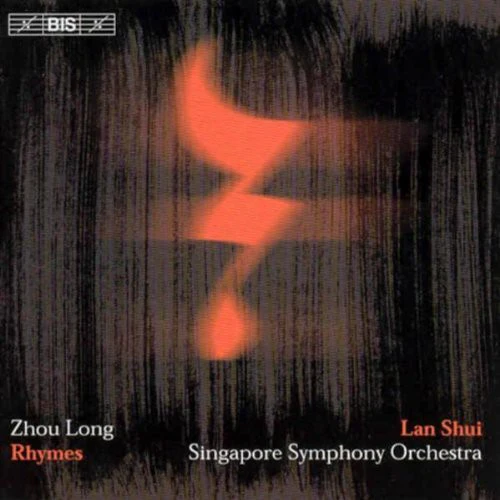
Zhou: Rhymes / Lan Shui, Singapore So, Et Al
Zhou Long, born 1953 in Beijing, came to the US in the 1980s and studied at Columbia University with composers Chou Wen-Chung and Mario Davidovsky, among others. Prior to this release, two collections of his chamber music have been reviewed in Fanfare—one by myself in 22:5, and one by Peter Burwasser in 19:1. Both of us were attracted to the composer’s ability to blend the sonorities of Chinese and Western instruments and devise convincing formal designs that drew from both musical cultures. In “limiting” himself to a Western orchestra (except for additional and varied percussion) in this program, he has in a sense set himself a greater challenge, and succeeds admirably.
What impresses most about these four works are the breadth of orchestral colors Zhou manipulates, and how the musical drama grows directly out of those colors. The four Poems from Tang, for example, are purely instrumental evocations of Tang Dynasty (AD 618–907) poems (printed in English translation in the booklet), where sounds of nature as well as intimations of mist, clouds, flames, and dreams emerge within fugitive rustling, burbling, and murmuring timbres, in contrast with full ensemble passages reminiscent of Stravinsky’s orchestral palette in The Firebird. Moreover, the rhythmic insistence of Stravinsky’s Rite of Spring appears to have influenced Zhou in the remaining works; in The Rhyme of Taigu an expanded percussion section not only adds haunting colors and textures but provides an energetic, repetitious rhythmic impetus, and Da Qu, which isolates Jonathan Fox’s bells, vibraphone, and gongs against an orchestra that threatens to erupt from tranquil to volatile, near chaotic, expression in the blink of an eye, is even more exotic and vibrant. (Note to solo percussionists and adventurous orchestras: this work has great audience-wowing potential.) Even the brief transformation of a Shaanxi love song, mixed with Zhou’s recollection of farmers burning their fields, in The Future of Fire builds to thunderous Rite-like climaxes.
BIS’s engineering captures the wide dynamic range of the music vividly, and conductor Lan Shui and the Singapore musicians present everything in the best possible light.
Art Lange, FANFARE
What impresses most about these four works are the breadth of orchestral colors Zhou manipulates, and how the musical drama grows directly out of those colors. The four Poems from Tang, for example, are purely instrumental evocations of Tang Dynasty (AD 618–907) poems (printed in English translation in the booklet), where sounds of nature as well as intimations of mist, clouds, flames, and dreams emerge within fugitive rustling, burbling, and murmuring timbres, in contrast with full ensemble passages reminiscent of Stravinsky’s orchestral palette in The Firebird. Moreover, the rhythmic insistence of Stravinsky’s Rite of Spring appears to have influenced Zhou in the remaining works; in The Rhyme of Taigu an expanded percussion section not only adds haunting colors and textures but provides an energetic, repetitious rhythmic impetus, and Da Qu, which isolates Jonathan Fox’s bells, vibraphone, and gongs against an orchestra that threatens to erupt from tranquil to volatile, near chaotic, expression in the blink of an eye, is even more exotic and vibrant. (Note to solo percussionists and adventurous orchestras: this work has great audience-wowing potential.) Even the brief transformation of a Shaanxi love song, mixed with Zhou’s recollection of farmers burning their fields, in The Future of Fire builds to thunderous Rite-like climaxes.
BIS’s engineering captures the wide dynamic range of the music vividly, and conductor Lan Shui and the Singapore musicians present everything in the best possible light.
Art Lange, FANFARE
Zhou Long, born 1953 in Beijing, came to the US in the 1980s and studied at Columbia University with composers Chou Wen-Chung and Mario Davidovsky, among others. Prior to this release, two collections of his chamber music have been reviewed in Fanfare—one by myself in 22:5, and one by Peter Burwasser in 19:1. Both of us were attracted to the composer’s ability to blend the sonorities of Chinese and Western instruments and devise convincing formal designs that drew from both musical cultures. In “limiting” himself to a Western orchestra (except for additional and varied percussion) in this program, he has in a sense set himself a greater challenge, and succeeds admirably.
What impresses most about these four works are the breadth of orchestral colors Zhou manipulates, and how the musical drama grows directly out of those colors. The four Poems from Tang, for example, are purely instrumental evocations of Tang Dynasty (AD 618–907) poems (printed in English translation in the booklet), where sounds of nature as well as intimations of mist, clouds, flames, and dreams emerge within fugitive rustling, burbling, and murmuring timbres, in contrast with full ensemble passages reminiscent of Stravinsky’s orchestral palette in The Firebird. Moreover, the rhythmic insistence of Stravinsky’s Rite of Spring appears to have influenced Zhou in the remaining works; in The Rhyme of Taigu an expanded percussion section not only adds haunting colors and textures but provides an energetic, repetitious rhythmic impetus, and Da Qu, which isolates Jonathan Fox’s bells, vibraphone, and gongs against an orchestra that threatens to erupt from tranquil to volatile, near chaotic, expression in the blink of an eye, is even more exotic and vibrant. (Note to solo percussionists and adventurous orchestras: this work has great audience-wowing potential.) Even the brief transformation of a Shaanxi love song, mixed with Zhou’s recollection of farmers burning their fields, in The Future of Fire builds to thunderous Rite-like climaxes.
BIS’s engineering captures the wide dynamic range of the music vividly, and conductor Lan Shui and the Singapore musicians present everything in the best possible light.
Art Lange, FANFARE
What impresses most about these four works are the breadth of orchestral colors Zhou manipulates, and how the musical drama grows directly out of those colors. The four Poems from Tang, for example, are purely instrumental evocations of Tang Dynasty (AD 618–907) poems (printed in English translation in the booklet), where sounds of nature as well as intimations of mist, clouds, flames, and dreams emerge within fugitive rustling, burbling, and murmuring timbres, in contrast with full ensemble passages reminiscent of Stravinsky’s orchestral palette in The Firebird. Moreover, the rhythmic insistence of Stravinsky’s Rite of Spring appears to have influenced Zhou in the remaining works; in The Rhyme of Taigu an expanded percussion section not only adds haunting colors and textures but provides an energetic, repetitious rhythmic impetus, and Da Qu, which isolates Jonathan Fox’s bells, vibraphone, and gongs against an orchestra that threatens to erupt from tranquil to volatile, near chaotic, expression in the blink of an eye, is even more exotic and vibrant. (Note to solo percussionists and adventurous orchestras: this work has great audience-wowing potential.) Even the brief transformation of a Shaanxi love song, mixed with Zhou’s recollection of farmers burning their fields, in The Future of Fire builds to thunderous Rite-like climaxes.
BIS’s engineering captures the wide dynamic range of the music vividly, and conductor Lan Shui and the Singapore musicians present everything in the best possible light.
Art Lange, FANFARE
$21.99
Zhou: Rhymes / Lan Shui, Singapore So, Et Al—
$21.99
Description
Zhou Long, born 1953 in Beijing, came to the US in the 1980s and studied at Columbia University with composers Chou Wen-Chung and Mario Davidovsky, among others. Prior to this release, two collections of his chamber music have been reviewed in Fanfare—one by myself in 22:5, and one by Peter Burwasser in 19:1. Both of us were attracted to the composer’s ability to blend the sonorities of Chinese and Western instruments and devise convincing formal designs that drew from both musical cultures. In “limiting” himself to a Western orchestra (except for additional and varied percussion) in this program, he has in a sense set himself a greater challenge, and succeeds admirably.
What impresses most about these four works are the breadth of orchestral colors Zhou manipulates, and how the musical drama grows directly out of those colors. The four Poems from Tang, for example, are purely instrumental evocations of Tang Dynasty (AD 618–907) poems (printed in English translation in the booklet), where sounds of nature as well as intimations of mist, clouds, flames, and dreams emerge within fugitive rustling, burbling, and murmuring timbres, in contrast with full ensemble passages reminiscent of Stravinsky’s orchestral palette in The Firebird. Moreover, the rhythmic insistence of Stravinsky’s Rite of Spring appears to have influenced Zhou in the remaining works; in The Rhyme of Taigu an expanded percussion section not only adds haunting colors and textures but provides an energetic, repetitious rhythmic impetus, and Da Qu, which isolates Jonathan Fox’s bells, vibraphone, and gongs against an orchestra that threatens to erupt from tranquil to volatile, near chaotic, expression in the blink of an eye, is even more exotic and vibrant. (Note to solo percussionists and adventurous orchestras: this work has great audience-wowing potential.) Even the brief transformation of a Shaanxi love song, mixed with Zhou’s recollection of farmers burning their fields, in The Future of Fire builds to thunderous Rite-like climaxes.
BIS’s engineering captures the wide dynamic range of the music vividly, and conductor Lan Shui and the Singapore musicians present everything in the best possible light.
Art Lange, FANFARE
What impresses most about these four works are the breadth of orchestral colors Zhou manipulates, and how the musical drama grows directly out of those colors. The four Poems from Tang, for example, are purely instrumental evocations of Tang Dynasty (AD 618–907) poems (printed in English translation in the booklet), where sounds of nature as well as intimations of mist, clouds, flames, and dreams emerge within fugitive rustling, burbling, and murmuring timbres, in contrast with full ensemble passages reminiscent of Stravinsky’s orchestral palette in The Firebird. Moreover, the rhythmic insistence of Stravinsky’s Rite of Spring appears to have influenced Zhou in the remaining works; in The Rhyme of Taigu an expanded percussion section not only adds haunting colors and textures but provides an energetic, repetitious rhythmic impetus, and Da Qu, which isolates Jonathan Fox’s bells, vibraphone, and gongs against an orchestra that threatens to erupt from tranquil to volatile, near chaotic, expression in the blink of an eye, is even more exotic and vibrant. (Note to solo percussionists and adventurous orchestras: this work has great audience-wowing potential.) Even the brief transformation of a Shaanxi love song, mixed with Zhou’s recollection of farmers burning their fields, in The Future of Fire builds to thunderous Rite-like climaxes.
BIS’s engineering captures the wide dynamic range of the music vividly, and conductor Lan Shui and the Singapore musicians present everything in the best possible light.
Art Lange, FANFARE






















