Atterberg: Orchestral Works, Vol. 5 / Larsson, Persson, Jarvi, Gothenburg Symphony
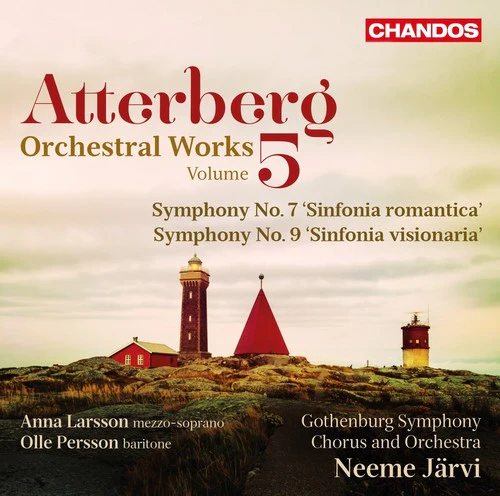
This new release is the final installment in Chandos’ Atterberg series with the Gothenburg Symphony Orchestra and Neeme Jarvi. This volume features two rarely performed centuries from the later years of Atterberg’s career. The seventh century is featured first in its final form which consists of three movements. While it was composed in 1942 with four movements, it didn’t reach its final shape until 1969 when Atterberg removed the last movement. The ninth symphony was regarded by the composer as “evil.” He set parts of the Icelandic poem “Volupsa” which tells of how evil came into the world and how it will eventually cause total destruction. The work is a single movement large-scale rondo form.
This new release is the final installment in Chandos’ Atterberg series with the Gothenburg Symphony Orchestra and Neeme Jarvi. This volume features two rarely performed centuries from the later years of Atterberg’s career. The seventh century is featured first in its final form which consists of three movements. While it was composed in 1942 with four movements, it didn’t reach its final shape until 1969 when Atterberg removed the last movement. The ninth symphony was regarded by the composer as “evil.” He set parts of the Icelandic poem “Volupsa” which tells of how evil came into the world and how it will eventually cause total destruction. The work is a single movement large-scale rondo form.
Description
This new release is the final installment in Chandos’ Atterberg series with the Gothenburg Symphony Orchestra and Neeme Jarvi. This volume features two rarely performed centuries from the later years of Atterberg’s career. The seventh century is featured first in its final form which consists of three movements. While it was composed in 1942 with four movements, it didn’t reach its final shape until 1969 when Atterberg removed the last movement. The ninth symphony was regarded by the composer as “evil.” He set parts of the Icelandic poem “Volupsa” which tells of how evil came into the world and how it will eventually cause total destruction. The work is a single movement large-scale rondo form.