🎉 Up to 70% Off Selected ItemsShop Sale

1 / 2
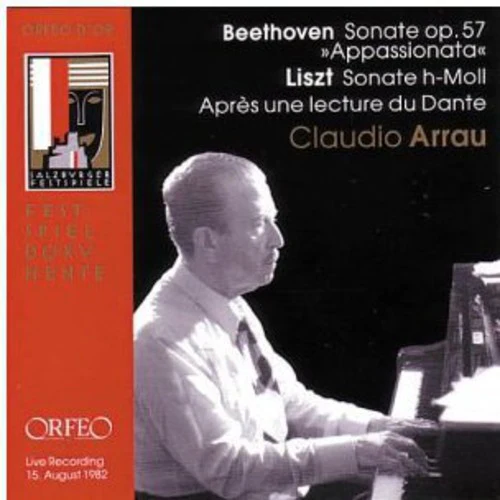
Beethoven, Liszt: Sonatas / Claudio Arrau
Arrau at 80 – as vital and virile as ever
Recorded at the Salzburg Festival in 1982 when he was already 80, this epic recital (Beethoven’s Op 81a Sonata is omitted for reasons of length) comes as a reminder of Claudio Arrau’s unique stature. His grandeur is overwhelming, his rich saturated tone unmistakable. True, expressive points may be stretched to their limit, yet even if you feel that the intensity with which he endows even the simplest phrase is over-bearing, his daunting mastery is never in doubt. Here, surely, is the final fruit of years of blazing commitment to his art and to two composers central to his vast and encompassing repertoire.
Fortunately the time is long past when Beethoven and Liszt might have been considered strange bed-fellows (the one profound, the other flashy and meretricious). And in Arrau’s magisterial hands you are made more than aware of the influence of Beethoven on Liszt (‘His work is like the pillar of cloud and fire which guided the Israelites through the desert’), an inspiration which led to the symphonic weight, breadth and quasi-orchestral sonorities of the the B minor and Dante Sonatas. Certainly when Arrau opens Beethoven’s Appassionata Sonata – muffled, distant and alive with menace – you may well look ahead to the sotto voce start to the Liszt Sonata. Again, every part is strenuously rather than elegantly argued (surface elegance played no part in Arrau’s musical make-up) and time and again there is an almost palpable sense of the pianist’s strength and vision, his thunderous and rhetorical close one of many examples of recreation on the grandest, loftiest scale.
Turning to Liszt, Arrau is grandioso indeed at 2'00" in the B minor Sonata and overall his generosity of spirit is such that it makes many recent performances seem sadly constricted in scope by comparison. Similarly in the Dante Sonata, Arrau’s response to a term such as disparato, is of an emotionalism that few would risk today and which he might have regretfully qualified in the recording studio. Seemingly hewn out of rock, these performances form a deeply personal, mesmeric and exhausting experience and are entirely what Peter Cosse, in his heartfelt review for the Salzburger Nachrichten, called ‘The Sum of a Pianist’s Life’.
Bryce Morrison, The GRAMOPHONE
Recorded at the Salzburg Festival in 1982 when he was already 80, this epic recital (Beethoven’s Op 81a Sonata is omitted for reasons of length) comes as a reminder of Claudio Arrau’s unique stature. His grandeur is overwhelming, his rich saturated tone unmistakable. True, expressive points may be stretched to their limit, yet even if you feel that the intensity with which he endows even the simplest phrase is over-bearing, his daunting mastery is never in doubt. Here, surely, is the final fruit of years of blazing commitment to his art and to two composers central to his vast and encompassing repertoire.
Fortunately the time is long past when Beethoven and Liszt might have been considered strange bed-fellows (the one profound, the other flashy and meretricious). And in Arrau’s magisterial hands you are made more than aware of the influence of Beethoven on Liszt (‘His work is like the pillar of cloud and fire which guided the Israelites through the desert’), an inspiration which led to the symphonic weight, breadth and quasi-orchestral sonorities of the the B minor and Dante Sonatas. Certainly when Arrau opens Beethoven’s Appassionata Sonata – muffled, distant and alive with menace – you may well look ahead to the sotto voce start to the Liszt Sonata. Again, every part is strenuously rather than elegantly argued (surface elegance played no part in Arrau’s musical make-up) and time and again there is an almost palpable sense of the pianist’s strength and vision, his thunderous and rhetorical close one of many examples of recreation on the grandest, loftiest scale.
Turning to Liszt, Arrau is grandioso indeed at 2'00" in the B minor Sonata and overall his generosity of spirit is such that it makes many recent performances seem sadly constricted in scope by comparison. Similarly in the Dante Sonata, Arrau’s response to a term such as disparato, is of an emotionalism that few would risk today and which he might have regretfully qualified in the recording studio. Seemingly hewn out of rock, these performances form a deeply personal, mesmeric and exhausting experience and are entirely what Peter Cosse, in his heartfelt review for the Salzburger Nachrichten, called ‘The Sum of a Pianist’s Life’.
Bryce Morrison, The GRAMOPHONE
Arrau at 80 – as vital and virile as ever
Recorded at the Salzburg Festival in 1982 when he was already 80, this epic recital (Beethoven’s Op 81a Sonata is omitted for reasons of length) comes as a reminder of Claudio Arrau’s unique stature. His grandeur is overwhelming, his rich saturated tone unmistakable. True, expressive points may be stretched to their limit, yet even if you feel that the intensity with which he endows even the simplest phrase is over-bearing, his daunting mastery is never in doubt. Here, surely, is the final fruit of years of blazing commitment to his art and to two composers central to his vast and encompassing repertoire.
Fortunately the time is long past when Beethoven and Liszt might have been considered strange bed-fellows (the one profound, the other flashy and meretricious). And in Arrau’s magisterial hands you are made more than aware of the influence of Beethoven on Liszt (‘His work is like the pillar of cloud and fire which guided the Israelites through the desert’), an inspiration which led to the symphonic weight, breadth and quasi-orchestral sonorities of the the B minor and Dante Sonatas. Certainly when Arrau opens Beethoven’s Appassionata Sonata – muffled, distant and alive with menace – you may well look ahead to the sotto voce start to the Liszt Sonata. Again, every part is strenuously rather than elegantly argued (surface elegance played no part in Arrau’s musical make-up) and time and again there is an almost palpable sense of the pianist’s strength and vision, his thunderous and rhetorical close one of many examples of recreation on the grandest, loftiest scale.
Turning to Liszt, Arrau is grandioso indeed at 2'00" in the B minor Sonata and overall his generosity of spirit is such that it makes many recent performances seem sadly constricted in scope by comparison. Similarly in the Dante Sonata, Arrau’s response to a term such as disparato, is of an emotionalism that few would risk today and which he might have regretfully qualified in the recording studio. Seemingly hewn out of rock, these performances form a deeply personal, mesmeric and exhausting experience and are entirely what Peter Cosse, in his heartfelt review for the Salzburger Nachrichten, called ‘The Sum of a Pianist’s Life’.
Bryce Morrison, The GRAMOPHONE
Recorded at the Salzburg Festival in 1982 when he was already 80, this epic recital (Beethoven’s Op 81a Sonata is omitted for reasons of length) comes as a reminder of Claudio Arrau’s unique stature. His grandeur is overwhelming, his rich saturated tone unmistakable. True, expressive points may be stretched to their limit, yet even if you feel that the intensity with which he endows even the simplest phrase is over-bearing, his daunting mastery is never in doubt. Here, surely, is the final fruit of years of blazing commitment to his art and to two composers central to his vast and encompassing repertoire.
Fortunately the time is long past when Beethoven and Liszt might have been considered strange bed-fellows (the one profound, the other flashy and meretricious). And in Arrau’s magisterial hands you are made more than aware of the influence of Beethoven on Liszt (‘His work is like the pillar of cloud and fire which guided the Israelites through the desert’), an inspiration which led to the symphonic weight, breadth and quasi-orchestral sonorities of the the B minor and Dante Sonatas. Certainly when Arrau opens Beethoven’s Appassionata Sonata – muffled, distant and alive with menace – you may well look ahead to the sotto voce start to the Liszt Sonata. Again, every part is strenuously rather than elegantly argued (surface elegance played no part in Arrau’s musical make-up) and time and again there is an almost palpable sense of the pianist’s strength and vision, his thunderous and rhetorical close one of many examples of recreation on the grandest, loftiest scale.
Turning to Liszt, Arrau is grandioso indeed at 2'00" in the B minor Sonata and overall his generosity of spirit is such that it makes many recent performances seem sadly constricted in scope by comparison. Similarly in the Dante Sonata, Arrau’s response to a term such as disparato, is of an emotionalism that few would risk today and which he might have regretfully qualified in the recording studio. Seemingly hewn out of rock, these performances form a deeply personal, mesmeric and exhausting experience and are entirely what Peter Cosse, in his heartfelt review for the Salzburger Nachrichten, called ‘The Sum of a Pianist’s Life’.
Bryce Morrison, The GRAMOPHONE
$16.99
Beethoven, Liszt: Sonatas / Claudio Arrau—
$16.99
Description
Arrau at 80 – as vital and virile as ever
Recorded at the Salzburg Festival in 1982 when he was already 80, this epic recital (Beethoven’s Op 81a Sonata is omitted for reasons of length) comes as a reminder of Claudio Arrau’s unique stature. His grandeur is overwhelming, his rich saturated tone unmistakable. True, expressive points may be stretched to their limit, yet even if you feel that the intensity with which he endows even the simplest phrase is over-bearing, his daunting mastery is never in doubt. Here, surely, is the final fruit of years of blazing commitment to his art and to two composers central to his vast and encompassing repertoire.
Fortunately the time is long past when Beethoven and Liszt might have been considered strange bed-fellows (the one profound, the other flashy and meretricious). And in Arrau’s magisterial hands you are made more than aware of the influence of Beethoven on Liszt (‘His work is like the pillar of cloud and fire which guided the Israelites through the desert’), an inspiration which led to the symphonic weight, breadth and quasi-orchestral sonorities of the the B minor and Dante Sonatas. Certainly when Arrau opens Beethoven’s Appassionata Sonata – muffled, distant and alive with menace – you may well look ahead to the sotto voce start to the Liszt Sonata. Again, every part is strenuously rather than elegantly argued (surface elegance played no part in Arrau’s musical make-up) and time and again there is an almost palpable sense of the pianist’s strength and vision, his thunderous and rhetorical close one of many examples of recreation on the grandest, loftiest scale.
Turning to Liszt, Arrau is grandioso indeed at 2'00" in the B minor Sonata and overall his generosity of spirit is such that it makes many recent performances seem sadly constricted in scope by comparison. Similarly in the Dante Sonata, Arrau’s response to a term such as disparato, is of an emotionalism that few would risk today and which he might have regretfully qualified in the recording studio. Seemingly hewn out of rock, these performances form a deeply personal, mesmeric and exhausting experience and are entirely what Peter Cosse, in his heartfelt review for the Salzburger Nachrichten, called ‘The Sum of a Pianist’s Life’.
Bryce Morrison, The GRAMOPHONE
Recorded at the Salzburg Festival in 1982 when he was already 80, this epic recital (Beethoven’s Op 81a Sonata is omitted for reasons of length) comes as a reminder of Claudio Arrau’s unique stature. His grandeur is overwhelming, his rich saturated tone unmistakable. True, expressive points may be stretched to their limit, yet even if you feel that the intensity with which he endows even the simplest phrase is over-bearing, his daunting mastery is never in doubt. Here, surely, is the final fruit of years of blazing commitment to his art and to two composers central to his vast and encompassing repertoire.
Fortunately the time is long past when Beethoven and Liszt might have been considered strange bed-fellows (the one profound, the other flashy and meretricious). And in Arrau’s magisterial hands you are made more than aware of the influence of Beethoven on Liszt (‘His work is like the pillar of cloud and fire which guided the Israelites through the desert’), an inspiration which led to the symphonic weight, breadth and quasi-orchestral sonorities of the the B minor and Dante Sonatas. Certainly when Arrau opens Beethoven’s Appassionata Sonata – muffled, distant and alive with menace – you may well look ahead to the sotto voce start to the Liszt Sonata. Again, every part is strenuously rather than elegantly argued (surface elegance played no part in Arrau’s musical make-up) and time and again there is an almost palpable sense of the pianist’s strength and vision, his thunderous and rhetorical close one of many examples of recreation on the grandest, loftiest scale.
Turning to Liszt, Arrau is grandioso indeed at 2'00" in the B minor Sonata and overall his generosity of spirit is such that it makes many recent performances seem sadly constricted in scope by comparison. Similarly in the Dante Sonata, Arrau’s response to a term such as disparato, is of an emotionalism that few would risk today and which he might have regretfully qualified in the recording studio. Seemingly hewn out of rock, these performances form a deeply personal, mesmeric and exhausting experience and are entirely what Peter Cosse, in his heartfelt review for the Salzburger Nachrichten, called ‘The Sum of a Pianist’s Life’.
Bryce Morrison, The GRAMOPHONE