🎉 Up to 70% Off Selected ItemsShop Sale

1 / 2
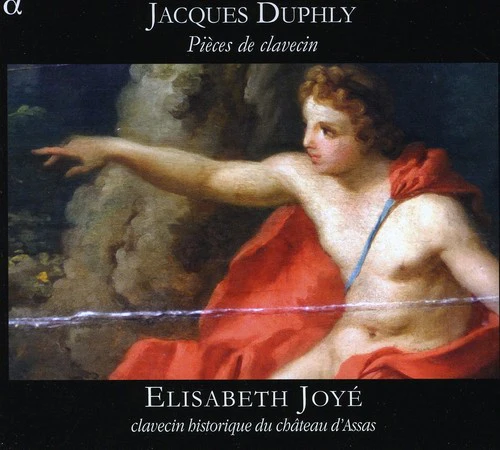
Duphly: Pieces De Clavecin / Elisabeth Joye
During the 18th century, the manufacture of harpsichords reached its climax; very soon after, a victim of changing tastes, the harpsichord abandoned its dominance to the pianoforte, seen as an incarnation of progress. Jacques Duphly, then, wrote the final pages of French harpsichord history, in works where nobility vies with eloquence. Born in 1715 (the year of Louis XIV’s death) and buried in July 1789 (just before the Revolution), he represents the perfect summary of an art form that once radiated throughrout Europe.
-----------------------------
3331090.az_DUPHLY_La_Forqueray_Medee.html
DUPHLY La Forqueray. Médée . Allemandes: en do; en ré. Courante La Boucon . Rondeaux. La Millettina. La Pothoüin . Chaconne. Courante. La Vanlo. Les Grâces. La de Belombre. La Félix • Elisabeth Joyé (hpd) • ALPHA 150 (75:00)
The grandson of one celebrated organist and trained by another, following his father’s death in 1742, Duphly speedily abandoned his appointments in the same profession in his native Rouen. He moved to Paris and chose a very different musical career, concentrating exclusively upon the harpsichord and private tutoring. He proved very successful, suggesting through numerous dedications and musical portraits his relationships with the highest artistic circles and musical patrons among the upper nobility. He seems to have been especially noted for his playing. D’Aquin de Château-Lyon wrote that Duphly “has a certain light touch, and a certain gentleness, which, with the addition of ornaments, renders the character of his pieces marvelously,” and Rousseau later quoted Duphly in his Musical Dictionary on the matter of fingering: “This perfection is generally achieved by a soft, light, regular touch.” Further elaboration results in what, in hindsight, would be some of the same goals of the French piano school of the 19th century, but that’s a matter for some other review. Suffice it to say that if Rousseau isn’t just placing his words in another’s mouth (which he did on more than one occasion), then Duphly emphasized clarity, proper ornamentation, and evenness of touch, even in those works of his that included rapid scales, figurations, and arpeggiated passages.
I mention these points because Elizabeth Joyé’s performances bring them to mind. While some other fine harpsichordists, such as Skip Sempé (Paradizo 0007) and Mitzi Meyerson (MDG 6005 1068), have produced fiery and virtuosic renditions of such pieces as La Millettina and the Rameau-like La de Belombre , Joyé is more measured in pace. Yet her version of these works lacks nothing for spirit, because she doesn’t rely solely upon excitement, as Sempé does; nor does she allow lengthy pauses to hang poised in midair between pairs of furious gallops. Though it may seem a bit simplistic to observe this, Joyé substitutes the exhilaration of the music itself for the excitement of a performance that draws attention away from the music. She allows us to focus instead on the irregular thematic rhythms and on how well Duphly’s harmonic accompaniments suit them.
At more moderate tempos, the rhythmic variety and passing harmonies of the Chaconne establish themselves fully without overwhelming the amiability of the piece. La Félix struts magnificently, and the melancholy lyricism of the Courante La Boucon makes itself felt without losing the gentle, forward flow of its 6/8 beat. Les Grâces is the slowest thing on the album and the most difficult to perform in several respects, given the importance of the notes inégales and an inflected but still metrical pacing. I find that John Paul (Lyrichord 8053), in his otherwise excellent survey of Duphly’s complete harpsichord music, loses the pacing here, as he does in La Pothoüin , but Joyé finds it unerringly.
La Félix also showcases the unusually fine, deep bass of the harpsichord used on this album, which is located in the Château d’Assas. Many images, both color and black and white, are devoted to it in the liner notes; and much attention is paid in a small but fine essay to its painted interior, depicting Apollo, Pan, and Midas. However, nothing is passed along about the instrument itself, its approximate age, any previous or recent restorations, the number and size of registers, the quality of its original materials, the casing, the tuning, etc.
The sound is close and moderately dry, and attractive liner notes are provided. Definitely recommended.
FANFARE: Barry Brenesal
-----------------------------
DUPHLY La Forqueray. Médée . Allemandes: en do; en ré. Courante La Boucon . Rondeaux. La Millettina. La Pothoüin . Chaconne. Courante. La Vanlo. Les Grâces. La de Belombre. La Félix • Elisabeth Joyé (hpd) • ALPHA 150 (75:00)
The grandson of one celebrated organist and trained by another, following his father’s death in 1742, Duphly speedily abandoned his appointments in the same profession in his native Rouen. He moved to Paris and chose a very different musical career, concentrating exclusively upon the harpsichord and private tutoring. He proved very successful, suggesting through numerous dedications and musical portraits his relationships with the highest artistic circles and musical patrons among the upper nobility. He seems to have been especially noted for his playing. D’Aquin de Château-Lyon wrote that Duphly “has a certain light touch, and a certain gentleness, which, with the addition of ornaments, renders the character of his pieces marvelously,” and Rousseau later quoted Duphly in his Musical Dictionary on the matter of fingering: “This perfection is generally achieved by a soft, light, regular touch.” Further elaboration results in what, in hindsight, would be some of the same goals of the French piano school of the 19th century, but that’s a matter for some other review. Suffice it to say that if Rousseau isn’t just placing his words in another’s mouth (which he did on more than one occasion), then Duphly emphasized clarity, proper ornamentation, and evenness of touch, even in those works of his that included rapid scales, figurations, and arpeggiated passages.
I mention these points because Elizabeth Joyé’s performances bring them to mind. While some other fine harpsichordists, such as Skip Sempé (Paradizo 0007) and Mitzi Meyerson (MDG 6005 1068), have produced fiery and virtuosic renditions of such pieces as La Millettina and the Rameau-like La de Belombre , Joyé is more measured in pace. Yet her version of these works lacks nothing for spirit, because she doesn’t rely solely upon excitement, as Sempé does; nor does she allow lengthy pauses to hang poised in midair between pairs of furious gallops. Though it may seem a bit simplistic to observe this, Joyé substitutes the exhilaration of the music itself for the excitement of a performance that draws attention away from the music. She allows us to focus instead on the irregular thematic rhythms and on how well Duphly’s harmonic accompaniments suit them.
At more moderate tempos, the rhythmic variety and passing harmonies of the Chaconne establish themselves fully without overwhelming the amiability of the piece. La Félix struts magnificently, and the melancholy lyricism of the Courante La Boucon makes itself felt without losing the gentle, forward flow of its 6/8 beat. Les Grâces is the slowest thing on the album and the most difficult to perform in several respects, given the importance of the notes inégales and an inflected but still metrical pacing. I find that John Paul (Lyrichord 8053), in his otherwise excellent survey of Duphly’s complete harpsichord music, loses the pacing here, as he does in La Pothoüin , but Joyé finds it unerringly.
La Félix also showcases the unusually fine, deep bass of the harpsichord used on this album, which is located in the Château d’Assas. Many images, both color and black and white, are devoted to it in the liner notes; and much attention is paid in a small but fine essay to its painted interior, depicting Apollo, Pan, and Midas. However, nothing is passed along about the instrument itself, its approximate age, any previous or recent restorations, the number and size of registers, the quality of its original materials, the casing, the tuning, etc.
The sound is close and moderately dry, and attractive liner notes are provided. Definitely recommended.
FANFARE: Barry Brenesal
During the 18th century, the manufacture of harpsichords reached its climax; very soon after, a victim of changing tastes, the harpsichord abandoned its dominance to the pianoforte, seen as an incarnation of progress. Jacques Duphly, then, wrote the final pages of French harpsichord history, in works where nobility vies with eloquence. Born in 1715 (the year of Louis XIV’s death) and buried in July 1789 (just before the Revolution), he represents the perfect summary of an art form that once radiated throughrout Europe.
-----------------------------
3331090.az_DUPHLY_La_Forqueray_Medee.html
DUPHLY La Forqueray. Médée . Allemandes: en do; en ré. Courante La Boucon . Rondeaux. La Millettina. La Pothoüin . Chaconne. Courante. La Vanlo. Les Grâces. La de Belombre. La Félix • Elisabeth Joyé (hpd) • ALPHA 150 (75:00)
The grandson of one celebrated organist and trained by another, following his father’s death in 1742, Duphly speedily abandoned his appointments in the same profession in his native Rouen. He moved to Paris and chose a very different musical career, concentrating exclusively upon the harpsichord and private tutoring. He proved very successful, suggesting through numerous dedications and musical portraits his relationships with the highest artistic circles and musical patrons among the upper nobility. He seems to have been especially noted for his playing. D’Aquin de Château-Lyon wrote that Duphly “has a certain light touch, and a certain gentleness, which, with the addition of ornaments, renders the character of his pieces marvelously,” and Rousseau later quoted Duphly in his Musical Dictionary on the matter of fingering: “This perfection is generally achieved by a soft, light, regular touch.” Further elaboration results in what, in hindsight, would be some of the same goals of the French piano school of the 19th century, but that’s a matter for some other review. Suffice it to say that if Rousseau isn’t just placing his words in another’s mouth (which he did on more than one occasion), then Duphly emphasized clarity, proper ornamentation, and evenness of touch, even in those works of his that included rapid scales, figurations, and arpeggiated passages.
I mention these points because Elizabeth Joyé’s performances bring them to mind. While some other fine harpsichordists, such as Skip Sempé (Paradizo 0007) and Mitzi Meyerson (MDG 6005 1068), have produced fiery and virtuosic renditions of such pieces as La Millettina and the Rameau-like La de Belombre , Joyé is more measured in pace. Yet her version of these works lacks nothing for spirit, because she doesn’t rely solely upon excitement, as Sempé does; nor does she allow lengthy pauses to hang poised in midair between pairs of furious gallops. Though it may seem a bit simplistic to observe this, Joyé substitutes the exhilaration of the music itself for the excitement of a performance that draws attention away from the music. She allows us to focus instead on the irregular thematic rhythms and on how well Duphly’s harmonic accompaniments suit them.
At more moderate tempos, the rhythmic variety and passing harmonies of the Chaconne establish themselves fully without overwhelming the amiability of the piece. La Félix struts magnificently, and the melancholy lyricism of the Courante La Boucon makes itself felt without losing the gentle, forward flow of its 6/8 beat. Les Grâces is the slowest thing on the album and the most difficult to perform in several respects, given the importance of the notes inégales and an inflected but still metrical pacing. I find that John Paul (Lyrichord 8053), in his otherwise excellent survey of Duphly’s complete harpsichord music, loses the pacing here, as he does in La Pothoüin , but Joyé finds it unerringly.
La Félix also showcases the unusually fine, deep bass of the harpsichord used on this album, which is located in the Château d’Assas. Many images, both color and black and white, are devoted to it in the liner notes; and much attention is paid in a small but fine essay to its painted interior, depicting Apollo, Pan, and Midas. However, nothing is passed along about the instrument itself, its approximate age, any previous or recent restorations, the number and size of registers, the quality of its original materials, the casing, the tuning, etc.
The sound is close and moderately dry, and attractive liner notes are provided. Definitely recommended.
FANFARE: Barry Brenesal
-----------------------------
DUPHLY La Forqueray. Médée . Allemandes: en do; en ré. Courante La Boucon . Rondeaux. La Millettina. La Pothoüin . Chaconne. Courante. La Vanlo. Les Grâces. La de Belombre. La Félix • Elisabeth Joyé (hpd) • ALPHA 150 (75:00)
The grandson of one celebrated organist and trained by another, following his father’s death in 1742, Duphly speedily abandoned his appointments in the same profession in his native Rouen. He moved to Paris and chose a very different musical career, concentrating exclusively upon the harpsichord and private tutoring. He proved very successful, suggesting through numerous dedications and musical portraits his relationships with the highest artistic circles and musical patrons among the upper nobility. He seems to have been especially noted for his playing. D’Aquin de Château-Lyon wrote that Duphly “has a certain light touch, and a certain gentleness, which, with the addition of ornaments, renders the character of his pieces marvelously,” and Rousseau later quoted Duphly in his Musical Dictionary on the matter of fingering: “This perfection is generally achieved by a soft, light, regular touch.” Further elaboration results in what, in hindsight, would be some of the same goals of the French piano school of the 19th century, but that’s a matter for some other review. Suffice it to say that if Rousseau isn’t just placing his words in another’s mouth (which he did on more than one occasion), then Duphly emphasized clarity, proper ornamentation, and evenness of touch, even in those works of his that included rapid scales, figurations, and arpeggiated passages.
I mention these points because Elizabeth Joyé’s performances bring them to mind. While some other fine harpsichordists, such as Skip Sempé (Paradizo 0007) and Mitzi Meyerson (MDG 6005 1068), have produced fiery and virtuosic renditions of such pieces as La Millettina and the Rameau-like La de Belombre , Joyé is more measured in pace. Yet her version of these works lacks nothing for spirit, because she doesn’t rely solely upon excitement, as Sempé does; nor does she allow lengthy pauses to hang poised in midair between pairs of furious gallops. Though it may seem a bit simplistic to observe this, Joyé substitutes the exhilaration of the music itself for the excitement of a performance that draws attention away from the music. She allows us to focus instead on the irregular thematic rhythms and on how well Duphly’s harmonic accompaniments suit them.
At more moderate tempos, the rhythmic variety and passing harmonies of the Chaconne establish themselves fully without overwhelming the amiability of the piece. La Félix struts magnificently, and the melancholy lyricism of the Courante La Boucon makes itself felt without losing the gentle, forward flow of its 6/8 beat. Les Grâces is the slowest thing on the album and the most difficult to perform in several respects, given the importance of the notes inégales and an inflected but still metrical pacing. I find that John Paul (Lyrichord 8053), in his otherwise excellent survey of Duphly’s complete harpsichord music, loses the pacing here, as he does in La Pothoüin , but Joyé finds it unerringly.
La Félix also showcases the unusually fine, deep bass of the harpsichord used on this album, which is located in the Château d’Assas. Many images, both color and black and white, are devoted to it in the liner notes; and much attention is paid in a small but fine essay to its painted interior, depicting Apollo, Pan, and Midas. However, nothing is passed along about the instrument itself, its approximate age, any previous or recent restorations, the number and size of registers, the quality of its original materials, the casing, the tuning, etc.
The sound is close and moderately dry, and attractive liner notes are provided. Definitely recommended.
FANFARE: Barry Brenesal
$20.99
Duphly: Pieces De Clavecin / Elisabeth Joye—
$20.99
Description
During the 18th century, the manufacture of harpsichords reached its climax; very soon after, a victim of changing tastes, the harpsichord abandoned its dominance to the pianoforte, seen as an incarnation of progress. Jacques Duphly, then, wrote the final pages of French harpsichord history, in works where nobility vies with eloquence. Born in 1715 (the year of Louis XIV’s death) and buried in July 1789 (just before the Revolution), he represents the perfect summary of an art form that once radiated throughrout Europe.
-----------------------------
3331090.az_DUPHLY_La_Forqueray_Medee.html
DUPHLY La Forqueray. Médée . Allemandes: en do; en ré. Courante La Boucon . Rondeaux. La Millettina. La Pothoüin . Chaconne. Courante. La Vanlo. Les Grâces. La de Belombre. La Félix • Elisabeth Joyé (hpd) • ALPHA 150 (75:00)
The grandson of one celebrated organist and trained by another, following his father’s death in 1742, Duphly speedily abandoned his appointments in the same profession in his native Rouen. He moved to Paris and chose a very different musical career, concentrating exclusively upon the harpsichord and private tutoring. He proved very successful, suggesting through numerous dedications and musical portraits his relationships with the highest artistic circles and musical patrons among the upper nobility. He seems to have been especially noted for his playing. D’Aquin de Château-Lyon wrote that Duphly “has a certain light touch, and a certain gentleness, which, with the addition of ornaments, renders the character of his pieces marvelously,” and Rousseau later quoted Duphly in his Musical Dictionary on the matter of fingering: “This perfection is generally achieved by a soft, light, regular touch.” Further elaboration results in what, in hindsight, would be some of the same goals of the French piano school of the 19th century, but that’s a matter for some other review. Suffice it to say that if Rousseau isn’t just placing his words in another’s mouth (which he did on more than one occasion), then Duphly emphasized clarity, proper ornamentation, and evenness of touch, even in those works of his that included rapid scales, figurations, and arpeggiated passages.
I mention these points because Elizabeth Joyé’s performances bring them to mind. While some other fine harpsichordists, such as Skip Sempé (Paradizo 0007) and Mitzi Meyerson (MDG 6005 1068), have produced fiery and virtuosic renditions of such pieces as La Millettina and the Rameau-like La de Belombre , Joyé is more measured in pace. Yet her version of these works lacks nothing for spirit, because she doesn’t rely solely upon excitement, as Sempé does; nor does she allow lengthy pauses to hang poised in midair between pairs of furious gallops. Though it may seem a bit simplistic to observe this, Joyé substitutes the exhilaration of the music itself for the excitement of a performance that draws attention away from the music. She allows us to focus instead on the irregular thematic rhythms and on how well Duphly’s harmonic accompaniments suit them.
At more moderate tempos, the rhythmic variety and passing harmonies of the Chaconne establish themselves fully without overwhelming the amiability of the piece. La Félix struts magnificently, and the melancholy lyricism of the Courante La Boucon makes itself felt without losing the gentle, forward flow of its 6/8 beat. Les Grâces is the slowest thing on the album and the most difficult to perform in several respects, given the importance of the notes inégales and an inflected but still metrical pacing. I find that John Paul (Lyrichord 8053), in his otherwise excellent survey of Duphly’s complete harpsichord music, loses the pacing here, as he does in La Pothoüin , but Joyé finds it unerringly.
La Félix also showcases the unusually fine, deep bass of the harpsichord used on this album, which is located in the Château d’Assas. Many images, both color and black and white, are devoted to it in the liner notes; and much attention is paid in a small but fine essay to its painted interior, depicting Apollo, Pan, and Midas. However, nothing is passed along about the instrument itself, its approximate age, any previous or recent restorations, the number and size of registers, the quality of its original materials, the casing, the tuning, etc.
The sound is close and moderately dry, and attractive liner notes are provided. Definitely recommended.
FANFARE: Barry Brenesal
-----------------------------
DUPHLY La Forqueray. Médée . Allemandes: en do; en ré. Courante La Boucon . Rondeaux. La Millettina. La Pothoüin . Chaconne. Courante. La Vanlo. Les Grâces. La de Belombre. La Félix • Elisabeth Joyé (hpd) • ALPHA 150 (75:00)
The grandson of one celebrated organist and trained by another, following his father’s death in 1742, Duphly speedily abandoned his appointments in the same profession in his native Rouen. He moved to Paris and chose a very different musical career, concentrating exclusively upon the harpsichord and private tutoring. He proved very successful, suggesting through numerous dedications and musical portraits his relationships with the highest artistic circles and musical patrons among the upper nobility. He seems to have been especially noted for his playing. D’Aquin de Château-Lyon wrote that Duphly “has a certain light touch, and a certain gentleness, which, with the addition of ornaments, renders the character of his pieces marvelously,” and Rousseau later quoted Duphly in his Musical Dictionary on the matter of fingering: “This perfection is generally achieved by a soft, light, regular touch.” Further elaboration results in what, in hindsight, would be some of the same goals of the French piano school of the 19th century, but that’s a matter for some other review. Suffice it to say that if Rousseau isn’t just placing his words in another’s mouth (which he did on more than one occasion), then Duphly emphasized clarity, proper ornamentation, and evenness of touch, even in those works of his that included rapid scales, figurations, and arpeggiated passages.
I mention these points because Elizabeth Joyé’s performances bring them to mind. While some other fine harpsichordists, such as Skip Sempé (Paradizo 0007) and Mitzi Meyerson (MDG 6005 1068), have produced fiery and virtuosic renditions of such pieces as La Millettina and the Rameau-like La de Belombre , Joyé is more measured in pace. Yet her version of these works lacks nothing for spirit, because she doesn’t rely solely upon excitement, as Sempé does; nor does she allow lengthy pauses to hang poised in midair between pairs of furious gallops. Though it may seem a bit simplistic to observe this, Joyé substitutes the exhilaration of the music itself for the excitement of a performance that draws attention away from the music. She allows us to focus instead on the irregular thematic rhythms and on how well Duphly’s harmonic accompaniments suit them.
At more moderate tempos, the rhythmic variety and passing harmonies of the Chaconne establish themselves fully without overwhelming the amiability of the piece. La Félix struts magnificently, and the melancholy lyricism of the Courante La Boucon makes itself felt without losing the gentle, forward flow of its 6/8 beat. Les Grâces is the slowest thing on the album and the most difficult to perform in several respects, given the importance of the notes inégales and an inflected but still metrical pacing. I find that John Paul (Lyrichord 8053), in his otherwise excellent survey of Duphly’s complete harpsichord music, loses the pacing here, as he does in La Pothoüin , but Joyé finds it unerringly.
La Félix also showcases the unusually fine, deep bass of the harpsichord used on this album, which is located in the Château d’Assas. Many images, both color and black and white, are devoted to it in the liner notes; and much attention is paid in a small but fine essay to its painted interior, depicting Apollo, Pan, and Midas. However, nothing is passed along about the instrument itself, its approximate age, any previous or recent restorations, the number and size of registers, the quality of its original materials, the casing, the tuning, etc.
The sound is close and moderately dry, and attractive liner notes are provided. Definitely recommended.
FANFARE: Barry Brenesal