🎉 Up to 70% Off Selected ItemsShop Sale

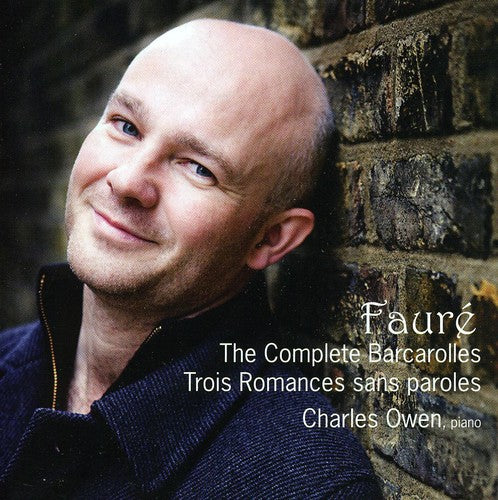
Faure: Complete Barcarolles; Trois Romances Sans Paroles
FAURÉ Barcarolles (complete) . 3 Romances sans paroles , op. 17 • Charles Owen (pn) • AVIE AV 2240 (63:20)
At the midcentury there were still artists active who had known Fauré and were cognizant of his world, however rapidly it may have been passing. One thinks of Marguerite Long, Yvonne Lefébure, Vlado Perlemuter, Robert Casadesus, Jean Doyen. As Fauré passed from living memory, a new generation of pianists approached his works with the generic, heavily pedaled, freely rubatomized manner that was the pianistic lingua franca of the 20th century’s last third. Matters of touch—light or sec, and sparing—and rhythmic steadiness were forgotten or ignored, and the public came to accept what was offered, that is, a sound very different from that which Fauré took for granted. The matter is not one of insisting upon slavish adherence to a “sacred tradition”—now, in any case, beyond recall—but of cultivating those oddments of style facilitating the optimum realization of Fauré’s music, which trails a dimension not always evident from close reading of its performing directions.
The marvel is the breathing naturalness with which Charles Owen has accomplished it—a marvel so complete that one is delighted, moved, entranced, noting only how deftly it is done. Without giving accompaniments or subsidiary figures undue prominence, every part is alive and singing with absolute, silvery clarity. Complementing his nonpareil traversal of the nocturnes (Avie 2133, Fanfare 32:1), Owen wings the barcarolles’ expressive curve, from early blithesomeness through middle-period pith and wizardry to the spare poetry of wizened old age, with a sympathetic grasp reviving, for an hour, a vanished world. One leaves it overcome with gratitude—gratitude to the composer, the artist, and for their rare endeavor, which has turned out so ravishingly well. For decades, the great and aptly named Jean Doyen’s traversal of the complete piano works was an unfailing touchstone for revealing Fauré’s manner of saying important things conversationally. Unfortunately, Erato’s masters were in sorry shape and their transfer to CDs was a disappointment. The good news is that Owen overtops him, and in sound of detailed, open, savoring immediacy. Jessica Duchen’s knowing annotations—a beautifully written contribution to the Fauré literature—confect a final elegance. This is for the ages, classic and indispensable.
FANFARE: Adrian Corleonis
FAURÉ Barcarolles (complete) . 3 Romances sans paroles , op. 17 • Charles Owen (pn) • AVIE AV 2240 (63:20)
At the midcentury there were still artists active who had known Fauré and were cognizant of his world, however rapidly it may have been passing. One thinks of Marguerite Long, Yvonne Lefébure, Vlado Perlemuter, Robert Casadesus, Jean Doyen. As Fauré passed from living memory, a new generation of pianists approached his works with the generic, heavily pedaled, freely rubatomized manner that was the pianistic lingua franca of the 20th century’s last third. Matters of touch—light or sec, and sparing—and rhythmic steadiness were forgotten or ignored, and the public came to accept what was offered, that is, a sound very different from that which Fauré took for granted. The matter is not one of insisting upon slavish adherence to a “sacred tradition”—now, in any case, beyond recall—but of cultivating those oddments of style facilitating the optimum realization of Fauré’s music, which trails a dimension not always evident from close reading of its performing directions.
The marvel is the breathing naturalness with which Charles Owen has accomplished it—a marvel so complete that one is delighted, moved, entranced, noting only how deftly it is done. Without giving accompaniments or subsidiary figures undue prominence, every part is alive and singing with absolute, silvery clarity. Complementing his nonpareil traversal of the nocturnes (Avie 2133, Fanfare 32:1), Owen wings the barcarolles’ expressive curve, from early blithesomeness through middle-period pith and wizardry to the spare poetry of wizened old age, with a sympathetic grasp reviving, for an hour, a vanished world. One leaves it overcome with gratitude—gratitude to the composer, the artist, and for their rare endeavor, which has turned out so ravishingly well. For decades, the great and aptly named Jean Doyen’s traversal of the complete piano works was an unfailing touchstone for revealing Fauré’s manner of saying important things conversationally. Unfortunately, Erato’s masters were in sorry shape and their transfer to CDs was a disappointment. The good news is that Owen overtops him, and in sound of detailed, open, savoring immediacy. Jessica Duchen’s knowing annotations—a beautifully written contribution to the Fauré literature—confect a final elegance. This is for the ages, classic and indispensable.
FANFARE: Adrian Corleonis
$5.25
Original: $14.99
-65%Faure: Complete Barcarolles; Trois Romances Sans Paroles—
$14.99
$5.25Description
FAURÉ Barcarolles (complete) . 3 Romances sans paroles , op. 17 • Charles Owen (pn) • AVIE AV 2240 (63:20)
At the midcentury there were still artists active who had known Fauré and were cognizant of his world, however rapidly it may have been passing. One thinks of Marguerite Long, Yvonne Lefébure, Vlado Perlemuter, Robert Casadesus, Jean Doyen. As Fauré passed from living memory, a new generation of pianists approached his works with the generic, heavily pedaled, freely rubatomized manner that was the pianistic lingua franca of the 20th century’s last third. Matters of touch—light or sec, and sparing—and rhythmic steadiness were forgotten or ignored, and the public came to accept what was offered, that is, a sound very different from that which Fauré took for granted. The matter is not one of insisting upon slavish adherence to a “sacred tradition”—now, in any case, beyond recall—but of cultivating those oddments of style facilitating the optimum realization of Fauré’s music, which trails a dimension not always evident from close reading of its performing directions.
The marvel is the breathing naturalness with which Charles Owen has accomplished it—a marvel so complete that one is delighted, moved, entranced, noting only how deftly it is done. Without giving accompaniments or subsidiary figures undue prominence, every part is alive and singing with absolute, silvery clarity. Complementing his nonpareil traversal of the nocturnes (Avie 2133, Fanfare 32:1), Owen wings the barcarolles’ expressive curve, from early blithesomeness through middle-period pith and wizardry to the spare poetry of wizened old age, with a sympathetic grasp reviving, for an hour, a vanished world. One leaves it overcome with gratitude—gratitude to the composer, the artist, and for their rare endeavor, which has turned out so ravishingly well. For decades, the great and aptly named Jean Doyen’s traversal of the complete piano works was an unfailing touchstone for revealing Fauré’s manner of saying important things conversationally. Unfortunately, Erato’s masters were in sorry shape and their transfer to CDs was a disappointment. The good news is that Owen overtops him, and in sound of detailed, open, savoring immediacy. Jessica Duchen’s knowing annotations—a beautifully written contribution to the Fauré literature—confect a final elegance. This is for the ages, classic and indispensable.
FANFARE: Adrian Corleonis